PRAGUE (AP) — The Czech Republic's government signed a deal on Wednesday with the state-run South Korean KHNP power utility to build two nuclear reactors in the country.
The contract between the dominant power company CEZ, where the Czech state has a majority stake, and KHNP was signed just a few hours after an appeals court dismissed a lower court ruling that blocked the government from signing the contract.
Prime Minister Petr Fiala called it “a crucial step” for the country to become more energy self-sufficient and secure.
“Nuclear energy is important for the Czech Republic,” Fiala said.
Earlier on Wednesday, the Supreme Administrative Court said that the ruling wasn't in line with law, meaning the signing of the deal could go ahead.
KHNP won a lucrative public tender last year, beating a competing bid by France’s EDF.
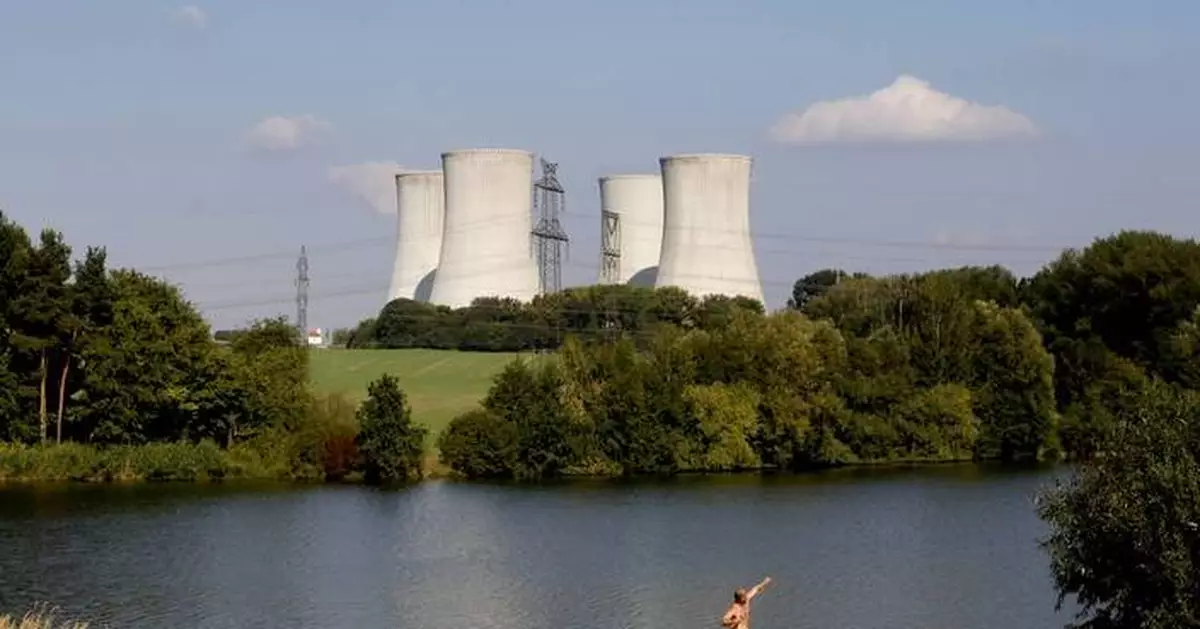
The two new reactors will be built at the existing Dukovany power plant in an effort for the country to wean itself off fossil fuels.
The contract between CEZ and KHNP was due to be signed on May 7, but EDF lodged a legal challenge at the regional court in the second-largest Czech city of Brno after the Czech anti-monopoly office dismissed its complaint about the tender.
The regional court said on May 6 that the deal couldn't be signed before it rules on the EDF case, because then there would be no way to change it even if the French company won.
CEZ and KHNP challenged that.
The two new reactors will complement Dukovany’s four 510-megawatt units that were completed in the 1980s. The total cost is 407 billion koruna ($18.7 billion), CEZ chief executive Daniel Beneš said.
The first new reactor is expected to become operational for a trial by 2036, the second about two years later.
Unlike its western neighbors Austria and Germany, the Czech Republic is doubling down on nuclear power and renewable energy sources after deciding to phase out coal for energy generation by 2033 to reduce carbon emissions.
The Czech Republic already relies on six nuclear reactors to generate more than a third of its electricity. Besides four in Dukovany, state-controlled power company CEZ operates two 1,000-megawatt reactors at the Temelin plant.
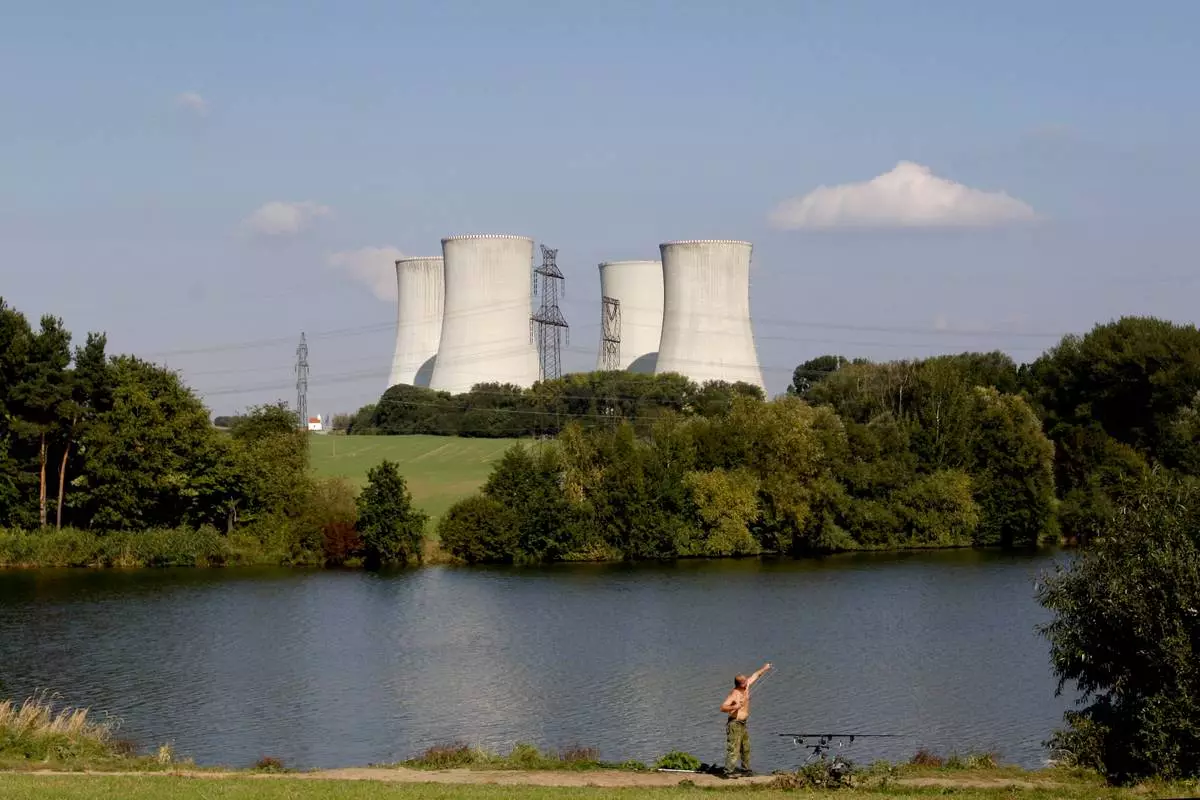
FILE - A man fishes with the towering Dukovany nuclear power plant in the background, in Dukovany, Czech Republic, Sept. 27, 2011. (AP Photo/Petr David Josek, File)
WASHINGTON (AP) — President Donald Trump has once again drawn his go-to diplomatic weapon — tariffs, this time to coerce the Iranian government to end its bloody crackdown on nationwide protests.
Trump said in a social media post on Monday he would impose a 25% tax on imports to the United States from countries that do business with Iran. The sanctions could hurt the Islamic Republic by reducing its access to foreign goods and driving up prices, which would likely inflame tensions in a country where inflation is running above 40%.
But the tariffs could create blowback for the United States, too, potentially raising the prices Americans pay for imports from Iranian trade partners such as Turkish textiles and Indian gemstones and threatening an uneasy trade truce Trump reached last year with China.
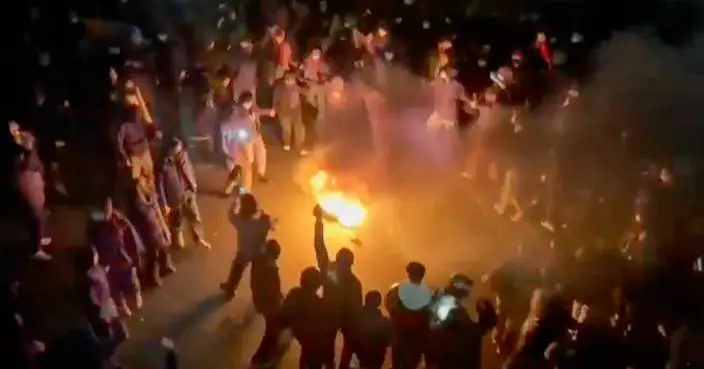
The death toll from the latest protests in Iran surpassed 2,500 as of Wednesday, activists said, as the hard-line Islamist government attempts to tamp down dissent against economic hardship and political repression.
The Trump administration has offered scant details since announcing the new tariffs targeting Iran. For instance, the White House has not said whether the taxes would be stacked on top of double-digit levies Trump imposed last year on almost every country on Earth. Or whether he would exempt some energy imports as he has in the past.
It's also unclear what legal authority the president is relying on to impose the import taxes. He invoked the 1977 International Emergency Economic Powers Act to justify his most sweeping tariffs last year. But businesses and several states have gone to court arguing that Trump overstepped his authority in doing so. The Supreme Court is hearing the case and could throw out Trump's tariffs and force him to send refunds to the U.S. importers that paid them.
Years of sanctions aimed at stopping Iran's nuclear program have left the country isolated. But it still did nearly $125 billion in international trade in 2024, including $32 billion with China, $28 billion with the United Arab Emirates and $17 billion with Turkey, according to the World Trade Organization.
Iran bought more than $6 billion worth of imports from the European Union that year. Russia and India also do considerable business with Iran. Energy dominates Iran's exports. Its top imports include gold, grain and smartphones.
Trump's attempt to pressure Iran is likely to cause collateral damage. Most prominently, his tariffs could upend his attempts to maintain a trade peace with China.
Last spring, the United States and China hammered each other with triple-digit tariffs, threatening to end trade between the world's two biggest economies and briefly panicking global financial markets. The two countries spent the rest of year trying to deescalate their trade conflict, reaching a truce in October that reined in tariffs, ended China's boycott of American soybeans and eased its restrictions on exports of rare-earth minerals and technologies critical for fighter jets, robots and other products.
The new tariffs, aimed at punishing Iran, would hit China because of its trade ties with Tehran. “President Trump’s threat to increase tariffs by 25% against China and other trading partners due to developments in Iran underscores just how fragile the U.S.-China trade truce is,” said former U.S. trade negotiator Wendy Cutler, now senior vice president at the Asia Society Policy Institute. "Even if he does not actually implement the tariff hike, damage has already been done. This threat erodes trust between the U.S. and China which is already at a low level.''
Adnan Mazarei, a nonresident senior fellow at the Peterson Institute for International Economics, doubts that the tariffs would persuade the Iranian government to ease its crackdown on protesters.
“I do not think this is going to be very successful,'' said Mazarei, a former deputy director of the International Monetary Fund with crisis-fighting experience in the Middle East. ”They will not for this alone change their views or their practices. It is a repressive regime, and it is willing to pay a high cost in terms of people’s blood to stay in power.''
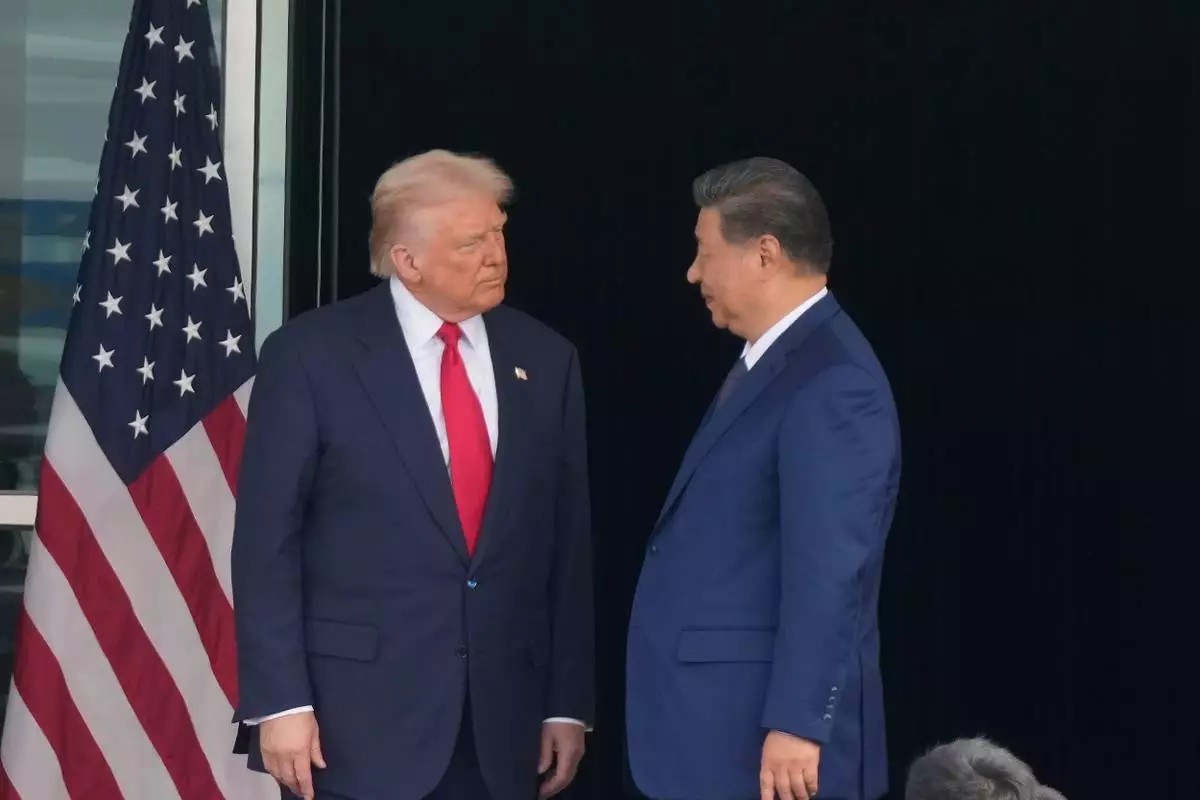
FILE - President Donald Trump, left, and Chinese President Xi Jinping, look at each other after their summit meeting at Gimhae International Airport Jinping in Busan, South Korea, Oct. 30, 2025. (AP Photo/Mark Schiefelbein, File)
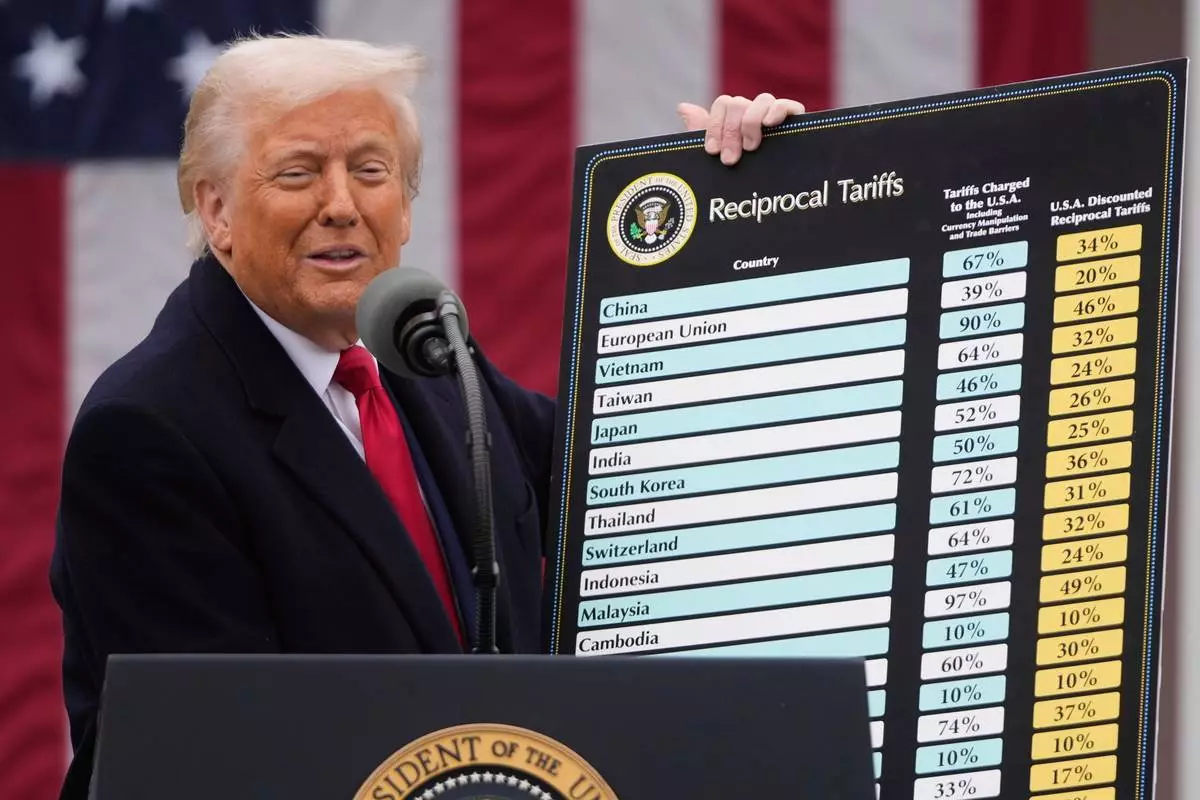
FILE - President Donald Trump speaks during an event to announce new tariffs in the Rose Garden at the White House, April 2, 2025, in Washington. (AP Photo/Mark Schiefelbein, File)
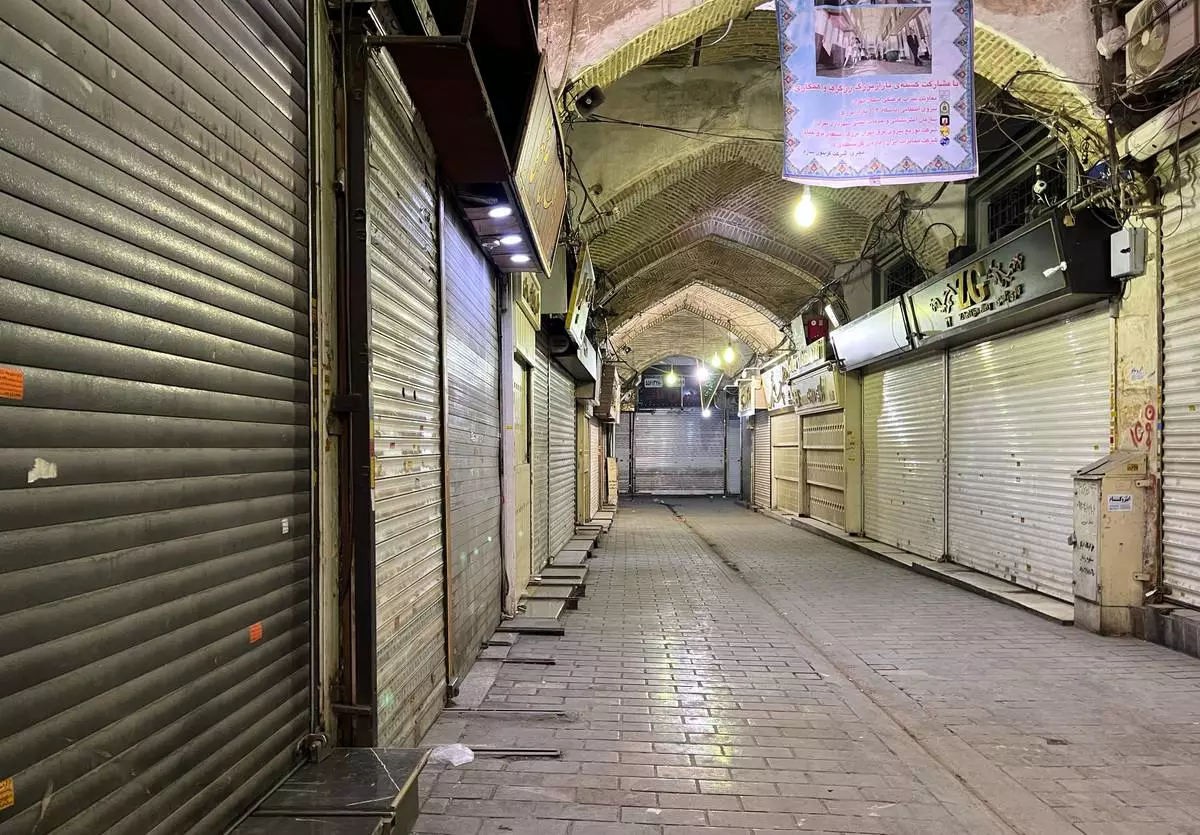
Shops are closed during protests in Tehran's centuries-old main bazaar, Iran, Tuesday, Jan. 6, 2026. (AP Photo/Vahid Salemi)