Skip to Content Facebook Feature Image

Activists say Iran has aired at least 97 coerced confessions from protesters, often after torture

News

Activists say Iran has aired at least 97 coerced confessions from protesters, often after torture
News

News

Activists say Iran has aired at least 97 coerced confessions from protesters, often after torture

2026-01-14 10:33 Last Updated At:10:40

JERUSALEM (AP) — They are shown handcuffed, their faces blurred. The confession videos, broadcast on Iranian state media, feature dramatic background music interspersed with clips appearing to show protesters attacking security forces. Some showcase gruesome homemade weapons that authorities claim were used in the attacks. Others highlight suspects in grainy security footage, appearing to set fires or destroy property.

Iran alleges these confessions, which often include references to Israel or America, are proof of foreign plots behind Iran's nationwide protests. Activists say they are coerced confessions, long a staple of Iran's hard-line state television, the only broadcaster in the country. And these videos are coming at an unprecedented clip.

Iranian state media has aired at least 97 confessions from protesters, many expressing remorse for their actions, since the protests began on Dec. 28, according to a rights group that is tracking the videos.

The U.S.-based Human Rights Activists News Agency says that based on testimony from prior detainees, the confessions often come after psychological or physical torture — and can have serious consequences, including the death penalty.

“These rights violations compound on top of each other and lead to horrible outcomes. This is a pattern that’s been implemented by the regime time and time again,” said Skylar Thompson, the group's deputy director.

Iran’s mission to the United Nations did not return a request for comment from The Associated Press. Iranian officials have described the protests as “riots” orchestrated by the United States and Israel. Iranian Foreign Minister Abbas Araghchi has said the violence must be foreign-influenced because Iranians would never set mosques on fire.

The nearly 100 confessions broadcast over just two weeks is unprecedented for Iran, Thompson said.

By comparison, from 2010 to 2020, there were around 350 forced confessions broadcast on state media, according to the activist groups Justice for Iran and the International Federation for Human Rights, the last major study compiled by activists. The rights group Together Against the Death Penalty said there were 40 to 60 confessions aired in 2025.

Additionally, Iran Human Rights and Together Against the Death Penalty reported at least 37 televised confessions of people facing the death penalty in the weeks following the 2022 protests over the death of Mahsa Amini after her arrest by the country’s morality police for allegedly not wearing her hijab to the liking of authorities. More than 500 people were killed and over 22,000 detained during the monthslong protests and security crackdown, the last major protests in Iran.

A 2014 U.N. Special Rapporteur human rights report on Iran found that among interviews with previously detained individuals, 70% said coerced information or confessions were used in their hearings. In nearly half the cases, the trial lasted just a few minutes.

After the Amini protests, the European Parliament adopted a resolution in January 2023 strongly condemning “the Islamic Republic’s policy of forcing confessions using torture, intimidation, threats against family members or other forms of duress, and the use of these forced confessions to convict and sentence protesters.”

In 2024, Iran executed 975 people, the highest number since 2015, according to a report by the United Nations. Four of the executions were carried out publicly. Iran carries out executions by hanging. According to the U.N. report, most people in Iran are executed for drug-related offenses or murder.

In 2024, security-related offenses, such as espionage, accounted for just 3% of the executions.

Thompson said she is “gravely concerned” over a surge in executions connected to the latest protests, adding that many of the video confessions are serious security-related offenses that carry the death penalty.

Tehran is known to have executed 12 people for espionage since the 12-day war in June between Israel and Iran. The most recent execution for espionage was last week, when Iran said it executed a man who was accused of spying for Israel’s Mossad spy agency in exchange for cryptocurrency. The state-run IRNA news agency said the man confessed to the spying charges.

The use of televised, coerced confessions dates to the chaotic years after Iran’s 1979 Islamic Revolution. State TV aired confessions by suspected members of communist groups, insurgents and others. Even Mehdi Bazargan, Iran’s first prime minister after the revolution, warned at one point he could be detained and put on television, “repeating things like a parrot.”

Among coerced confessions that gained international attention was in 2009 by then-Newsweek correspondent Maziari Bahari, who was also imprisoned for several months. He directed a documentary, “Forced Confessions,” and wrote a memoir about his ordeal.

Since the protests began on Dec. 28, 18,100 people have been arrested and more than 2,500 have been killed, the vast majority protesters, according to Human Rights Activists News Agency. The organization relies on a network of activists inside Iran that confirms all reported fatalities.

The Iranian government has not released overall casualty figures for the demonstrations. The AP has been unable to independently assess the toll.

Even before the protest movement exploded, human rights organizations and Western governments have condemned Iran’s increasing use of capital punishment, particularly for political and espionage-related offenses. Activists argue that many of the convictions rely on coerced confessions, and that trials often take place behind closed doors, without access to independent legal representation.
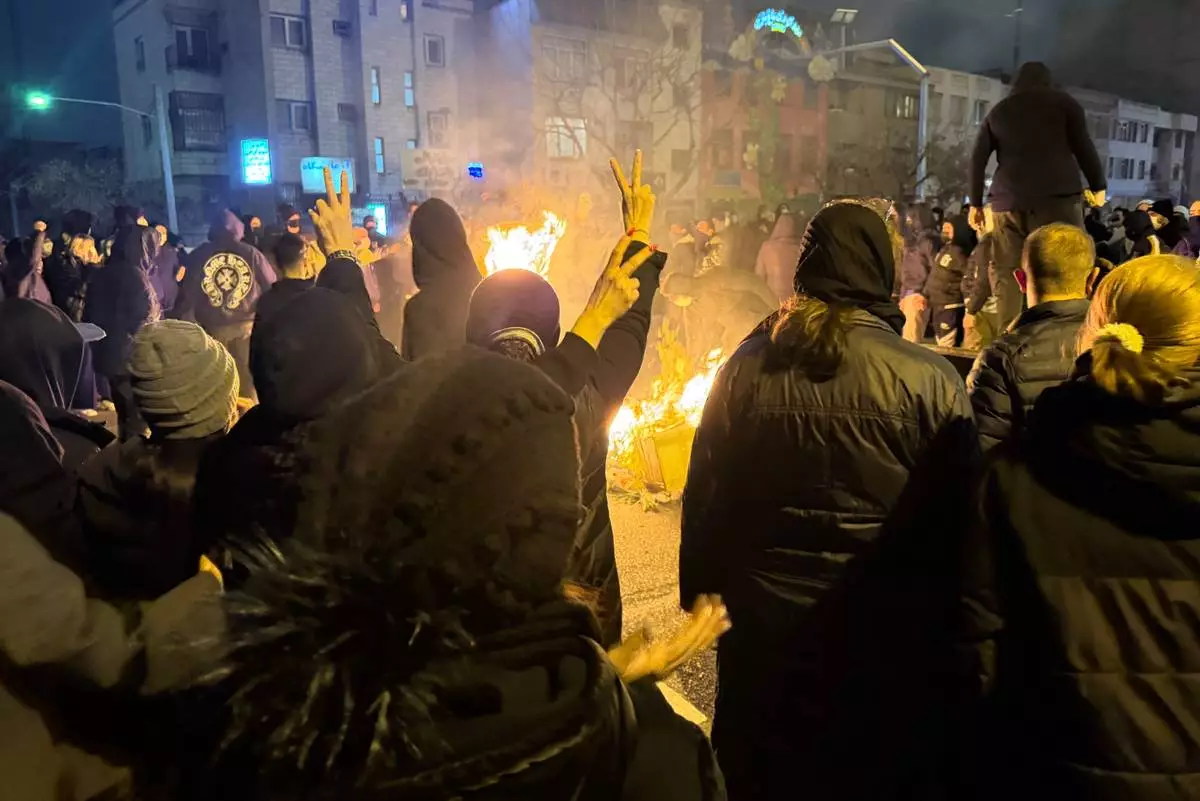
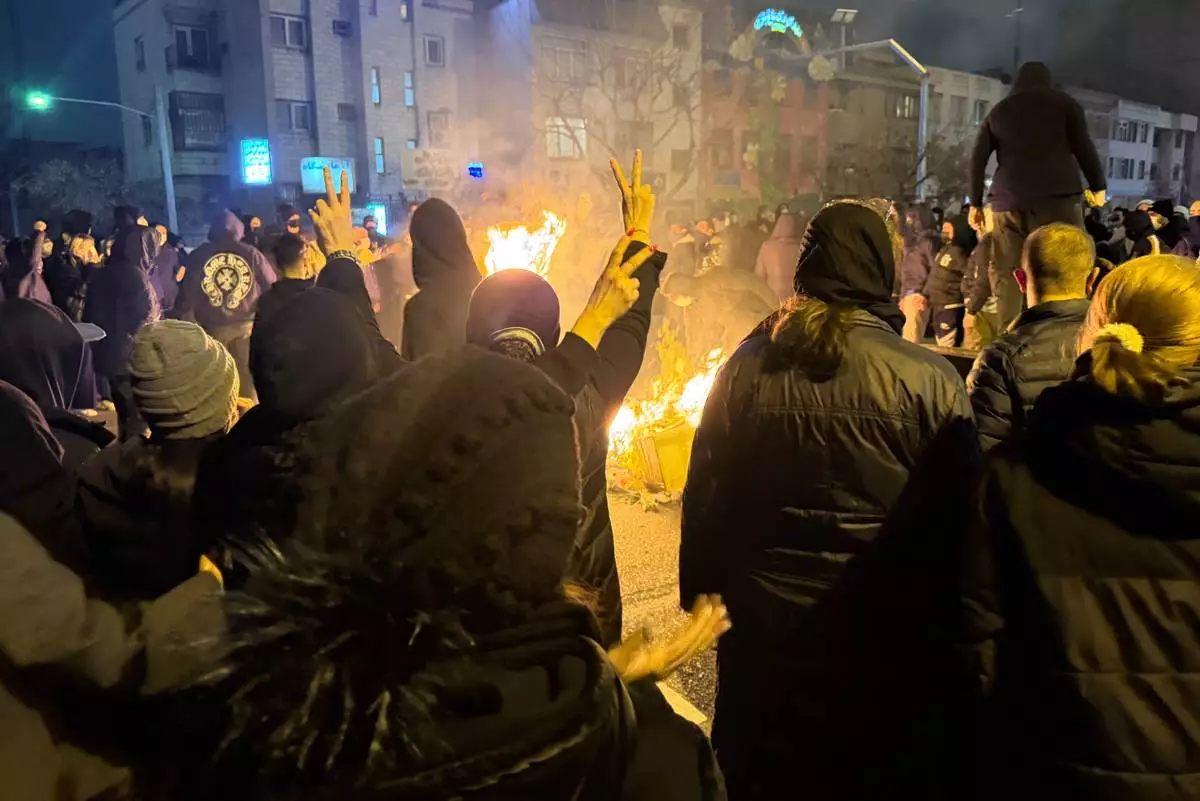
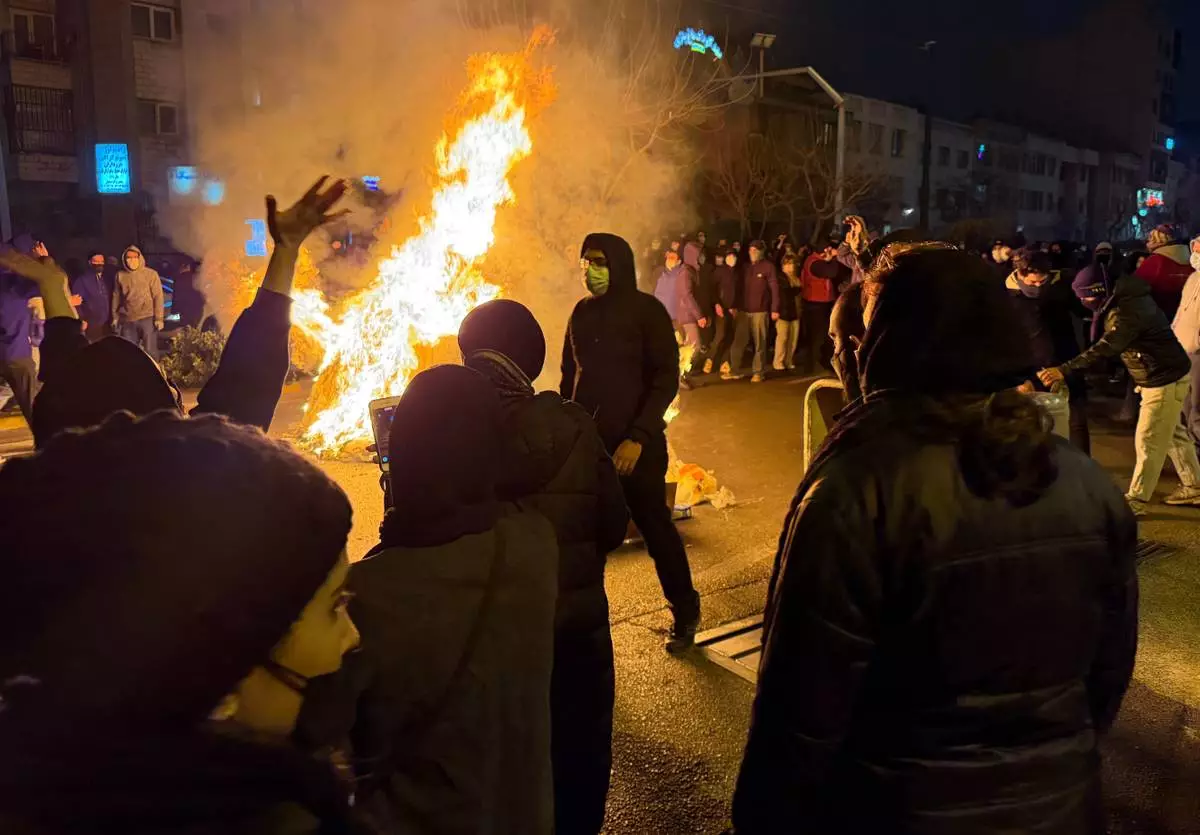
In this photo obtained by The Associated Press, Iranians attend an anti-government protest in Tehran, Iran, Friday, Jan. 9, 2026. (UGC via AP)
In this photo obtained by The Associated Press, Iranians attend an anti-government protest in Tehran, Iran, Friday, Jan. 9, 2026. (UGC via AP)

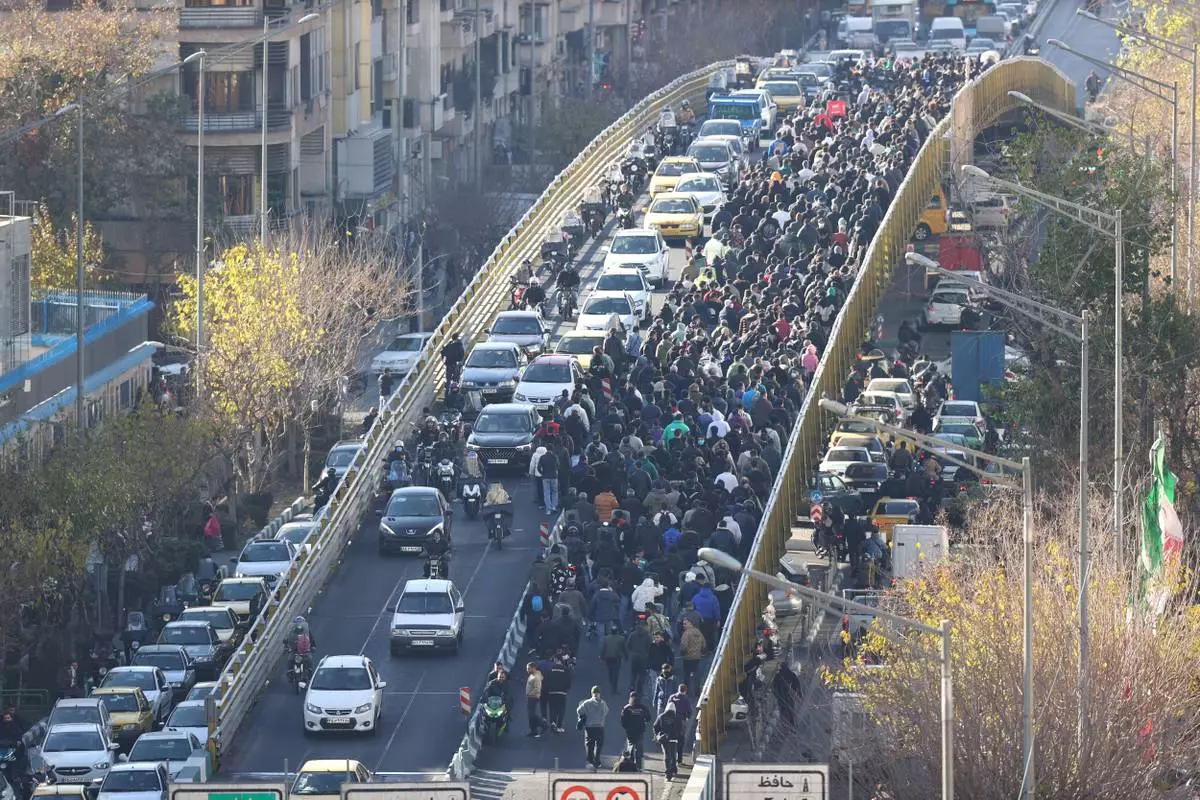
FILE - Protesters march on a bridge in Tehran, Iran, on Dec. 29, 2025. (Fars News Agency via AP, File)
FILE - Protesters march on a bridge in Tehran, Iran, on Dec. 29, 2025. (Fars News Agency via AP, File)

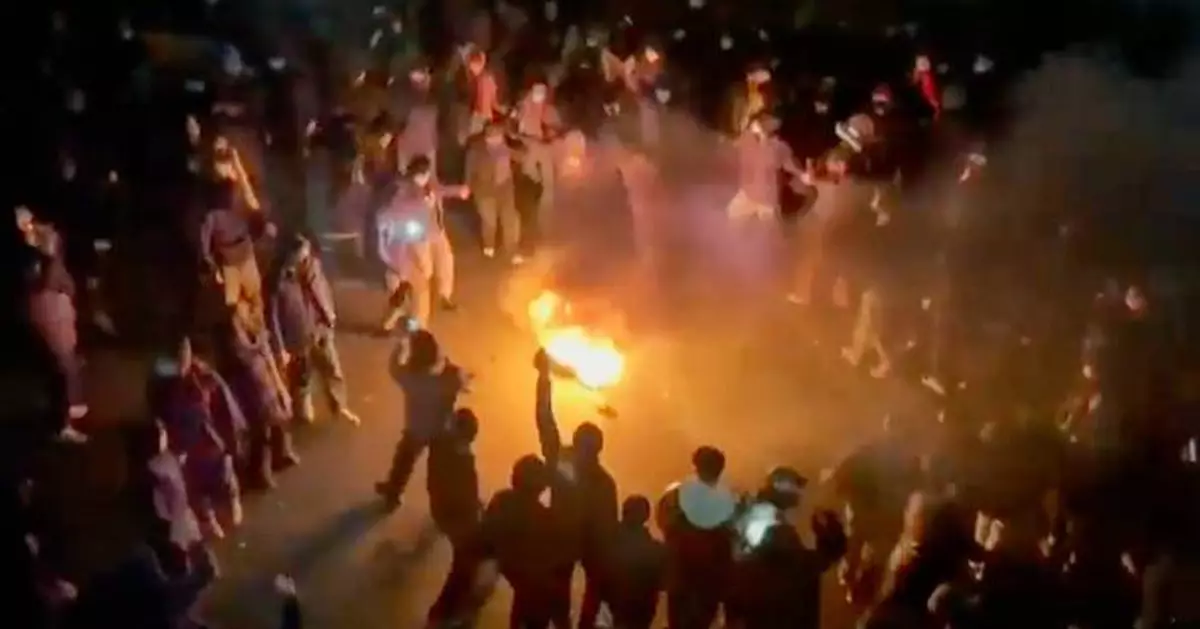
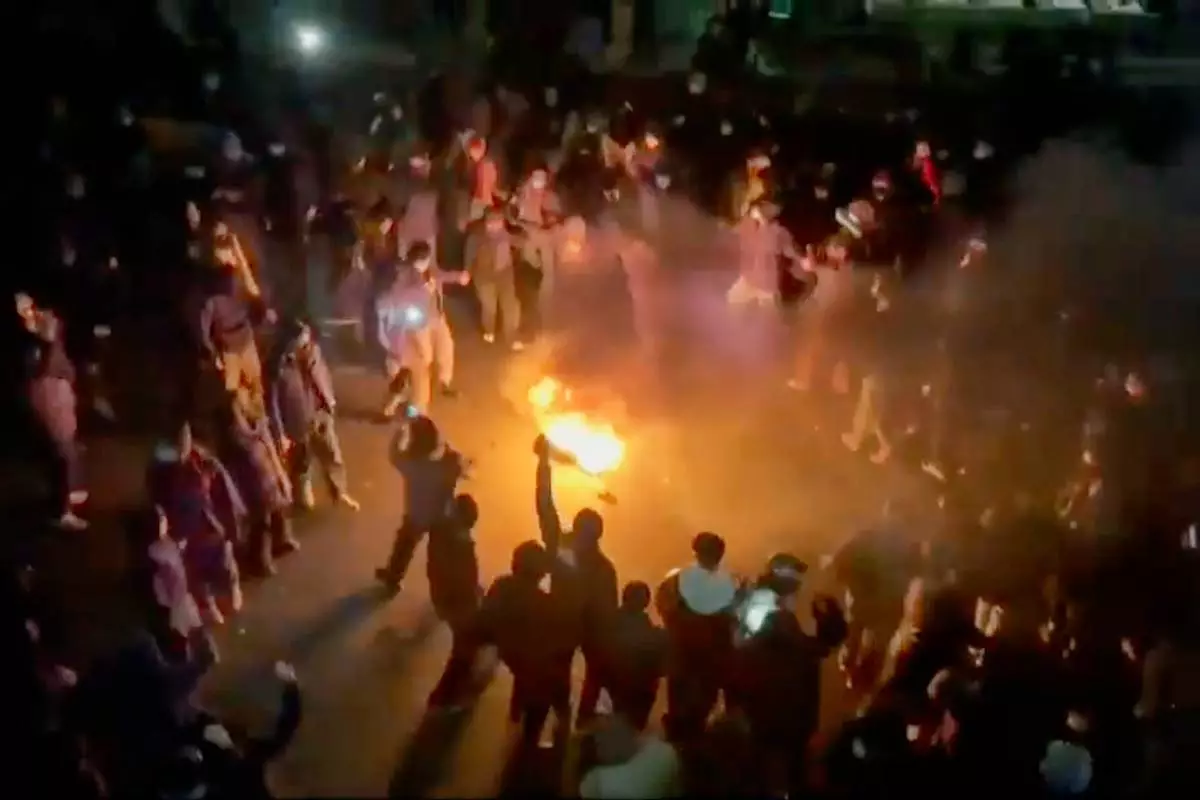
FILE - This frame grab from footage circulating on social media shows protesters dancing and cheering around a bonfire as they take to the streets despite an intensifying crackdown as the Islamic Republic remains cut off from the rest of the world, in Tehran, Iran, Jan. 9, 2026. (UGC via AP, File)
FILE - This frame grab from footage circulating on social media shows protesters dancing and cheering around a bonfire as they take to the streets despite an intensifying crackdown as the Islamic Republic remains cut off from the rest of the world, in Tehran, Iran, Jan. 9, 2026. (UGC via AP, File)
WASHINGTON (AP) — President Donald Trump was consulting with his national security team Tuesday about next steps with Iran as he looked to get a better understanding of the number of Iranian citizens who have been killed and arrested in more than two weeks of unrest throughout the country.

Trump said he believes that the killing is “significant” and that his administration would “act accordingly.” He added that he believed the Iranian government was “badly misbehaving.”

But the president said he has yet to receive a confirmed number of Iranians killed in the protests that began late last month, saying he has heard “five different sets of numbers” about the death toll.

Since the protests began Dec. 28, 16,700 people have been arrested and more than 2,500 have been killed, the vast majority protesters, according to the Human Rights Activists News Agency. The organization relies on a network of activists inside Iran that confirms all reported fatalities.

“The message is they’ve got to show humanity,” Trump said of the Iranian government. “They’ve got a big problem. And I hope they’re not going to be killing people.”

The comments came after Trump earlier in the day announced he was cutting off the prospect of talks with Iranian officials amid a protest crackdown, telling Iranian citizens “help is on its way.”

Trump did not offer any details about what the help would entail, but his remarks come just two days after the Republican president said Iran wants to negotiate with Washington after his threat to strike the Islamic Republic.

But Trump appeared to make an abrupt shift about his willingness to engage with the Iranian government.

“Iranian Patriots, keep protesting and take over your institutions if you can,” Trump said in speech Tuesday at an auto factory in Michigan. “Save the names of the killers and abusers that are abusing you. You are being very badly abused."

Iran's chief envoy to the United Nations, Ambassador Amir Saeid Iravani, denounced Trump's latest comments in a letter to U.N. officials as “interventionist rhetoric.”

“This reckless statement explicitly encourages political destabilization, incites and invites violence and threatens the sovereignty, territorial integrity and national security of the Islamic Republic of Iran,” Iravani wrote.

Iranian state media has aired at least 97 confessions from protesters, many expressing remorse for their actions, since the protests began, according to a rights group that is tracking the videos.

Iran alleges these confessions, which often include references to Israel or America, are proof of foreign plots behind Iran’s nationwide protests. Activists say they are coerced confessions, long a staple of Iran’s hard-line state television, the only broadcaster in the country. And these videos are coming at an unprecedented clip.

Trump, in an exchange with reporters during the factory visit, demurred when asked what kind of help he would provide.

“You’re going to have to figure that one out,” he said.

The U.S. president has repeatedly threatened Tehran with military action if his administration found the Islamic Republic was using deadly force against antigovernment protesters. Trump on Sunday told reporters he believed Iran is “starting to cross” that line and has left him and his national security team weighing “very strong options” even as he said the Iranians had made outreach efforts to the U.S.

Trump announced Monday he would slap 25% tariffs on countries doing business with Tehran “effective immediately,” but the White House has not provided details on that move. China, the United Arab Emirates, Turkey, Brazil and Russia are among economies that do business with Tehran.

Vice President JD Vance, Secretary of State Marco Rubio and key White House National Security Council officials began meeting Friday to develop options for Trump, ranging from a diplomatic approach to military strikes.

“We don’t want to see people killed and we want to see a little bit of freedom for these people," Trump said. "These people have been living in hell for a long time.”

Iran, through the country’s parliamentary speaker, has warned that the U.S. military and Israel would be “legitimate targets” if Washington uses force to protect demonstrators.

Trump said he was undeterred by threats of Iranian retaliation.

“Iran said that the last time I blew them up,” said Trump, referring to threats from the government ahead of U.S. military strikes in June on key Iranian nuclear facilities. “They better behave.”

More than 600 protests have taken place across all of Iran’s 31 provinces, the Human Rights Activists News Agency reported Tuesday.

Understanding the scale of the protests has been difficult. Iranian state media has provided little information about the demonstrations. Online videos offer only brief, shaky glimpses of people in the streets or the sound of gunfire.

Trump's push on the Iranian government to end the crackdown comes as he is dealing with a series of other foreign policy emergencies around the globe.

It’s been more than a week since the U.S. military launched a successful raid to arrest Venezuela’s Nicolás Maduro and remove him from power. The U.S. continues to mass an unusually large number of troops in the Caribbean Sea.

Trump is also focused on trying to get Israel and Hamas onto the second phase of a peace deal in Gaza and broker an agreement between Russia and Ukraine to end the nearly four-year war in Eastern Europe.

But advocates urging Trump to take strong action against Iran say this moment offers an opportunity to further diminish the theocratic government that’s ruled the country since the Islamic revolution in 1979.

The demonstrations are the biggest Iran has seen in years — protests spurred by the collapse of Iranian currency that have morphed into a larger test of supreme leader Ayatollah Ali Khamenei’s repressive rule.

Associated Press reporter Michelle L. Price contributed to this report.

Iranians attend an anti-government protest in Tehran, Iran, Friday, Jan. 9, 2026. (AP Photo)

Iranians attend an anti-government protest in Tehran, Iran, Friday, Jan. 9, 2026. (AP Photo)

Iranians attend an anti-government protest in Tehran, Iran, Friday, Jan. 9, 2026. (AP Photo)

Iranians attend an anti-government protest in Tehran, Iran, Friday, Jan. 9, 2026. (AP Photo)

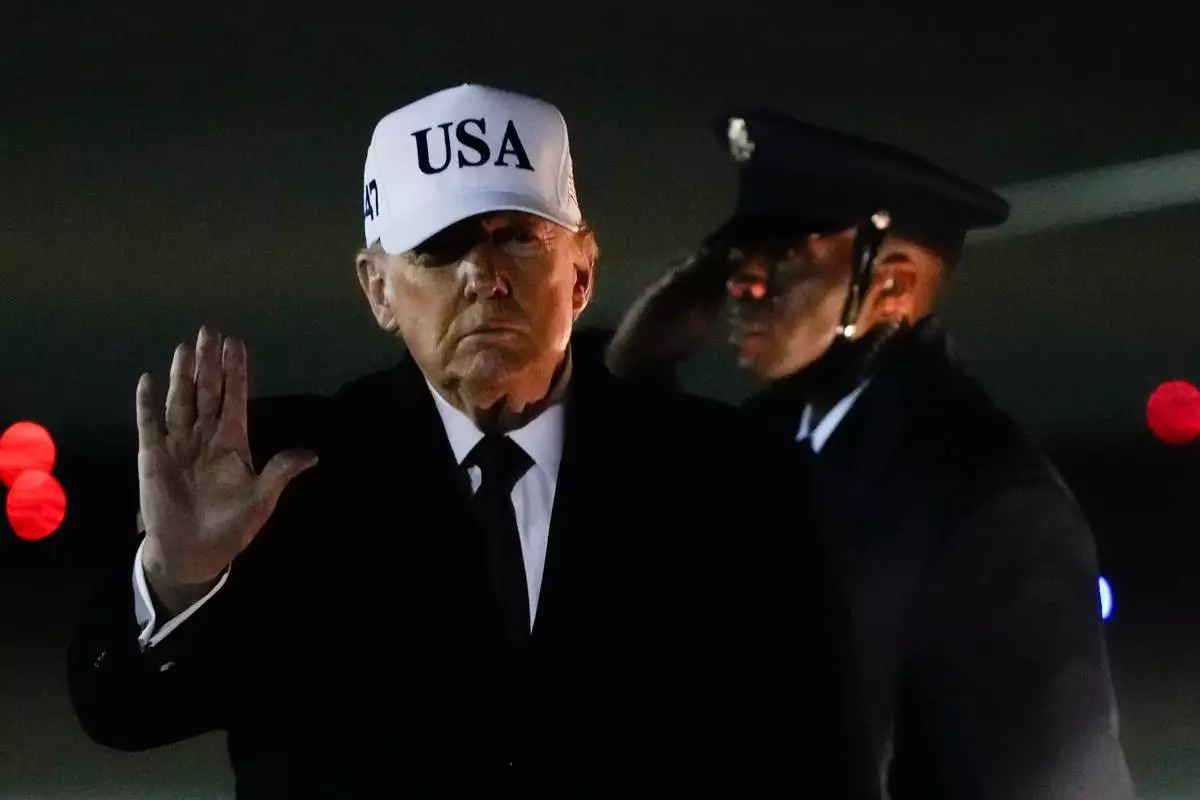
President Donald Trump waves after arriving on Air Force One from Florida, Sunday, Jan. 11, 2026, at Joint Base Andrews, Md. (AP Photo/Julia Demaree Nikhinson)

President Donald Trump waves after arriving on Air Force One from Florida, Sunday, Jan. 11, 2026, at Joint Base Andrews, Md. (AP Photo/Julia Demaree Nikhinson)

Recommended Articles