A court ruling that halted the Trump administration's tariffs has thrown a key element of the U.S. trade strategy into legal limbo, with experts warning that a drawn-out appeals process will continue to harm the country's business environment.
On May 28, a U.S. trade court ruling declared that the Trump administration's wide-ranging tariffs imposed under the International Emergency Economic Powers Act (IEEPA) are unlawful. The ruling from the New York-based Court of International Trade came after a number of lawsuits arguing Trump has overstepped his authority on imposing across-the-board duties on imports.
In light of the agreement between the U.S. and China to lift some tariffs for 90 days, many are wondering whether the legal question can be fully resolved before that deadline. According to James Viator, a professor at Loyola University College of Law, any final decision from a higher court within that time frame is highly unlikely.
"I think the 90-day thought should basically be disregarded. Because those tariffs are the major bargaining chip in President Trump's view, I think. And so those lower court opinions need to be -- from the Trump administration's viewpoint -- need to be overturned by either the appellate courts or finally by the Supreme Court because those are the two big bargaining chips,” said the legal scholar.
"And so I don't think much will happen in negotiations until those two bargaining chips come back into play. That is, if the Supreme Court reverses the lower court opinions. If the lower court's opinions are not reversed, then fast recalibration will be necessary for other bargaining chips to bring to the table. I think everyone agrees those are the two big bargaining chips that Trump is holding. Until the judicial process is finished, he doesn't know for sure whether he has those chips to play with," he said.
The uncertainty in the legal realm has meanwhile translated into wariness among American businesses and investors.
"That is definitely a self-defeating policy, in the sense of incurring a lot of harm on the U.S. businesses when it comes to business decisions. No one wants to invest at this point, no suppliers know how to rearrange their supply chain at this point, so I think that would be very damaging given that this is going to be a drawn-out process as well," said Yan Liang, a professor of economics at Willamette University.
In last week's ruling, a panel of three judges held that the executive orders entailing fentanyl-related tariffs on goods from Canada, Mexico and China as well as the "worldwide, retaliatory" tariffs announced on April 2 "will be vacated and their operation permanently enjoined."
The complaint lodged by a group of small businesses argued that the IEEPA does not authorize the U.S. president to impose across-the-board tariffs nor authorize tariffs at all.
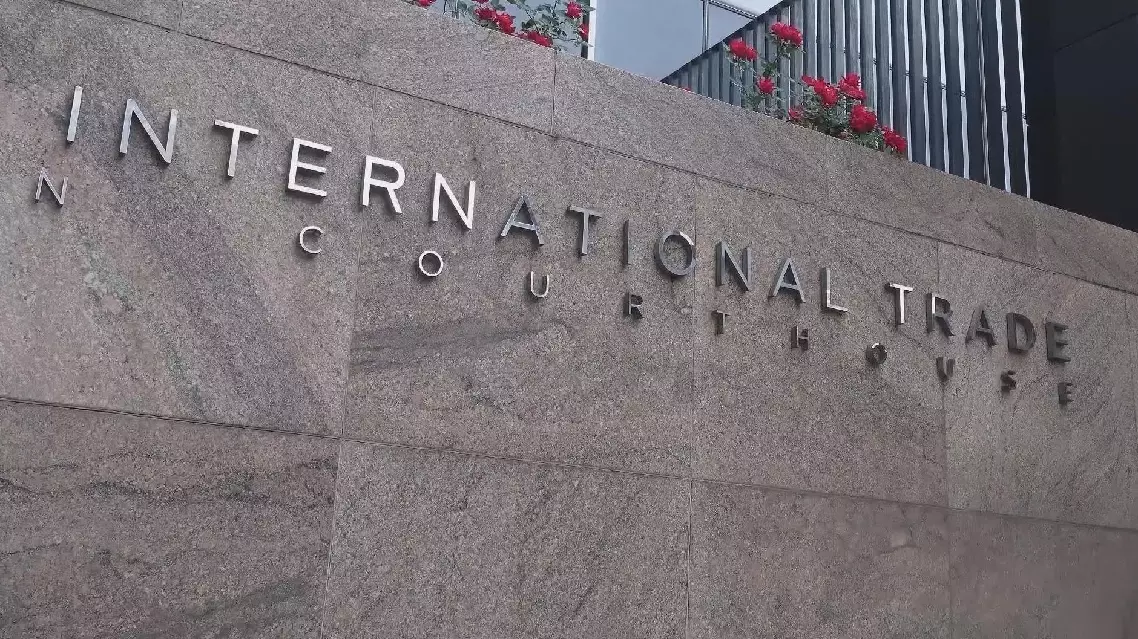
Doubt cast on Trump's trade leverage after court ruling halts tariffs