PARIS (AP) — The dream run continues for the 361st-ranked Loïs Boisson at Roland-Garros.
After taking down third-seeded Jessica Pegula in the previous round, the French wild-card entry upset sixth-ranked Mirra Andreeva 7-6 (6), 6-3 on Wednesday in front of a boisterous and largely partisan crowd to reach the semifinals of the French Open.
Click to Gallery
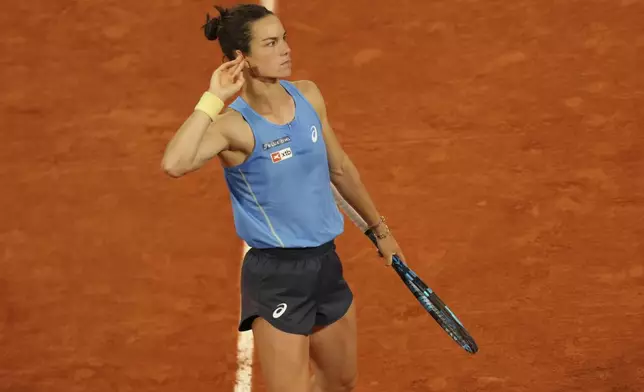
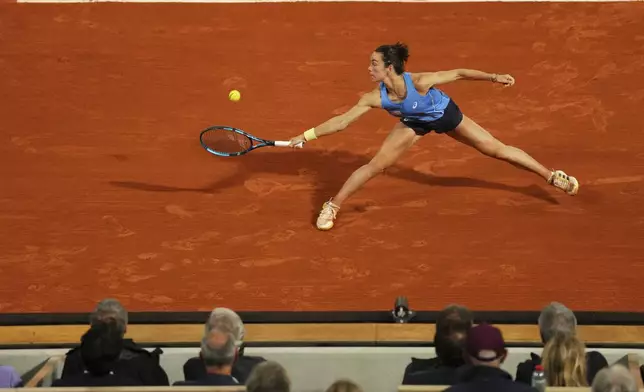
France's Lois Boisson celebrates after winning the first set against Russia's Mirra Andreeva during their quarterfinal match of the French Tennis Open at the Roland-Garros stadium in Paris, Wednesday, June 4, 2025. (AP Photo/Aurelien Morissard)
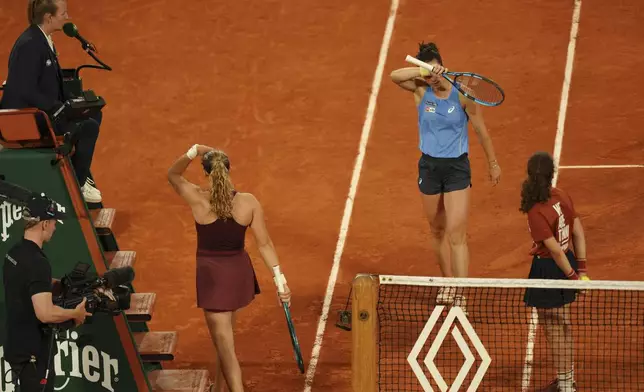
France's Lois Boisson, centre right, and Russia's Mirra Andreeva attend a break during their quarterfinal match of the French Tennis Open at the Roland-Garros stadium in Paris, Wednesday, June 4, 2025. (AP Photo/Aurelien Morissard)
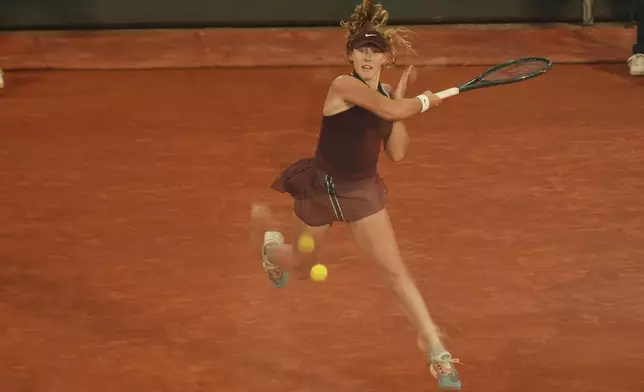
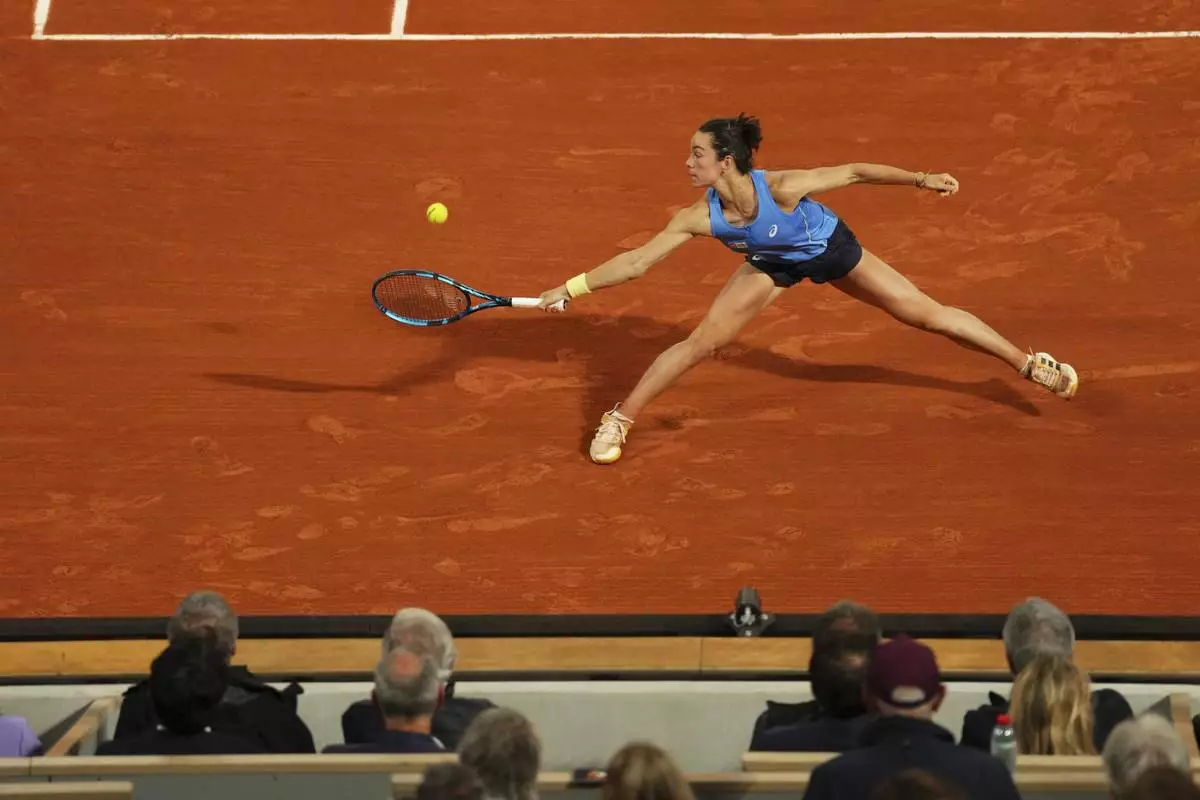
Russia's Mirra Andreeva is reflected in a glass as she serves against France's Lois Boisson during their quarterfinal match of the French Tennis Open at the Roland-Garros stadium in Paris, Wednesday, June 4, 2025. (AP Photo/Aurelien Morissard)
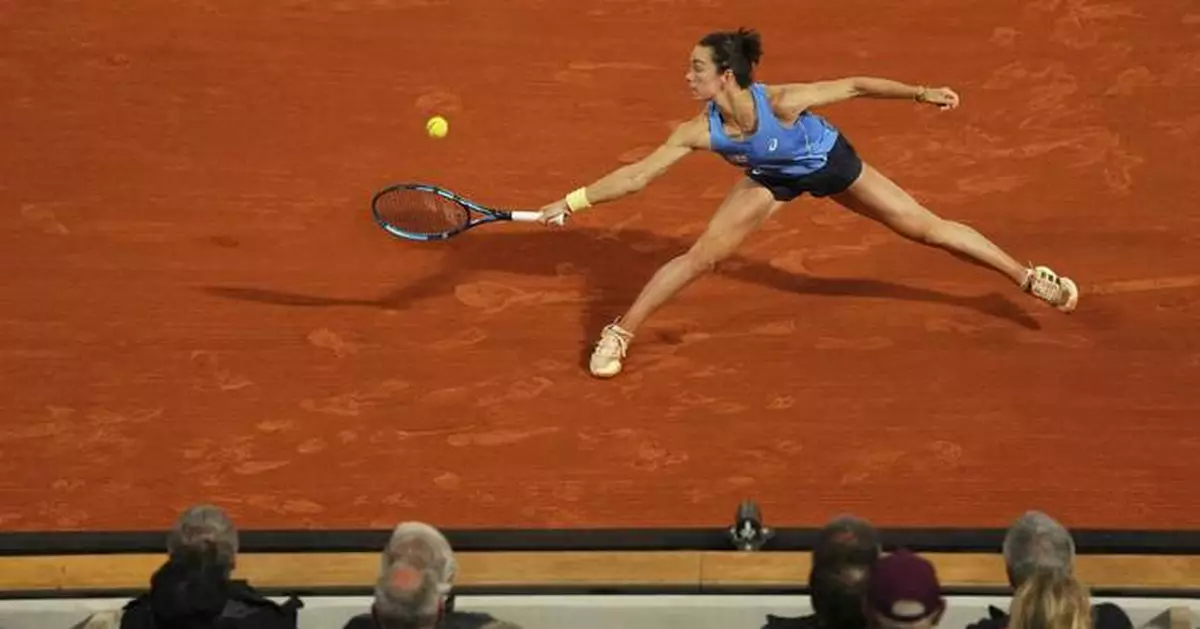
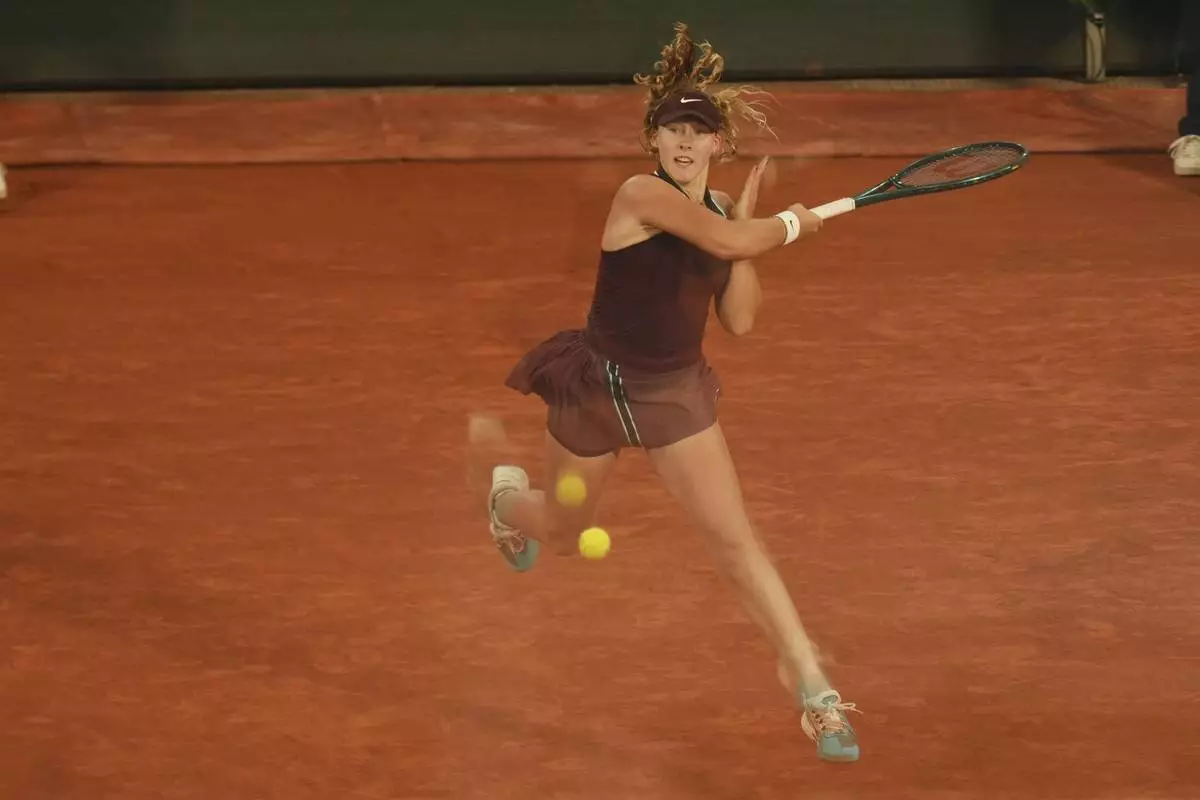
France's Lois Boisson plays a shot against Russia's Mirra Andreeva during their quarterfinal match of the French Tennis Open at the Roland-Garros stadium in Paris, Wednesday, June 4, 2025. (AP Photo/Aurelien Morissard)
A year ago, Boisson tore her left ACL just a week before her home Grand Slam tournament started, preventing her from accepting an invitation to play. On Thursday, she will have the chance to advance to the final when she takes on No. 2 seed Coco Gauff.
“It's incredible, no matter what, given what happened last year and all the difficult moments I went through,” Boisson said during her post-match interview.
The 22-year-old player was largely unknown outside tennis circles before capturing the spotlight in Paris. She is appearing in her first Grand Slam main draw and became the first woman to reach the semifinals at her debut major tournament since 1989, when Monica Seles and Jennifer Capriati both did it at the French Open.
She is also the youngest French semifinalist at a Grand Slam event since Amélie Mauresmo at Wimbledon in 1999. The last Frenchwoman to win the title at Roland-Garros was Mary Pierce, 25 years ago.
“I don’t think it’s a miracle," Boisson said. "It’s just the result of hard work. Nothing else.”
Boisson's performance even impressed the top-ranked male player, Jannik Sinner.
“I think that’s exactly what France needs, something very new, very special, great mentality,” Sinner said after moving into the semifinals. “The level she produces is amazing. Very consistent. Very clay court style.”
Sinner said he warmed up with Boisson on Wednesday.
“We hit some balls. It was a very consistent warmup for a different game style for a woman, because the ball is quite high and quite spinny,” he said. “Physically very strong. She deserves to be in the position where she is right now, and we wish her all the best for the future.”
Under the closed roof of court Philippe-Chatrier, Andreeva repeatedly showed her frustration with the crowd as fans chanted “Loïs, Loïs” between points, waved Tricolor flags, shouted during play, and even applauded the Russian teenager’s errors.
The first set was marked by momentum swings and brilliant shot-making from both players. Boisson twice found herself down a break but fought back each time, using heavy spin and deep groundstrokes to trouble her 18-year-old opponent.
Andreeva grew visibly tense on key points, struggling to maintain her composure and wasting a chance to close out the first set when up 5-3. Despite saving three set points and forcing a tiebreaker, she ultimately handed the set to Boisson with two consecutive backhand errors.
Andreeva responded strongly at the start of the second set, racing to a 3-0 lead. But Boisson broke back with a thunderous backhand winner down the line, drawing a roar of approval from the lively crowd.
Andreeva received a warning after netting a routine forehand volley and angrily hitting a ball into the stands. She then argued with the umpire over a call that gave Boisson three break points. Andreeva saved the first one with a forehand winner then double-faulted, and never recovered.
“The first set was super intense, and I was really struggling at the start of the second, but I managed to regroup and finish like that,” said Boisson, who will make a big jump in the rankings.
Having reached a career high of No. 152 last year before her knee injury, Boisson will climb at least to No. 68 on Monday. And that could be even higher if she manages to pull off a third straight shocker — against Gauff in the semifinals.
“Every kid who plays tennis dreams to win a Slam,” Boisson said. “More for French players, to win Roland-Garros. For sure I will go for the dream, because my dream is to win it, not to be in the semifinals.”
An unseeded player has reached the French Open final twice in the last four years: eventual champion Barbora Krejcikova in 2021, and Karolina Muchova in 2023.
Andreeva, a semifinalist in Paris last year, said she struggled to deal with the pressure of a hostile crowd, sometimes making the wrong tactical decisions.
“Today was one of those days when it’s just a bit harder to deal with everything that’s going on in the court,” she said.

France's Lois Boisson celebrates after winning the first set against Russia's Mirra Andreeva during their quarterfinal match of the French Tennis Open at the Roland-Garros stadium in Paris, Wednesday, June 4, 2025. (AP Photo/Aurelien Morissard)
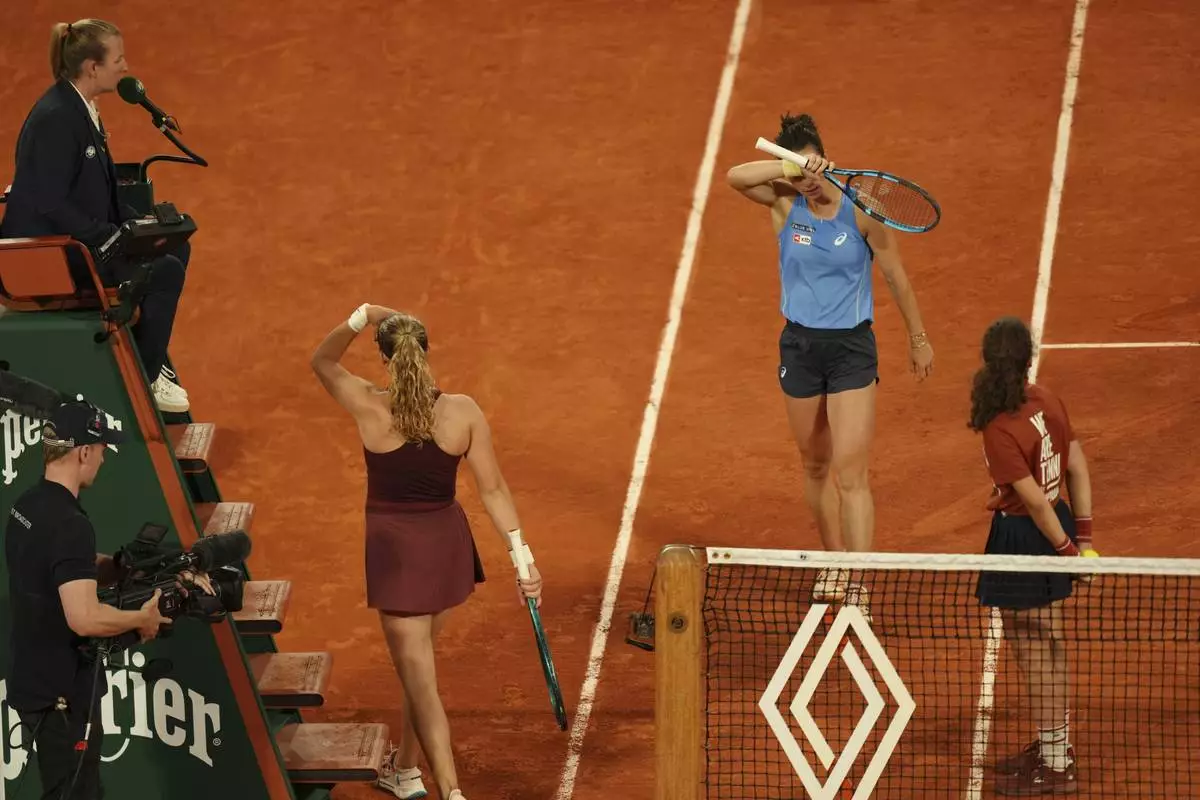
France's Lois Boisson, centre right, and Russia's Mirra Andreeva attend a break during their quarterfinal match of the French Tennis Open at the Roland-Garros stadium in Paris, Wednesday, June 4, 2025. (AP Photo/Aurelien Morissard)
Russia's Mirra Andreeva is reflected in a glass as she serves against France's Lois Boisson during their quarterfinal match of the French Tennis Open at the Roland-Garros stadium in Paris, Wednesday, June 4, 2025. (AP Photo/Aurelien Morissard)
France's Lois Boisson plays a shot against Russia's Mirra Andreeva during their quarterfinal match of the French Tennis Open at the Roland-Garros stadium in Paris, Wednesday, June 4, 2025. (AP Photo/Aurelien Morissard)
DUBAI, United Arab Emirates (AP) — Semiofficial news agencies in Iran published a chart Thursday suggesting the country’s paramilitary Revolutionary Guard put sea mines into the Strait of Hormuz during the war, in a message that may be intended to pressure the U.S. as uncertainty hangs over a days-old two-week ceasefire and further negotiations are expected in Pakistan.
The shaky ceasefire has been largely holding between the U.S., Israel and Iran, although Tehran and Washington have offered vastly different explanations of the initial terms.
Israel insists the agreement does not apply to their war against Hezbollah militants in Lebanon and have escalated deadly strikes there, leading Iran to claim it is violating the deal. Meanwhile, Iran said it had won agreement that it would control the Strait of Hormuz, charge tolls and enrich uranium — while Trump said the deal called for the strait to be reopened and Iran to hand over its uranium stockpile.
The chart of the Strait of Hormuz was released by the ISNA news agency, as well as Tasnim, which is believed to be close to the Guard. They showed a large circle marked “danger zone” in Farsi over the Traffic Separation Scheme, which was the route ships take through the strait, the narrow mouth of the Persian Gulf through which 20% of all oil and natural gas traded once passed.
The chart suggested ships travel further north through waters closer to Iran’s mainland near Larak Island, a route some ships were observed taking during the war. It was dated from Feb. 28 until Thursday, April 9, and it was unclear if the Guard had cleared any mining on the route since then.
Iran’s deputy foreign minister, Saeed Khatibzadeh, said his country will allow ships to pass through the Strait of Hormuz in accordance with “international norms and international law” once the United States ends its “aggression” in the Middle East and Israel stops attacking Lebanon.
Khatibzadeh told the BBC on Thursday that Iran had closed the strait after U.S. ally Israel committed an “intentional grave violation of the ceasefire.”
He added that "we have shown to everybody that energy security is pivotal for Iran, is pivotal for this body of water in the Persian Gulf, and we are going to be abided by the international norms and international law.”
Oil rose again to above $97 a barrel and Asian stocks were trading lower Thursday on skepticism over the ceasefire. Brent crude, the international standard, was up 2.9% to $97.46 per barrel. It had fallen briefly to below $92 following the temporary ceasefire announcement.
Ship-tracking data from Kpler showed only four vessels with their Automatic Identification System trackers on passed through the Strait of Hormuz on Wednesday, the first day of the ceasefire. However, that does not include so-called “dark fleet” vessels, which travel with their AIS trackers turned off. Many of those “dark fleet” ships carry sanctioned Iranian crude oil out to the open market.
U.S. President Donald Trump posted a statement insisting that his surge of warships and troops will remain around Iran “until such time as the REAL AGREEMENT reached is fully complied with.”
Trump’s comments on his Truth Social platform appeared to be a way to pressure Iran.
“If for any reason it is not, which is highly unlikely, then the ‘Shootin’ Starts,’ bigger, and better, and stronger than anyone has ever seen before,” Trump wrote.
He also insisted Iran would not be able to build nuclear weapons and “the Strait of Hormuz WILL BE OPEN & SAFE.”
The U.S. and Iran both claimed victory after reaching the ceasefire agreement, and world leaders expressed relief. But more drones and missiles hit Iran and Gulf Arab countries after the deal was announced.
Israel also intensified its attacks on the Hezbollah militant group in Lebanon on Wednesday, hitting commercial and residential areas in Beirut. At least 182 people were killed in the deadliest day of fighting there. First responders searched overnight for missing people still under the rubble after the deadly Israeli strikes.
Israel said Thursday it had killed an aide to Hezbollah leader Naim Kassem in its airstrikes on Beirut. It identified the man killed as Ali Yusuf Harshi, a secretary and nephew to Kassem. Hezbollah did not immediately respond to a request for comment.
Lebanon's state-run National News Agency reported Thursday that an Israeli strike overnight had killed at least seven people in southern Lebanon. The Israeli military did not immediately acknowledge the strike.
The violence threatens to scuttle what U.S. Vice President JD Vance called a “fragile” deal.
Iran's parliament speaker said Wednesday that planned talks were “unreasonable” because Washington had broken three of Tehran’s 10 conditions for an end to the fighting. In a social media post, Mohammad Bagher Qalibaf objected to Israeli attacks on Hezbollah, an alleged drone incursion into Iranian airspace after the ceasefire took effect and U.S. refusal to accept any Iranian enrichment capabilities in a final agreement.
Iranian Foreign Minister Abbas Araghchi insisted an end to the war in Lebanon was part of the ceasefire deal, but Israeli Prime Minister Benjamin Netanyahu and Trump said the truce did not cover Lebanon. When the deal was announced, the prime minister of Pakistan, which served as a mediator, said in a social media post that it applied to “everywhere including Lebanon and elsewhere.”
A New York-based think tank warned the ceasefire “hovers on the verge of collapse.”
The Soufan Center said Israel's strikes on Lebanon on Wednesday added to the risk the deal would fall apart.
“Even if Lebanon was formally outside the deal, the scale of Israel’s strikes was likely to be viewed as escalatory, nonetheless,” it wrote in an analysis published Thursday. “Israel’s strikes can be understood both as an effort to drive a wedge between Iran and its proxies and as a response to being allegedly sidelined in the original ceasefire discussions.”
The White House said that Vice President JD Vance would lead the U.S. delegation to talks in Islamabad aimed at ending the war, which are set to start Saturday.
Iran's ambassador in Islamabad, Reza Amiri Moghadam, wrote on X that Iran's negotiating team would arrive in the Pakistani capital Thursday night, but later deleted the post without providing further comment.
His initial post said the talks would be "based on 10 points proposed by Iran.”
Those include Iran enriching uranium, maintaining its control of the Strait of Hormuz and other issues that have been nonstarters in the past for Trump. The White House has repeatedly described the 10 points issued by Iran as false.
Becatoros reported from Athens, Greece. Chan Ho-him in Hong Kong, Zeke Miller in Washington and Kareem Chehayeb and Hussein Malla contributed to this report.
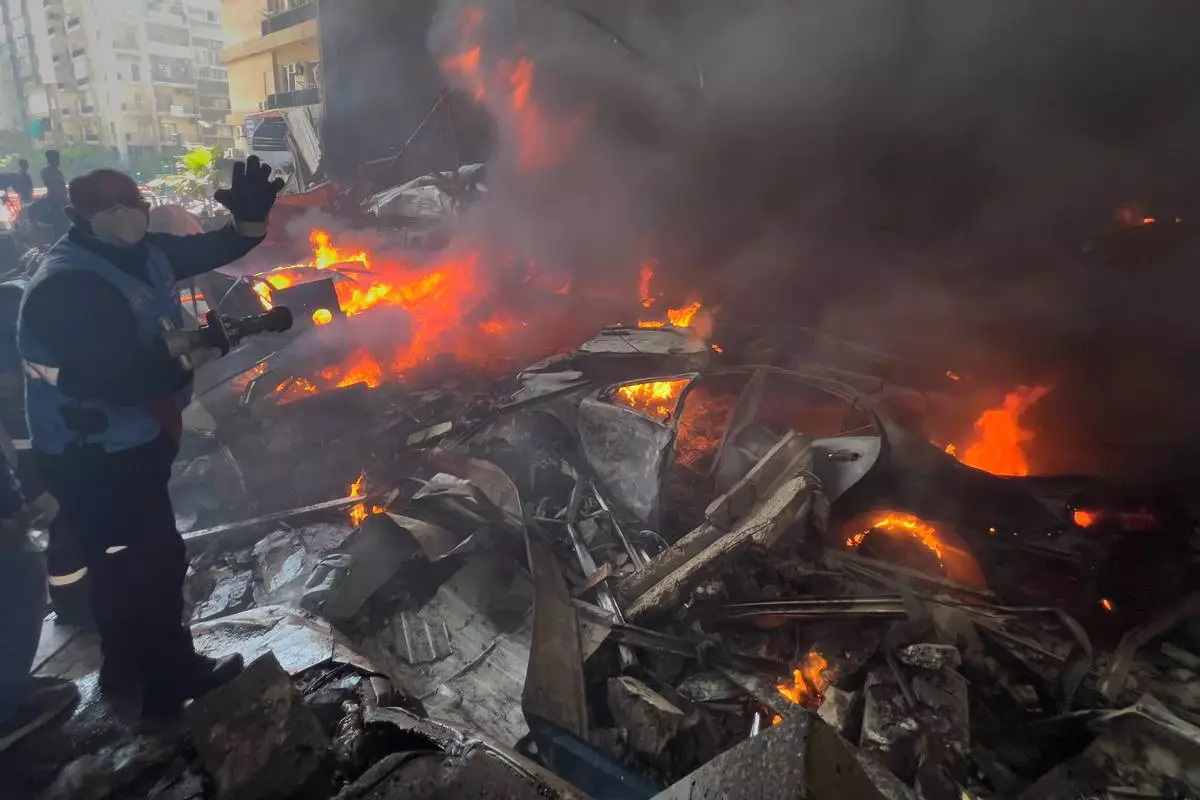
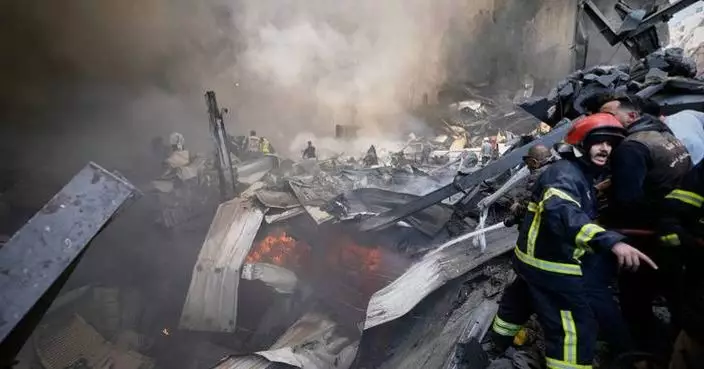
A rescue worker extinguishes burning cars at the site of an Israeli airstrike in central Beirut, Lebanon, Wednesday, April 8, 2026. (AP Photo/Hussein Malla)
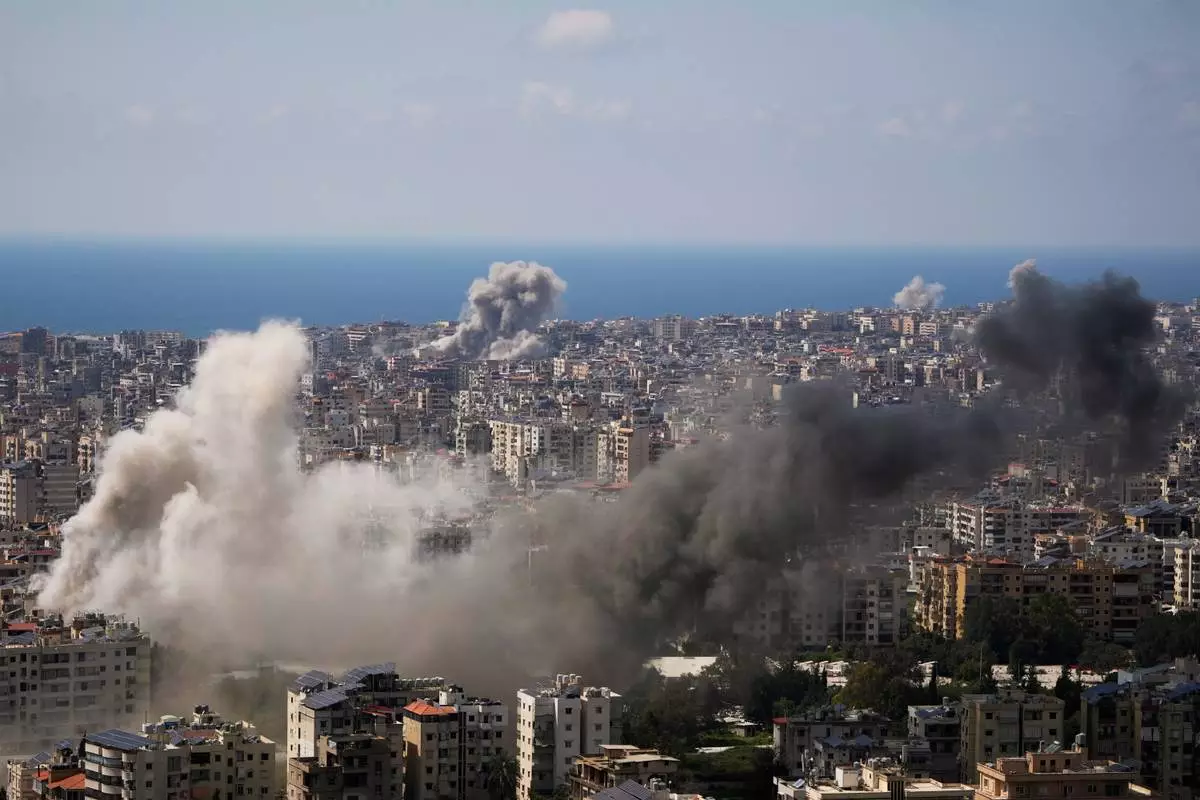
Smoke rises following several Israeli airstrikes in Beirut, Lebanon, Wednesday, April 8, 2026. (AP Photo/Hassan Ammar)
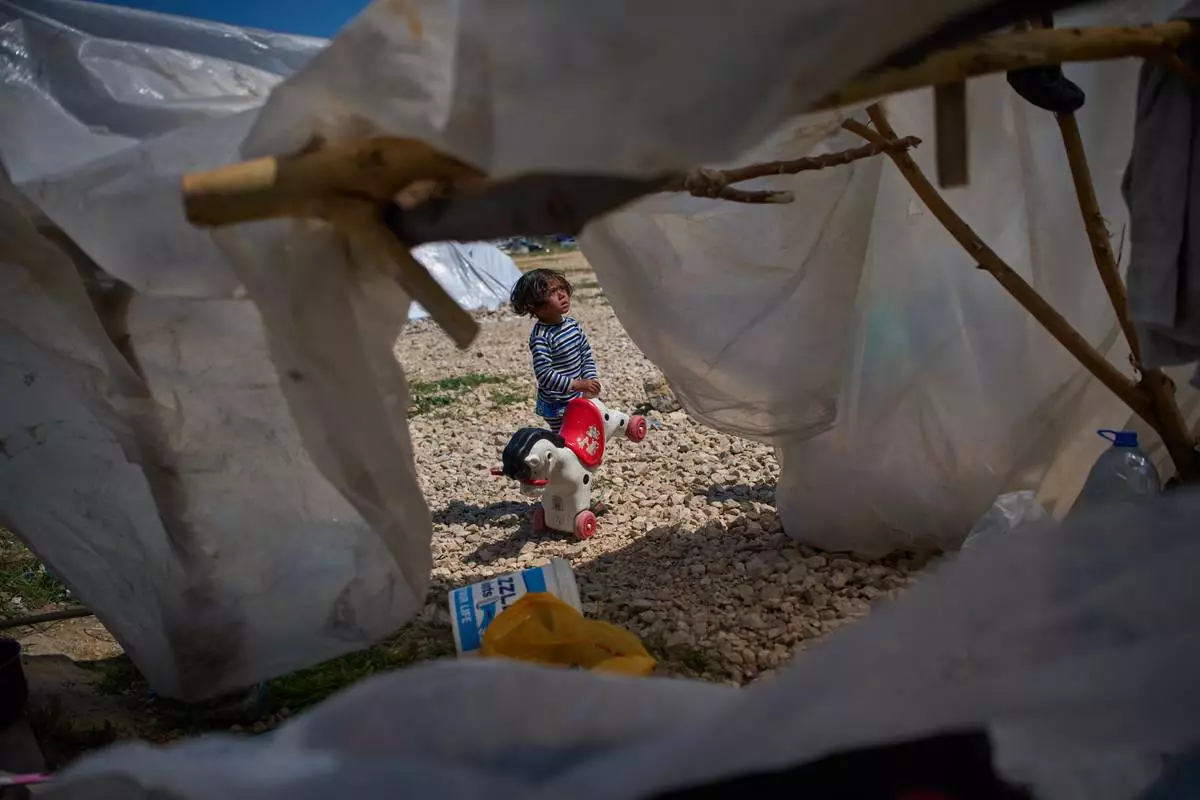
Ali, 4, holds a toy horse next to the tent his family uses as a shelter after fleeing Israeli bombardment in southern Lebanon, in Beirut, Lebanon, Wednesday, April 8, 2026. (AP Photo/Emilio Morenatti)
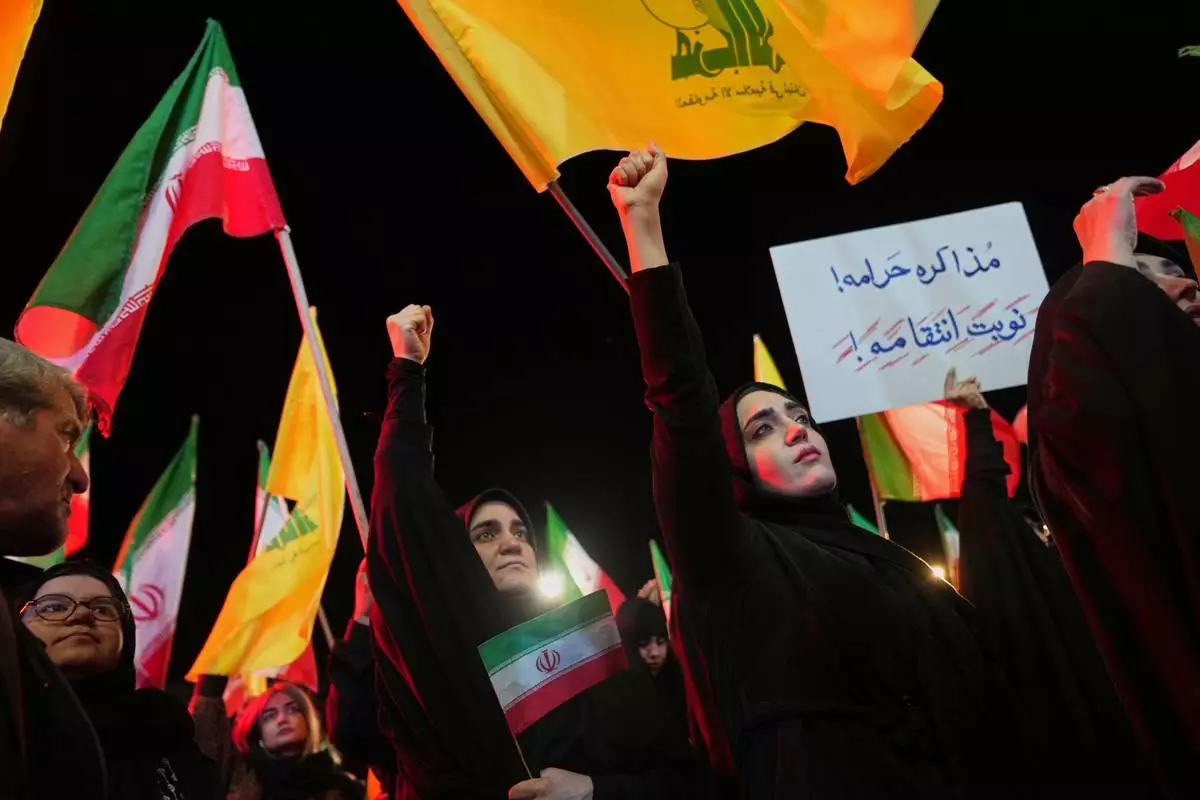
Government supporters gather ahead of the funeral procession for Maj. Gen. Majid Khademi, head of intelligence for Iran's paramilitary Revolutionary Guard, in Tehran, Iran, Wednesday, April 8, 2026. (AP Photo/Francisco Seco)
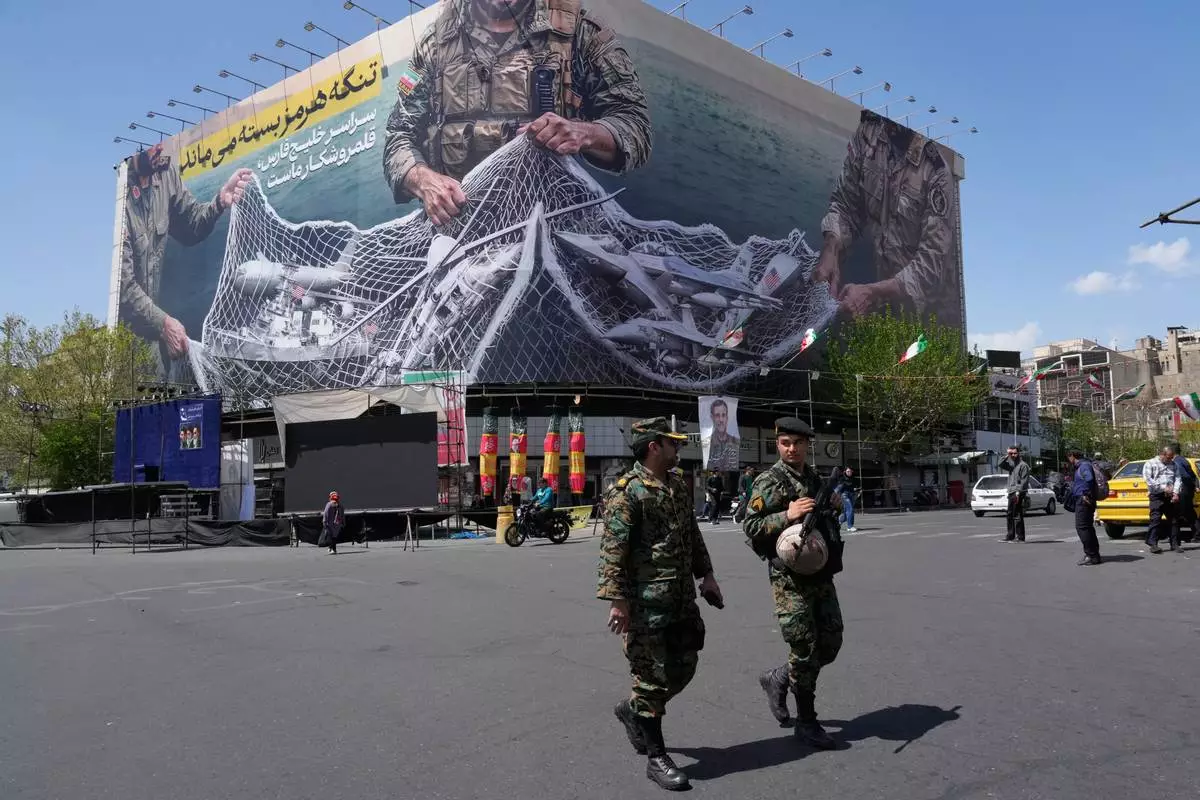
FILE - Two police officers walk in front of an anti-U.S. billboard depicting American aircraft being caught by Iranian armed forces in a fishing net beneath the words in Farsi, "The Strait of Hormuz will remain closed, The entire Persian Gulf is our hunting ground," in Tehran, Iran, Sunday, April 5, 2026. (AP Photo/Vahid Salemi, File)