BOSTON (AP) — Los Angeles Angels pitcher Tyler Anderson got into a shouting match with Red Sox first base coach José Flores on the field at Fenway Park before Wednesday’s game. Neither team would discuss what it was about.
A video posted on social media showed Anderson and Flores going face-to-face during batting practice. Angels pitching coach Barry Enright also joined the argument before Red Sox third base coach Kyle Hudson came in and tried to break it up.
The video also showed Red Sox manager Alex Cora speaking calmly with Anderson, who gave up five runs in 4 1/3 innings against Boston on Monday night.
Asked what the brouhaha was about, Cora said, “Just baseball talk. Disagreements that happened during the series, but everything’s good.” He declined to elaborate.
The Angels did not make Anderson or Enright available to reporters after the game, which Boston won 11-9, referring questions to manager Ron Washington. Washington also would not get into specifics.
AP MLB: https://apnews.com/hub/mlb

Boston Red Sox manager Alex Cora walks to the mound to make a pitching change during the sixth inning of a baseball game against the Milwaukee Brewers, Tuesday, May 27, 2025, in Milwaukee. (AP Photo/Aaron Gash)

Los Angeles Angels starting pitcher Tyler Anderson delivers during the fifth inning of a baseball game against the Boston Red Sox, Monday, June 2, 2025, in Boston. (AP Photo/Robert F. Bukaty)
This is the sun's time to shine: Sunday is the longest day of the year in the Northern Hemisphere.
Sunday is the solstice, marking the start of astronomical summer north of the equator. It’s the opposite in the Southern Hemisphere, where it is the shortest day of the year and winter will start.
The word “solstice” comes from the Latin words “sol,” for sun, and “stitium,” which can mean “pause” or “stop.” The summer solstice is the end of the sun’s annual march higher in the sky, when it makes its longest, highest arc. The bad news for sun lovers: It then starts retreating and days will get a little shorter every day until late December.
People have marked solstices for eons with festivals and monuments, including Sweden's midsummer eve celebrations and Stonehenge, which was designed to align with the sun’s paths at the solstices.
Here’s what to know about the Earth’s orbit.
As the Earth travels around the sun, it does so at an angle, making the sun’s warmth and light fall unequally on the northern and southern halves of the planet for most of the year.
The solstices mark the times when the Earth is tipped most extremely either toward or away from the sun. This means the hemispheres are getting very different amounts of sunlight, and days and nights are at their most unequal.
At the Northern Hemisphere’s summer solstice, the Earth’s upper half is leaning toward the sun, creating the longest day and shortest night of the year. The summer solstice falls between June 20 and 22. This year it’s June 21.
The opposite happens at the Northern Hemisphere winter solstice: the Earth’s upper half leans the furthest away from the sun, leading to the shortest day and longest night of the year. The winter solstice falls between Dec. 20 and 23.
During the equinox, the Earth’s tilt is neither toward the sun nor away from the sun, so both the northern and southern hemispheres get an equal amount of sunlight. The sun rises almost exactly due east and it sets almost exactly due west.
The word equinox comes from two Latin words meaning equal and night. That’s because on the equinox, day and night last almost the same amount of time — though one may get a few extra minutes, depending on where you are on the planet.
The Northern Hemisphere’s fall — or autumnal — equinox can land between Sept. 21 and 24, depending on the year. Its spring — or vernal — equinox can land between March 19 and 21. The exact time of the equinox is the moment the sun is directly overhead at the equator.
These are just two different ways to carve up the year.
While astronomical seasons depend on how the Earth moves around the sun, meteorological seasons are defined by the weather. Meteorologists break down the year into three-month seasons based on annual temperature cycles. By that calendar, spring starts on March 1, summer on June 1, fall on Sept. 1 and winter on Dec. 1.
The Associated Press Health and Science Department receives support from the Howard Hughes Medical Institute’s Department of Science Education and the Robert Wood Johnson Foundation. The AP is solely responsible for all content.

FILE - Kansas City Royals second baseman Michael Massey (19) and shortstop Bobby Witt Jr., right, return to the dugout during the fourth inning of a baseball game against the Houston Astros, Friday, June 12, 2026, in Kansas City, Mo. (AP Photo/Charlie Riedel, File)

FILE - Soccer fans sit on a bench overlooking Lumen Field stadium at sunset during the 2026 World Cup in Seattle, Saturday, June 13, 2026. (AP Photo/Manu Fernandez, File)
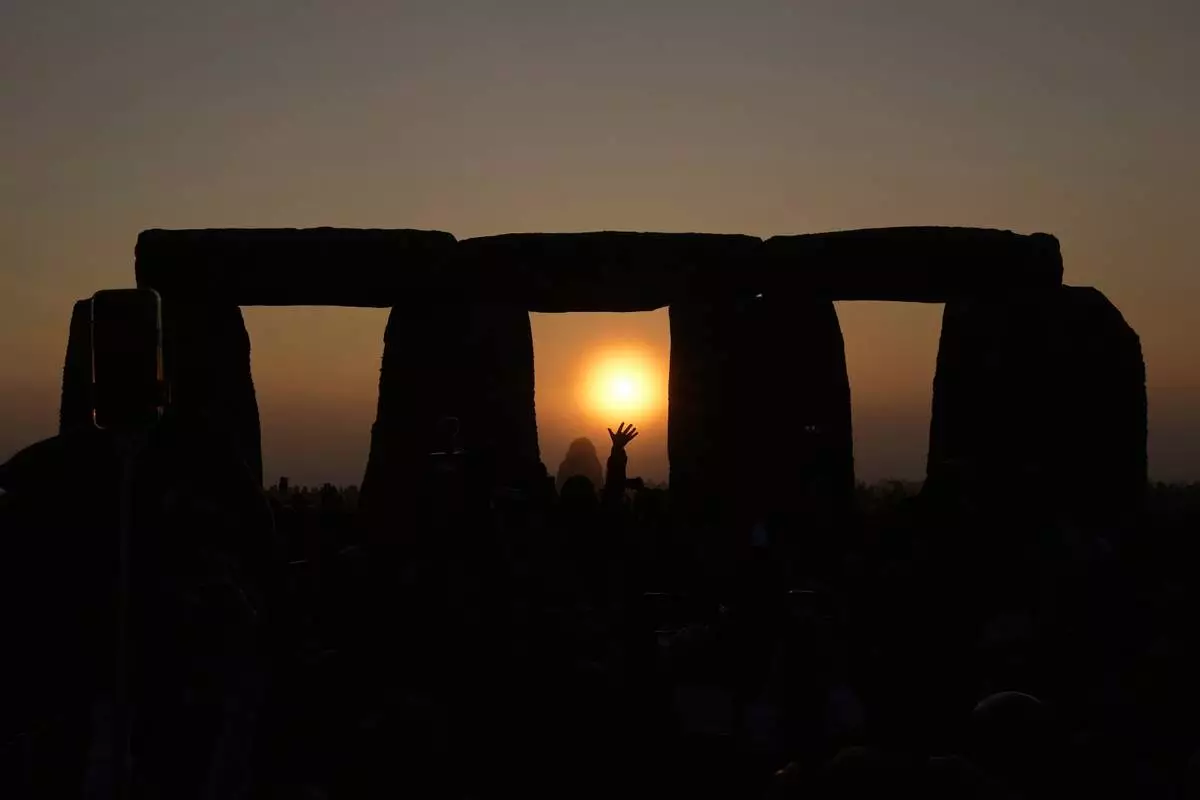
FILE - Revelers gather at the ancient stone circle Stonehenge to celebrate the Summer Solstice, the longest day of the year, near Salisbury, England, Wednesday, June 21, 2023. (AP Photo/Kin Cheung, File)