Greek winemakers are bracing for potential disruptions in the wake of U.S. President Donald Trump's sweeping tariffs on European Union exports.
As May and June are typically the critical period for Greek grapes to bloom and bear fruit, production is the biggest worry for local winemakers. This year, the so-called "reciprocal tariffs" implemented by the Trump administration are adding to their concerns.
George Lazaridis is in charge of Domaine Costa Lazaridi S.A., a winery located in the northern suburbs of Athens producing about 1.1 million bottles of wine annually. About 40 percent of the bottles are exported, with the U.S. as its second-largest export market.
"The United States is one of our main markets because there are a lot of Greeks there that work there, that have restaurants, that have wholesalers and support our Greek products," he said.
This March, Trump threatened a 200-percent tariff on all alcohol imports from the EU. Later in April, when the U.S. announced the implementation of the reciprocal tariff policy on many countries and regions, it set tariff rates for the EU was 20 percent.
Recently, Trump called for a 50-percent tariff on the EU on the grounds that there was no progress in negotiations between the U.S. and the bloc, but then postponed the implementation of the tariff rate until July 9.
The ever-changing tariff threats have left Greek winemakers frustrated.
"We live in big fear for the future. With this high input of tariffs, we will not be able to absorb it, (even if we) make a big change," said Lazaridis.
When tariffs are imposed on basic agricultural products such as edible oil, vegetables and fruits, producers are not actually the ones who suffer the biggest losses, because the rising prices will eventually be passed on to consumers. However, Lazaridis explained that wine may be impacted differently.
"With all these tariffs input to the U.S. citizens, the products that are first in need will absorb the majority of the income of the consumers. So the consumers are going to be a little bit reluctant to buy expensive Greek wine," he said.
Lazaridis said Greek winemakers are exploring other markets outside the U.S., with Europe and Asia being their main focus.
However, the U.S. accounts for 17 percent of Greek wine exports, making it the second-largest export destination for Greek wine. Such a large market share is difficult to find a substitute in the short term.
"Now that we see these tariffs coming into effect, we will take action even faster. We'll try to find new markets as fast as possible to avoid loss in the percentage of our sales," said the winemaker.
As the U.S. imposes high tariffs across the EU, competition among the bloc's wine producers will become more intense. Wine-producing countries such as France, Italy and Spain could squeeze out Greek sales in other countries and regions.
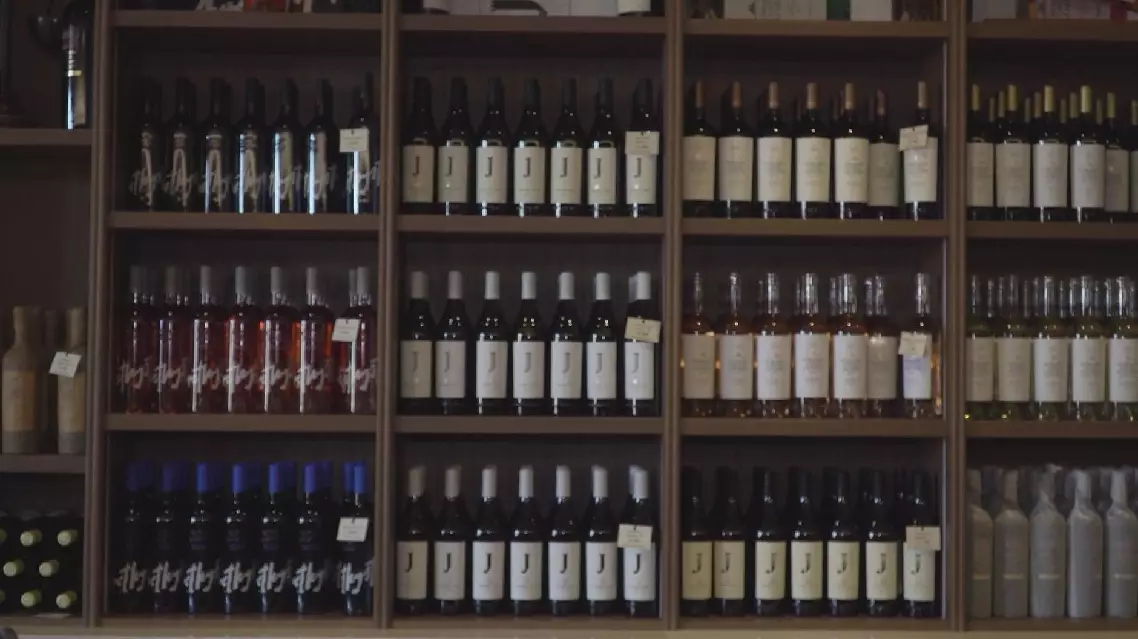
Trump's tariffs spark bitter aftertaste among Greek wine producers