BENGALURU, India (AP) — An innovative portable shelter recently exhibited in one of India's largest cities shows how smart, cheap ways to help workers escape the heat are gaining traction in a country that's particularly vulnerable to climate change-driven extreme temperatures.
The Neralu shelter, winner of a design contest in the southern city of Bengaluru, was displayed at the Sweat and Concrete 2025 event in late May alongside a theatrical performance about heat impacts on outdoor workers and exhibits on heat-related studies. Organizer Kanishk Kabiraj said the aim of the exhibition is to raise awareness about how extreme heat is endangering the health and livelihoods of the country’s outdoor workforce. It comes amid a shift in India toward greater awareness of climate-related issues in recent years.
Click to Gallery
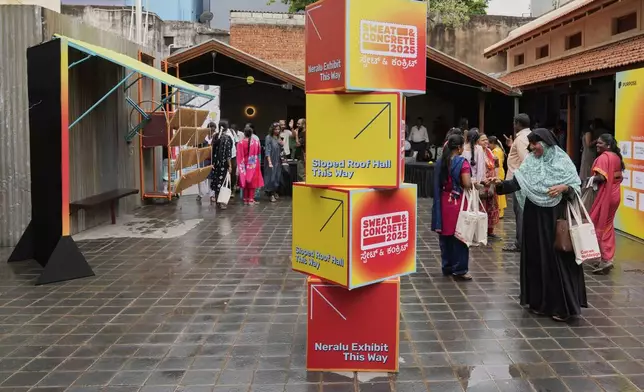
Daily wage workers, who mostly work outdoors, leave after exploring Neralu, an innovative portable heat shelter, at the Sweat and Concrete 2025 event in Bengaluru, India, Thursday, May 29, 2025. (AP Photo/Aijaz Rahi)
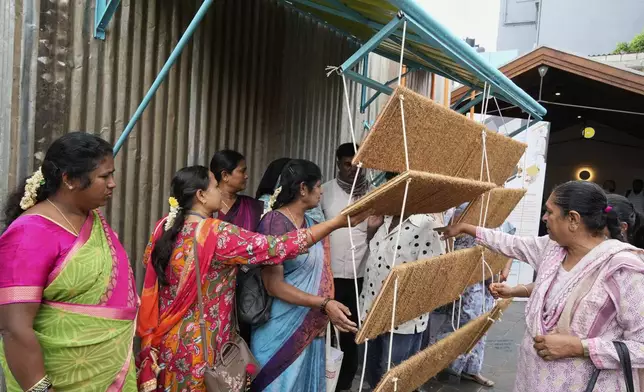
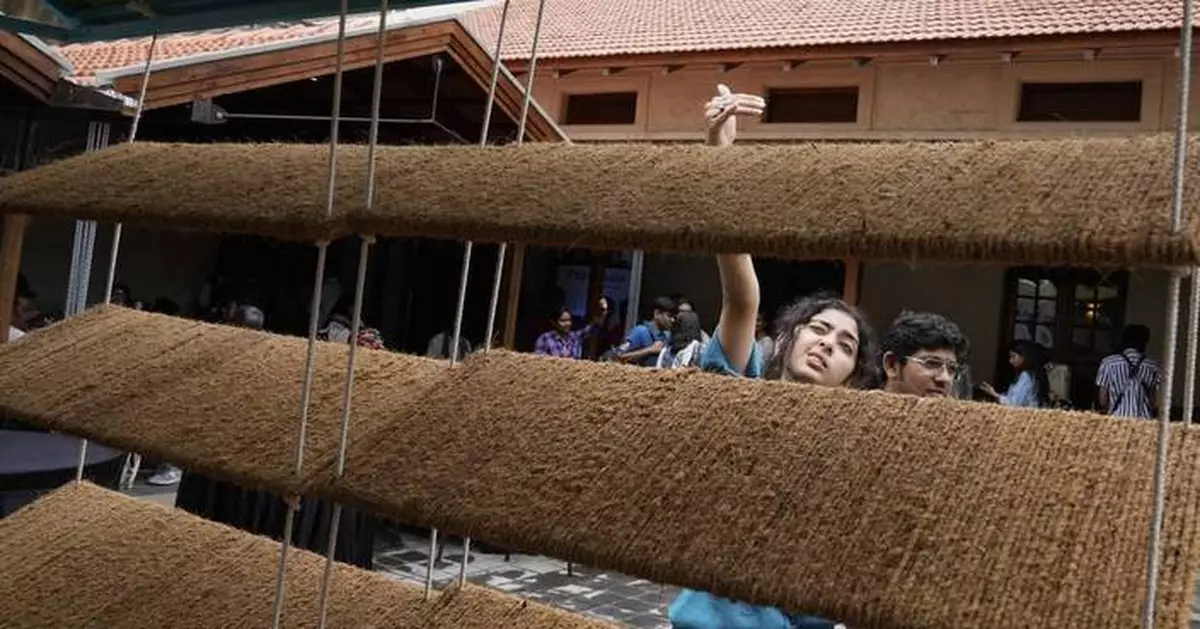
Daily wage workers, who mostly work outdoors, explore Neralu, an innovative portable heat shelter, at the Sweat and Concrete 2025 event in Bengaluru, India, Thursday, May 29, 2025. (AP Photo/Aijaz Rahi)
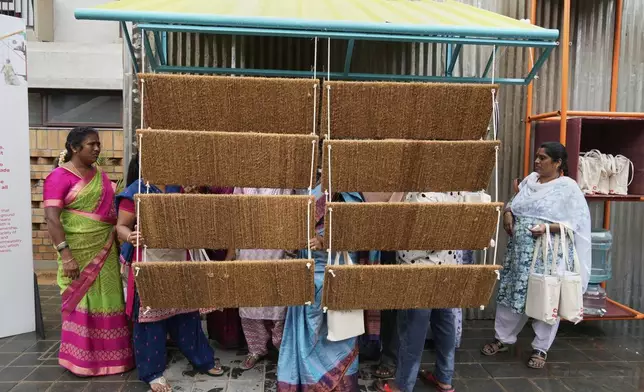
Daily wage workers, who mostly work outdoors, explore Neralu, an innovative portable heat shelter, at the Sweat and Concrete 2025 event in Bengaluru, India, Thursday, May 29, 2025. (AP Photo/Aijaz Rahi)
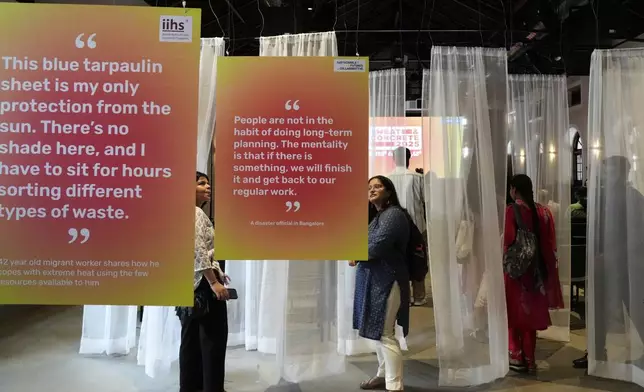
Visitors read interpretive panels highlighting the impact of heat at the Sweat and Concrete 2025 event in Bengaluru, India, Thursday, May 29, 2025. (AP Photo/Aijaz Rahi)
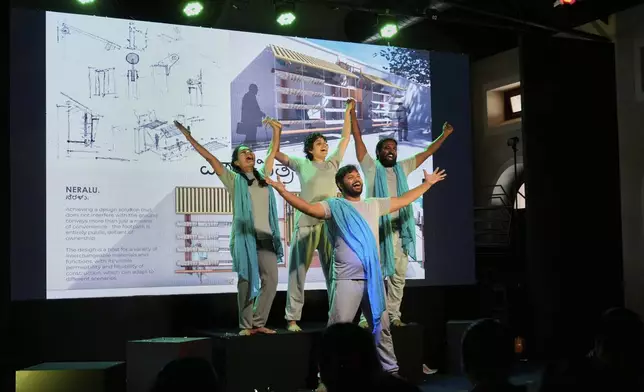
A group of theater artists perform to highlight the benefits of Neralu, an innovative portable heat shelter, at the Sweat and Concrete 2025 event in Bengaluru, India, Thursday, May 29, 2025. (AP Photo/Aijaz Rahi)
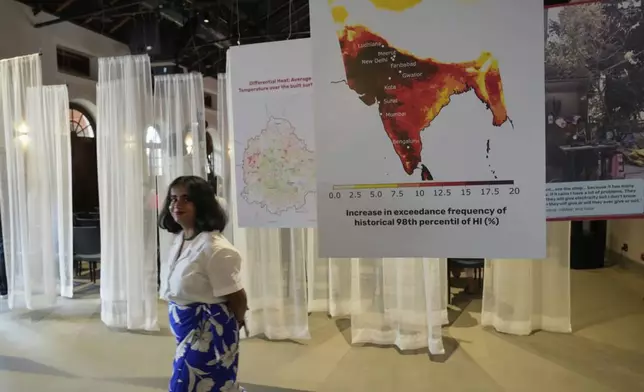
A woman walks past interpretive panels highlighting the impact of heat at the Sweat and Concrete 2025 event in Bengaluru, India, Thursday, May 29, 2025. (AP Photo/Aijaz Rahi)
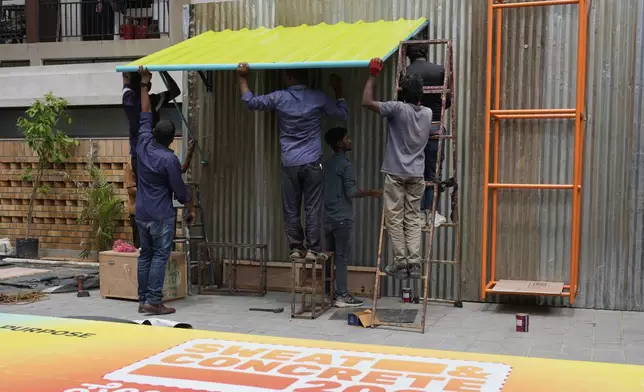
Workers install Neralu, an innovative portable heat shelter, ahead of the Sweat and Concrete 2025 event in Bengaluru, India, Wednesday, May 28, 2025. (AP Photo/Aijaz Rahi)
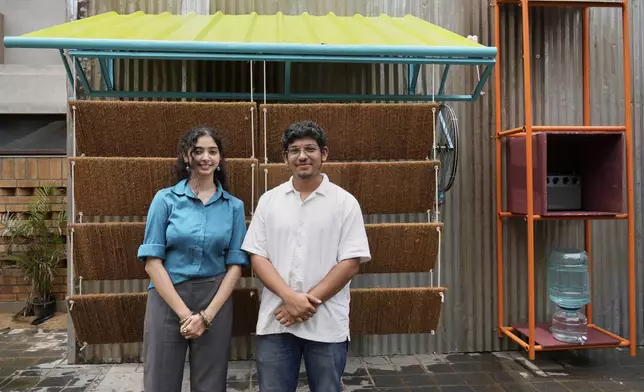
Ankritya Diggavi, left, and Sagar Kandal, architects behind the design of Neralu, an innovative portable heat shelter, pose in front of their installation at the Sweat and Concrete 2025 event in Bengaluru, India, Thursday, May 29, 2025. (AP Photo/Aijaz Rahi)
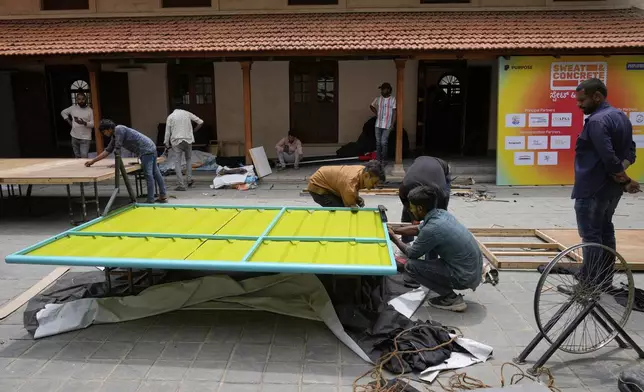
Workers assemble Neralu, an innovative portable heat shelter, before installing it at the Sweat and Concrete 2025 event in Bengaluru, India, Wednesday, May 28, 2025. (AP Photo/Aijaz Rahi)
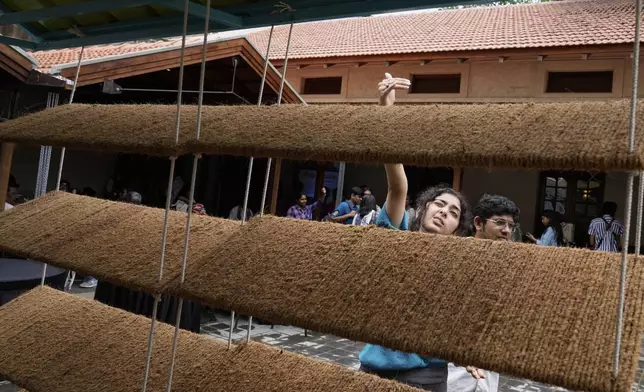
Ankritya Diggavi, one of the architects behind the design of Neralu, an innovative portable heat shelter, explains its features to visitors at the Sweat and Concrete 2025 event in Bengaluru, India, Thursday, May 29, 2025. (AP Photo/Aijaz Rahi)
“We think that it’s important to not only talk conceptually but to try and create models and proof of concept,” Kabiraj said.
Neralu, which means shade in Kannada, the most common local language spoken in Bengaluru, consists of a lightweight frame that supports a shade, bench and angled slats operated by manual pulleys to fan people seated within. The shelter costs about $175 and is made of metal, fiber-reinforced plastic and plywood. Weighing roughly 15 kilograms (33 pounds), the shelter for up to four people can be installed on outdoor walls and easily disassembled and transported on the small motor vehicles known as tuk-tuks.
“This kind of shelter will be helpful for people like us who work outdoors,” said Madhe Gowda, a 62-year-old fruit seller who came to the exhibit. “I sell fruits from my pushcart all day. When it’s really hot, my fruits begin to rot and it becomes difficult for me to move around much."
Neralu beat 19 other entries in a contest for designing heat shelters for outdoor workers organized in Bengaluru last year. Ankritya Diggavi, one of the architects behind the design, said it was inspired by speaking to and observing outdoor workers.
“They have made their own makeshift measures using material like beach umbrellas and tarpaulin sheets,” Diggavi said.
The designers said the Neralu shelter can be made of recycled and repurposed material from the auto industry or other businesses. They said the design has a lot of room to be modified according to local needs and available materials.
“We wanted something simple, affordable, and quick to assemble,” said Sagar Kandal, another one of the designers.
They said they have received interest from both public and private organizations that want to purchase and install these shelters in the city. The Indian Meteorological Department has found the number of extreme heat days increasing in the city, which planning experts say is likely due to climate change and rapid urbanization.
And with a rising number of Indian states designing heat and climate change adaptation plans, they said the shelter can work in any heat-stressed city that needs low-cost solutions.
Tamanna Dalal, a researcher on heat policy at the New Delhi-based think tank Sustainable Futures Collaborative, said the way cities are built in India is resulting in urban heat islands, parts of cities with higher average temperatures than the surrounding areas. Shelters that take local climate factors into account and can be replicated easily will become “supremely important” as heat worsens in the coming years, Dalal added.
India is among the world’s most vulnerable countries to climate impacts, with floods, heat waves and cyclones having resulted in 80,000 deaths and economic losses nearing $180 billion from 1993 to 2022. According to the International Labor Organization, India stands to lose up to 34 million jobs due to increasing heat by 2030.
P. Kumaravel, a 42-year-old construction worker who was at the event held over two days at the end of May, welcomed the idea of the shelter, but said good public transport and reliable health insurance are what workers like him need the most.
“This year’s heat was really bad. I had rashes and pimples. We rest under a tree when we can, but we’re paid to work, not to rest,” he said. “A shelter is helpful, but it’s not enough,” he said.
Follow Sibi Arasu on X at @sibi123
The Associated Press’ climate and environmental coverage receives financial support from multiple private foundations. AP is solely responsible for all content. Find AP’s standards for working with philanthropies, a list of supporters and funded coverage areas at AP.org.
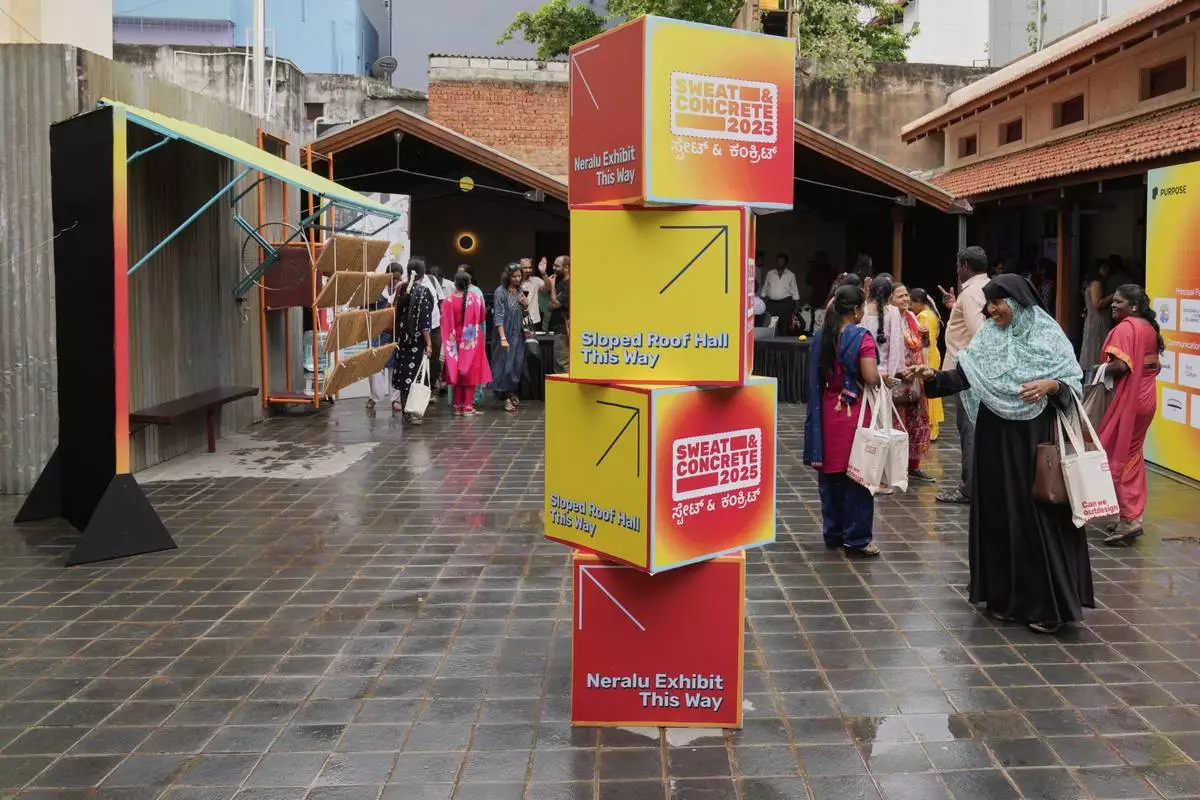
Daily wage workers, who mostly work outdoors, leave after exploring Neralu, an innovative portable heat shelter, at the Sweat and Concrete 2025 event in Bengaluru, India, Thursday, May 29, 2025. (AP Photo/Aijaz Rahi)
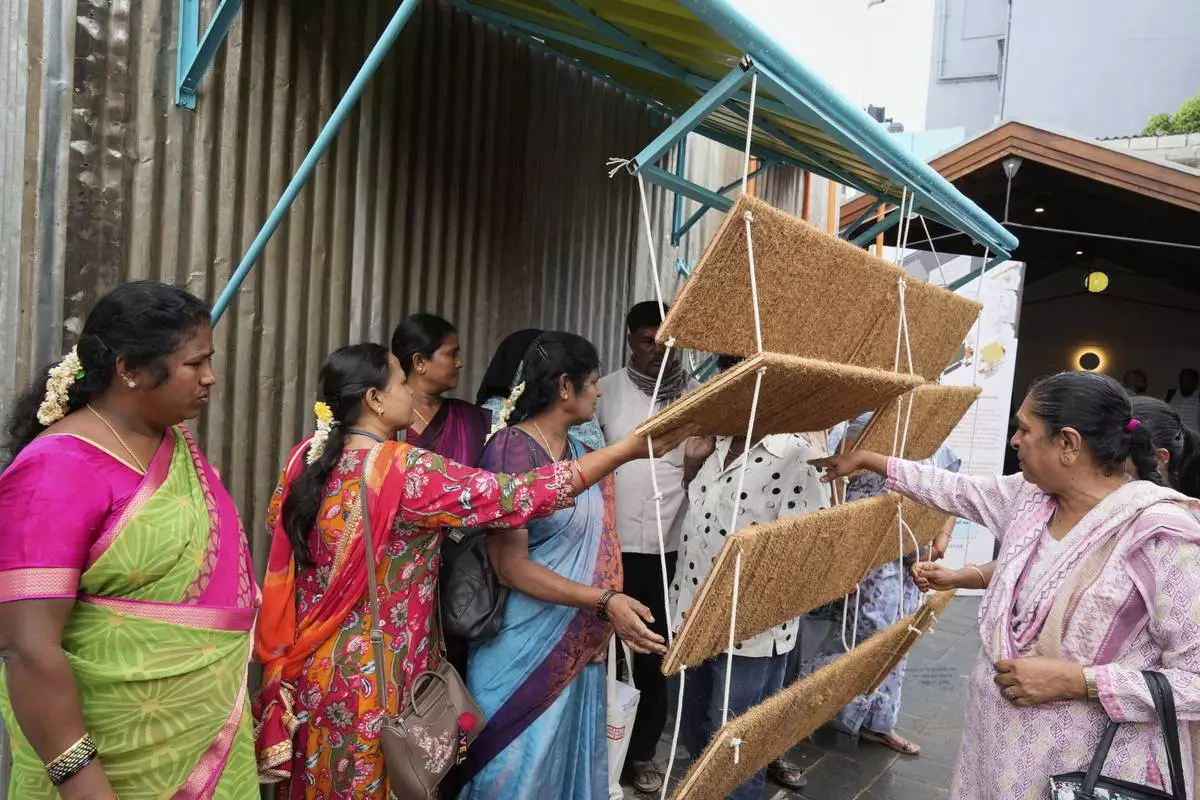
Daily wage workers, who mostly work outdoors, explore Neralu, an innovative portable heat shelter, at the Sweat and Concrete 2025 event in Bengaluru, India, Thursday, May 29, 2025. (AP Photo/Aijaz Rahi)
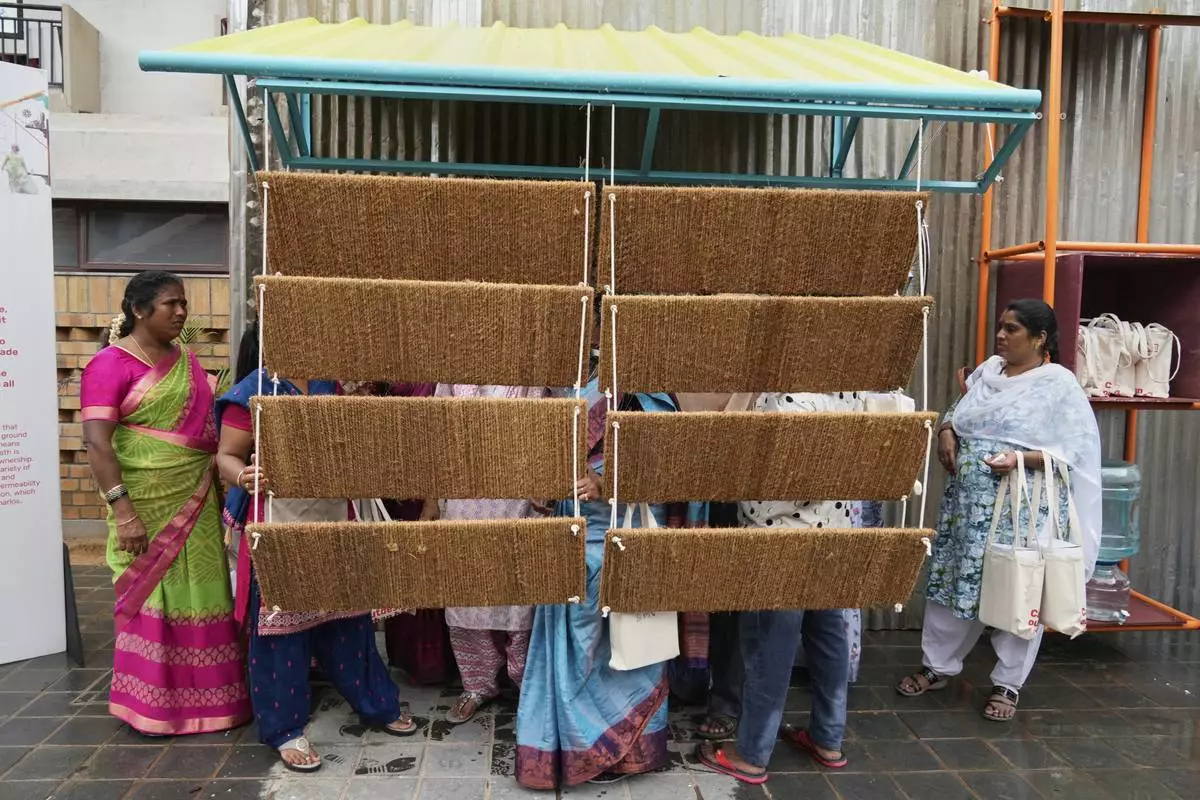
Daily wage workers, who mostly work outdoors, explore Neralu, an innovative portable heat shelter, at the Sweat and Concrete 2025 event in Bengaluru, India, Thursday, May 29, 2025. (AP Photo/Aijaz Rahi)
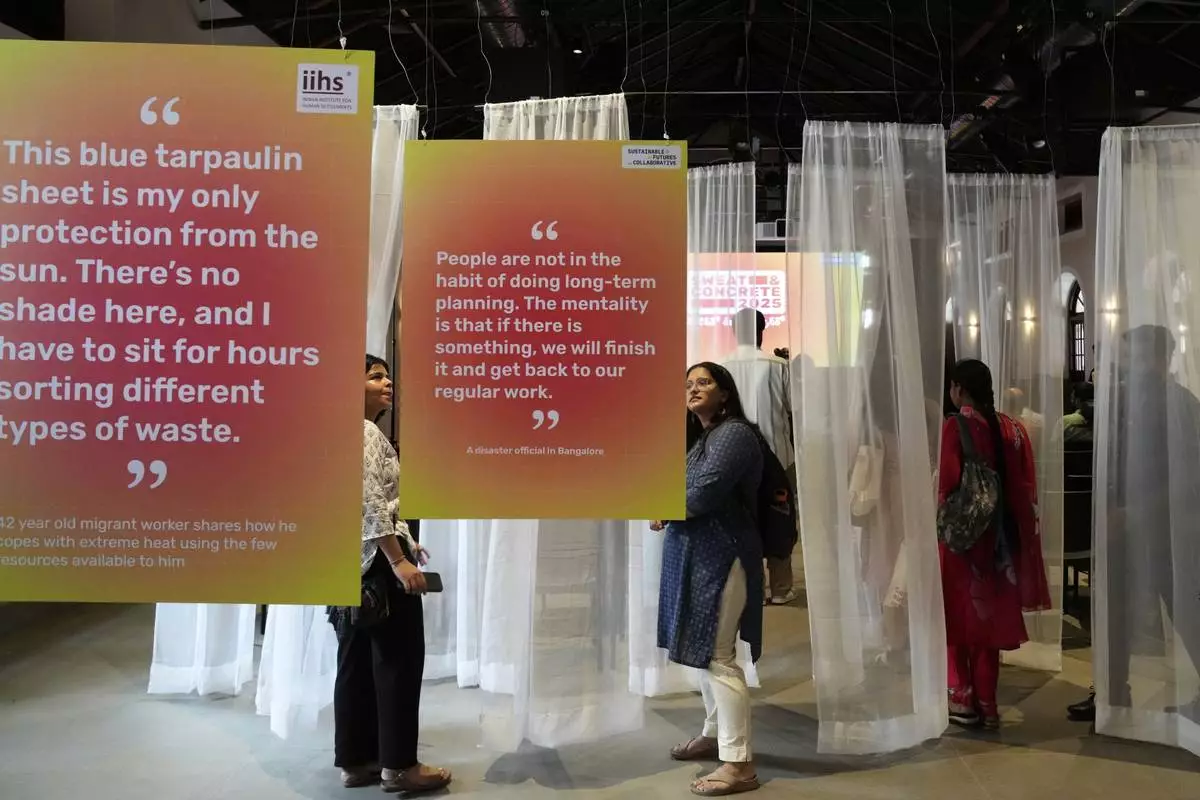
Visitors read interpretive panels highlighting the impact of heat at the Sweat and Concrete 2025 event in Bengaluru, India, Thursday, May 29, 2025. (AP Photo/Aijaz Rahi)

A group of theater artists perform to highlight the benefits of Neralu, an innovative portable heat shelter, at the Sweat and Concrete 2025 event in Bengaluru, India, Thursday, May 29, 2025. (AP Photo/Aijaz Rahi)
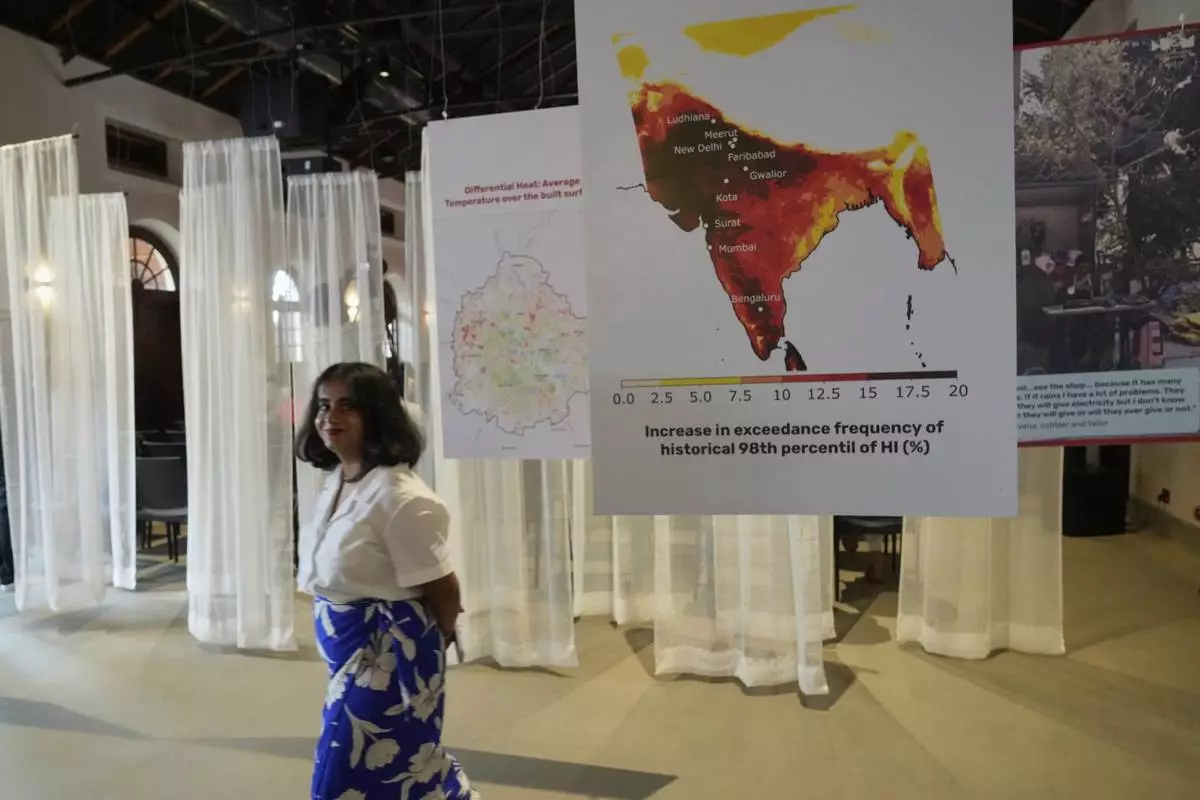
A woman walks past interpretive panels highlighting the impact of heat at the Sweat and Concrete 2025 event in Bengaluru, India, Thursday, May 29, 2025. (AP Photo/Aijaz Rahi)
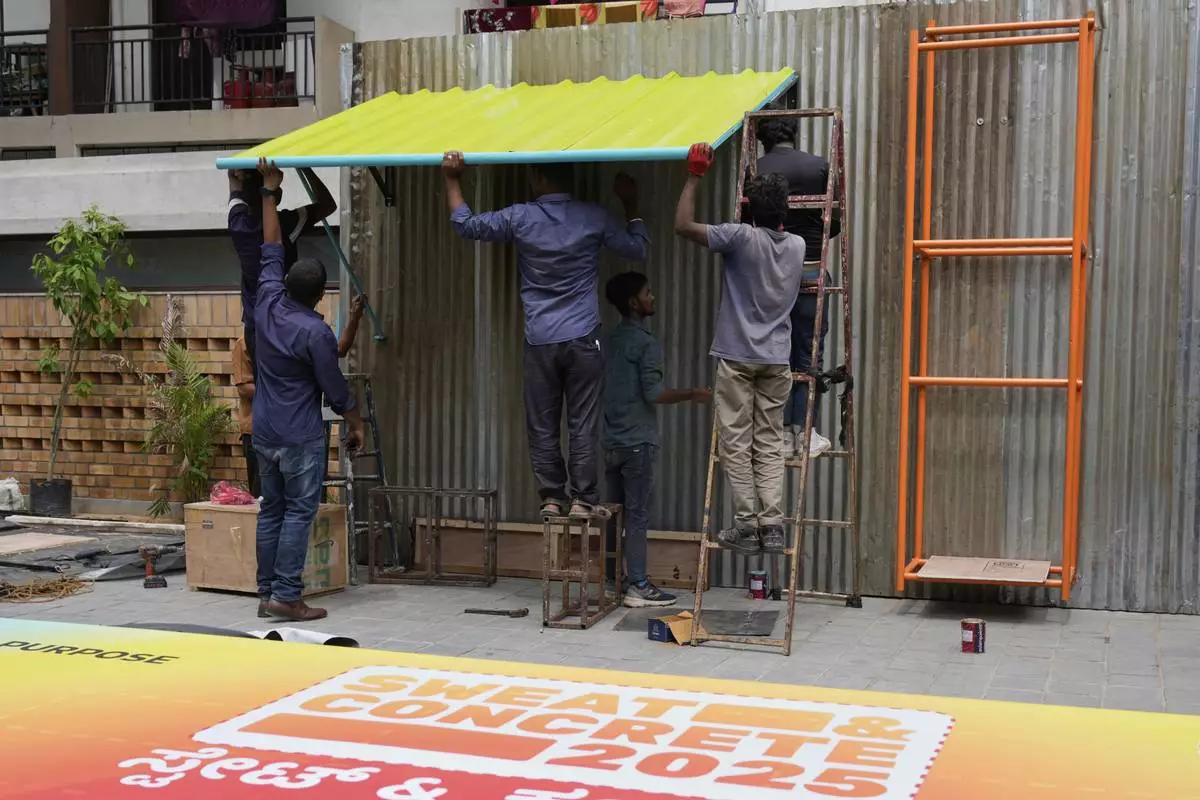
Workers install Neralu, an innovative portable heat shelter, ahead of the Sweat and Concrete 2025 event in Bengaluru, India, Wednesday, May 28, 2025. (AP Photo/Aijaz Rahi)
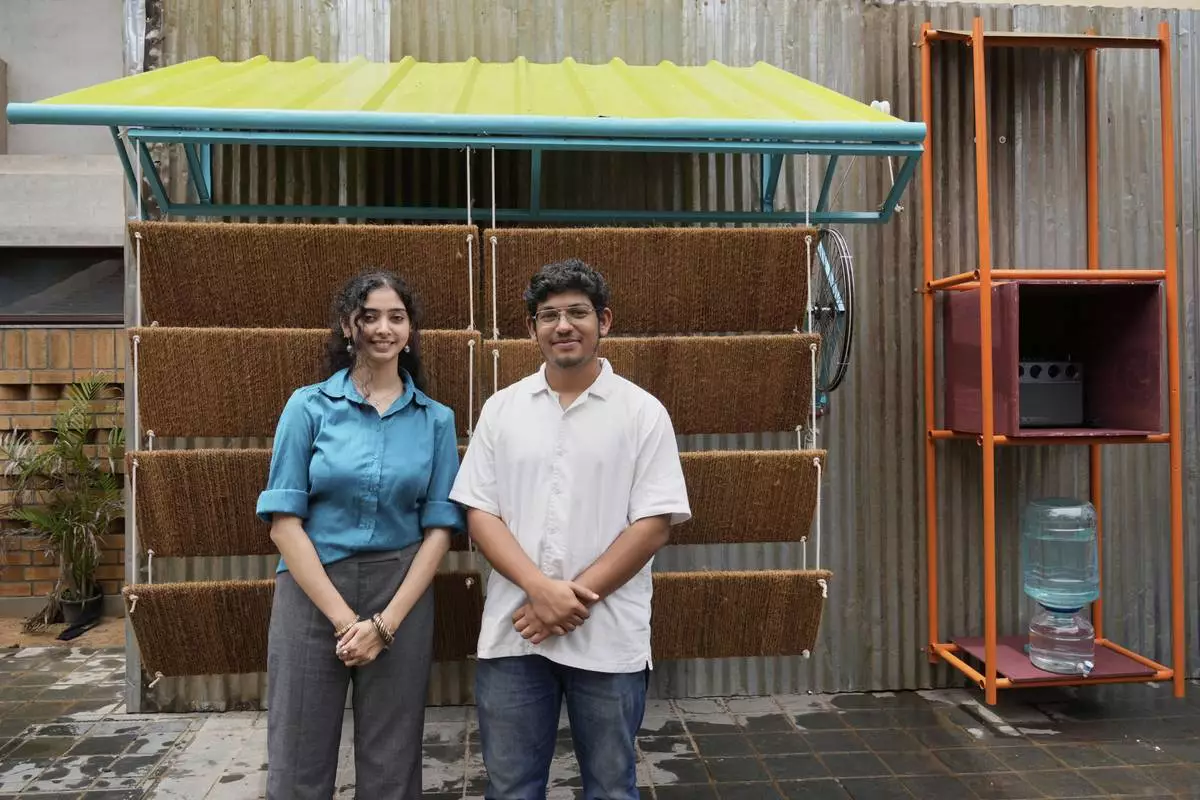
Ankritya Diggavi, left, and Sagar Kandal, architects behind the design of Neralu, an innovative portable heat shelter, pose in front of their installation at the Sweat and Concrete 2025 event in Bengaluru, India, Thursday, May 29, 2025. (AP Photo/Aijaz Rahi)
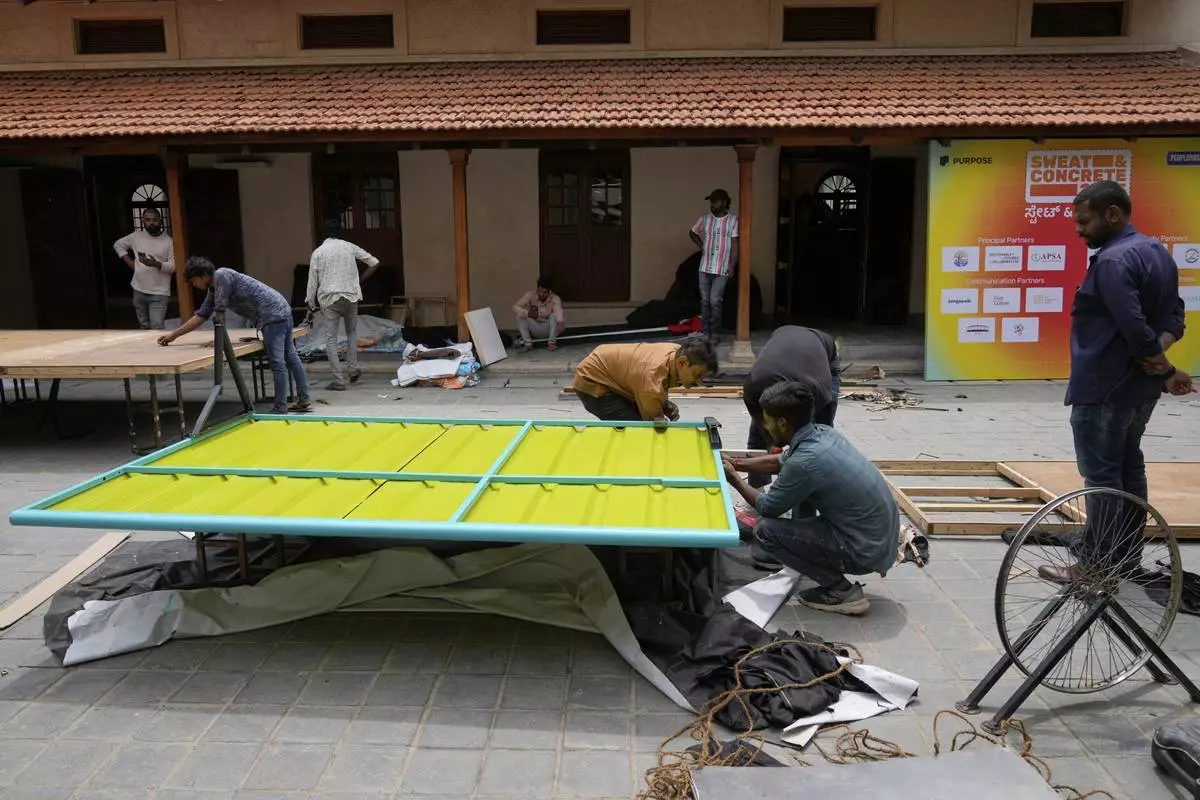
Workers assemble Neralu, an innovative portable heat shelter, before installing it at the Sweat and Concrete 2025 event in Bengaluru, India, Wednesday, May 28, 2025. (AP Photo/Aijaz Rahi)
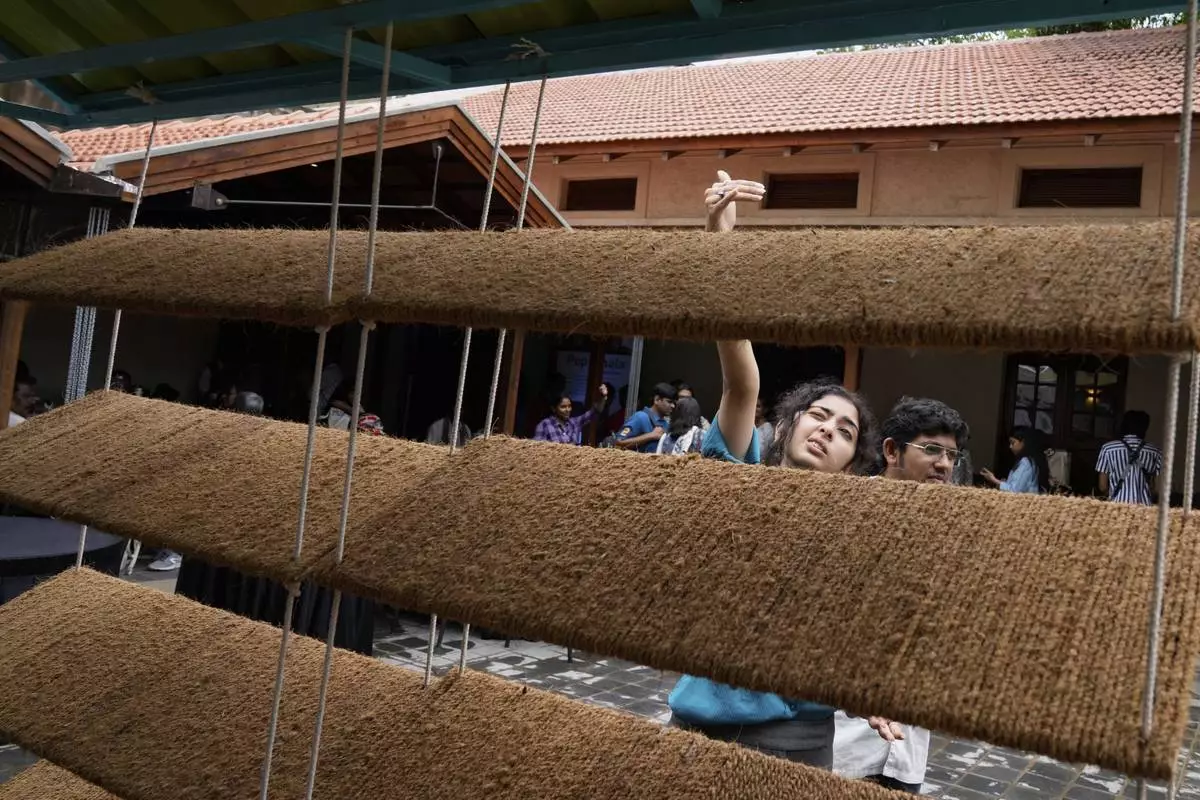
Ankritya Diggavi, one of the architects behind the design of Neralu, an innovative portable heat shelter, explains its features to visitors at the Sweat and Concrete 2025 event in Bengaluru, India, Thursday, May 29, 2025. (AP Photo/Aijaz Rahi)