Thursday's phone call between Chinese President Xi Jinping and U.S. President Donald Trump is a good sign of some better days ahead for the China-U.S. relations when the world's two largest economies have traded barbs over tariffs and other disputes, an American scholar said.
In the phone talks initiated by Trump, President Xi said that dialogue and cooperation are the only correct choice for China and the United States, and the two sides should enhance communication in such fields as foreign affairs, economy and trade, military, and law enforcement to build consensus, clear up misunderstandings, and strengthen cooperation.
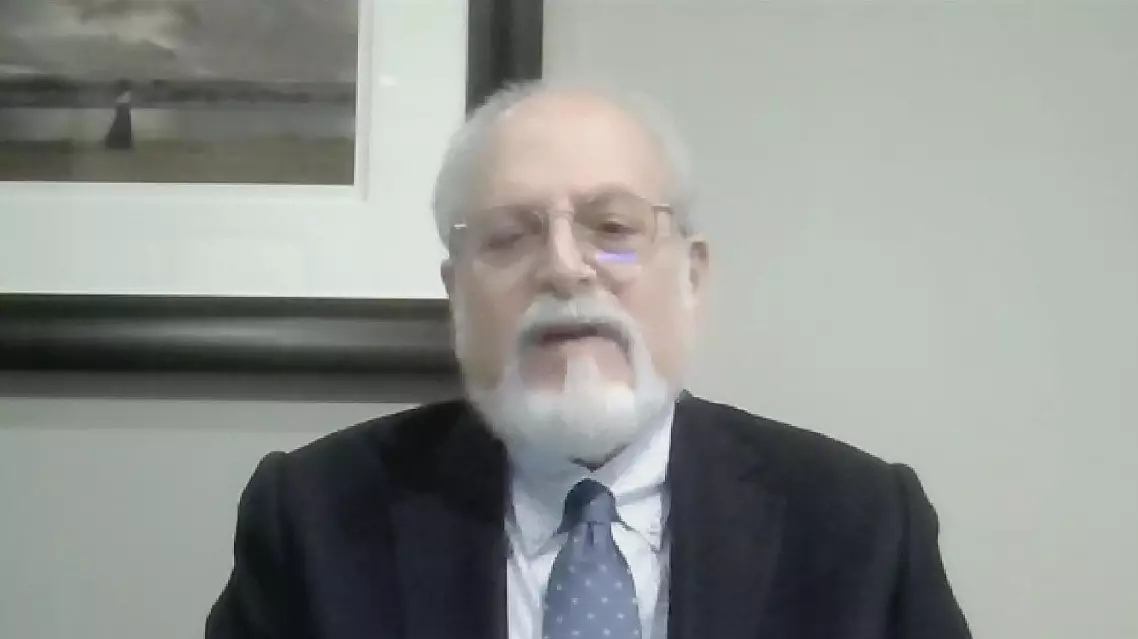
In an interview with the China Global Television Network (CGTN) on Friday, Denis Simon, a distinguished fellow at the Institute for China-America Studies, called the phone call a "breakthrough," noting that it builds upon the momentum from the economic and trade talks in Geneva last month, when both sides agreed on the need for structured dialogue.
"It's important that they had a breakthrough, and the breakthrough was they finally got a chance to speak with one another. We had the events in Geneva that were very productive, and now finally both men have decided that the direct communication was the only way to proceed ahead. And I know that President Trump was particularly anxious to have this phone call. So the fact that it occurred, I think, is a good sign that there could be some better days ahead," he said.
Simon said both sides should follow the principles of mutual respect, peaceful coexistence, and win-win cooperation in handling their relations.
"The Chinese side always makes a great effort to emphasize three things -- mutual respect, peaceful coexistence and win-win cooperation, and the reason why they do that is that the old days are over where the relationship was very asymmetrical, quite hierarchical and very much among unequals. Today, that's no longer the case. So the dynamics of the relationship have changed, and I think the Chinese are starting to make clear that there's not going to be progress on any issue, unless the two sides start from those three agreed upon principles," he said.
Simon pointed out that the call reportedly included talks on a mutual willingness to arrange a face-to-face summit, a step that could help both countries address the core issues blocking progress.
"They both, I think, believe that a face-to-face meeting could be good to further clear the air about what is actually holding things back. The Chinese side was very explicit that it thought the blame was not on its side. And of course, the United States said it had different expectations about what would happen. And so I think, you know, sometimes, face-to-face conversation could in fact be the best way to get the countries to make real meaningful progress as they go forward," he said.
Amid the U.S. ongoing visa revocation threats, Trump reportedly told Xi that Chinese students remain welcome in the United States, a statement viewed positively by many in China.
Simon concurred, calling on the United States not to "manipulate the visa issue" for short-term gains.
If young people can learn together, it will help shape a more constructive future for bilateral ties, he noted.
Xi-Trump phone call bodes well for China-US relations: US scholar
Xi-Trump phone call bodes well for China-US relations: US scholar