Skip to Content Facebook Feature Image

Shanghai’s nursing homes enhance elderly care with advanced technologies

China

China

China

Shanghai’s nursing homes enhance elderly care with advanced technologies

2025-06-08 03:14 Last Updated At:06:37

Nursing homes in Shanghai are providing online medical services and setting up smart medical devices that allow seniors to receive top-tier healthcare without the need to leave their homes.

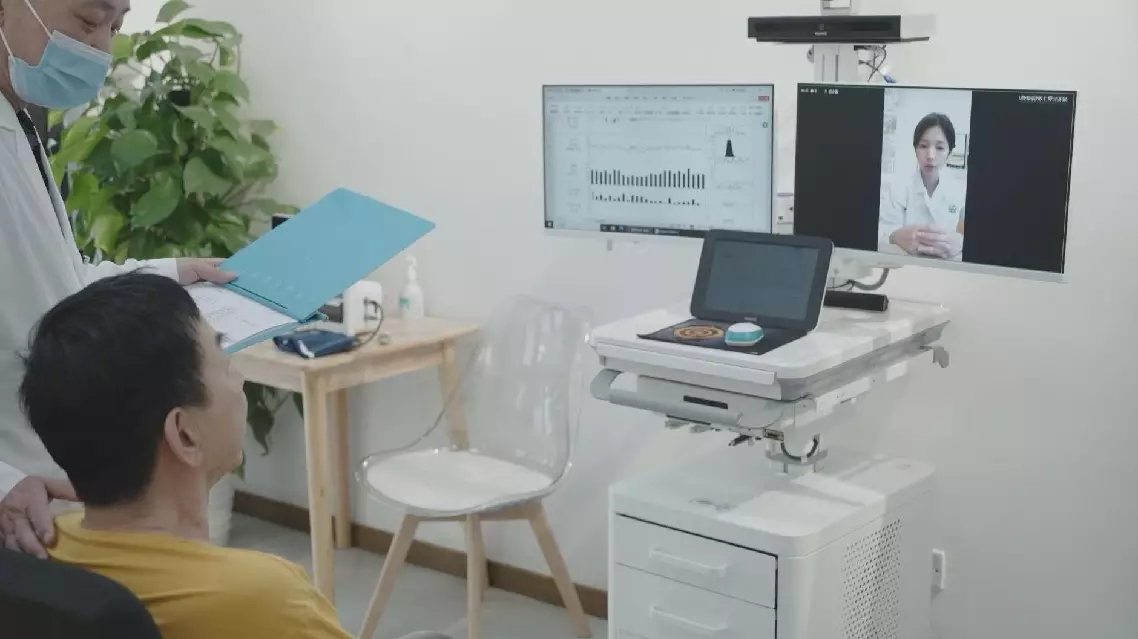
Cui Ronggen, 68, who underwent heart bypass surgery, has been living in a nursing home in Shanghai for six months. Recently, caregivers noticed fluctuations in his blood pressure and chest pain. Thanks to the facility's adoption of cutting-edge technology, Cui was able to consult with specialists from a leading hospital remotely via a 5G telemedicine computer cart.

"The 5G telemedicine cart enables remote consultations and online diagnosis. These things can be done through this device once the patient's appointment is scheduled with a medical expert. In the past, seniors had to travel to hospitals with family members, wait in line, and go through lengthy procedures, which is time-consuming and exhausting. Now, with this device, families can feel at ease, and seniors don't even need to leave the nursing home. It enriches the medical services in the nursing home and brings high-quality resources from the city's best hospitals directly to the elders here," said Xu Wen, director of the nursing home.

The shift toward a tech-enabled care system is part of a broader trend nationwide as China grapples with aging population. According to the Ministry of Civil Affairs, by the end of 2024, China's population of seniors aged 65 and above reached 220 million. This growing demographic has spurred the development of new models for elderly care, which emphasizes technology-assisted services to complement traditional care methods.

Shanghai has been at the forefront of combining online medical services with elderly care since 2021. Today, seniors in many of the city's nursery homes can access to online registration, consultations and remote medical services. After diagnosis, prescribed medications would be delivered directly to the nursing home. Additionally, the nursing home's medical center can conduct follow-up tests, such as electrocardiogram, based on the online consultation results.

"The online platform is convenient and efficient. It allows seniors to get medical treatment as early as possible," said Lu Jinlin, a resident.

In addition to online treatment, Shanghai is also exploring the use of robotics in elderly care.

"We believe seniors should benefit from the convenience of digitalization, including future applications like humanoid robots and specialized care robots, which can help address the current shortage of caretakers. What we see are hardware advancements, but what truly matters is the service behind them. The goal is to offer seniors a better, warmer and premium living experience through heartfelt care," said Li Zhiwei, director of the Department of Aging and Elderly Care Services under the Civil Affairs Bureau of Pudong New Area.
Shanghai’s nursing homes enhance elderly care with advanced technologies
Shanghai’s nursing homes enhance elderly care with advanced technologies
The Iranian government is focusing on public concerns and maintaining stable supplies of essential goods amid recent protests, Iranian President Masoud Pezeshkian said in a televised interview on Sunday.

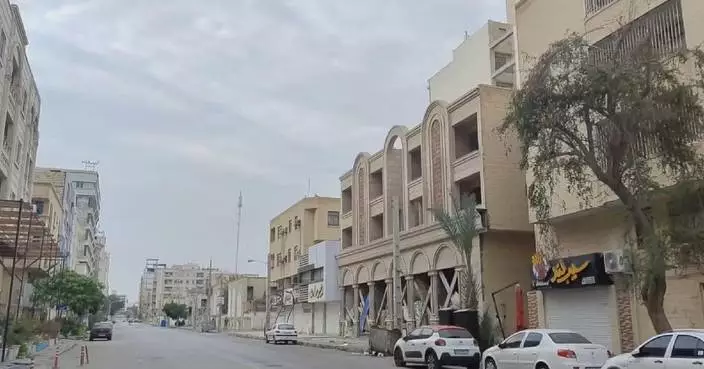
In the city of Karaj, northwest of the capital Tehran, daily life has largely continued as normal. A video filmed by a local resident on Sunday shows food stores open and grocery shelves fully stocked.

"This is the block near my home, and there are some food stores here. Daily life continues here. Last night we did not see many protests in Karaj. Right now the city is very safe. This is a grocery store close to my home. All the food is available; nothing is in shortage. Here are noodles and different types of beans. Here are dairy products, cheese, and yogurt. I also checked other grocery stores and didn't see any shortages. Everything is available," said local resident Ali Reza.

Iranian officials have described recent disturbances as acts orchestrated by the "enemy," including some carried out by well-trained and armed "terrorists." The incidents have caused casualties among security personnel and civilians, as well as property damage.

The Secretary of Iran's Supreme National Security Council Ali Larijani has directed authorities to severely punish the "terrorists."

Meanwhile, Iran's police chief Ahmad-Reza Radan said on Sunday that the police had raised alert levels and arrested several leaders of the troublemakers during the operations on Saturday.

President Pezeshkian noted in the interview that the normal demands of the Iranian people are reasonable and justified, but they must realize that triggering riots and carrying out terrorist acts are the enemy's attempts to undermine the country. He urged the public to remain vigilant.

Also on Sunday, Iranian Parliament Speaker Mohammad Baqer Qalibaf warned that Tehran would regard U.S. and Israeli bases and facilities in the Middle East as "legitimate targets" if Washington takes military action against Iran. His remarks followed media reports saying U.S. President Donald Trump is "seriously considering authorizing a strike" against Iran.

Iranian state media reported that at least 109 members of Iran's security forces have been killed in clashes since the protests began 14 days ago. Meanwhile, human rights groups based outside the country said the number of protesters killed has exceeded 200, though the figure could not be independently verified.

The protests initially erupted over a sharp depreciation of the rial and sweeping subsidy reforms. Iranian authorities have blamed the unrest on foreign-linked agents and sanctions imposed by the United States.

Iranian president says government focusing on ensuring supplies amid protests

Iranian president says government focusing on ensuring supplies amid protests

Recommended Articles