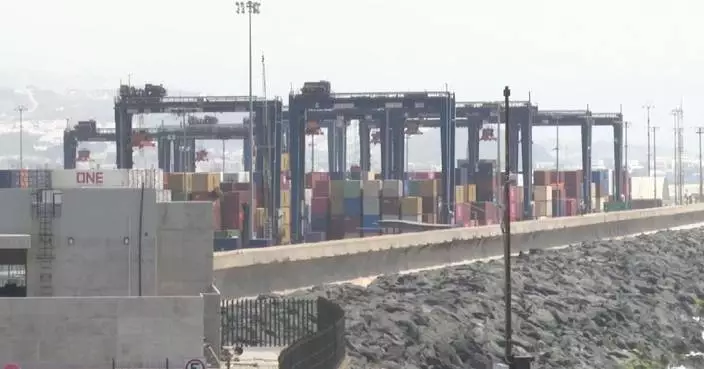
The ongoing rice crisis in Japan has forced many retailers out of business while dealing a particularly heavy blow to small shops, despite the release of government stockpiles since March this year.
Stores are struggling to keep up with demand and soaring prices have put the staple food out of reach for many households. Despite government interventions, such as releasing emergency rice reserves, prices have remained high.
According to a recent survey by a Japanese research firm, the fiscal year from April 1, 2024 to March 31, 2025 saw the number of rice shop closures increase by 10 percent compared to the same period the previous year. Meanwhile, 47.6 percent of the surveyed retailers reported disruption to their business operations.
In Japan, rice is distributed through a multi-layered supply chain before reaching consumers. Farmers typically sell their harvest to collection agents, notably the Japan Agricultural Cooperatives (JA). The agents pass the rice to wholesalers, who then sell it to retailers such as supermarkets or specialty rice shops. Each step in the chain adds transportation fees and profit margins that accumulate and are eventually passed on to households.
Official data show that the average retail price of rice currently stands at 852 yen (about 5.88 U.S. dollars) per kilogram, significantly higher than the 330-yen advance payment the JA offers to farmers.
The supply crunch and high costs have prompted a retail shop in Chiba Prefecture to step up purchase directly from farmers. Meanwhile, another rice store in Tokyo said the types of rice on its shelves have nearly halved compared with last summer, while prices have surged.
"I'm able to source some brands for my store, but at really high prices. As for some other brands, even the wholesalers have gone out of stock," Koichi Ogawa, owner of a rice store in Tokyo, told China Central Television (CCTV) in an interview.
Japan's Ministry of Agriculture, Forestry and Fisheries released rice reserves for emergency use since March in a bid to stabilize prices, and has only in the recent week begun accepting applications from small and mid-sized retailers to buy the government-stockpiled rice.
However, this move has failed to curb the crisis because not even a limited amount made it to small retailers like the ones CCTV visited in Tokyo and Chiba.
"Small shops like ours usually come behind second, or even third place on the government's priority list. We always come as the last, because all the policies favor the large companies. We actually feel quite dissatisfied with this," said Motoaki Makino, a rice retailer in Chiba Prefecture.
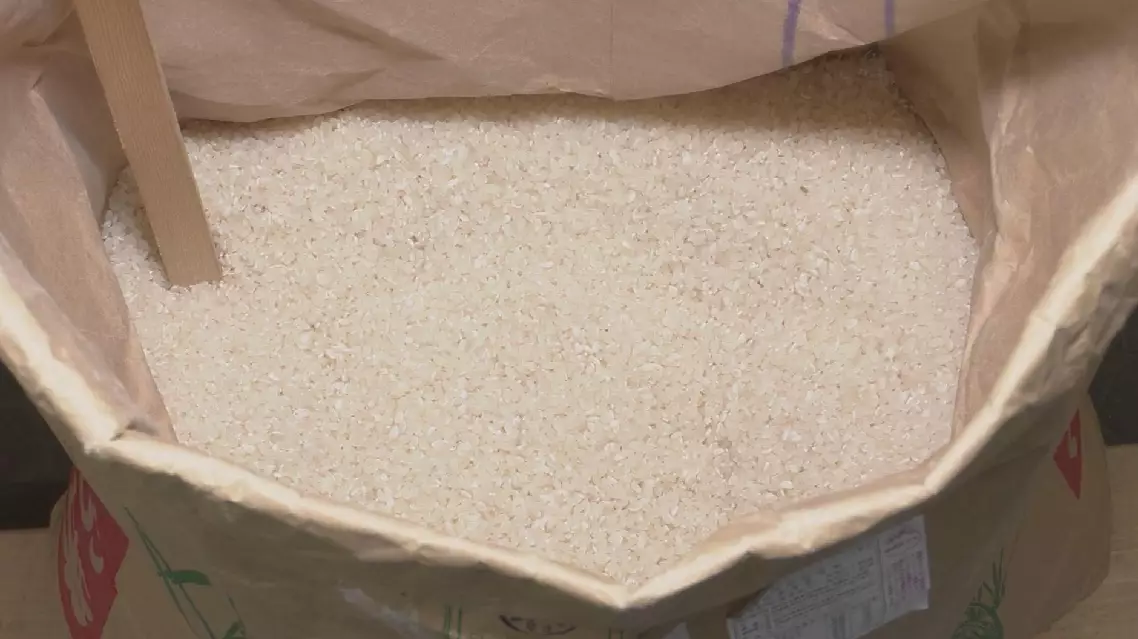
Japan's small retailers hit hard by rice shortages, soaring prices
A young official of the Communist Party of China (CPC) from a once inaccessible village has been dedicated to developing his hometown and leading villagers in combating poverty and pursuing a prosperous life.
Deep in the mountains of Liangshan Yi Autonomous Prefecture of southwest China's Sichuan Province, Abuluoha Village, whose name means "a place few people ever reach" in the local Yi language, has long been known as the last village in China to gain road access.
Jilie Ziri, the first college student from this village, now serves as the Party secretary of the village.
"When I was a child, I had to walk about five hours to get to school. There was no road. I had to climb over mountains. During the rainy season, my brother and I carried machetes to clear the overgrown mountain path. The most dangerous part was crossing the river on a hand-pulled cable. Once, a steel wire pierced straight through my hand. I couldn't let go, because if I did, I would've fallen into the river below," he said.
Having endured those hardships himself, the young man knows exactly what was holding his village back.
After graduating from college in 2017, he turned down job opportunities in the city and returned home, determined to transform his hometown.
"A road was something three generations of our villagers had dreamed of. Without one, development was almost impossible. After I came back, I kept working with different government departments, hoping we could make that dream come true," he said.
However, carving a road along steep cliffs was an enormous engineering challenge, and a heavy-lift helicopter had been deployed to airlift construction equipment into the village.
The road was officially opened on June 30, 2020, but it is not the end of the journey.
With transportation no longer a barrier, Jilie Ziri turned his attention to creating new opportunities for villagers.
"Agricultural experts told me that our climate and altitude were perfect for growing navel oranges. The government helped provide seedlings, and I also worked with companies to introduce drip irrigation. Today, we have about 23 hectares of orchards, and last year they generated around 16,000 U.S. dollars in sales," he said.
Jilie Ziri's commitment to his hometown has inspired another young villager to come back. The 25-year-old Ada Niuse now works as the village accountant.
Ada Niuse also serves as a guide at the village exhibition hall, where old photographs remind him just how much life has changed.
"This photo shows my home, and this is me as a child. It was summer. We sat there to keep cool, while our livestock stayed underneath. And that child was about my age. We just ate our meals like that. We never imagined we'd one day have proper tables and chairs," he said.
For Jilie Ziri, helping improve people's lives is more than a job; it is what being a grassroots Party member truly means.
"As grassroots Party members, we are the closest link between the Party and the people. Our responsibility is to put what we've learned to good use, help government policies take root, and bring real change to places that need it most," he said.
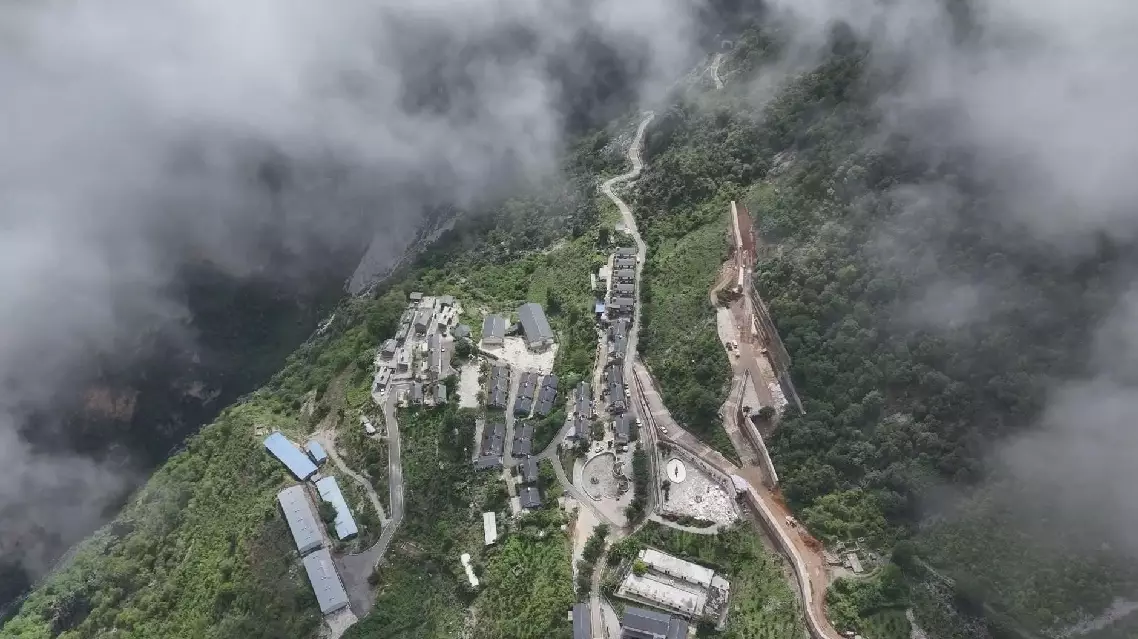
Young village official dedicated to transforming once-roadless village