The main structure of a mega fully steerable radio telescope was capped in northwest China's Xinjiang Uygur Autonomous Region on Sunday, marking another step forward in the construction of the major scientific research infrastructure project in the country.
Located in the foothills of the Tianahan Mountains in Qitai County, the telescope will feature a single dish measuring 110 meters in diameter and weigh more than 6,000 tons. The fully steerable dish will allow the telescope to observe 75 percent of celestial bodies in the sky.
Construction on the 110-meter-diameter telescope started in September 2022 and is expected to be completed in 2028.
The next phase of the construction will involve equipment installation and system testing.
China is also building another fully steerable radio telescope with a diameter of 120 meters, so far the world's largest, in northeast China's Jilin Province.
The Green Bank Telescope in West Virginia, the United States, currently holds the title as the world's largest operational fully steerable radio telescope, with its dish measuring 100 meters by 110 meters.
Compared with fixed radio telescopes of the same size, fully steerable radio telescopes can observe a larger part of the sky.

Main structure of under-construction mega radio telescope capped in Xinjiang
The United Nations warned Wednesday that the ongoing Ebola outbreak in the Democratic Republic of the Congo (DRC) and Uganda could worsen a food crisis in the region as the virus has spread beyond its initial epicenter to additional areas.
The World Health Organization has declared the Ebola outbreak a public health emergency of international concern, citing rising cases, cross-border spread and significant uncertainties about the scale of the epidemic, and allocated an additional 3.4 million U.S. dollars from its contingency fund for emergencies.
Stephane Dujarric, spokesman for UN Secretary-General Antonio Guterres, told reporters that the UN chief called for efforts to help address global humanitarian needs, including emerging challenges such as the Ebola outbreak.
"On the ground, our colleagues at WFP (World Food Programme) are telling us today that the Ebola outbreak could worsen food insecurity unless access constraints are overcome and assistance is scaled up," he said.
As of May 19, the DRC has reported more than 500 suspected cases and at least 130 deaths. Uganda has confirmed two cases, including one death.
Currently, 26.5 million people in the DRC face severe food insecurity. In the eastern part of the country -- the epicenter of the Ebola outbreak -- nearly 10 million people are experiencing crisis or emergency levels of hunger.
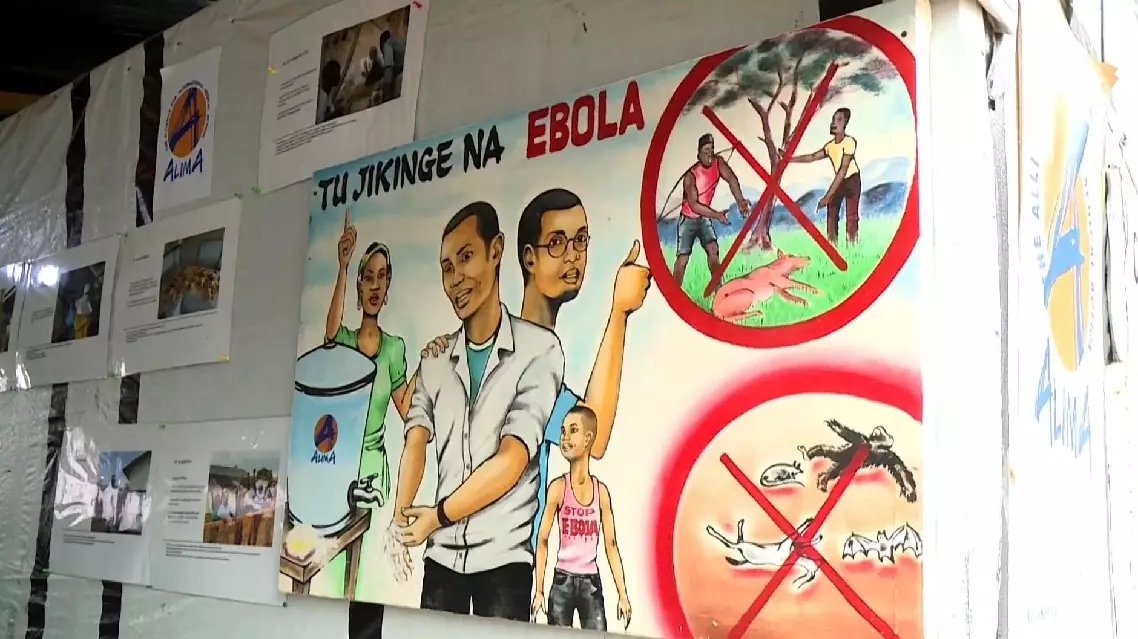
Ebola outbreak could worsen food crisis in Central Africa: UN