Since the beginning of this year, China's coastal areas have prioritized ecological conservation and green development to advance the expansion, quality, and efficiency of its Beautiful Bays initiative -- a key part of the country's broader effort to protect marine ecology and the environment.
China's coastline extends over 18,000 kilometers, with 283 bays distributed from north to south across 11 provincial-level coastal regions. In recent years, China has devoted greater efforts to protecting its marine ecology and environment as part of its broader goal of building a Beautiful China.
Since 2021, the country has launched the 'Beautiful Bays' initiative, establishing three key indicators: bay environment, biodiversity and ecology, and offshore water quality.
China plans to build more than 110 Beautiful Bays across the country by 2027, with a long-term goal of transforming all 283 major bays into Beautiful Bays by 2035. To realize this vision, coastal regions are intensifying efforts to restore bay ecosystems and improve environmental conditions.
At Chuandong Port in Dafeng District, Yancheng City in Jiangsu Province -- located on the coast of the Yellow Sea -- new progress has been made in bay restoration efforts.
Researchers have successfully experimented with planting native salt-tolerant species, including Chinese tamarisk and Suaeda glauca, transforming a once saline-alkali wetland into a lush coastal habitat with abundant water and vegetation.
"This year, we plan to complete the restoration of an area of approximately 500 mu (about 33.35 hectares), to protect the local ecological foundation to the greatest extent possible and ensure a safe habitat for rare species," said Ni Huaiyu, head of the Resource Conservation and Ecological Restoration Department at the Natural Resources and Planning Bureau of Dafeng District.
In the Longdao area of Tangshan Bay in north China's Hebei Province, local authorities are restoring seagrass beds to regulate water circulation and improve water quality.
Meanwhile, in Xiamen City, Fujian Province in eastern China, efforts are underway to remove silt using cutter suction dredgers in Xinglin Bay, aimed at accelerating ecological restoration and upgrading the bay's environment.
Zhongshan City, located at the mouth of the Pearl River in south China's Guangdong Province, has focused on improving the water quality of rivers flowing into the sea and on continuously expanding sewage pipe networks that extend into villages. A total of 6,450 kilometers of new pipelines have been constructed.
As of the end of March this year, more than 63,000 sewage outfalls discharging into the sea had been identified nationwide, and 92.5 percent of those in key bays had been remediated.
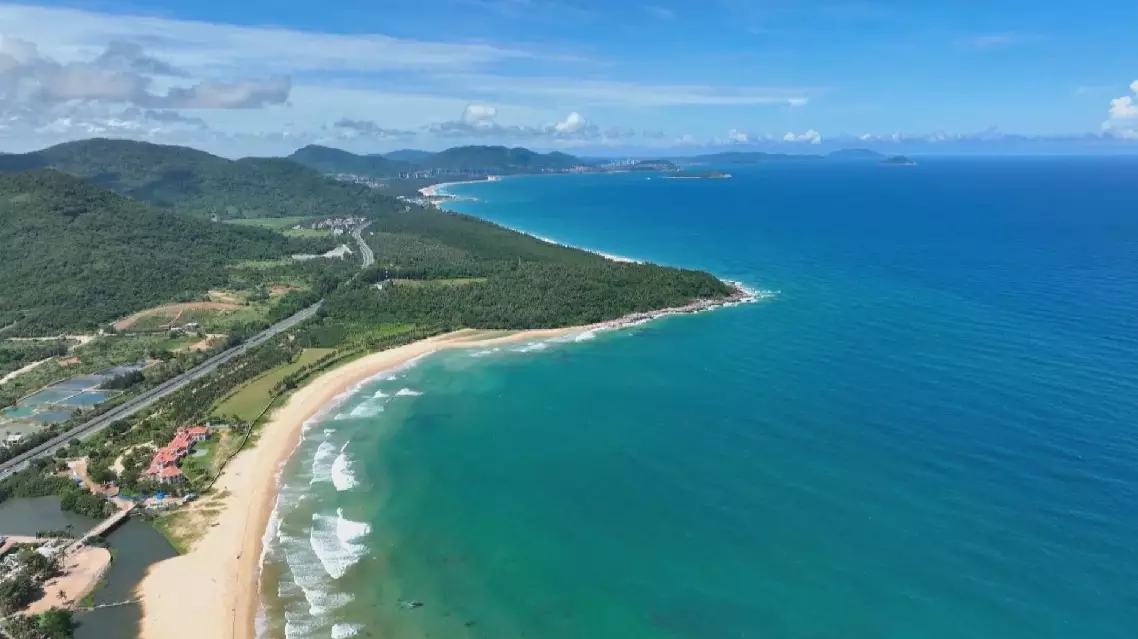
China accelerates its 'Beautiful Bays' initiative to boost marine ecological conservation