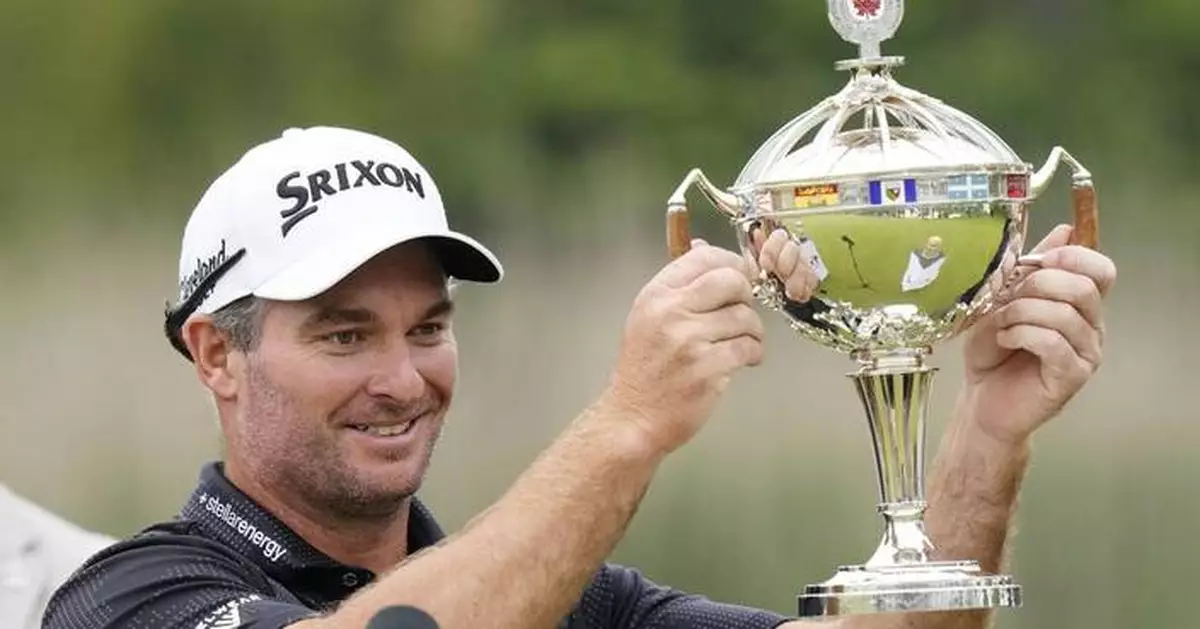
CALEDON, Ontario (AP) — Ryan Fox of New Zealand won for the second time in five weeks on the PGA Tour with another memorable shot in a playoff, this time a 3-wood to 7 feet on the fourth extra hole Sunday to beat Sam Burns in the RBC Canadian Open.
Fox won the Myrtle Beach Classic last month by chipping in for birdie to win a three-man playoff. This one on the TPC Toronto at Osprey Valley took a little longer.
Click to Gallery
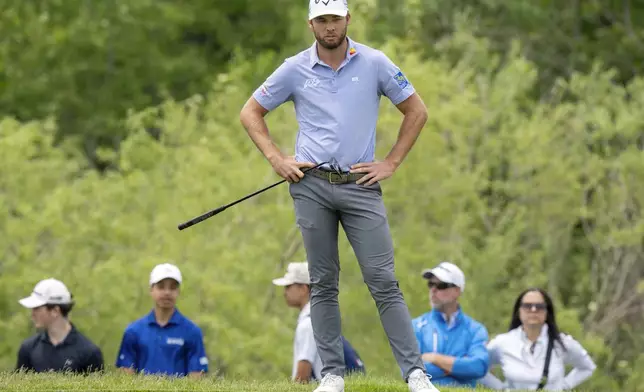
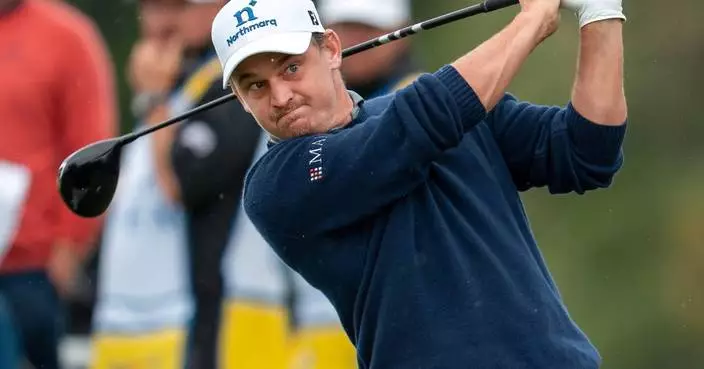
Sam Burns looks at his putt on the 6th hole in the final round of the Canadian Open golf tournament in Caledon, Ontario, Sunday, June 8, 2025. (Frank Gunn/The Canadian Press via AP)
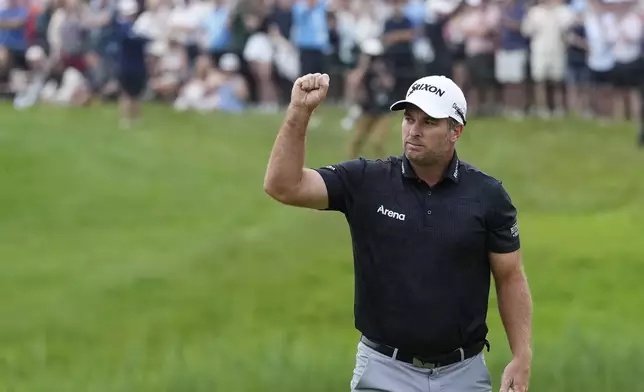
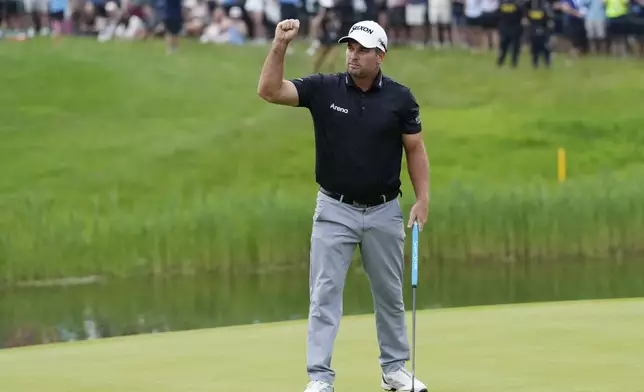
Ryan Fox celebrates after winning the Canadian Open golf tournament on the fourth playoff hole in Caledon, Ontario, Sunday, June 8, 2025. (Frank Gunn/The Canadian Press via AP)
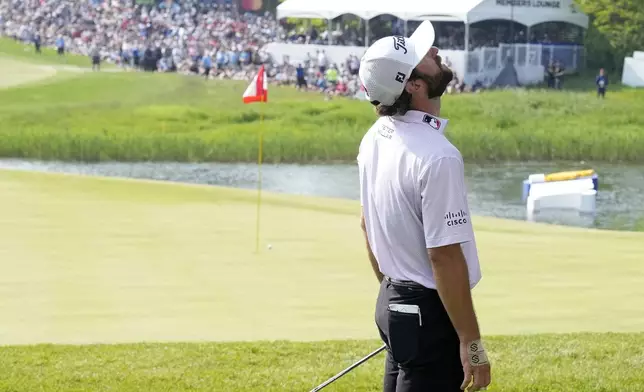
Cameron Young reacts after missing a chip on the 18th hole during the final round of the RBC Canadian Open golf tournament in Caledon, Ontario, Sunday, June 8, 2025. (Frank Gunn/The Canadian Press via AP) /The Canadian Press via AP)
Ryan Fox celebrates after winning the RBC Canadian Open golf tournament on the fourth playoff hole in Caledon, Ontario, Sunday, June 8, 2025. (Frank Gunn/The Canadian Press via AP)
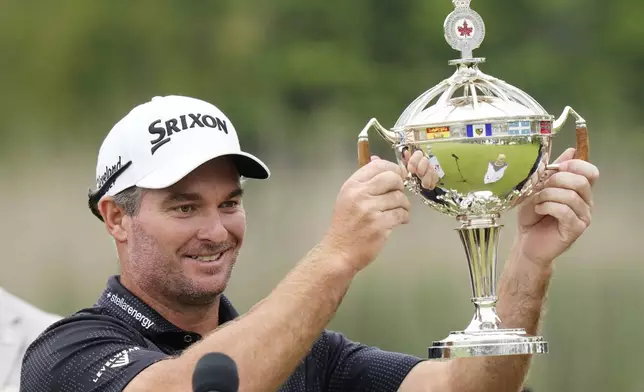
Ryan Fox raises the championship trophy after winning the RBC Canadian Open golf tournament in Caledon, Ontario, Sunday, June 8, 2025. (Frank Gunn/The Canadian Press via AP)
What turned out to be the winning shot might be more memorable. Fox smoked a 3-wood that landed softly just left of the pin and settled 7 feet away. Burns pulled his 3-wood some 55 feet left of the front right pin. He ran his eagle putt 8 feet by and missed that one.
Fox missed his eagle try before tapping in for birdie.
“To be honest, Sam and I had a bit of a pillow fight for three holes,” Fox said. “But that shot I hit on 18, that 3-wood, was probably the best shot I've ever hit. It would have been nice to make the putt. But hey, I'll take it.”
Fox holed a birdie putt from just inside 18 feet on the par-5 18th in regulation for a 4-under 66 that allowed him to join Sam Burns at 18-under 262. Burns had finished some two hours earlier with a birdie on the final hole for a 62.
They played the 18th four more times — the PGA Tour moved the pin position from far left to front right after two extra holes — and there was nothing compelling about the extra holes.
Burns, regarded as one of the best putters on the PGA Tour, had a birdie putt from just over 5 feet on the first playoff for the win. He left that out to the right. The next time down 18, Fox went for the green and pushed his 3-wood. The collar of rough stopped it from going in the water. He pitched to 12 feet and had that birdie putt for the win, but left it a foot short.
Pillow fight, indeed.
On the third time playing the 18th in overtime, Burns had a lob wedge that was short and to the right, spinning off the green and nearly into the water. Fox hit his 40 feet out to the right. They both made par.
Fox delivered the goods on the final hole and now has two wins in just over a month. The victory moved the 38-year-old Fox from No. 75 to No. 32 in the world, getting him into the U.S. Open next week for being among the top 60 in the world ranking.
Kevin Yu birdied the last hole for a 66 to finish alone in third, one shot out of the playoff. He narrowly missed out on the top 60 to get to Oakmont next week. But Yu joined Cameron Young and Matt McCarty as earning the top three spots for the British Open next month for players not already eligible.
Fox already was in the British Open from his victory in the BMW PGA Championship in 2023, the flagship event on the European tour. Fox now has eight wins worldwide — two on the PGA Tour, four on the European tour and two on the PGA Tour of Australasia.
Burns was hopeful of ending more than two years without a victory, his last title coming in the final year of the World Golf Championships-Match Play in 2023.
Young shot a 65 to tie for fourth. He was within range of Burns when Young made an incredible par on the 17th, going from the trees on the right to mangled left on the rough, gouging that out to 15 feet and making the putt.
But needing birdie on the par-5 closing hole to catch Burns, the clubhouse leader at the time, Young flushed a 3-wood into the breeze and over the green into the trees, leaving him virtually no shot. It took two to get on the green and he made bogey to finish two shots behind.
“I couldn’t have hit two better shots on the last hole. I don’t hit 3-wood that far, and it’s blowing straight into the wind, and it decided to bounce all the way to the back woods,” Young said. “I thought in the air I was going to have about a 12-footer to win the tournament, and it ended up somewhere I was going to struggle to make par, let alone make a 4. Pretty upset.”
AP golf: https://apnews.com/hub/golf
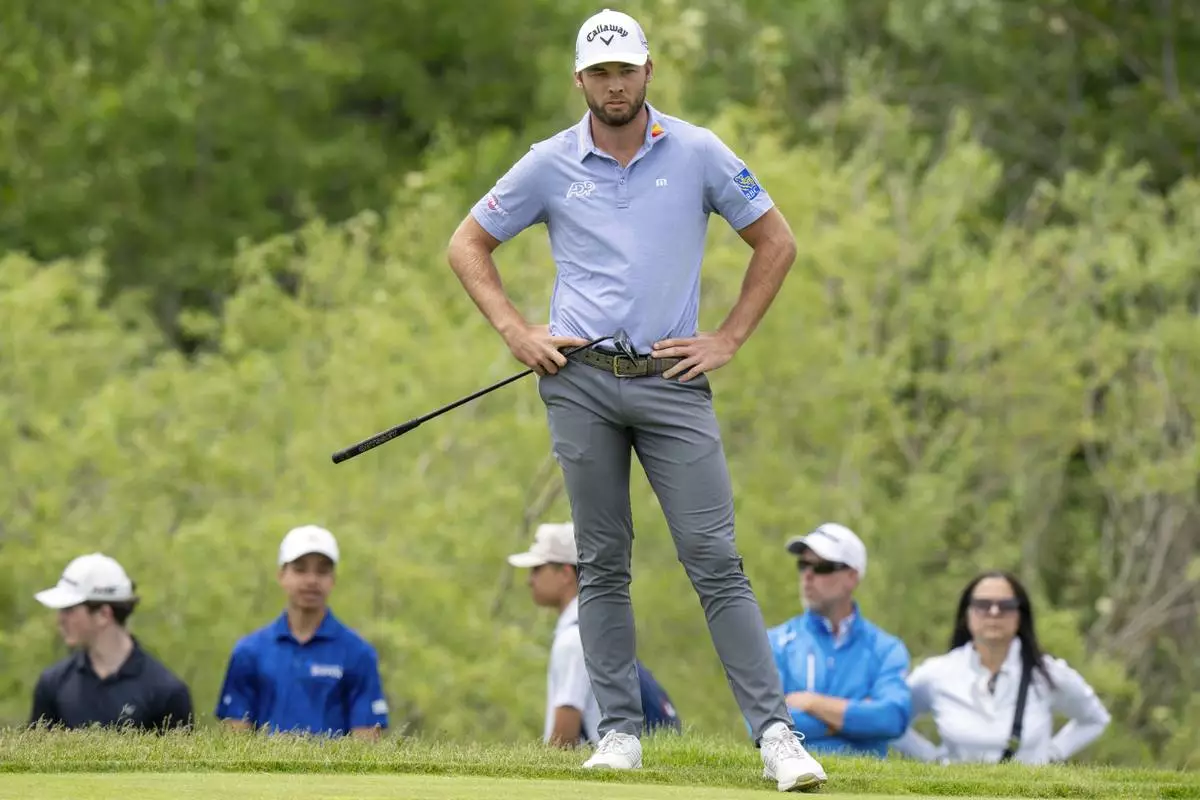
Sam Burns looks at his putt on the 6th hole in the final round of the Canadian Open golf tournament in Caledon, Ontario, Sunday, June 8, 2025. (Frank Gunn/The Canadian Press via AP)
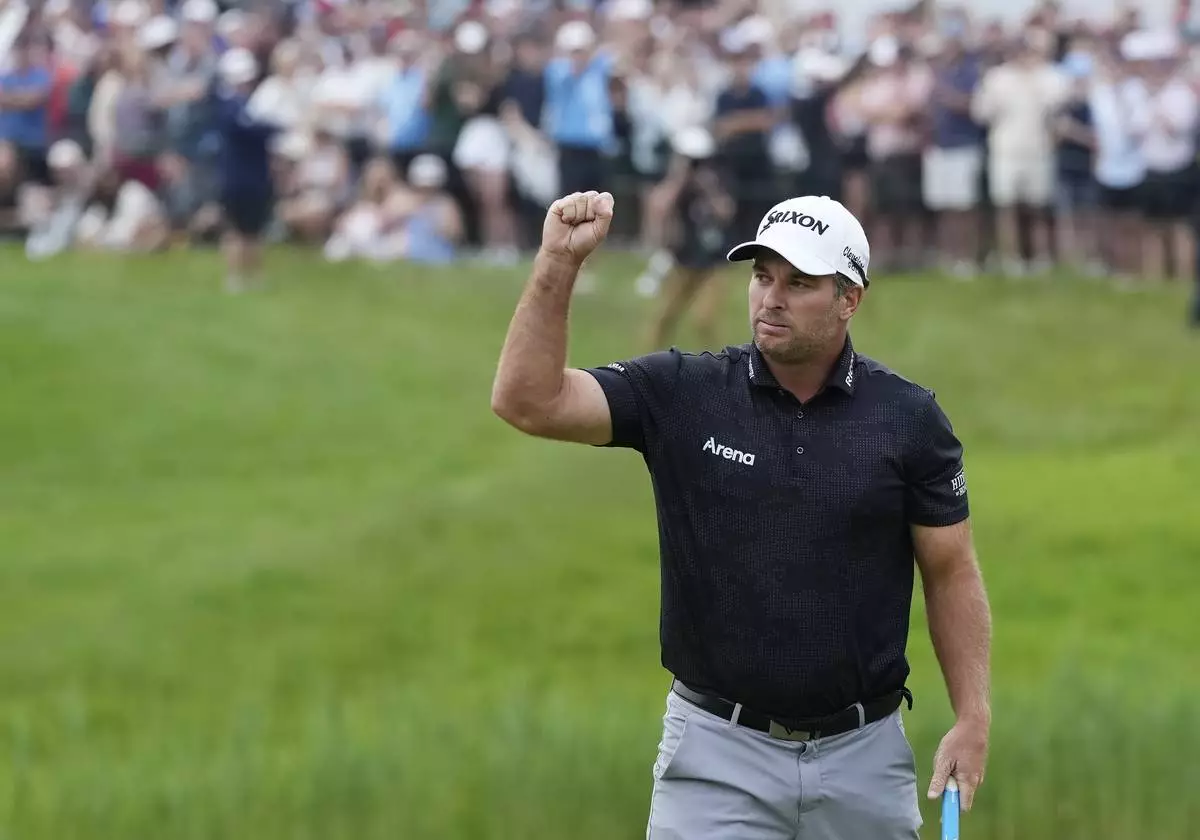
Ryan Fox celebrates after winning the Canadian Open golf tournament on the fourth playoff hole in Caledon, Ontario, Sunday, June 8, 2025. (Frank Gunn/The Canadian Press via AP)
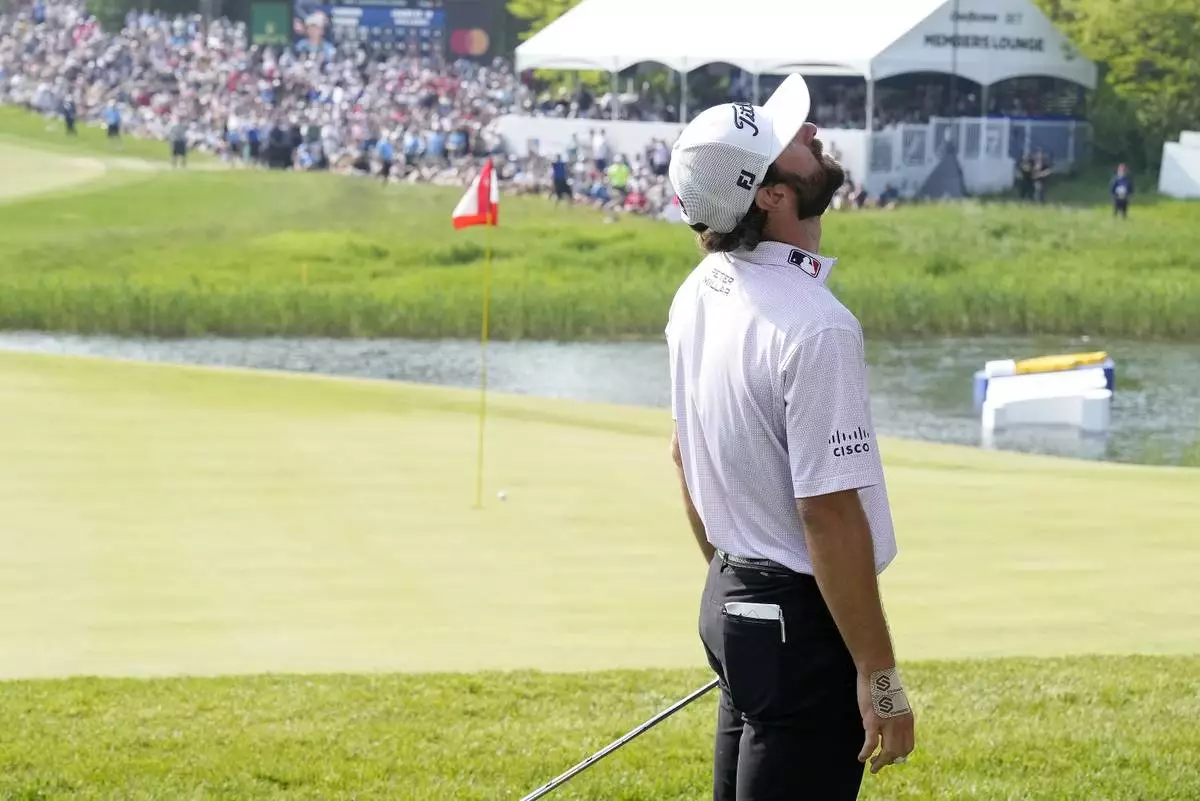
Cameron Young reacts after missing a chip on the 18th hole during the final round of the RBC Canadian Open golf tournament in Caledon, Ontario, Sunday, June 8, 2025. (Frank Gunn/The Canadian Press via AP) /The Canadian Press via AP)
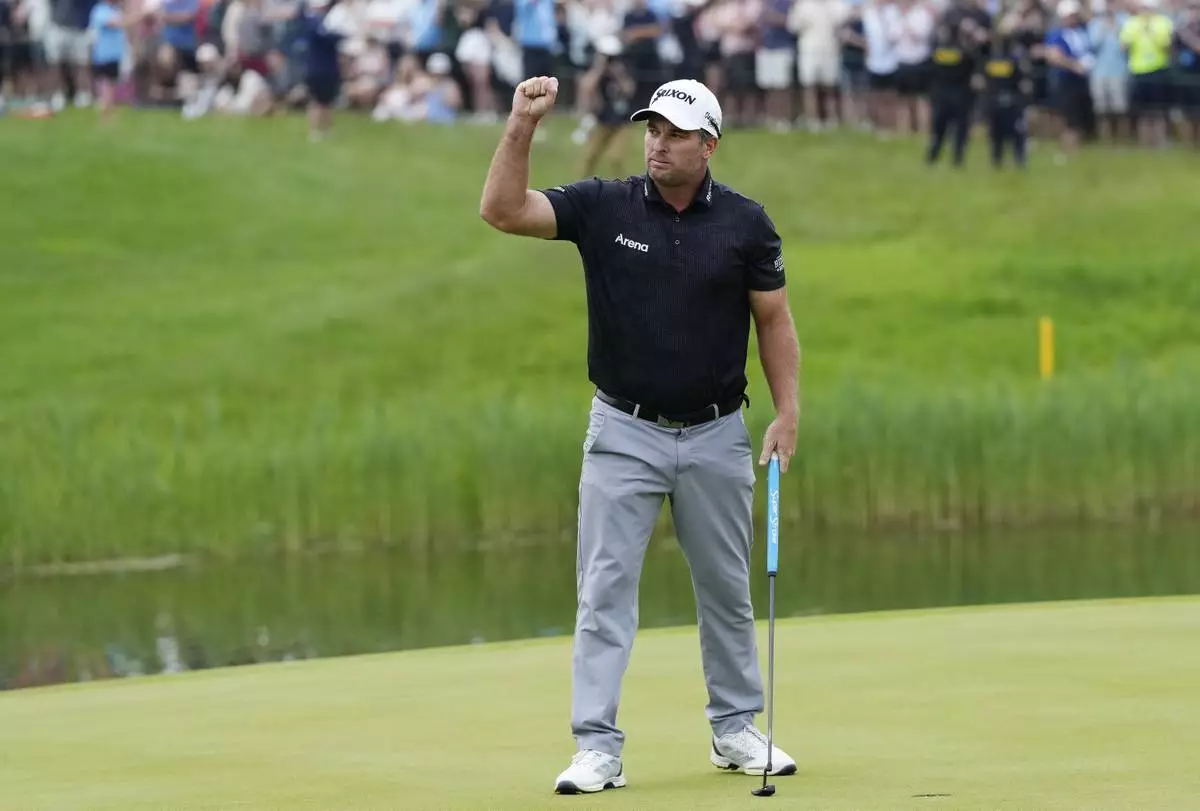
Ryan Fox celebrates after winning the RBC Canadian Open golf tournament on the fourth playoff hole in Caledon, Ontario, Sunday, June 8, 2025. (Frank Gunn/The Canadian Press via AP)
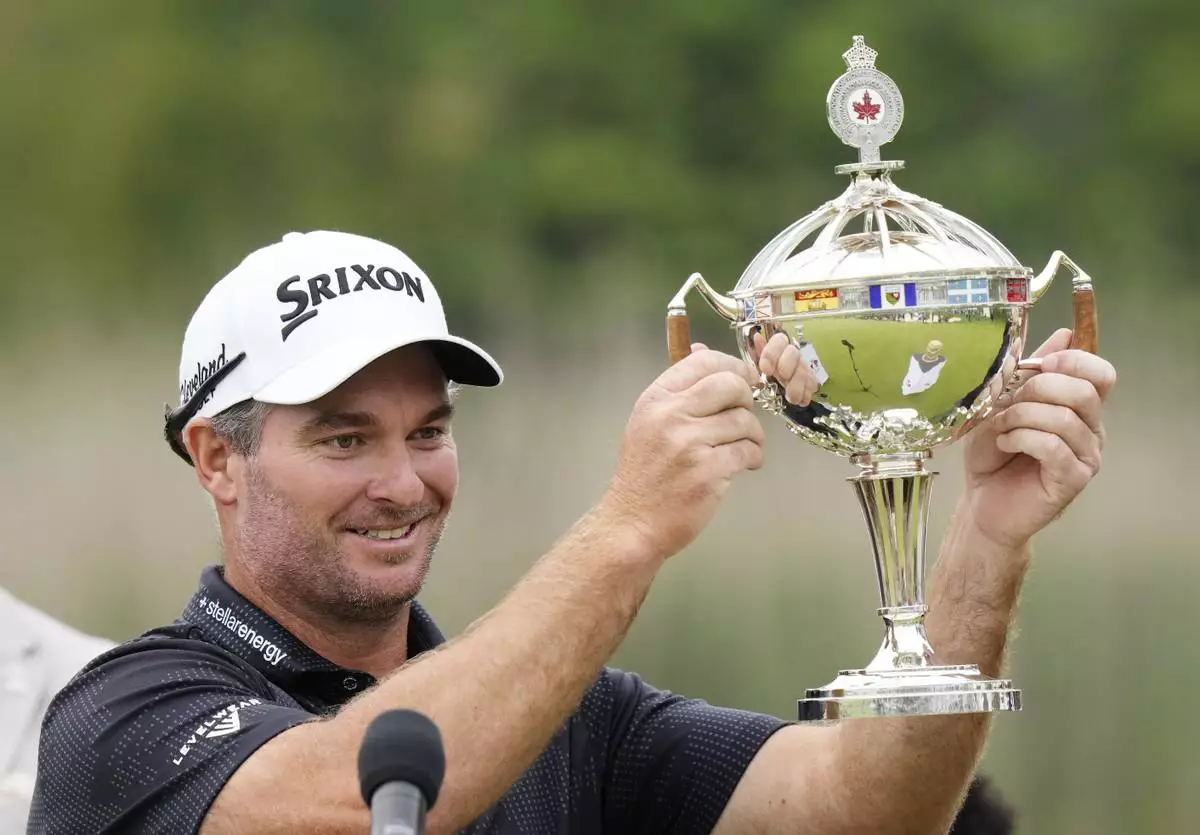
Ryan Fox raises the championship trophy after winning the RBC Canadian Open golf tournament in Caledon, Ontario, Sunday, June 8, 2025. (Frank Gunn/The Canadian Press via AP)
EVIAN-LES-BAINS, France (AP) — Right after his 80th birthday party celebrations, U.S. President Donald Trump is heading to a summit in France of the G7 club of powerful democracies to dive into issues — Iran, Ukraine, trade and more — that have been sources of friction with allies he will be meeting.
Hours before leaving Washington, Trump announced an agreement to end the war — a development that could change the dynamic for the G7 leaders during the talks from late Monday to Wednesday.
Just days ago, when the Iran-U.S. ceasefire was hanging by a thread, with resumed strikes, the gathering on the shores of Europe’s largest Alpine lake appeared headed for stormy waters.
Analysts speculated that tempers could flare and that Trump might not stick around for long in Evian-les-Bains, the Alpine spa town that's been enveloped in a security bubble for the G7 leaders and guests also invited by French President Emmanuel Macron, the host.
Aside from France and the U.S., the other G7 nations are Canada, Germany, Italy, Japan and the United Kingdom.
Here's what to know about their latest annual summit:
Shared values and interests, leaders' personal chemistry and the informality of G7 gatherings — the club first came together in 1975 to brainstorm fixes for the ailing global economy — have facilitated discussion at previous meetings.
“Many of the great G7 summit initiatives have come from leaders’ spontaneous combustion, created by them on the spot, based on free, unrestricted dialogue about the values, memories and even the sports, like baseball, that they share,” said John Kirton, a G7 specialist at the University of Toronto.
But Trump’s relationships with European allies have been fraught even before he launched the Iran war with Israel in February without consulting them. The Evian gathering is their first get-together since then.
Allies that Trump berated for refusing to join the war are likely to greet any Iran deal with relief if it reopens the Strait of Hormuz and enables Persian Gulf energy exports to flow freely again.
As host, Macron has packed the meatiest and potentially most contentious topics into the summit’s first 24 hours, including the Iran war and its impact on energy supplies and the Ukraine war that’s largely slipped down the White House's list of top priorities.
Tuesday's morning session on Ukraine will afford invited guest President Volodymyr Zelenskyy an opportunity to showcase progress that Ukrainian forces are making against the Russian invasion. If Zelenskyy is able to convince Trump that Russian President Vladimir Putin cannot achieve his aims in the war militarily, he might perhaps also be able to persuade him that Putin should be pushed to the negotiating table.
After his Oval Office thrashing by Trump and Vice President JD Vance last year, Zelenskyy now has "a significantly stronger hand,” said Maria Snegovaya, a Russia expert at the Center for Strategic and International Studies, a Washington, D.C., think tank.
The Trump administration “does tend to look more favorably at those states that have certain positions of power tilting in their favor,” she said.
A lunch meeting Tuesday on the Middle East could go any number of ways. The U.S.-Iran deal is expected to be signed on Friday, followed by technical talks on details over the next 60 days. Trump will be pressed for more information about the terms of the agreement.
If it reopens the Strait of Hormuz, France and Britain are expected to make the case that they could help rid the narrow waterway of any mines and escort tankers through it. They have been working on such plans with other nations but have been waiting for a stable ceasefire to launch the mission.
G7 leaders are also expected to talk about developing other energy supply routes out of the Gulf, including via Egypt. The Egyptian president, Abdel-Fattah el-Sissi, as well as Qatar’s ruling emir and the United Arab Emirates' president will join those talks. Trump is also meeting with each of those regional leaders privately during the summit.
China, not a G7 member, is expected to be a focus of economic talks on Wednesday. G7 nations are concerned that China is flooding export markets with subsidized products, unfairly out-competing their own industries and destroying jobs. China's economy dwarfs those of all G7 nations except the United States.
Discussions are also scheduled on artificial intelligence, including how to protect young people online, and how to economically aid developing countries.
Indian Prime Minister Narendra Modi and Brazil’s President Luiz Inácio Lula da Silva are attending some of the summit. So, too, are the leaders of South Korea and Kenya.
The G7 countries take turns hosting and organizing activities. France inherited the G7 presidency from Canada, last year’s summit host, and will pass it to the U.S. in 2027.
The club's first summit, in Rambouillet, France, in 1975, brought together the leaders of six nations — France, West Germany, Italy, Japan, the U.K. and the U.S. — for brainstorming on how to speed their recovery from the sharpest economic slump since World War II. Canada joined the following year, making the G7.
No G7 leader has ever skipped an annual summit, a perfect attendance record for more than 50 years, said Kirton, the University of Toronto specialist.
Membership has always been limited to democracies, enabling Russia to join as a fledgling democracy in 1998 but ruling out Communist Party-ruled China.
The club has broken off with Russia since 2014, when Putin seized Crimea from Ukraine, foreshadowing the full-scale war now raging since 2022.
Associated Press writers Jamey Keaten in Geneva and Sylvie Corbet in Paris contributed.
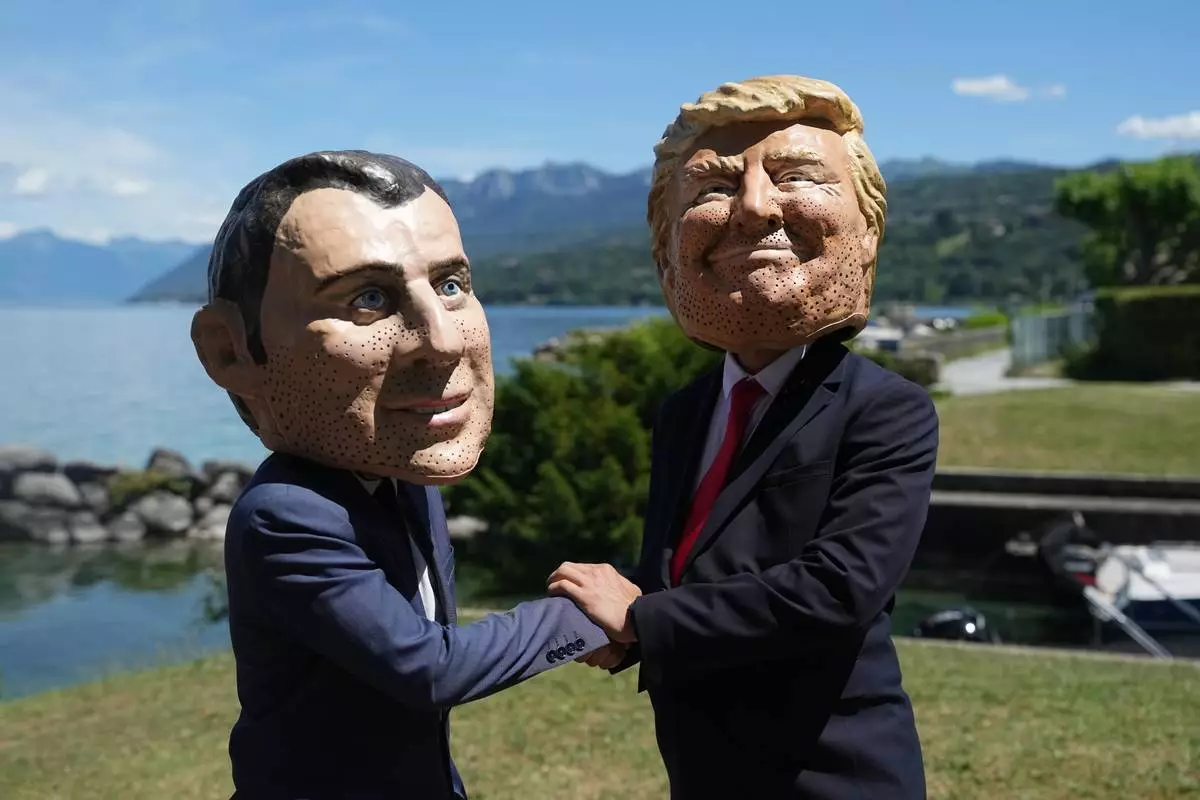
Oxfam's satirical 'big heads' of the G7 leaders depicting French President Emmanuel Macron, left, and U.S. President Donald Trump pose, in Evian-les-Bains, France, Sunday, June 14, 2026, ahead of the G7 summit scheduled to take place in France June 15-17. (AP Photo/Thibault Camus)
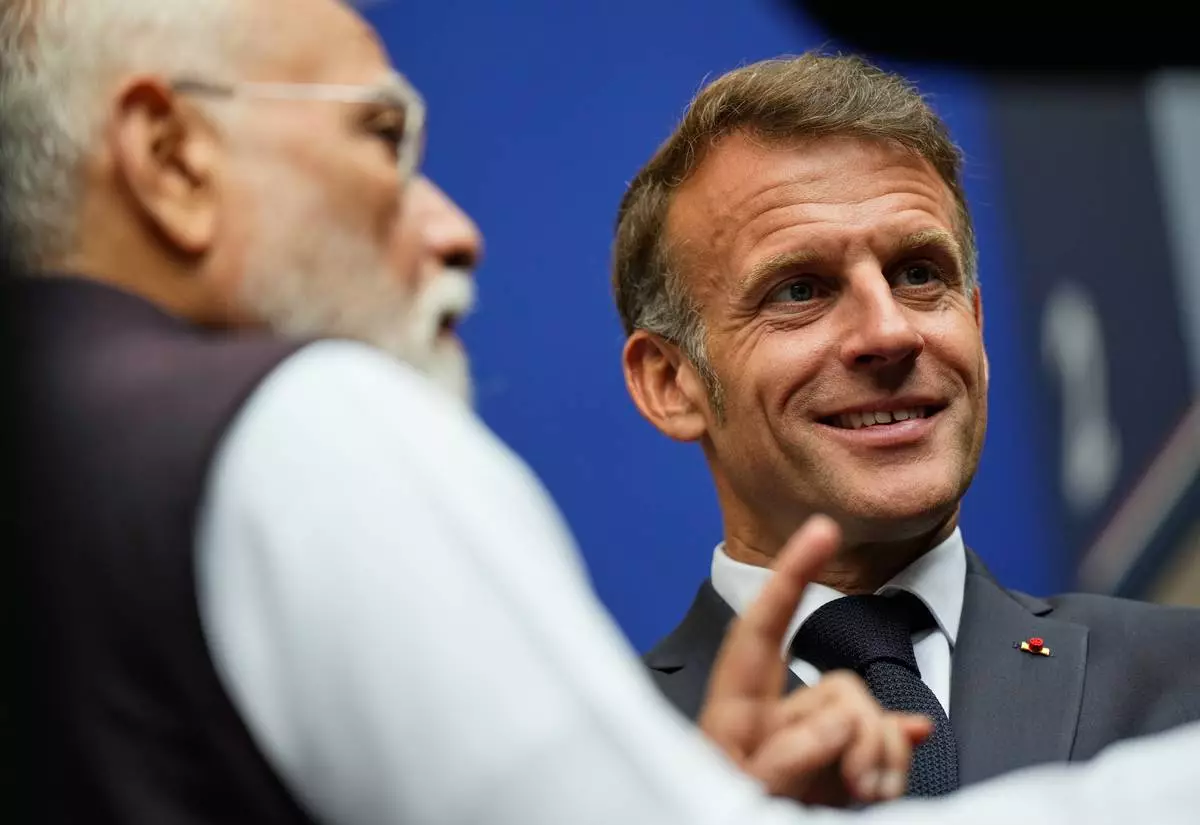
Indian Prime Minister Narendra Modi, left, and French President Emmanuel Macron attend an Indian education and ecosystem event in Nice, southern France, Sunday, June 14, 2026. (AP Photo/Lewis Joly, Pool)
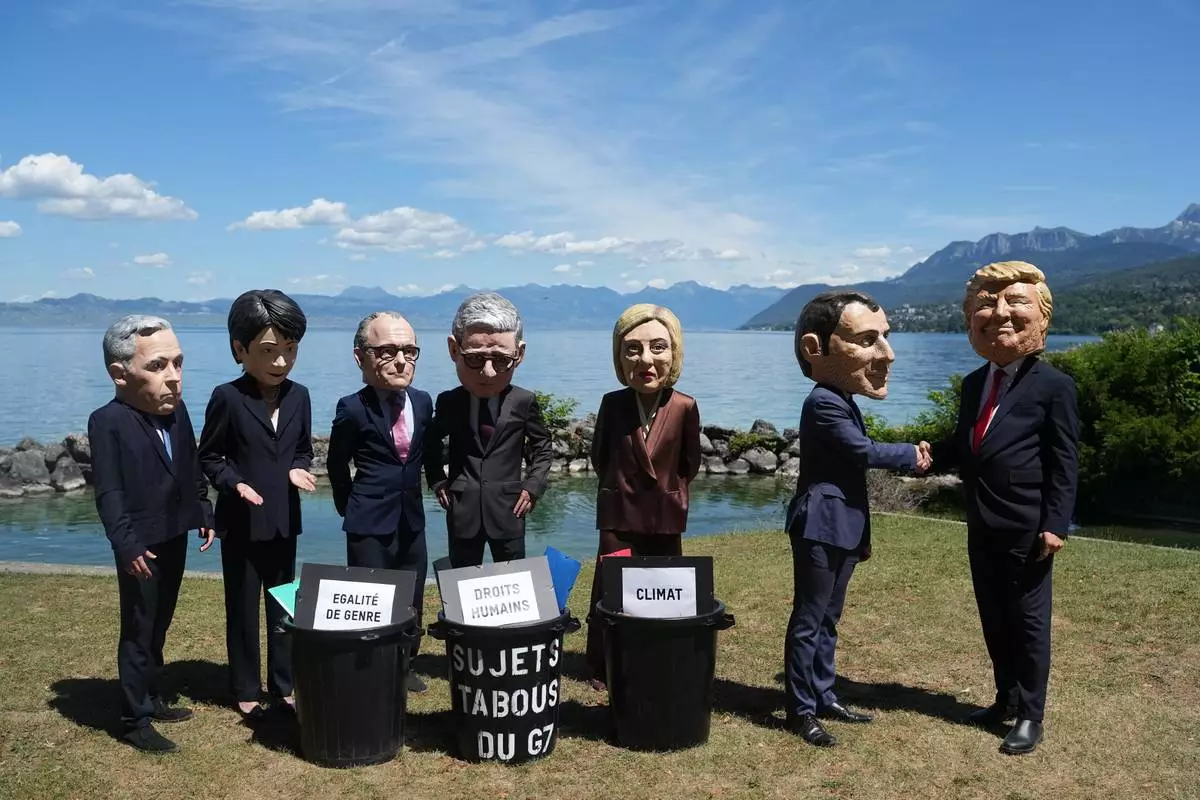
Oxfam's satirical 'big heads' of the G7 leaders pose, in Evian-les-Bains, France, Sunday, June 14, 2026, ahead of the G7 summit scheduled to take place in France June 15-17. (AP Photo/Thibault Camus)