China's smart highway platform is cutting congestion and boosting rescue speeds across the country's busiest roads. Nowhere is this more evident than in Guangdong Province - home to China's most extensive expressway network - where AI-powered systems recently managed a record 9.15 million vehicles in a single day during peak holiday travel.
By integrating real-time traffic monitoring, predictive analytics, and automated emergency response, the technology is transforming how mega-cities handle extreme traffic volumes while keeping drivers safe.
With over 6 million vehicles traversing Guangdong's 11,700-kilometer expressway system daily, Guangdong is using technology to streamline mobility.
The "YueTongXing" service platform empowers drivers to check real-time traffic conditions and avoid congestion before hitting the road. In the event of an accident, drivers can use the platform's AI-powered "Road Rescue" feature to instantly share their precise location with emergency responders - boosting rescue efficiency and reducing response times by 40 percent.
From real-time traffic updates to customized route planning, from service area navigation to ETC processing and expressway invoicing, and from basic congestion indicators (red/yellow/green) to detailed average speed displays - the "YueTongXing" platform serves as the intelligent core of Guangdong's highway network, functioning as a unified digital ecosystem for comprehensive travel services.
"This intelligent hub goes far beyond simple information aggregation. By integrating cutting-edge technologies including cloud computing, big data analytics, AI, and large language models, it processes massive real-time traffic data and user demand patterns to deliver smart, personalized mobility services," said Zhou Haomin, general manager of Guangdong Transportation Group Road Network Car Owner Travel Service Platform Project Department.
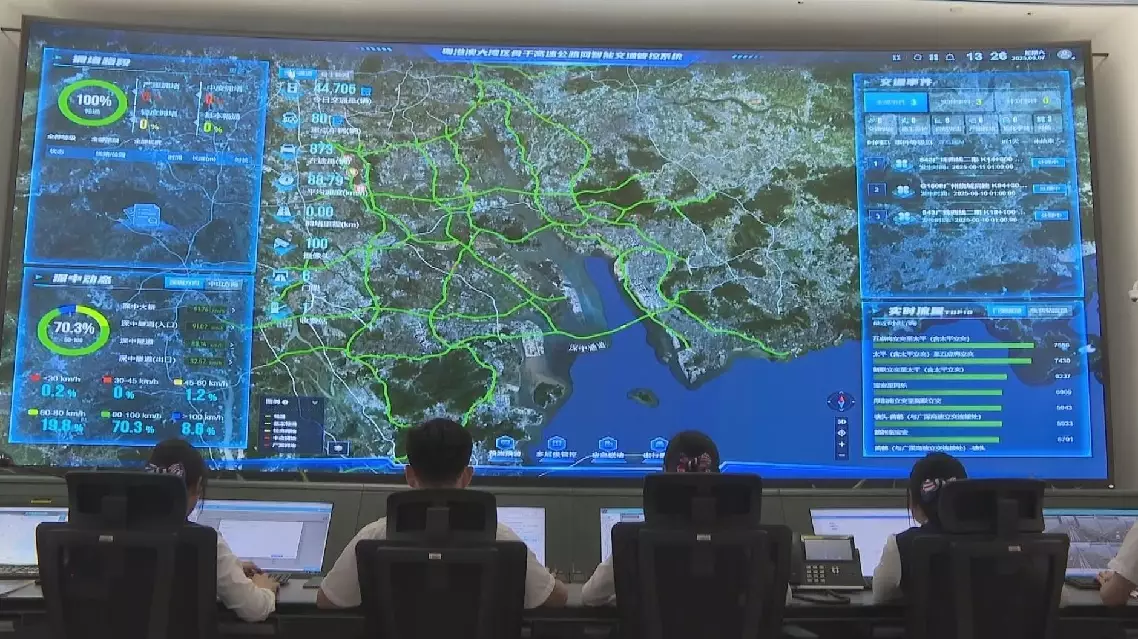
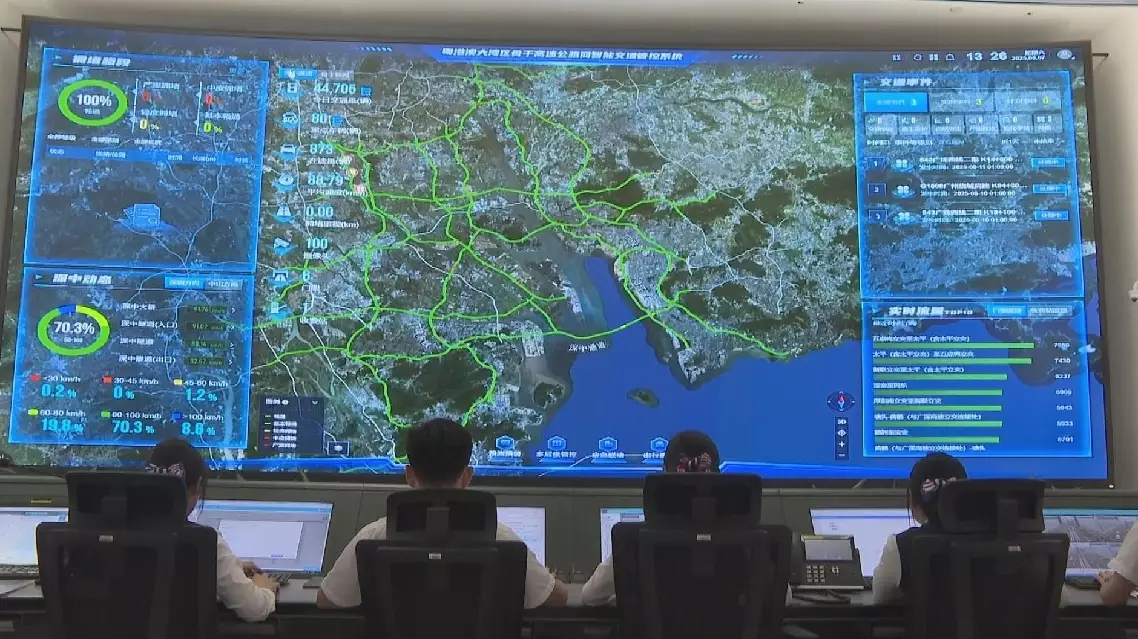
In the command center of the Guangdong-Hong Kong-Macao Greater Bay Area's smart highway management platform, the Pearl River Estuary cross-sea channel network has been divided into three core control zones.
Through real-time monitoring and analysis of traffic flow, vehicle speeds, and incident data, the system can promptly detect and predict traffic congestion and abnormal situations. It automatically generates management plans and response strategies, while coordinating relevant departments for timely resolution.
"We've developed a sophisticated multi-level traffic control model operating at lane, road section, and network scales. This system optimizes traffic flow distribution across the entire Greater Bay Area highway network, significantly improving overall traffic efficiency," said Xu Xianwei, R&D team member of Guangdong Transport Group's Greater Bay Area Smart Management Platform.
China's smart highway platform cuts congestion, boosts rescue speeds
China;s smart highway platform cuts congestion, boosts rescue speeds
After more than three months at sea, members of China's 16th Arctic Ocean expedition have jointly created a painting that captures both the triumphs and trials of polar scientific research.
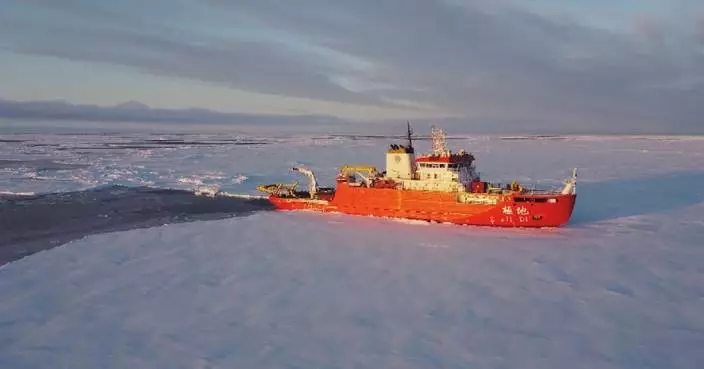
Organized by the Ministry of Natural Resources, the expedition deployed four ships, Xuelong, Xuelong 2, Jidi, and Tansuo 3, to study extreme environmental changes in the Arctic against the backdrop of accelerating global warming. On September 29, Xuelong and Xuelong 2 returned to Shanghai after completing their missions.
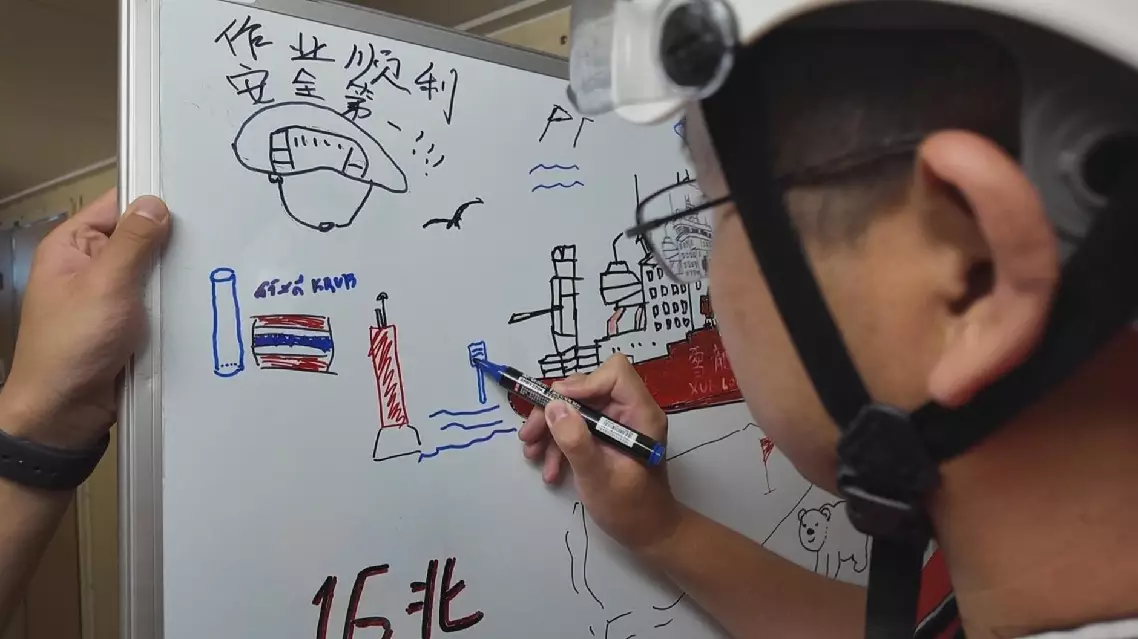
During the voyage, China Media Group (CMG) reporters aboard Xuelong invited nearly 100 crew members to collaborate on a canvas, sharing their experiences. The painting depicts the difficulties and challenges they faced, the honors and expectations of their research, and the images of those dedicated to science.
Before any crew member ever picked up a brush, the Arctic had already sketched the background with its extreme weather. Strong winds, torrents, and a harsh environment posed major challenges for the researchers.
"After staying outside for some five or ten minutes, our hands would already be frozen red. When we reached the trough of the waves [on a boat], it would look as if the waves were coming right over our heads," recalled Zhu Chengwei, an expedition member.
Despite the hardship, the researchers successfully tested and used domestically produced advanced ocean observation equipment in polar research -- one of their proudest moments, which they recorded on the canvas.
Qin Chuan, captain of the Xuelong ocean team, chose to paint a domestically produced monitor float.
"This is an Argo float we deployed, which automatically monitors ocean profiles. It has great significance for understanding the basic marine environment, and it's made in China," he said.
Xie Haixiang, director of the Xuelong laboratory, sketched a fundamental research equipment for the trip.
"I will draw a CTD (Conductivity, Temperature, and Depth instrument). The CTD is the most important equipment for ocean surveys, providing the most basic data and water samples," he said.
"Only by carrying equipment onto the Arctic sea ice yourself and lowering the instruments, can you get what you want. For instance, we take a little ocean water, and analyze what's in it, to understand the changes each year. Global warming needs to be understood through different dimensions," recalled researcher Zhu.
Beyond the canvas, what stands out even more striking are the moments of dedication: veteran members leading newcomers onto the ice, a group holding its ground in level-8 gales and heavy snow, and 30 people relaying to recover equipment stuck in the ice.
The most important element, beyond any record or image in the painting, is this group of expedition members who fear no hardship.
"Whenever I think of the polar spirit, countless images of those standing at the very front would flash before my eyes," Zhu said.
"What we have done today will benefit future generations. Although we are doing something that may seem very insignificant, I believe it will surely prove its worth in the future,"said Ning Wenfeng, another team member.
China's 16th Arctic expedition crews paint portrait of proud polar expedition moments, hardships