Heilongjiang in northeast and Hubei in central China are rolling out new itineraries for summer tourism.
In Tongjiang City of Heilongjiang, a riverside park comes alive at dusk with newly launched night cruises. Locals and tourists get on board white egret-themed boats or bamboo rafts to enjoy evening views along the Songhua River.
"When taking photos by the rails, the river breeze touches on you, give you a magical feeling," said a tourist.
The route connects the park's core scenic spots with the wetlands to the north, offering shimmering waterfront vistas.
Beyond the cruise, nearby attractions like Xunke County's newly opened Red Pomegranate cultural village feature live performances and games, demonstrating the region's summer charm.
Down south, Wuhan, the provincial capital of Hubei, has turned frequent rains into a kind of attraction. Cruise ships on the Yangtze River now detour beneath the Yangsigang Bridge, where passengers experience a curated "listening to rain" moment as water cascades from the bridge like a waterfall.
"It's incredibly romantic -- with the water falling, making you feel like waiting for someone in mist," said a tourist.
Aboard, guests can sip themed cocktails like Waiting for Rain and collect special commemorative stamps of their unique watery journey.

Heilongjiang, Hubei present new itineraries for summer tourism
Twenty-six people have been rescued after a nine-story building under construction collapsed early Sunday in Angeles City in the northern Philippines, according to local government authorities.
The Disaster Risk Reduction and Management Office of Angeles said 24 people were pulled from the collapsed structure, while two others were rescued from a nearby aparthotel struck by the incident. Rescue teams are still searching for any individuals who may remain trapped.
Emergency crews cut through layers of shattered concrete and twisted metal, pausing repeatedly to listen for signs of survivors beneath the wreckage.
"Our personnel from the search and rescue team who were conducting the initial assessment were the ones who heard the victims moaning in pain," said Maria Sajili, spokesperson of the Bureau of Fire Protection.
Earlier reports said at least 30 people had been trapped under the building.
The Angeles City Information Office said the accident occurred around 03:00 local time, turning much of the site into a mountain of rubble.
Heavy rains and strong winds preceded the collapse, with 44 millimeters of rainfall recorded between 19:00 and 20:00 on Saturday, according to local atmospheric services.
Several workers managed to escape during the initial collapse, while others nearby suffered minor injuries. Emergency personnel from multiple agencies have since been deployed, but the officials said the effort remained extremely challenging.
Rescue crews are navigating unstable concrete slabs, tight voids within the wreckage, and the constant risk of further collapse.
"Challenges, of course, (include) the heat of the sun, and plus it's a massive construction -- concrete, steel and scaffoldings are very heavy and challenging for our responders," said Jay Pelayo, information officer of Angeles City.
Heavy machinery has been deployed to clear parts of the collapse site, but much of the rescue work is still being carried out by hand, with crews moving cautiously through the unstable wreckage in search of survivors.
Investigators have yet to determine the cause of the collapse. Authorities are now examining whether structural weaknesses, construction issues, or other factors may have played a role in the collapse.
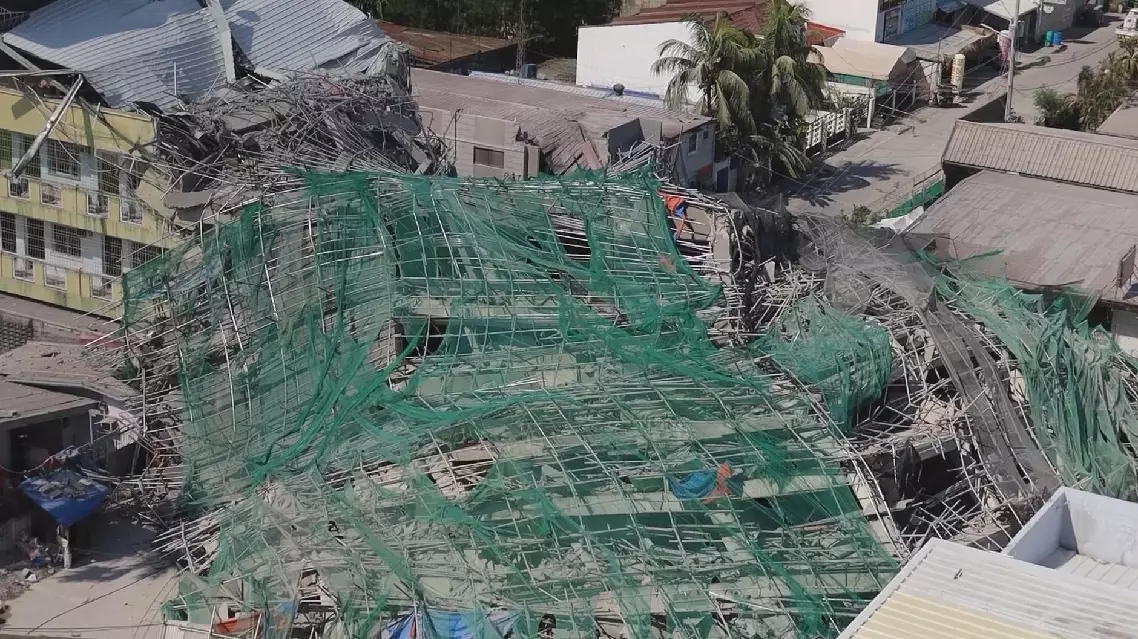
26 rescued from building collapse site in N. Philippines