The main structure of a radio telescope has been shipped from China to Brazil, signaling the start of its construction in the Latin American country as part of an international space science collaboration between the two countries.
The telescope will be built in Paraiba State, on the edge of the Amazon rainforest, as a significant international collaboration in the field of radio astronomy and space science known as the Bingo project.
It is the largest radio astronomy initiative in South America and the only radio telescope globally focused on dark energy research, specifically designed to observe the widely distributed neutral hydrogen in the universe.
By studying the spectral lines of neutral hydrogen, researchers can better understand the distribution of hydrogen in the cosmos, thereby gaining insights into the structure and evolution of the universe, and helping to unveil the mysteries of cosmic structure and dark energy.
In addition to detecting important signals from deep space, the telescope will also monitor the movements of small celestial bodies such as satellites and meteoroids, providing warnings about potential threats to Earth.
The main design and processing of this telescope were completed by Chinese experts.
"The telescope employs a dual-offset structure, with each section having a unique shape. Installation in Brazil will be carried out by the Brazilian side, which necessitates a simplified installation process. Therefore, we drew extensively from domestic advanced telescope design and manufacturing experiences, using a combination of panels and spatial truss structures to effectively address issues of mass production and efficient installation," said Wu Yang, senior engineer from the 54th Research Institute of the China Electronics Technology Group Corporation (CETC) and a core project member.
The main structure of the radio telescope will depart from Tianjin Port and is expected to arrive at Suape Port in Brazil after nearly two months of transit. The project is anticipated to be completed by 2026.

Radio telescope shipped to Brazil for collaboration project with China
Japan's reliance on U.S. economic policy is allowing foreign funds to acquire Japanese assets at bargain prices, according to Japanese economist Kazuhide Uekusa.
He warned that the government's economic and defense strategies prioritize foreign capital and political profits over public welfare, failing to bring true prosperity to ordinary citizens.
The Bank of Japan (BOJ) on Friday raised its policy interest rate by 0.25 percentage points to 1.25 percent, the highest in about 31 years, following a two-day board meeting.
According to Uekusa, the timing of the shift aligns perfectly with the interests of large American funds.
"The Takaichi Cabinet has been reluctant to raise interest rates, thus allowing the yen to continue to depreciate. I think this is actually equivalent to helping foreign capital purchase Japanese assets at a low price. However, U.S. Treasury Secretary Scott Bessent has recently made a clear adjustment to the policy direction of the U.S. dollar against the Japanese yen, promoting the appreciation of the Japanese yen. The reason is that some large funds in the United States have basically completed their investment layout in Japanese assets," said Uekusa.
Uekusa also said Japan cannot attempt to revitalize its economy by expanding military spending and supporting the defense industry, and such a military buildup strategy is unlikely to bring about true prosperity and stability.
"I think it is true that the Japanese economy has been stagnant for a long time. However, to expand military spending in an attempt to revitalize the economy is, in my opinion, an extremely foolish and even crazy move. To achieve peace and stability in Japan, the foundation should be to establish friendly relations with neighboring countries rather than military expansion. The reason why the Japanese government attaches so much importance to the military industry is that it can generate huge profits, and a part of these profits may flow back to political parties or political figures through various means. I don't think this is at all for the benefit of the people," he said.
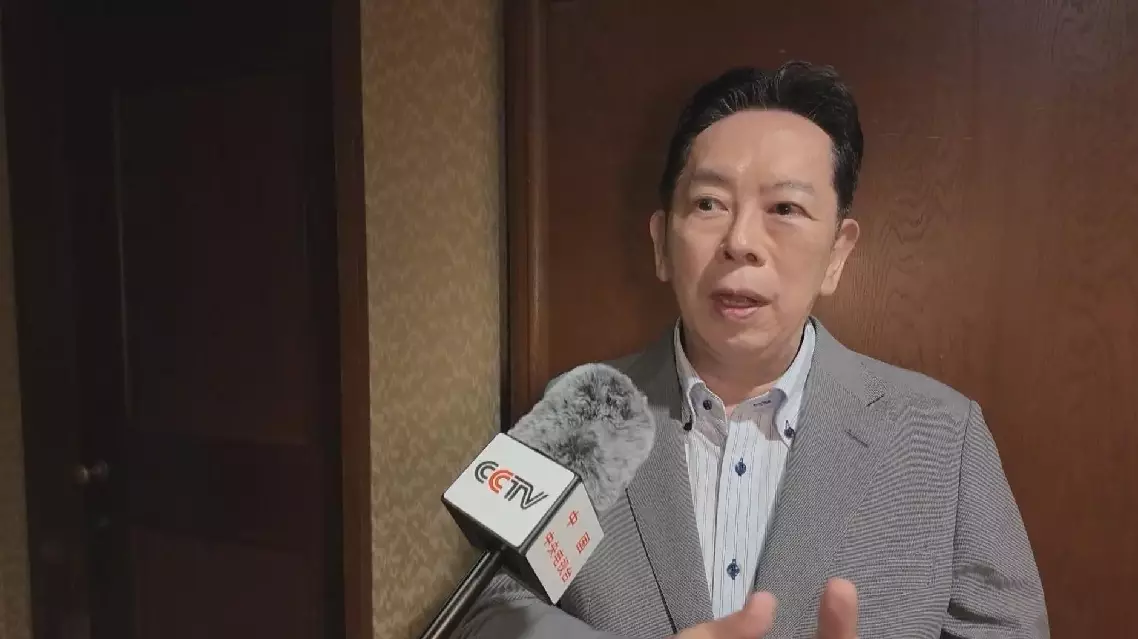
Japanese economist criticizes gov't policies for enabling cheap asset sales to foreign funds