China's private enterprises, which are core engines of the country's foreign trade, have driven growth by expanding export volumes on the back of new technological breakthrough.
In 2024, private enterprises became one of the core engines of China's foreign trade for the first time, occupying a central position among foreign trade entities.
The latest data from the General Administration of Customs show that in the first five months of this year, private enterprise imports and exports totaled 10.25 trillion yuan (about 1.435 trillion U.S. dollars), marking an increase of seven percent and accounting for 51.7 percent of the national total, 2.4 percent higher than in the same period last year.
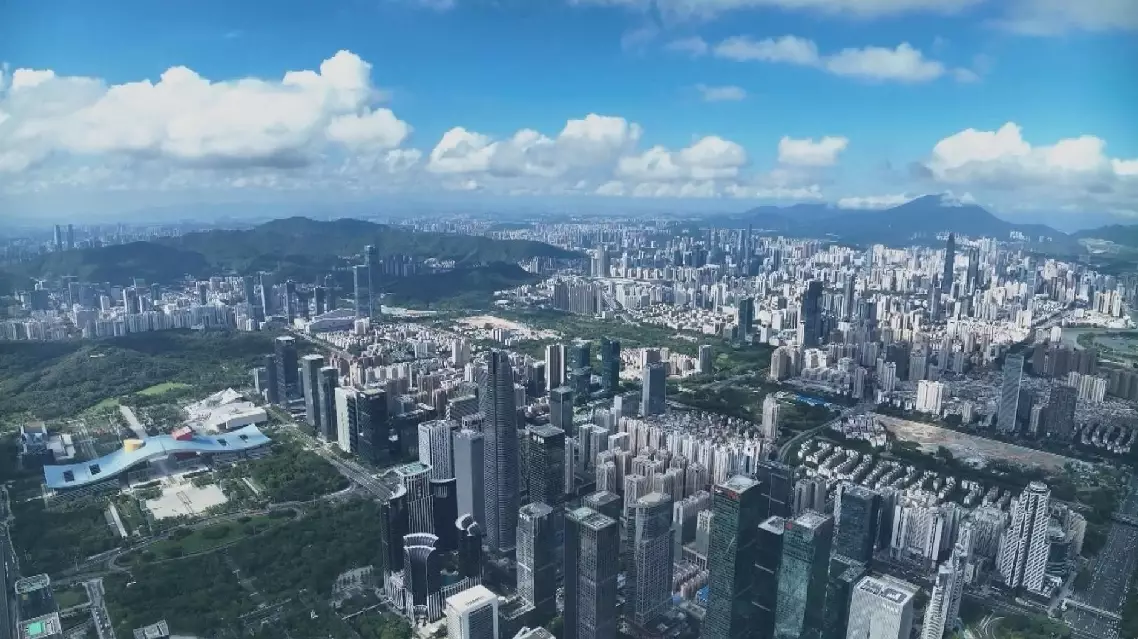
Known as a frontrunner in the nation’s ambition to open-up and develop, Shenzhen City in south China's Guangdong Province is home to one of China's earliest special economic zones, where enterprises of different sizes and with different backgrounds thrive.
This year, 87 national-level "little giant" enterprises that apply special, sophisticated techniques to produce unique and novel products have registered in the city, the most in the country in terms of the number of new additions.
Private enterprises are also the major contributors to Shenzhen's foreign trade growth, with their imports and exports accounting for over 70 percent of the city's total.
Distinctive industrial belts and sci-tech parks are scattered across different administrative regions, with many hosting these "little giant" enterprises.
At a technology industrial park in the city's Bao'an District, RobotAnno (Shenzhen) Co., Ltd, an AI-based coffee-making robot manufacturer, has built a robot that can complete a cup of latte coffee with an artistic design in the foam in just 90 seconds, three times quicker than a human barista can do it. Their AI-based beverage robots are now sold in over 70 countries around the world.
"Over the past two years, our company has achieved exponential growth, doubling both annual production capacity and output. The monthly production capacity of our robotic arms has reached 200 units. From customer demands to prototype delivery, it takes us only 168 hours," said Huang Huang, founder of RobotAnno.
Panoramic camera (360-degree VR camera) manufacturer Insta360 is also based in Bao’an, where they make cameras that have held top position in global market share for this type of product for six consecutive years.
The company typically launches new products every six months to a year, allowing them to swiftly respond to changes in market demand. This rapid iteration capability is largely attributed to Shenzhen's comprehensive and efficient industrial chain.
"Being based in Shenzhen, we can access the widest array of supply chain and market resources within a two-hour drive. Shenzhen also brings together numerous high-tech companies and innovative talents, providing an excellent environment for our product innovation. This strong support spans from research and development to market entry," said Chen Yongqiang, founder of Insta360.
Data shows that in 2024, Shenzhen was home to 2.623 million private businesses, which continue to grow and thrive, making new breakthroughs in strategic emerging industries such as biomedicine, new energy and the low-altitude economy while steadily growing their export volumes.
China's private enterprises drive foreign trade growth with new breakthroughs