DALLAS--(BUSINESS WIRE)--Jun 11, 2025--
Arcis Golf, the second largest owner and operator of golf facilities in the United States, has acquired three nationally-recognized clubs: The Country Club of the South (Johns Creek, Georgia), The Manor Golf & Country Club (Alpharetta, Georgia), and White Columns Country Club (Milton, Georgia). The transactions closed yesterday, and Arcis Golf assumes operations of all clubs today.
This press release features multimedia. View the full release here: https://www.businesswire.com/news/home/20250611141755/en/
The Country Club of the South
“The acquisition of three historic clubs – each distinguished by exceptional courses, facilities, and amenities – brings a fresh dimension to our diverse collection of private, daily-fee and resort properties, marks an exciting new chapter for Arcis Golf,” said Blake Walker, Founder, Chairman and CEO of Arcis Golf. “The Country Club of the South, The Manor Golf & Country Club, and White Columns Country Club fit perfectly into our strategy of owning and operating premier properties in key expansion markets, underscoring our unwavering commitment to growing the game of golf and creating transformative lifestyle experiences. We look forward to investing in capital improvements and bringing our family-centric, lifestyle-driven model to these clubs as we continue to address the wide-ranging needs of our diverse consumer base and provide an open and inclusive experience.”
“It has been a true privilege to have been a steward of these outstanding clubs,” said David Pillsbury, CEO of Invited, the previous owner of the clubs. “We are confident that under Arcis Golf’s ownership, the clubs will maintain their renowned reputations and continue to deliver exceptional golf and lifestyle experiences to their members for years to come.”
Arcis Golf plans to invest significant capital in golf course enhancements and lifestyle amenities across the three clubs. This is Arcis Golf’s 18 th club acquisition in the last three years, and with these acquisitions, the Company now owns 54 holes across three clubs in the Atlanta area. Arcis Golf’s national portfolio includes The Woodlands Country Club in Houston, Texas, Champions Retreat Golf Club in Augusta, Georgia, Cowboys Golf Club in Dallas, Texas, Grayhawk Golf Club in Scottsdale, Arizona, and The Club at Snoqualmie Ridge in Seattle, Washington. Arcis Golf’s clubs have hosted competitions at the highest levels including PGA Tour, LPGA Tour, and premier amateur events, such as the Augusta National Women’s Amateur and NCAA Division I Championships.
An industry leader in providing inventive programming and unrivaled lifestyle amenities that complement exceptional golf offerings, Arcis Golf has invested more than $150 million over the past four years on property upgrades, new amenities, personnel, training, and systems to create extraordinary experiences and forge emotional connections with members and guests. The Company has received numerous honors, including recognition on the Inc. 500 list of fastest-growing private companies in America.
To learn more about Arcis Golf, visit www.arcisgolf.com.
Each of the three signature properties has a distinctive identity and differentiated offerings.
The Country Club of the South (Johns Creek, Georgia)
The Country Club of the South, Atlanta’s premier destination for golf, offers an 18-hole signature golf course, which was designed by the legendary Jack Nicklaus and revered as one of the most demanding courses in Atlanta. The club also features on-site restaurants, a tennis center with six clay and six hard courts, state-of-the-art facilities, group classes and personal training, and a private event venue.
The Manor Golf & Country Club (Alpharetta, Georgia)
The Manor Golf & Country Club is a Distinguished Club of America that offers an 18-hole golf course designed by the legendary Tom Watson and stands among only 16 courses in the world designed by Watson. In addition to its championship golf course, the club features robust junior golf and tennis programs, premier dining, world-class amenities, vibrant social events, and elegant private venues.
White Columns Country Club (Milton, Georgia)
White Columns Country Club offers an 18-hole championship golf course that was designed by Tom Fazio and has earned consistent recognition as one of Atlanta's premier golf courses. The club also offers world-class amenities, including swimming, tennis, pickleball and fitness facilities, lively social events, premier dining, and private event venues.
About Arcis Golf
Arcis Golf is a premier owner and operator of 70 private, resort, and daily fee clubs in the United States. Arcis Golf continues to transform its portfolio of clubs into inclusive, lifestyle hubs with dynamic programming and unrivaled amenities. Golf and country clubs are elevated to levels of excellence designed to exceed the needs and expectations of families, friends, members, and guests of all ages. The Company is also known for innovative management, with a best-in-class leadership team that is committed to enhancing service levels and reinventing the modern club experience. Headquarters: 8343 Douglas Avenue, Ste. 200, Dallas, TX 75225. Phone: (214) 722-6000. Website: arcisgolf.com.

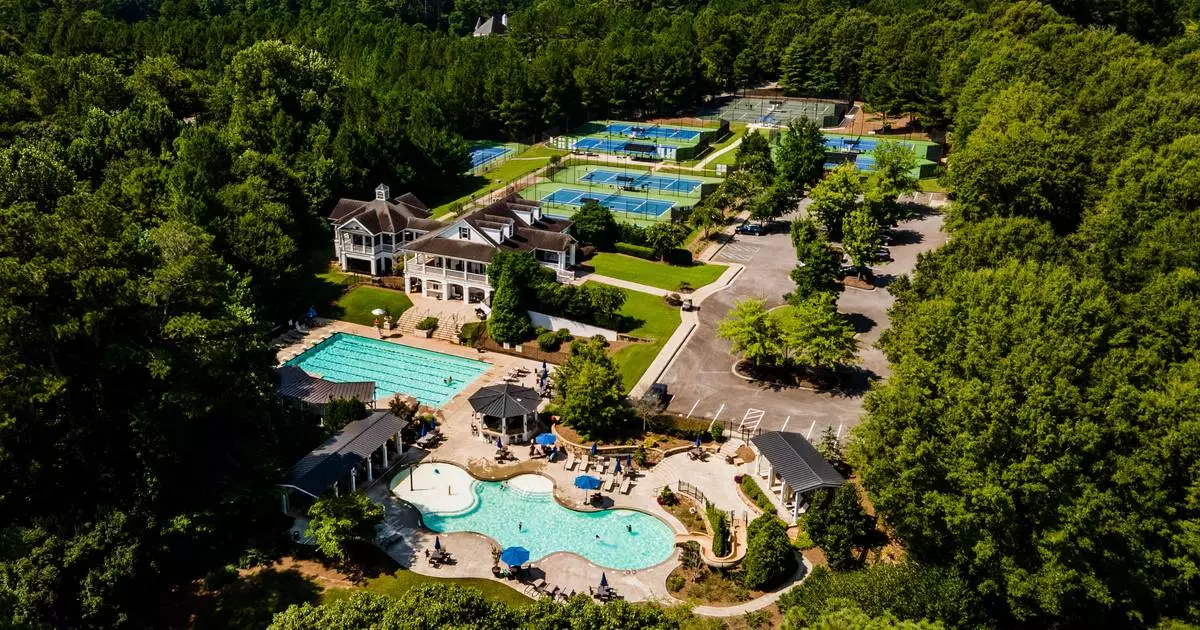
White Columns Country Club
The Manor Golf & Country Club
NEW YORK (AP) — U.S. consumers haven’t stopped spending money since the Iran war drove up fuel prices, but many shoppers are reassessing what they buy and where, according to company executives and retail analysts.
The behavior changes observed so far are subtle, such as altered routines for buying gasoline and fewer visits to clothing and furniture stores. They also are uneven across the population. During recent earnings calls with analysts, executives from American mainstays like Walmart, McDonald's and Dollar General cited overall shopper resilience as well as noticeable cutbacks by lower-income customers.
But the new signs of strain cited by major retailers as generous income tax refunds helped shore up their sales make some economists and analysts think they will see a wider retrenchment when the refunds are gone and consumers face the cumulative impact of more expensive gas and higher prices for food, clothing, insurance and other goods and services.
Trevor Chapman, a communications executive in West Hills, California, said that instead of going to a local independent gas station, he and his wife now plan their fuel stops around Costco stores with filling stations. The couple also is doing more online food shopping to avoid impulse buys, he said.
“Gas is a kind of catalyst,” Chapman said. “It trickles down into the entire budget. We’re trying to keep everything as normal as possible. But it’s starting to feel like it’s adding up more and more.”
Well before the U.S. and Israel launched the war, many consumers already were being more choosy with their discretionary purchases, fatigued by several years of stubborn inflation and tariffs on imported goods imposed last year.
The U.S. Commerce Department reported last week that higher prices, not more purchases, accounted for most of the growth in Americans' spending in April, when a key inflation gauge reached the highest level since October 2023.
Members-only warehouse stores like Costco, Walmart's Sam's Club and BJ's Wholesale Club have seen more traffic at their fuel pumps since the war began in late February, according to the companies. Fuel typically costs less at the wholesale clubs.
But many drivers are not filling their tanks up, Walmart Chief Financial Officer John David Rainey told analysts late last month. For the first time since 2022, Walmart customers and Sam’s Club members are buying an average of less than 10 gallons per trip, he said.
“That’s an indication of stress,” Rainey said.
Costco members also are making changes. They are visiting store gas stations more frequently to “top up in between what would have normally been a gap between getting the tank to empty because of the concern about what might the gas price be tomorrow,” Chief Financial Officer Gary Millerchip said in late May.
Meanwhile, the gas price surge has hurt convenience stores, where 80% of all fuel is sold in the U.S., according to Jeff Lenard, a vice president at the National Association of Convenience Stores.
A sales analysis by the trade group found that the number of pump transactions at the properties of 130 convenience store companies fell by nearly 10% across March and April compared to the same two months last year. The number of sales inside the companies' stores dropped by 10.4%, according to the analysis.
“When you lose gallons to the big box, you also lose in-store sales," Lenard said.
Higher gas prices did not stop many Americans from dining out in the first two months of the war with Iran. Tax refunds helped, the National Restaurant Association said. Customer traffic at U.S. restaurants in April was unchanged from the same month last year, although a 2.6% increase in restaurant spending resulted largely from higher menu prices, according to market research firm Circana.
But cracks are starting to form as budget-conscious U.S. residents shoulder the combined weight of paying more for gas and other consumer goods on top of increasing costs in other areas from inflation past and present.
The price of gas won't help bring customers with household incomes of $45,000 or less back to U.S. fast-food restaurants, McDonald’s Chairman and CEO Chris Kempczinski said last month. People in that income group began scaling back their fast-food purchases after the period of inflation that accompanied the end of the COVID-19 pandemic, and the trend picked up speed last year.
U.S.-based restaurant consulting firm Revenue Management Solutions analyzed 14.6 billion restaurant transactions from the last four years and found that as gasoline gets more expensive, restaurant visits gradually decline, according to Chief Research Officer Sebastián Fernandez. The analysis indicated the impact doubles when gas hits the $4 mark, which it did as a nationwide average on March 31.
Consumers also are making concessions when they shop for groceries, according to Stew Leonard, president of an eight-store supermarket chain his father founded, Stew Leonard's. He's noticed customers buying meat in bulk to freeze and being less tempted to buy the products showcased during live food demonstrations or offered for sampling.
“It's telling me that people are sticking more to their shopping list,” Leonard said.
Dollar General CEO Todd Vasos also cited $4 a gallon gas as a tipping point that had more consumers with household incomes above $100,000 frequenting the discount chain. Vasos told analysts Tuesday that many of Dollar General's core shoppers, who have mid-to-low incomes and live in rural areas, were paring back their food spending.
Sophie Tolsdorf, 29, of La Grange, Kentucky, said she is one of the consumers stocking up on meat when the price is reasonable. She also switched to buying whole fruit instead pre-cut fruit in containers and cut back on the rawhide bones for her dog that cost $40 a pack.
“He might have noticed,” Tolsdorf said. "He's definitely a little bit bored during the workday now.”
Before the war, retailers had spent multiple earnings seasons highlighting consumer caution and selectivity as factors that could weigh on sales of nonessential products. Shoppers appear to have curbed their discretionary spending even more as the cost of buying gas went up, said Marshal Cohen, chief retail advisor at Circana.
Between April 25 and May 23, U.S. retailers sold 6% fewer non-grocery products than they did during the comparable four-week period of 2025, Cohen said. Housewares, clothing, footwear and sports equipment had the biggest declines, anywhere from 5% to 7%. Circana reported that toys and beauty items remained bright spots, registering at least an 8% increase in the number of units sold.
Location intelligence company Placer.ai, which tracks people's movements based on cellphone usage, saw visits to the gas stations of BJ’s, Costco and Sam’s Club stores start to accelerate in early March, aligning with a sharp rise in fuel prices, according to R.J. Hottovy, the company's head of analytical research.
By early May, Placer.ai's data showed four consecutive weeks of reduced foot traffic at clothing, electronics and home furnishing stores, and more trips to grocery stores and dollar stores.
“Consumers are prioritizing value-oriented retailers like warehouse clubs, superstores, and off-price chains," Hottovy said.
AP Food Writer Dee-Ann Durbin in Detroit contributed to the report.
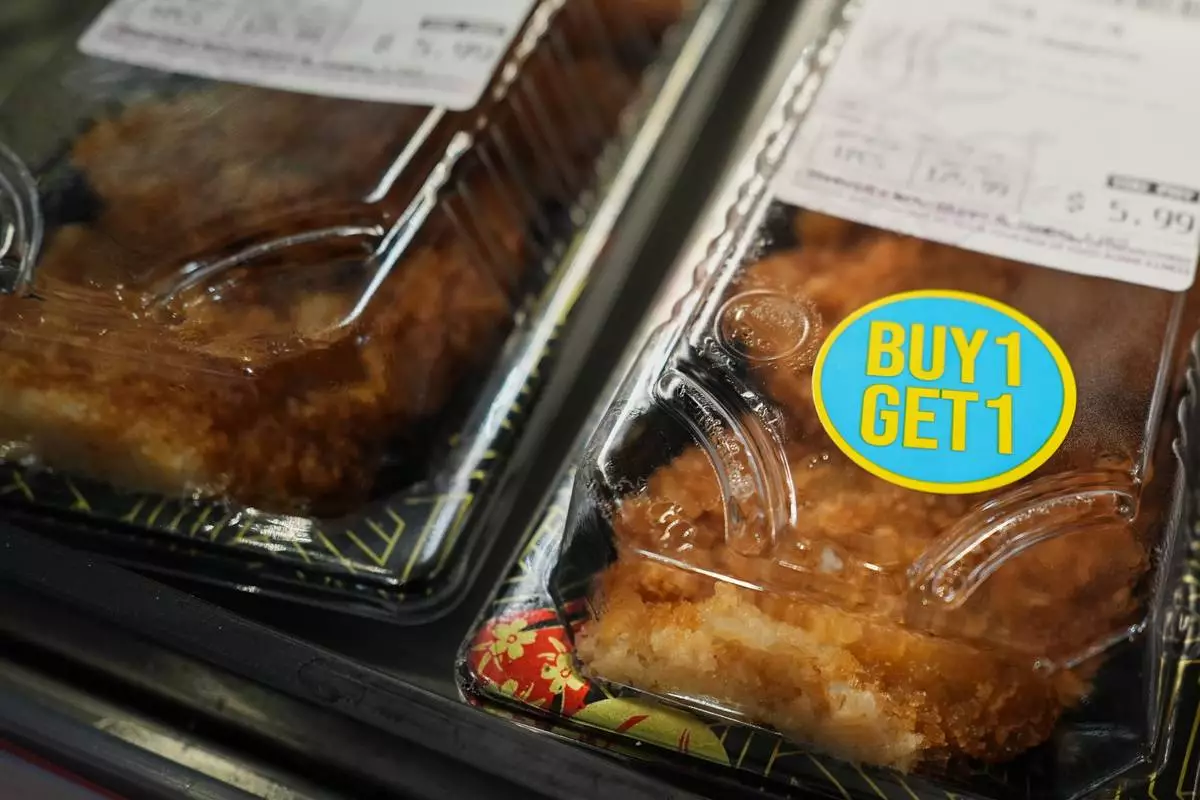
FILE - "Buy one Get one" sign is displayed on a product at a grocery store in Schaumburg, Ill., Thursday, May 14, 2026. (AP Photo/Nam Y. Huh, File)

FILE - A customer prepares to pump diesel fuel at this Madison, Miss., Sam's Club, Tuesday, May 24, 2022. (AP Photo/Rogelio V. Solis, File)
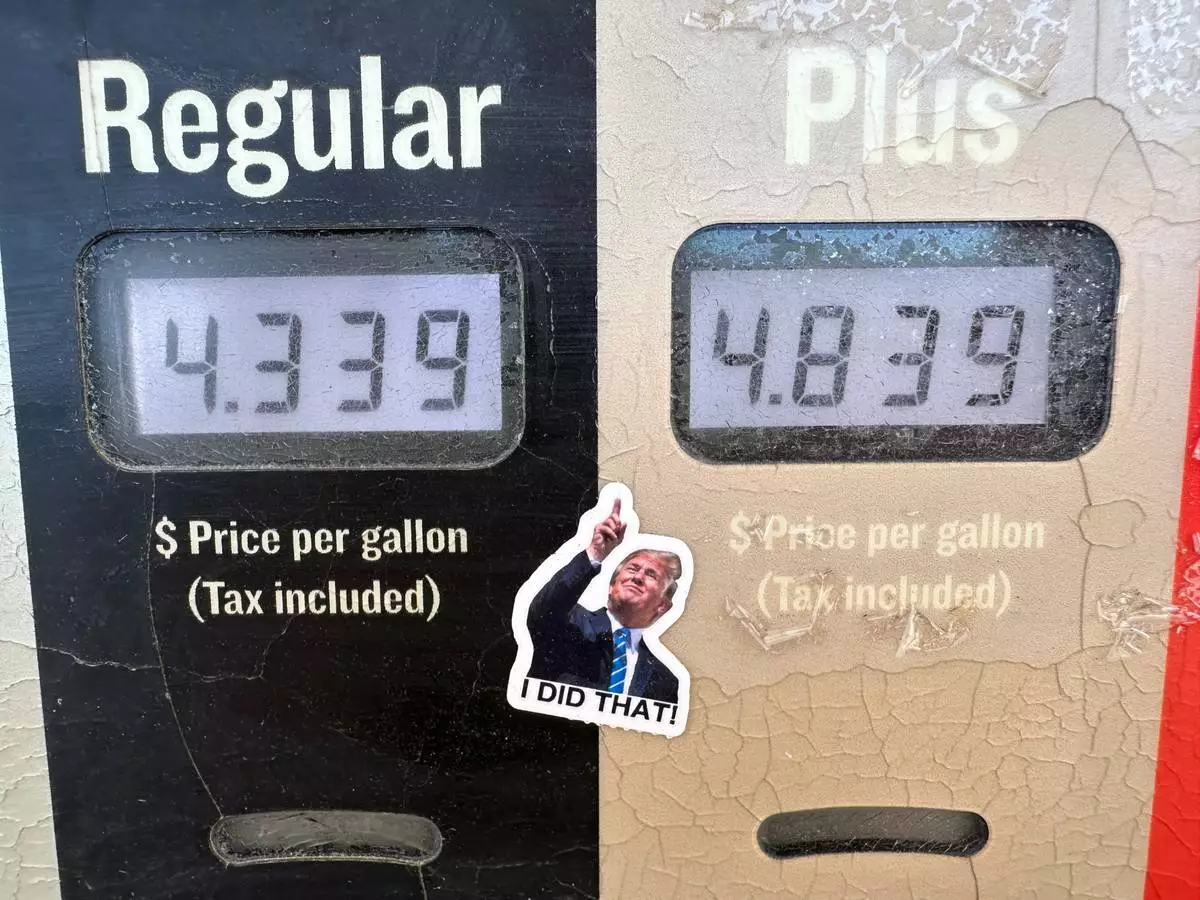
A sticker of President Donald J. Trump points to the electronically-posted prices for a gallon of regular or regular plus gasoline available at a Conoco station Saturday, May 30, 2026, in Denver. (AP Photo/David Zalubowski)
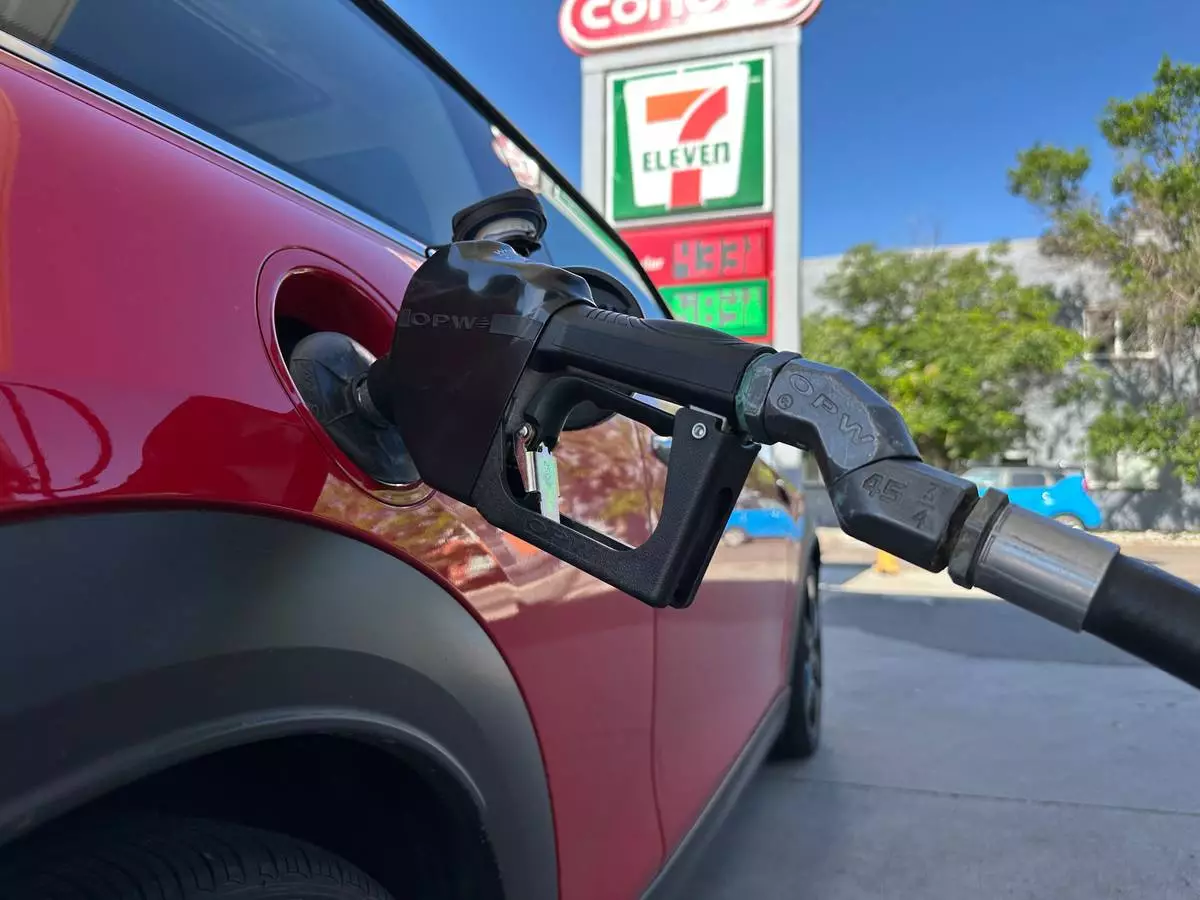
A motorist fills up the tank of a vehicle at a Conoco gasoline station Saturday, May 30, 2026, in Denver. (AP Photo/David Zalubowski)