Duyun, a city which is home to 33 ethnic minority groups in southwest China's Guizhou Province, is rapidly urbanizing thanks to strategies such as developing live commerce and heritage markets to promote its rich cultural heritage, fostering job creation and attracting young people back to take a stake in their hometown’s future.
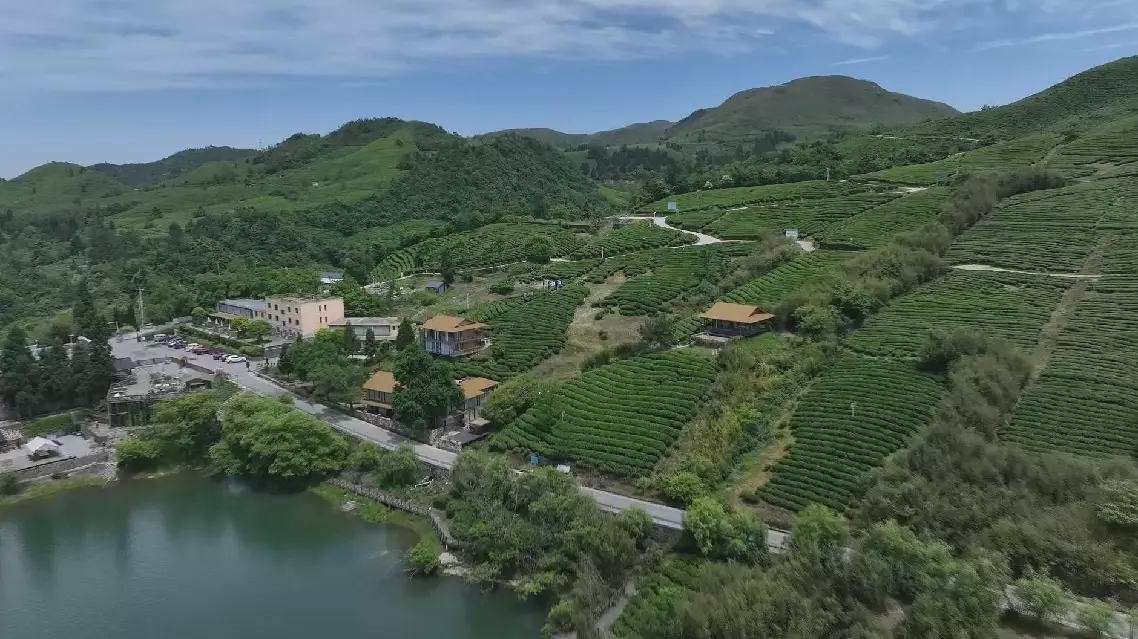
Nestled at the ideal elevation of 1,200 meters -- the sweet spot between 600 and 1,800 meters where tea thrives -- Duyun’s natural advantages mean that it can cultivate one of China's 10 most famous teas, Duyun Maojian.
"For my parents, tea was just a way to survive. Now it's different. Last year, our co-op trained us to sell tea online and last month alone, one livestream moved nearly 1.5 tons," said a tea farmer.
With 33 ethnic groups calling Duyun home, the city has transformed intangible heritage into economic opportunities.
"To revitalize traditional crafts, Duyun has created an intangible cultural heritage market, bringing together 24 heritage techniques and 16 artisan shops. This vibrant space offers visitors immersive experiences to see, touch, and take home pieces of living heritage," said Ma Jing, director of the Duyun Bureau of Culture, Radio, Television, and Tourism.
The stalls at the market are full of exquisite handicrafts representing various ethnic groups, including the Shui script, Miao embroidery, and Bouyei batik. Each piece tells a thousand-year-old story.
"I am the fourth generation to keep this craft alive. As a child, I'd watch my mother's hands create these traditional patterns. Back then, only our local community valued this art. When I inherited the craft, I began blending these ancient techniques with modern designs, contemporary clothing, accessories that today's customers love. Now through my online store and physical shop, I'm sharing our heritage with the world. As my business grows, I'm providing work for over 600 local embroiderers, proving our traditions can thrive in the modern economy," said Wei Xianglong, a Buyi ethnic indigo dyer and weaver techniques, who is keeping this intangible cultural heritage alive.
With the city's thriving core industries powering economic growth, Duyun is embracing new urbanization by upgrading education, healthcare, and infrastructure, while constructing factories to create more job opportunities for local people.
"Duyun's got a strong light textile industry, and now we're bringing in more businesses from the eastern region, where the industry is really concentrated, to set up factories here. The goal is to create more job opportunities for locals," said Pan Yongjie, director of the Duyun Employment Services Administration.
With its centuries-old tea industry as a solid foundation and a burgeoning film studio injecting new energy, more and more young people are choosing to return to Duyun to start businesses. Some are diving into tourism and film production, others are opening photography studios in the historic district, and many are returning to promote tea culture.
As the city develops at an unprecedented pace, local people are realizing that right here in their hometown, everyone can find their own stage.
"I used to think big cities were the only places with real opportunities, but Duyun's potential has completely changed my perspective. While many historical cities focus on imperial dynasties in their commercial districts, what makes Duyun unique is its living heritage of 33 ethnic minority groups. That's why I returned to launch this innovative business -- an ethnic costume experience center that also serves bubble tea made with our premium Duyun Maojian. Seeing my hometown blossom while preserving its cultural roots -- that's my definition of true success," said Chen Xi, founder of a local photography studio.
Multi-ethnic city in Guizhou promoting rapid urbanization