Skip to Content Facebook Feature Image

UN votes overwhelmingly to demand Gaza ceasefire, hostage release and aid access

News

UN votes overwhelmingly to demand Gaza ceasefire, hostage release and aid access
News

News

UN votes overwhelmingly to demand Gaza ceasefire, hostage release and aid access

2025-06-13 06:51 Last Updated At:07:01

UNITED NATIONS (AP) — U.N. member nations voted overwhelmingly Thursday to demand an immediate ceasefire in Gaza, the release of all hostages held by Hamas, and unrestricted access for the delivery of desperately needed food to 2 million Palestinians.

The vote in the 193-member General Assembly was 149-12 with 19 abstentions. It was adopted with a burst of applause. The United States and close ally Israel opposed the resolution, along with Argentina, Hungary, Paraguay, Papua New Guinea and six Pacific island nations.

More Images
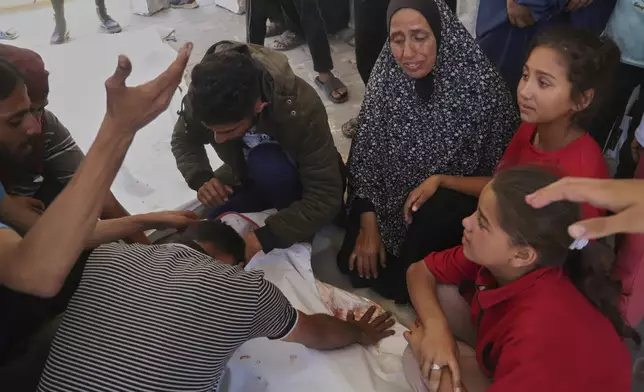
Relatives mourn over the body of Palestinian teenager Ghazal Eyad, 16, who was killed while heading to an aid distribution hub, during her funeral in Rafah, southern Gaza Strip, Wednesday, June 11, 2025. (AP Photo/Mariam Dagga)
Relatives mourn over the body of Palestinian teenager Ghazal Eyad, 16, who was killed while heading to an aid distribution hub, during her funeral in Rafah, southern Gaza Strip, Wednesday, June 11, 2025. (AP Photo/Mariam Dagga)

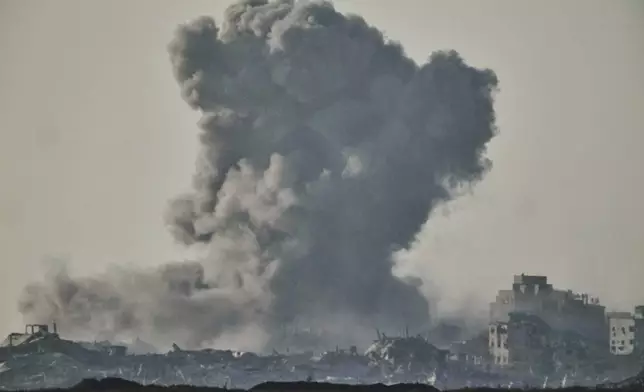
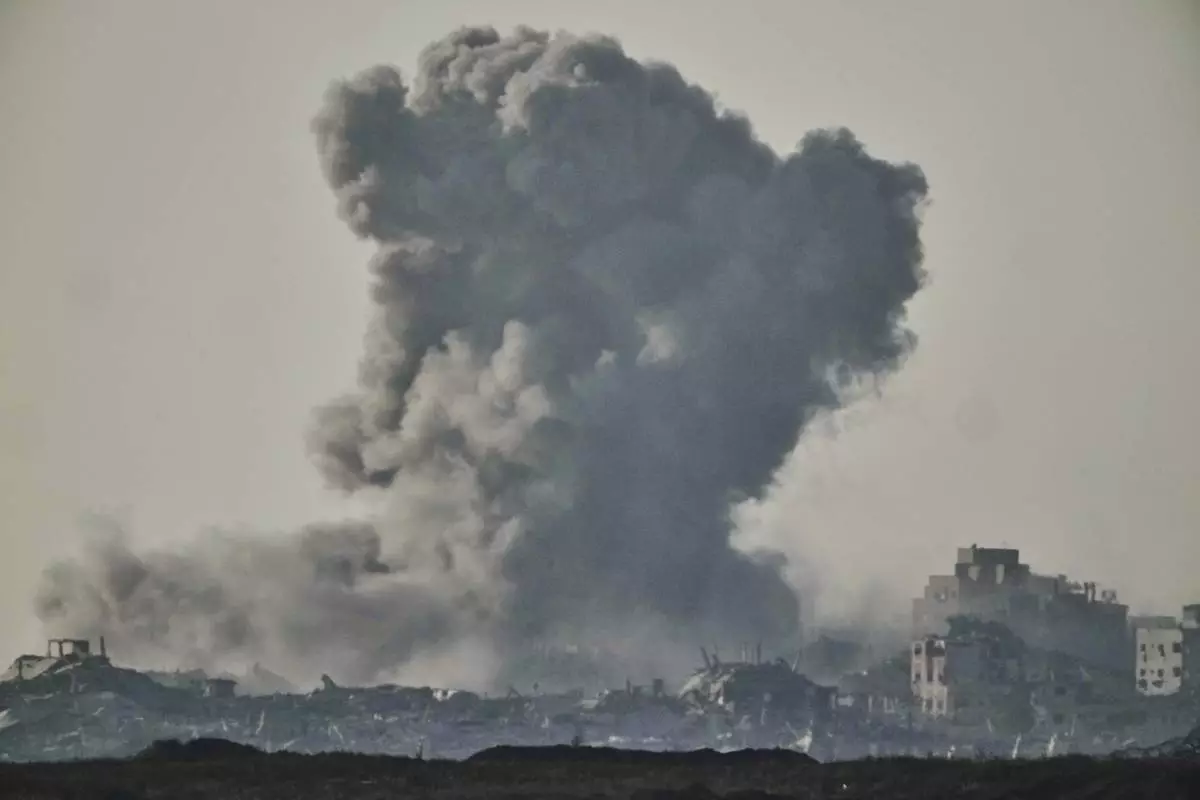
Smoke rises to the sky following an Israeli strike in the Gaza Strip as seen from southern Israel, Wednesday, June 11, 2025. (AP Photo/Ariel Schalit)
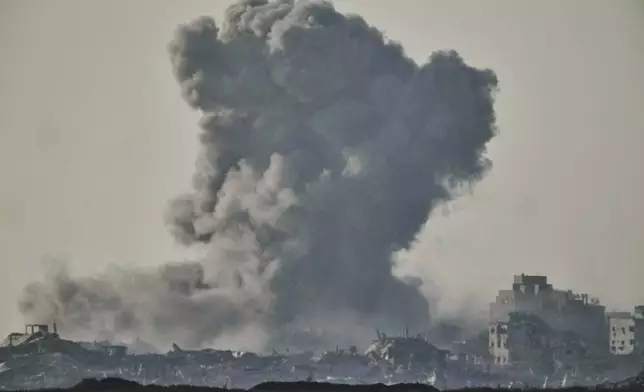
Smoke rises to the sky following an Israeli strike in the Gaza Strip as seen from southern Israel, Wednesday, June 11, 2025. (AP Photo/Ariel Schalit)
Smoke rises to the sky following an Israeli strike in the Gaza Strip as seen from southern Israel, Wednesday, June 11, 2025. (AP Photo/Ariel Schalit)

Smoke rises to the sky following an Israeli strike in the Gaza Strip as seen from southern Israel, Wednesday, June 11, 2025. (AP Photo/Ariel Schalit)

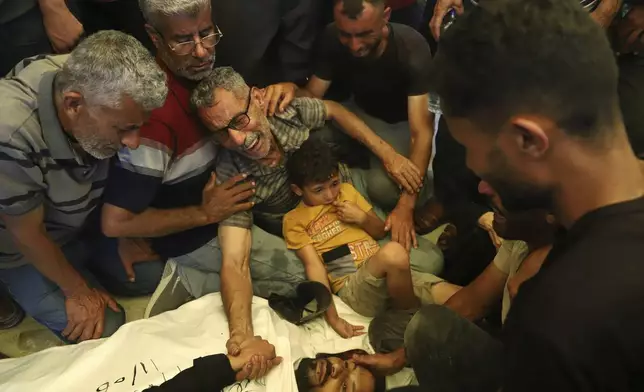
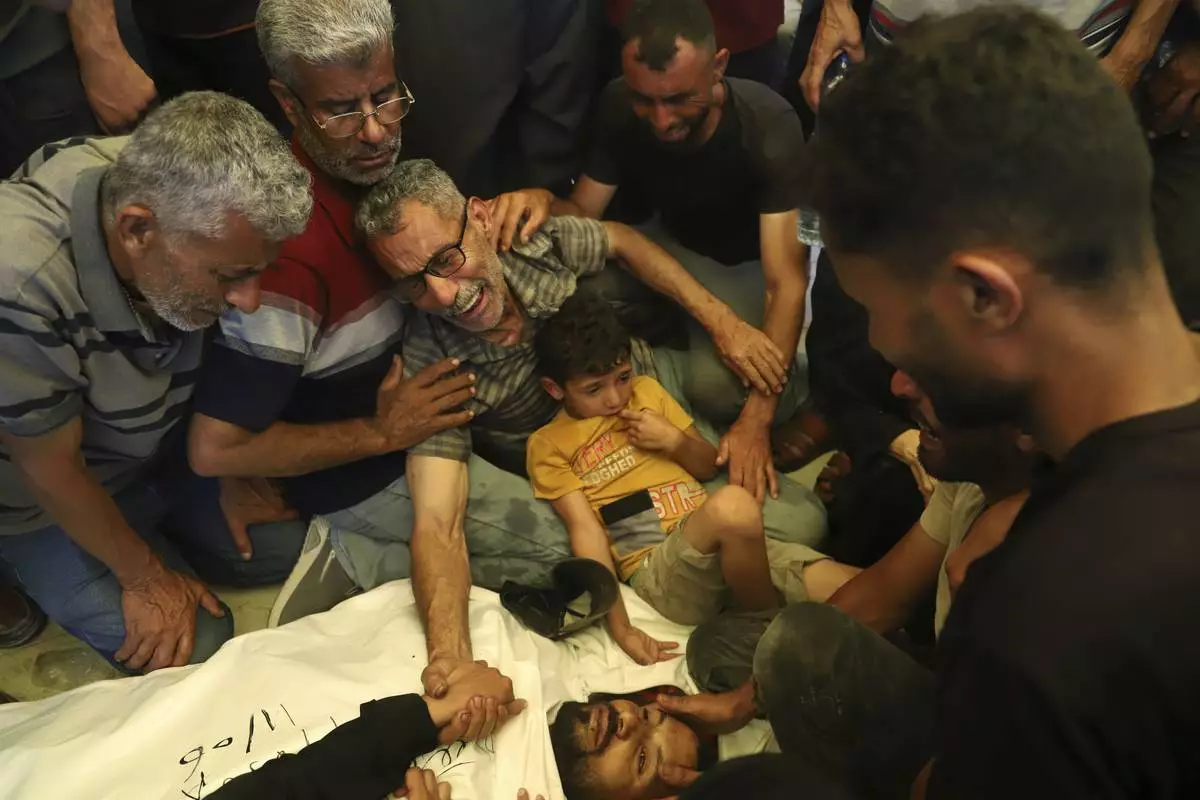
Ata Qasas, center, mourns over the body of his son Rashad Qasas, who was killed while heading to an aid distribution hub, during his funeral in Rafah, southern Gaza Strip, Wednesday, June 11, 2025. (AP Photo/Mariam Dagga)
Ata Qasas, center, mourns over the body of his son Rashad Qasas, who was killed while heading to an aid distribution hub, during his funeral in Rafah, southern Gaza Strip, Wednesday, June 11, 2025. (AP Photo/Mariam Dagga)

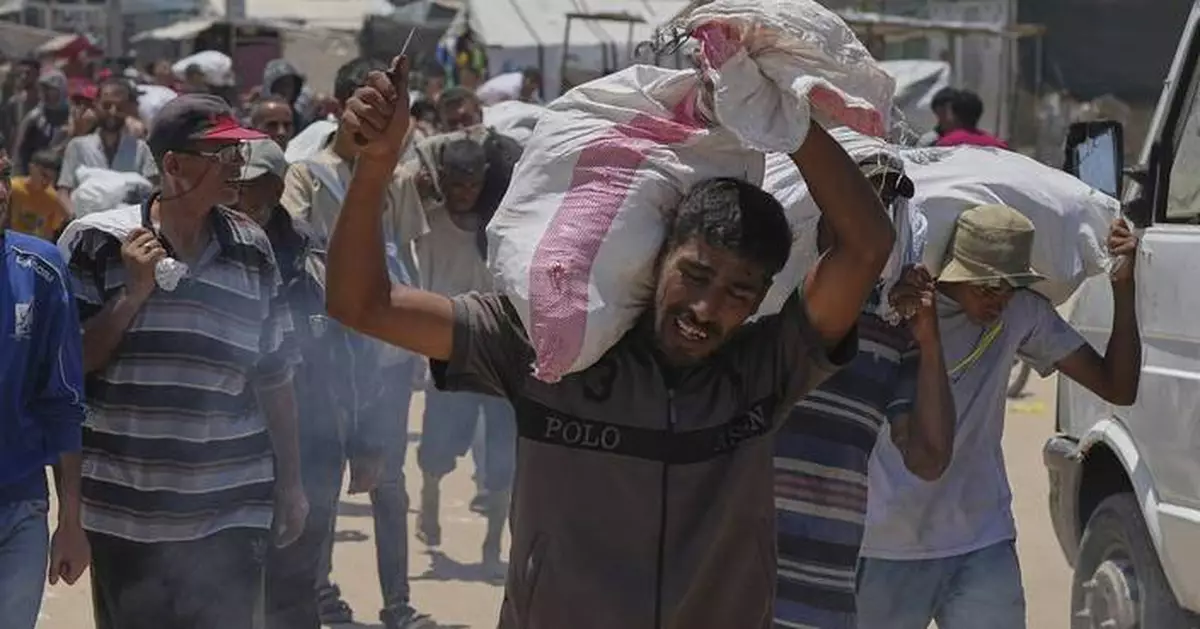
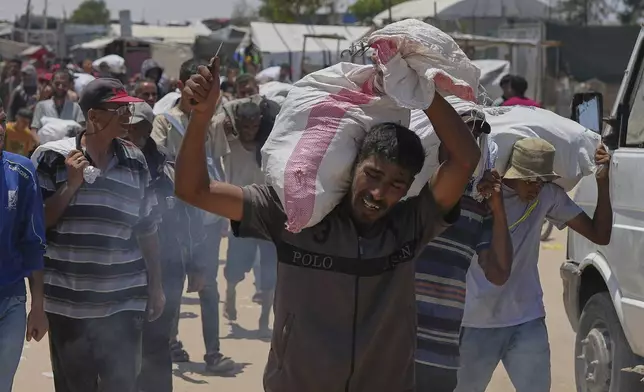
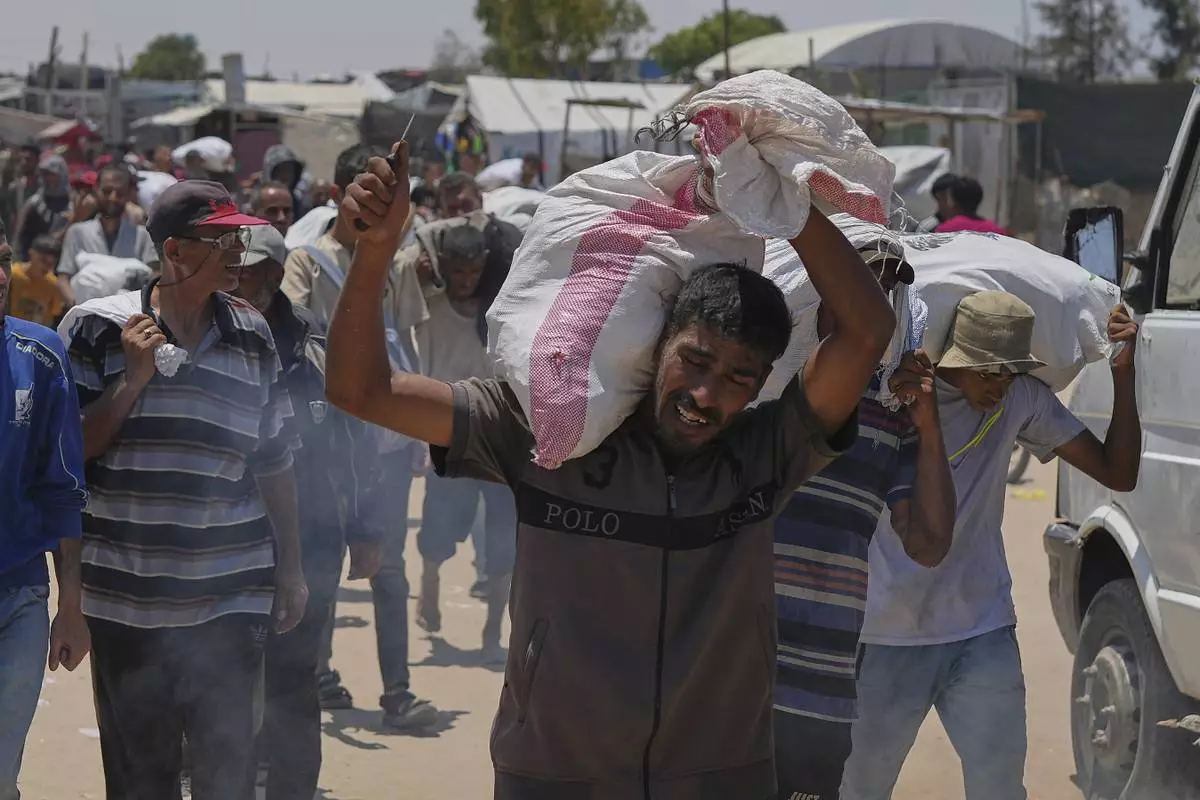
A Palestinian carries a bag containing food and humanitarian aid delivered by the Gaza Humanitarian Foundation, a U.S.-backed organization, in Rafah, southern Gaza Strip, Wednesday, June 11, 2025. (AP Photo/Abdel Kareem Hana)

A Palestinian carries a bag containing food and humanitarian aid delivered by the Gaza Humanitarian Foundation, a U.S.-backed organization, in Rafah, southern Gaza Strip, Wednesday, June 11, 2025. (AP Photo/Abdel Kareem Hana)

The resolution, drafted by Spain, “strongly condemns any use of starvation of civilians as a method of warfare.”

Israel’s U.N. Ambassador Danny Danon spoke vehemently against the resolution, especially for failing to condemn Hamas for its attack in southern Israel on Oct. 7, 2023, which triggered the war in Gaza. He denied that Israel was using starvation as a weapon of war, calling the accusation a “blood libel,” and insisted that aid is being delivered.

Experts and human rights workers say hunger is widespread in Gaza and some 2 million Palestinians are at risk of famine if Israel does not fully lift its blockade and halt its military campaign, which it renewed in March after ending a ceasefire with Hamas.

The Palestinian U.N. ambassador, Riyad Mansour, pleaded with U.N. members to approve the resolution.

“The actions you take today to stop the killing, displacement and the famine will determine how many more Palestinian children die a horrible death,” he said.

The Palestinians and their supporters went to the General Assembly after the U.N. Security Council failed to pass a resolution last week demanding a ceasefire in Gaza and calling on Israel to lift all restrictions on the delivery of aid. The United States scuttled the resolution with its veto because it was not linked to the release of the hostages, while all 14 other members of the council voted in favor. It was the fifth time the U.S. had vetoed a resolution calling for a halt to the fighting.

General Assembly President Philemon Yang said in opening Thursday's meeting that the world body once again was being called on to address “the unacceptable and catastrophic situation in Gaza” because the Security Council is paralyzed and unable to fulfil its responsibility for maintaining international peace and security.

There are no vetoes in the assembly. But unlike in the Security Council, its resolutions are not legally binding, though they are seen as a barometer of world opinion.

After a 10-week blockade that barred all aid to Gaza, Israel is allowing the United Nations to deliver a trickle of food assistance and is backing a newly created U.S. aid group, which has opened several sites in the center and south of the territory to deliver food parcels.

But the aid system rolled out last month by the Gaza Humanitarian Foundation has been troubled by near-daily shootings as crowds make their way to aid sites, while the longstanding U.N.-run system has struggled to deliver food because of Israeli restrictions and a breakdown of law and order.

Like the failed Security Council resolution, the resolution passed Thursday does not condemn Hamas' attack or say the militant group must disarm and withdraw from Gaza. Both are U.S. demands.

Acting U.S. Ambassador Dorothy Shea reiterated those demands before Thursday's vote and said the resolution “sends an unacceptable message to Hamas and other Iran-backed terrorist proxies, and that message is, you will be rewarded for taking hostages, diverting aid and launching attacks from civilian areas.”

The resolution references a March 28 legally binding order by the top United Nations court for Israel to open more land crossings into Gaza for food and other supplies. The International Court of Justice issued the order in a case brought by South Africa accusing Israel of acts of genocide, charges Israel strongly denies.

It stresses that Israel, as an occupying power, has an obligation under international law to ensure that humanitarian aid reaches those in need.

The resolution reiterates the assembly's commitment to a two-state solution to the Israeli-Palestinian conflict, with the Gaza Strip as part of a Palestinian state. The assembly is holding a high-level meeting next week to push for a two-state solution, which Israel has rejected.

It supports mediation efforts by Egypt, Qatar and the United States aimed at implementing a January ceasefire agreement.

In the Oct. 7 attack, the Hamas-led militants killed around 1,200 people, mostly civilians, and took 251 hostages; 53 are still being held, of whom Israel believes 30 are dead. Israel’s military campaign has killed over 55,000 Palestinians, according to Gaza’s Health Ministry. It says women and children make up most of the dead, but doesn’t distinguish between civilians and combatants. Israel says it has killed more than 20,000 militants, without providing evidence.
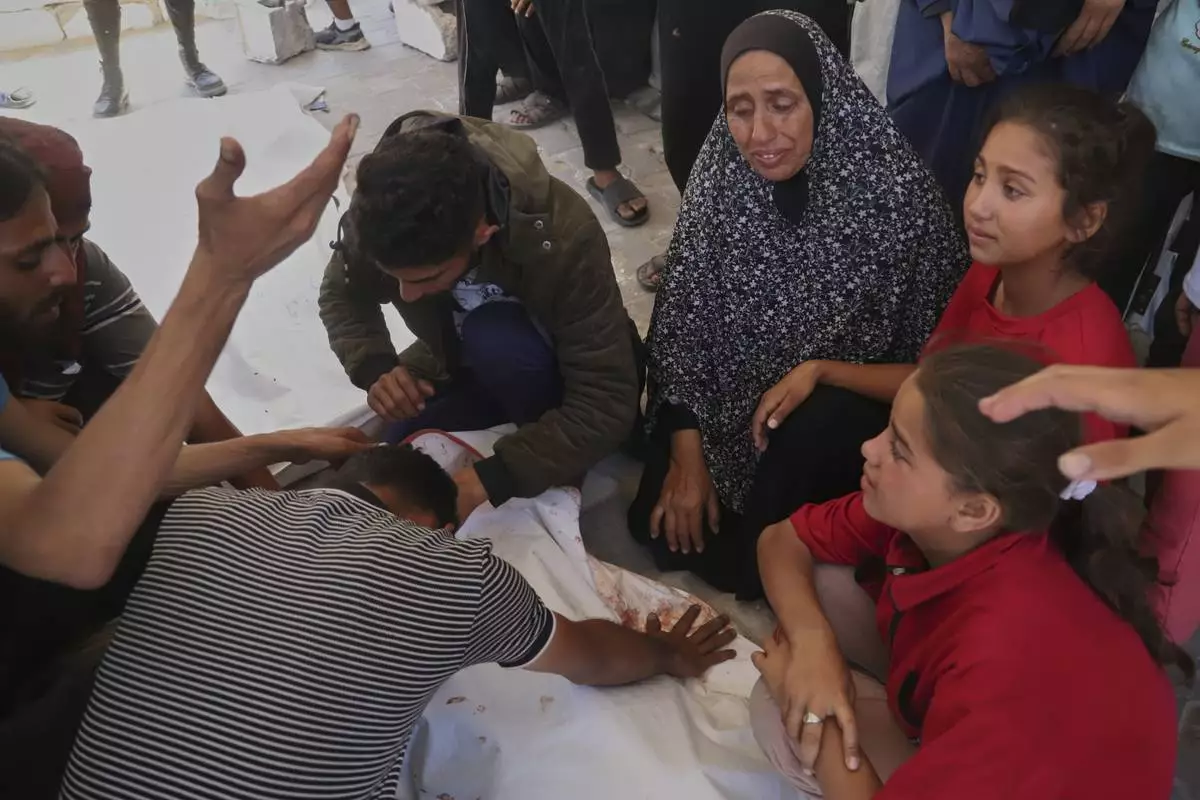
Relatives mourn over the body of Palestinian teenager Ghazal Eyad, 16, who was killed while heading to an aid distribution hub, during her funeral in Rafah, southern Gaza Strip, Wednesday, June 11, 2025. (AP Photo/Mariam Dagga)
Relatives mourn over the body of Palestinian teenager Ghazal Eyad, 16, who was killed while heading to an aid distribution hub, during her funeral in Rafah, southern Gaza Strip, Wednesday, June 11, 2025. (AP Photo/Mariam Dagga)

Smoke rises to the sky following an Israeli strike in the Gaza Strip as seen from southern Israel, Wednesday, June 11, 2025. (AP Photo/Ariel Schalit)
Smoke rises to the sky following an Israeli strike in the Gaza Strip as seen from southern Israel, Wednesday, June 11, 2025. (AP Photo/Ariel Schalit)
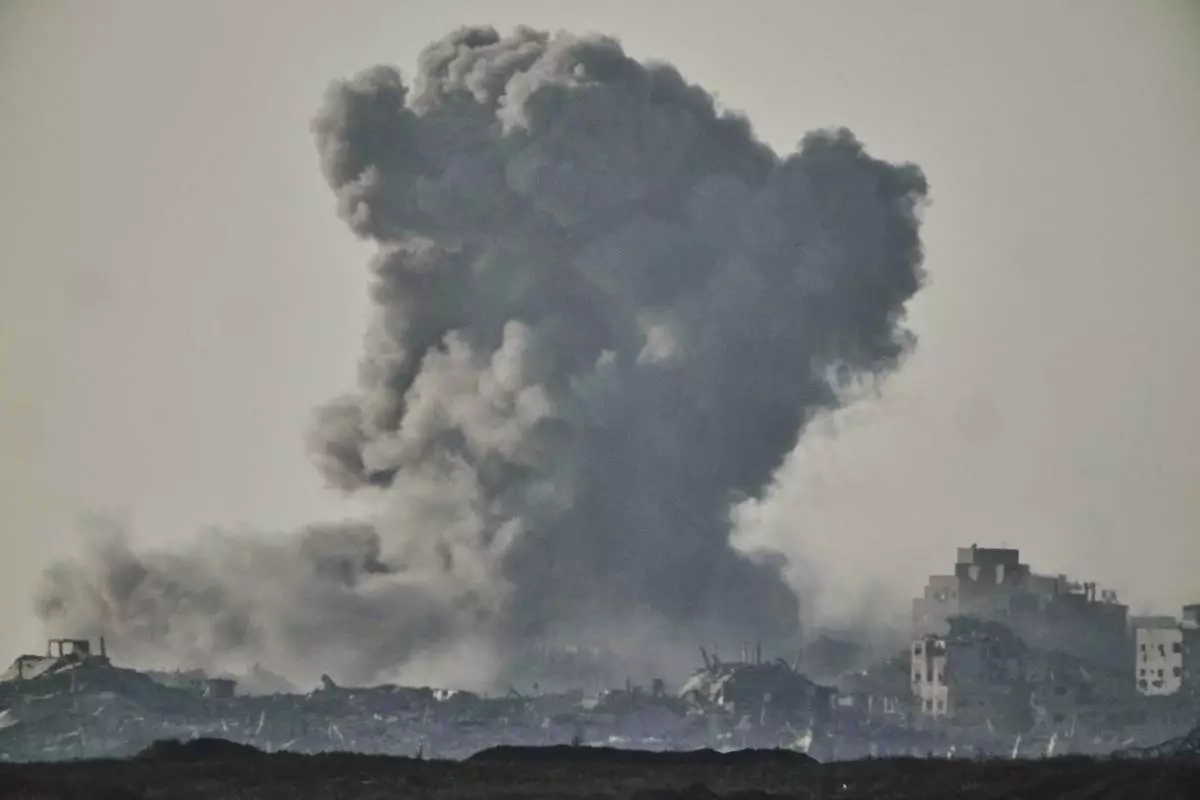
Smoke rises to the sky following an Israeli strike in the Gaza Strip as seen from southern Israel, Wednesday, June 11, 2025. (AP Photo/Ariel Schalit)

Smoke rises to the sky following an Israeli strike in the Gaza Strip as seen from southern Israel, Wednesday, June 11, 2025. (AP Photo/Ariel Schalit)

Ata Qasas, center, mourns over the body of his son Rashad Qasas, who was killed while heading to an aid distribution hub, during his funeral in Rafah, southern Gaza Strip, Wednesday, June 11, 2025. (AP Photo/Mariam Dagga)
Ata Qasas, center, mourns over the body of his son Rashad Qasas, who was killed while heading to an aid distribution hub, during his funeral in Rafah, southern Gaza Strip, Wednesday, June 11, 2025. (AP Photo/Mariam Dagga)

A Palestinian carries a bag containing food and humanitarian aid delivered by the Gaza Humanitarian Foundation, a U.S.-backed organization, in Rafah, southern Gaza Strip, Wednesday, June 11, 2025. (AP Photo/Abdel Kareem Hana)

A Palestinian carries a bag containing food and humanitarian aid delivered by the Gaza Humanitarian Foundation, a U.S.-backed organization, in Rafah, southern Gaza Strip, Wednesday, June 11, 2025. (AP Photo/Abdel Kareem Hana)
CAIRO (AP) — Iranians began to regain internet access on Wednesday after authorities ended a monthslong shutdown. But users said service was slow and spotty in some areas, with apps like YouTube and Instagram heavily restricted, as they were before the cutoff began during nationwide protests in January.

Authorities justified the outage as a military imperative after the United States and Israel attacked Iran on Feb. 28. Their decision to lift some restrictions this week came as negotiators appeared to be closing in on a more permanent truce. But many Iranians feared access could be cut off again at a moment's notice.

Internet tracking company Netblocks said Iran’s connectivity, which measures the ability of devices to connect to the internet, is at around 86% of capacity from before the cutoff. Internet analysis firm Kentik said internet traffic, which measures the amount of data transferred and is a good illustration of usage, was at around 40%.

Amir Rashidi, an Iranian cybersecurity analyst, said there were still widespread disruptions. “It's too early to say the shutdown is over,” he wrote on X.

Iran’s roughly 90 million people have been cut off from the internet for most of 2026, one of the world’s longest and strictest national shutdowns. Young people with online careers saw their incomes evaporate. Job losses and the closure of online businesses added to the war's steep economic costs.

The cutoff made it difficult for Iranian families to communicate through months of unrest and war. At some points, phone lines were also cut off, though they were later restored.

A woman living in Tehran said that for months she was barely able to speak to her sons living abroad. She couldn't believe authorities had restored access, saying she had assumed they would find some justification to prolong the outage.

A taxi driver said service was restored but weak. He expressed hope it would improve so he could use messaging apps with family and friends. Both spoke on condition of anonymity for security reasons.

Prices spiked during the shutdown, with residents in Tehran at times paying around $7.50 per gigabyte. Prices are back down to around $2.25 for 30 gigabytes, roughly where they were before the protests.

Even then, Iran tightly controlled access to popular social media sites, leading many to rely on virtual private networks, or VPNs. The cost of those workarounds soared during the shutdown, making them unaffordable for many as the economy was battered.

Businesses have started reappearing online, announcing their return with posts on sites like Instagram and Telegram.

A gamer and tech influencer in the central city of Isfahan said the shutdown had caused him to lose a lot of his audience on YouTube and Instagram, where he had spent years building up a large following.

“All my views and interactions are way down. I’ve been erased from the algorithm,” he said in a voice note sent by WhatsApp, adding that his internet connection was still slower than before the shutdown.

“The situation is such that many content producers have had their income reduced to zero, have moved on to other jobs, or have been forced to sell their equipment to survive,” he said. He spoke on condition of anonymity for fear of reprisal.

Iranian authorities first shut down the internet in January during mass anti-government protests that were eventually stamped out in a violent crackdown. Thousands of people were killed and tens of thousands detained.

That cutoff was just starting to ease when the government imposed a complete internet blackout after the start of the war, when U.S. and Israeli strikes killed Iran's supreme leader and other top officials.

The government faced criticism for the prolonged shutdown, which caused even more harm to an economy devastated by inflation, strikes on key industries and a U.S. blockade on Iranian ports.

The internet cutoff cost an estimated $30-40 million daily, with indirect losses likely twice that much, a member of Iran’s Chamber of Commerce, Afshin Kolahi, told a local newspaper last month. About 10 million people have jobs that depend on internet connectivity, according to Communications Minister Sattar Hashemi.

Iranians still had access to a national net, but that has a far narrower reach, and users complained of poor service and heavy censorship. Senior government officials are given SIM cards granting them access to the global internet. Under pressure, the government expanded access to the SIM cards to some professions during the shutdown.

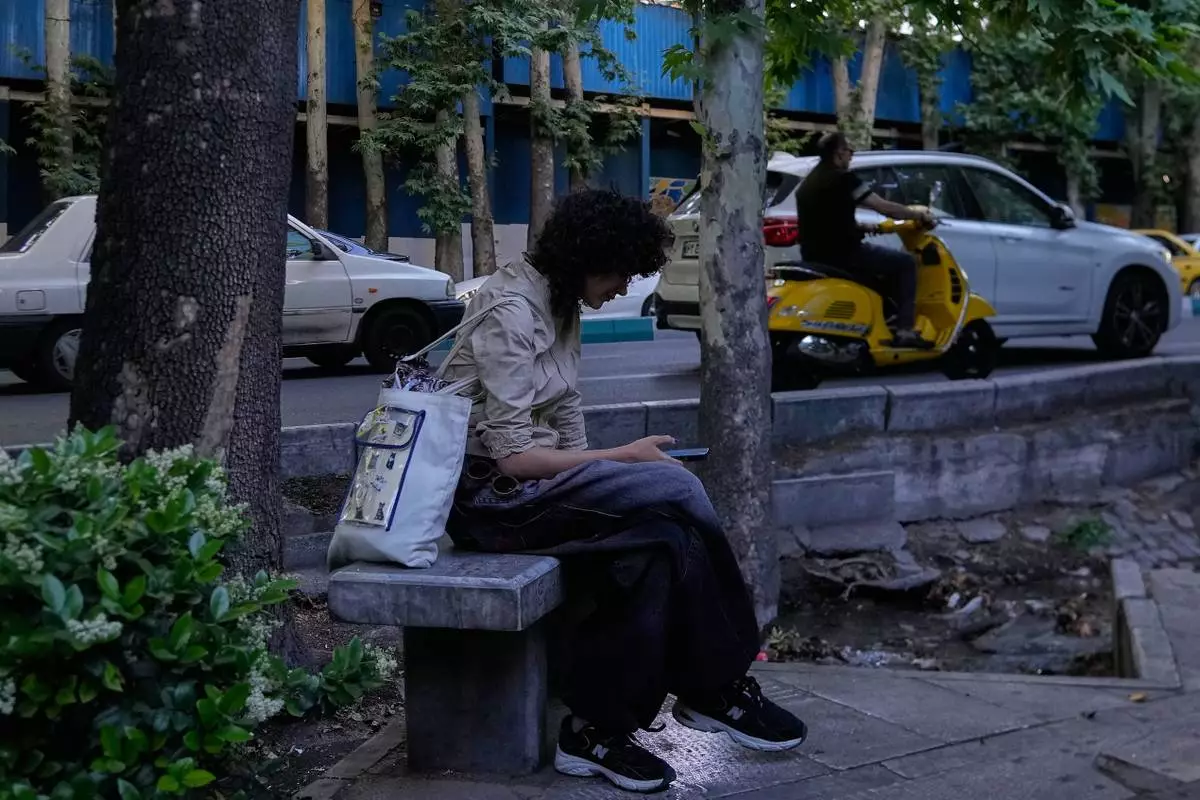
A woman checks her smartphone while sitting on a bench along a sidewalk in northern Tehran, Iran, Tuesday, May 26, 2026. (AP Photo/Vahid Salemi)

A woman checks her smartphone while sitting on a bench along a sidewalk in northern Tehran, Iran, Tuesday, May 26, 2026. (AP Photo/Vahid Salemi)

Recommended Articles