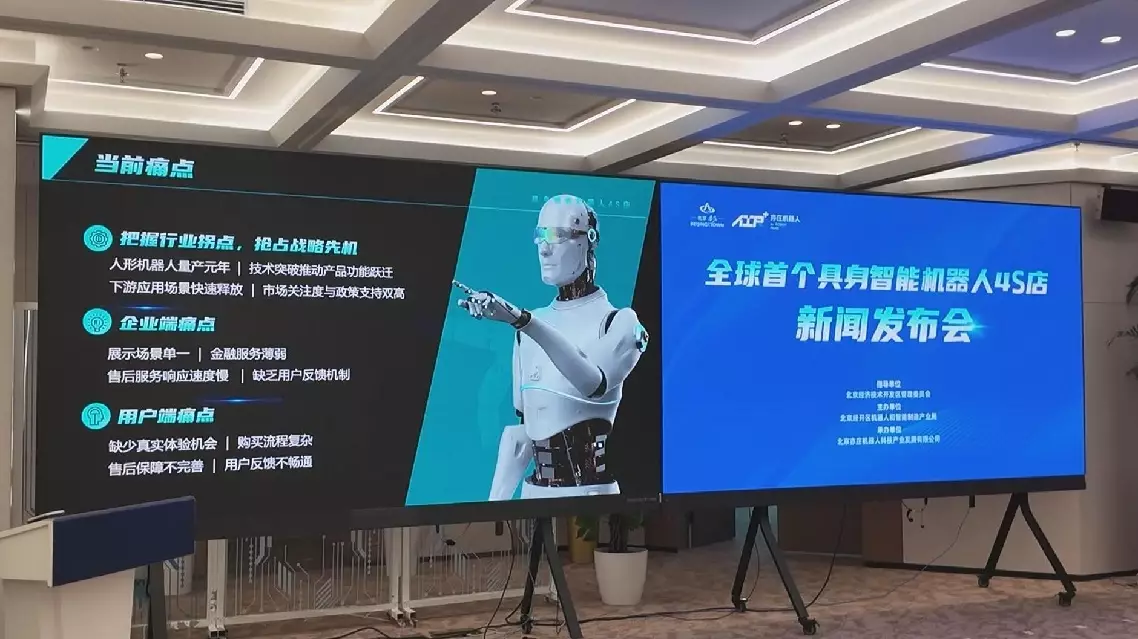
China's capital is set to launch the world's first "4S store" dedicated to embodied artificial intelligence (AI) robots, marking the latest push to commercialize advanced robotics in the country.
The facility, unveiled on Wednesday at a press conference, is scheduled to open in a robotics industrial park in Yizhuang, located in southern Beijing, during the 2025 World Robot Conference, which is set for August 8-12.
Similar to traditional automobile 4S models, known as "sales, service, spare parts and surveys", the store will provide services on robotics sales, maintenance, parts and information.
According to the press conference, the robot 4S store will feature an area for scenario-based demonstrations and immersive interactions, offering customers a hands-on experience with the product capabilities in real-life settings.
Meanwhile, the facility will boast a nationwide rapid-response parts supply network and a professional support team for robot maintenance, assembly and repair.
Industry enthusiasm is already mounting. So far, more than 100 supply chain enterprises in the robotics industry have expressed clear intentions to settle in, including 30 companies specializing in humanoid robots. Ten leading embodied AI robot firms, including the Beijing Humanoid Robot Innovation Center, UBTECH and Galaxea, have signed cooperation agreements with the robot 4S store and are expected to be among the first batch of partners to move in.
Liang Liang, deputy director of Yizhuang's administrative committee, said that the establishment of the world's first 4S store for embodied AI robots marks a key step in building a vibrant robotics industry ecosystem in Yizhuang, which paves the way for the rapid development of robotics firms and enhances the area's global influence as a robotics hub.
Yizhuang, home to over 300 robotics and smart manufacturing enterprises, is a key cluster in Beijing's robotics sector. The area hosts the permanent site of the World Robot Conference and boasts an industry chain valued at over 10 billion yuan (approximately 1.39 billion U.S. dollars), accounting for half of Beijing's total robotics industry.
Adding to its growing list of global firsts, Yizhuang earlier this year hosted the world's first humanoid robot half-marathon, drawing 20 robotics teams from universities, research institutes and tech companies to join human athletes in a race covering 21.0975 kilometers.
Tiangong Ultra, developed by Beijing Humanoid Robot Innovation Center, claimed victory in the humanoid half marathon, crossing the finish line first with a time of two hours, 40 minutes, and 42 seconds.
Liang noted that Yizhuang is fast emerging as a cradle for the future of the robotics industry and a vital hub linking to the global market.
Beijing to open world's first "4S store" for embodied AI robots
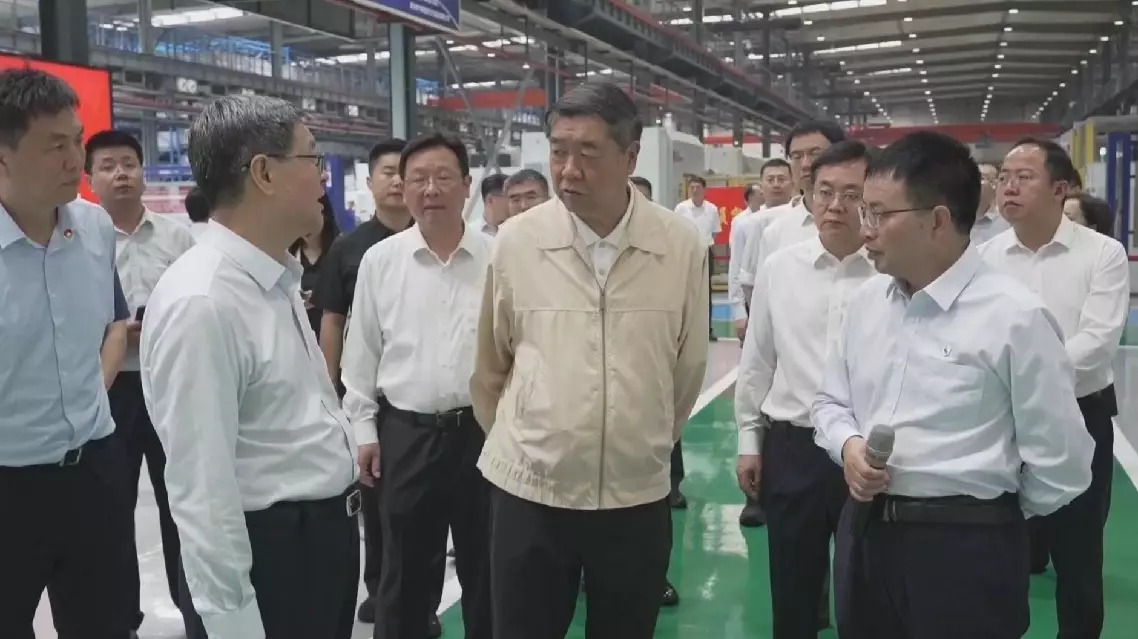
China stands ready to work with all countries to improve global human rights governance and promote the sound development of the international human rights cause, Chinese Foreign Minister Wang Yi said on Monday.
Wang, who is also a member of the Political Bureau of the Communist Party of China Central Committee, made the remarks in a speech delivered via video link during the high-level segment of the 61st session of the United Nations Human Rights Council.
Wang noted that the international situation is complex and intertwined, and that global human rights governance and the post-World War II international order are facing new tests of the times. The Global Governance Initiative proposed by China has received support and responses from more than 150 countries and international organizations, he added.
Wang called for upholding sovereign equality and safeguarding the original aspirations of global human rights governance. The only path that can lead to ever-broader prospects is one of human rights development, rooted in a country's specific national conditions and responsive to the needs of its people, he said.
All parties should abide by the international rule of law and consolidate the foundations of global human rights governance, Wang noted. Together, all countries should uphold the "golden rule" of non-interference in one another's internal affairs, and firmly reject words and deeds that create double standards in the name of human rights, he said.
He called for practicing multilateralism and addressing the challenges to global human rights governance. All countries should reject all forms of colonialism or racial discrimination, and respond properly to rising issues such as artificial intelligence, as well as climate change and human rights.
Wang emphasized that all parties should advocate a people-oriented approach to global human rights governance and enrich the connotations of such governance. The international community should also position the right to development in a more prominent position on the multilateral human rights agenda, he said.
Calling for action-oriented approaches to and the enhanced efficacy of global human rights governance, Wang said that China is willing to coordinate its actions with the international community to collectively chart a new blueprint for this global cause.
Noting that 2026 marks the start of China's 15th Five-Year Plan period, he said the country will continue advancing its whole-process people's democracy, ensuring the achievements of Chinese modernization benefit all people in a more equitable manner.
China stands ready to work with all countries to promote common development and prosperity, safeguard international fairness and justice, uphold the common values of humanity, and build a community with a shared future for all, with the aim of ensuring that the progress of human rights civilization benefits the whole world, he stressed.
China ready to work with all countries to improve global human rights governance: Chinese FM