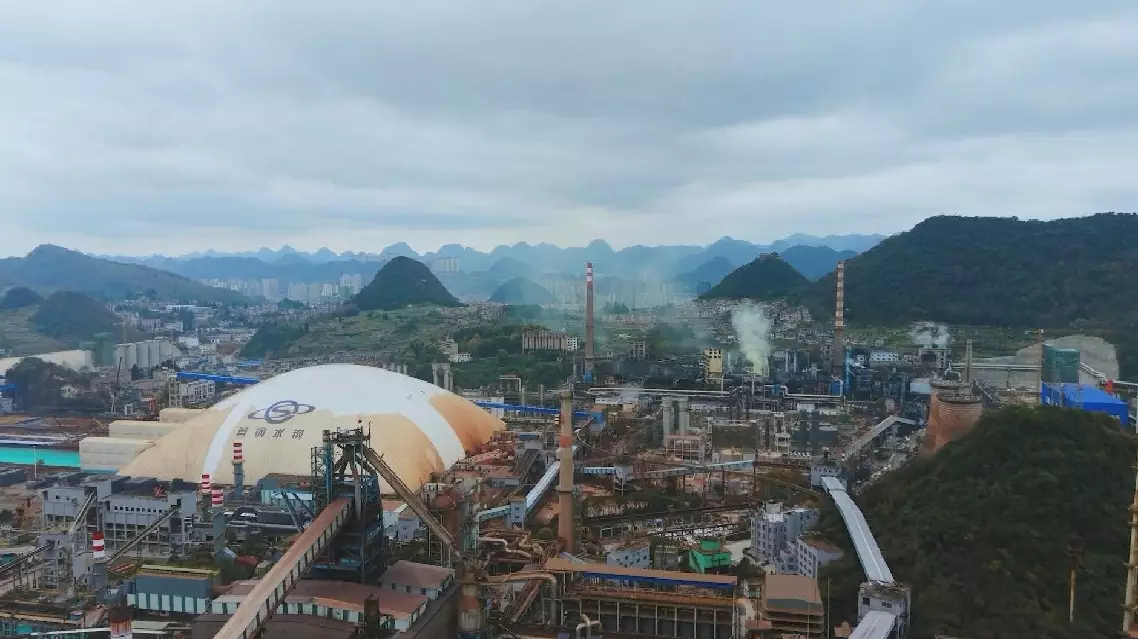
China's homegrown supercritical carbon dioxide power generation technology has entered commercial operation, with the world's first facility of its kind running steadily for six months in Guizhou Province in the southwest.
Developed over 17 years by a team of Chinese scientists, the breakthrough promises to improve energy efficiency and expand applications in sectors ranging from industrial waste heat recovery to solar thermal power and energy storage.
Carbon dioxide has become a key factor in power generation. Its supercritical form is now used as a working medium to replace steam in power units, delivering higher efficiency.
The world's first commercial facility using this technology, now operating with two units, is known as "Chaotan One" (Super Carbon-1).
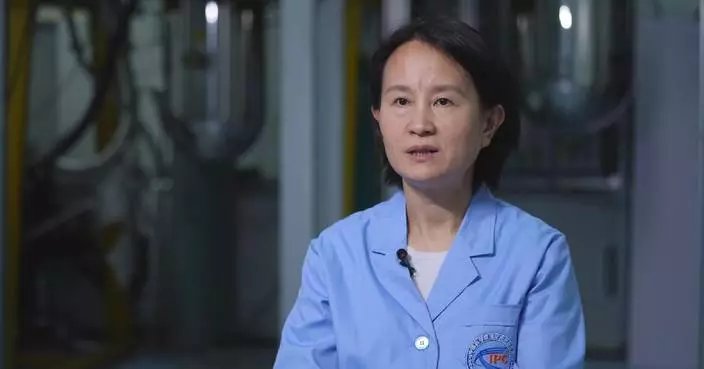
The technology is backed by a team led by scientist Huang Yanping dedicated to powering the future of energy.
Huang first heard of "supercritical CO2 power generation" seventeen years ago.
"Back then, most people thought this technology had no future and it could never work. Almost all the feedback we got was negative, just discouragement," said Huang, chief scientist with China National Nuclear Corporation (CNNC).
Without few related theories, they derived their own. Without any data, they gathered it themselves, piece by piece. This young team, with the average age of members under 35, bore the weight of it all.
"As long as the scientific principle holds, it's our duty to turn the technology into reality. Our team has stuck with this for 16 years, quietly pushing ahead. What kept us going was the scientific spirit -- and our commitment as Party members," said Huang.
Moving from lab to plant cost billions of yuan and countless sleepless nights.
Zhao Xuebin, the on-site technical director, was forging a path no one had ever walked.
"During the first turbine spin-up, the actual data were way off from our calculations, and we couldn't figure out why. We had to scrap our approach and redo every single inspection. That really tested everyone's morale and confidence," said Zhao, technical director of "Chaotan One" Demonstration Project.
The site conditions were harsh, and coordination was far more complex than in the lab. Yet, the team pressed on, step by step.
At the lowest point, the turbine failed to start more than a dozen times. The pressure was immense -- they could barely hold on.
Then, one late night in 2025, it finally worked. They hugged each other and burst into tears of joy.
"The moment we generated power, even the quietest person was stunned. We kept asking each other: 'Did we really do it?' That feeling of release -- I'll never forget it," said Zhao.
That success was no small feat -- it marked a leap in power generation efficiency of over 85 percent.
From its initial use in waste heat recovery for heavy industries, the technology is now set to expand into broader fields, such as solar thermal power and energy storage systems.
"I believe Chaotan One's greatest value is that it offers humanity a more efficient way to use energy. It provides a solution for energy security -- and for AI's growing hunger for electricity -- by making primary energy go much further," said Huang.
China powers future of energy with supercritical CO2