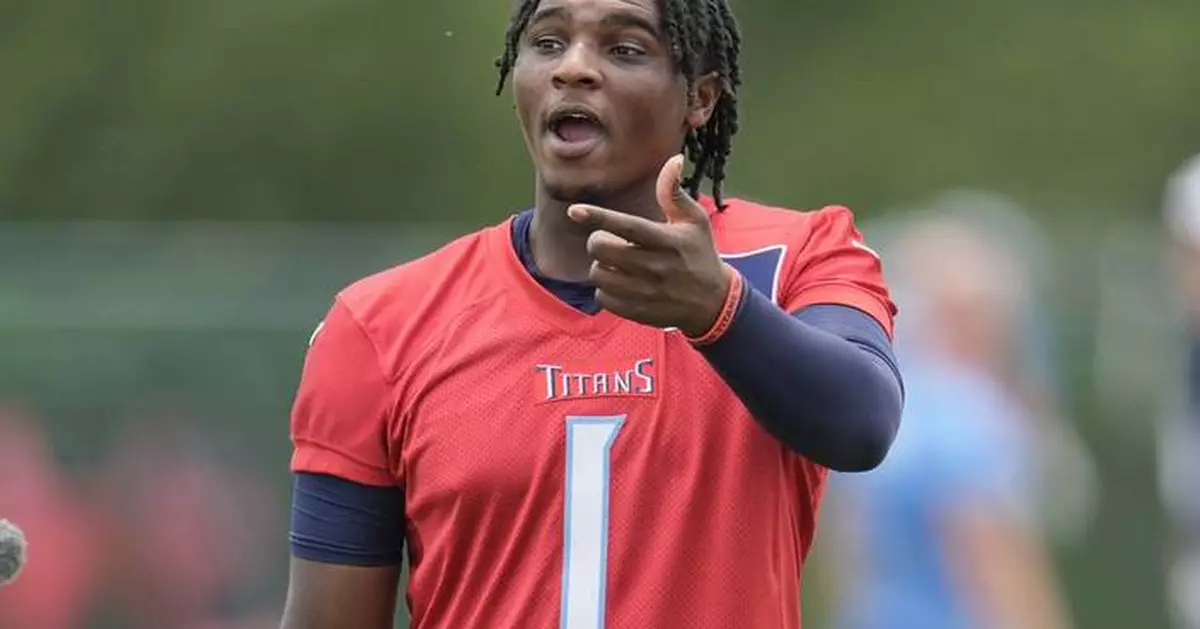
NASHVILLE, Tenn. (AP) — Cam Ward talks so much that Tennessee coach Brian Callahan asked the rookie if he needed to wait until the Titans quarterback stopped before calling a play during practice.
The answer?
Click to Gallery
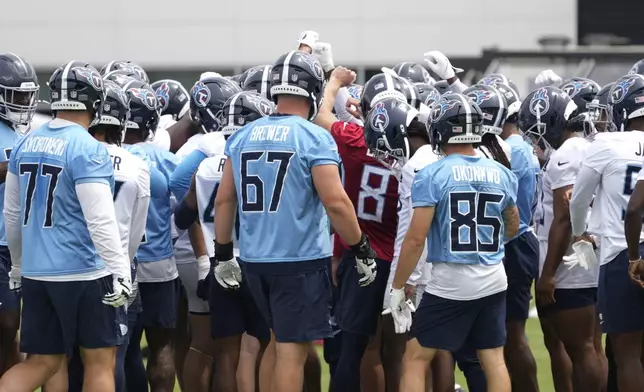
Tennessee Titans players huddle during practice at NFL football minicamp, Thursday, June 12, 2025, in Nashville, Tenn. (AP Photo/George Walker IV)
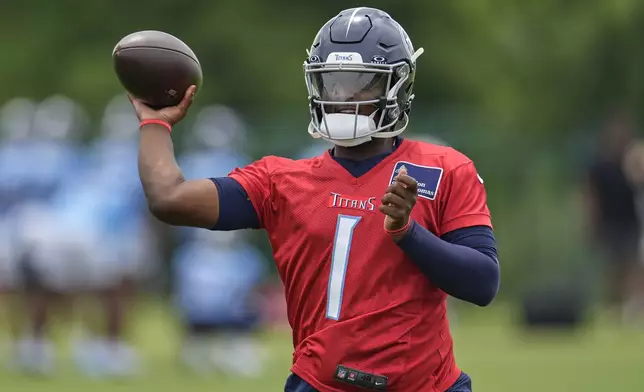
Tennessee Titans quarterback Cam Ward (1) looks to throw a pass during practice at NFL football minicamp, Thursday, June 12, 2025, in Nashville, Tenn. (AP Photo/George Walker IV)

Tennessee Titans defensive tackle Jeffery Simmons (98) and quarterback Cam Ward, right, talk with each other during practice at NFL football minicamp, Thursday, June 12, 2025, in Nashville, Tenn. (AP Photo/George Walker IV)
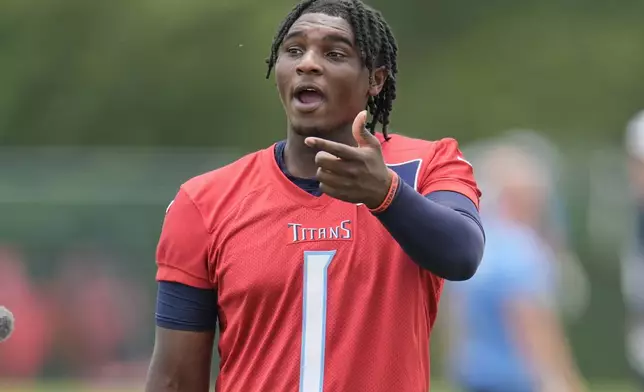
Tennessee Titans quarterback Cam Ward (1) talks to a coach during practice at NFL football minicamp, Thursday, June 12, 2025, in Nashville, Tenn. (AP Photo/George Walker IV)
Nope. Ward listens even while talking. The rookie then proves how closely he pays attention by never missing a beat running the next play.
“He enters right into the huddle, and he calls the play and doesn’t screw up the play call, and I thought that was actually kind of remarkable," Callahan said. "I know I couldn’t do that.”
Ward said Thursday that it's pretty simple for him. The No. 1 overall pick in April's draft out of Miami is always locked in. The talking comes naturally.
“What’s the point of playing something that you love if you can’t have fun with it?” Ward said. "So that’s where it comes from. But I mean, I love the game. And so any chance I get, you know, to let somebody know that they can’t (mess) with me it really doesn’t matter.”
Ward wrapped up his first offseason Thursday as the Titans completed their three-day mandatory minicamp in front of family and a batch of food trucks. Rookies work until June 20, then there's a break until July 22 for training camp when the quarterback competition that really isn’t resumes.
Callahan has done his best to limit the pressure on the rookie by rotating the start of drills among all four quarterbacks on the roster even as Ward got more work during this minicamp for a simple reason: As a rookie the Titans need to give him as much experience as possible.
Ward has been doing his part, showing up early working with fellow rookies and staying late. They have watched the Titans' 2024 games, practice tape, review the plays being run in practice later that day. All designed to grow together and be on the same page.
It's been noticeable enough that Callahan has talked with the rookie about having grinding months ahead.
“I’m not telling him what to do, I’m just making the point that there’s a lot ahead of him that he’s not aware of yet when it comes to this, the length and the week-to-week-to-week grind that comes up for these guys,” Callahan said. “It is a marathon.”
Tyler Lockett is a veteran receiver going into his 11th NFL season and has watched Ward since he played at Washington State. Lockett has been impressed with how Ward understands defenses, gets the ball out and understands timing this early.
“I think everybody's able to see exactly what they saw on the film,” Lockett said.
Ward has had rookie moments. He was picked off twice Thursday, once by linebacker Cody Barton. He rebounded by throwing a nice pass into tight coverage to Bryce Oliver later in a red zone drill for a touchdown.
Quarterbacks coach Bo Hardegree said Ward has worked hard on his footwork and timing and improved on mechanics such as breaking the huddle and recognizing defenses. Ward's hard work is noticeable in other ways too in how he takes coaching points or corrections.
“If he makes a mistake, never make the same mistake twice," Hardegree said. "And that’s important to him.”
Once the rookies start their break, Ward knows he'll be busy studying the playbook and throwing lots of footballs.
The quarterback who worked his way from Incarnate Word to Washington State and Miami before becoming the NFL's top draft pick in April knows he'll likely be thinking about football even while showering during the break.
Even with his first NFL game still months away, Ward knows his biggest goal for his career: Wins.
“The quarterback position will always be judged off wins,” Ward said. “So you know I’m just trying to win a lot of games in the NFL in my career. Try to ... help my team win a lot of games.”
AP NFL: https://apnews.com/hub/nfl
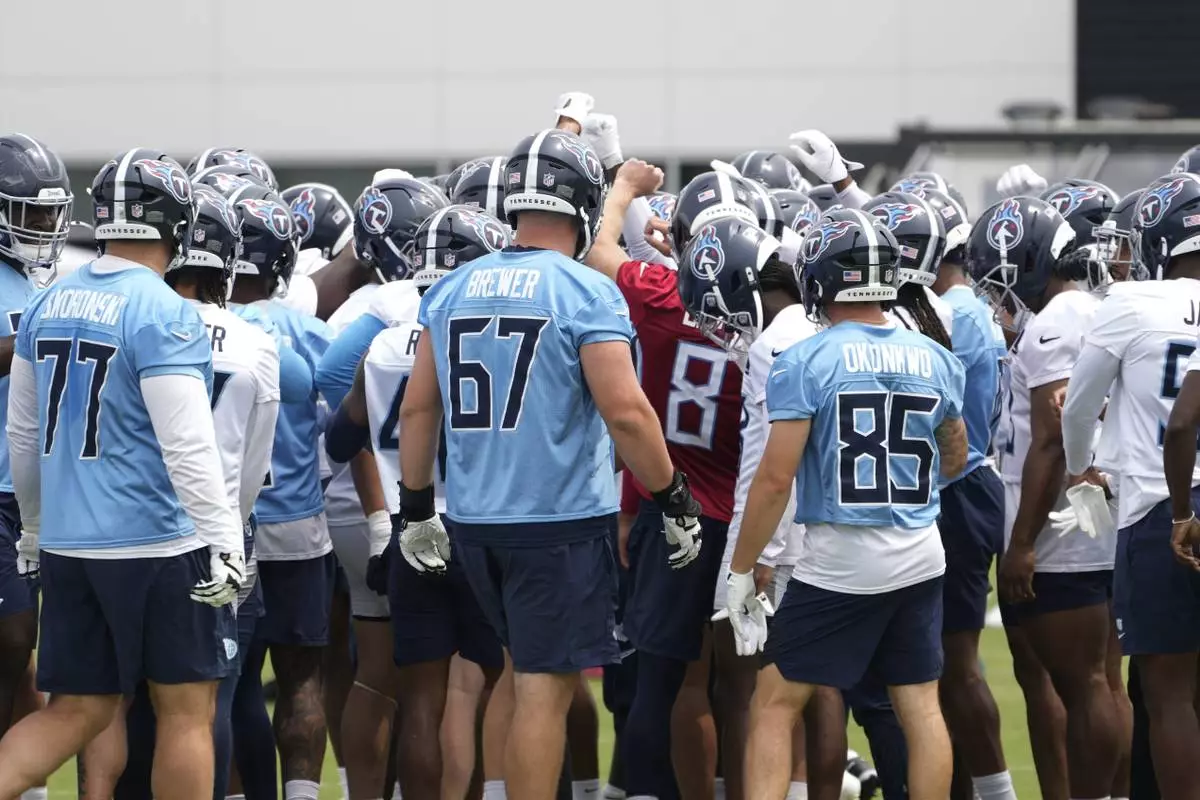
Tennessee Titans players huddle during practice at NFL football minicamp, Thursday, June 12, 2025, in Nashville, Tenn. (AP Photo/George Walker IV)
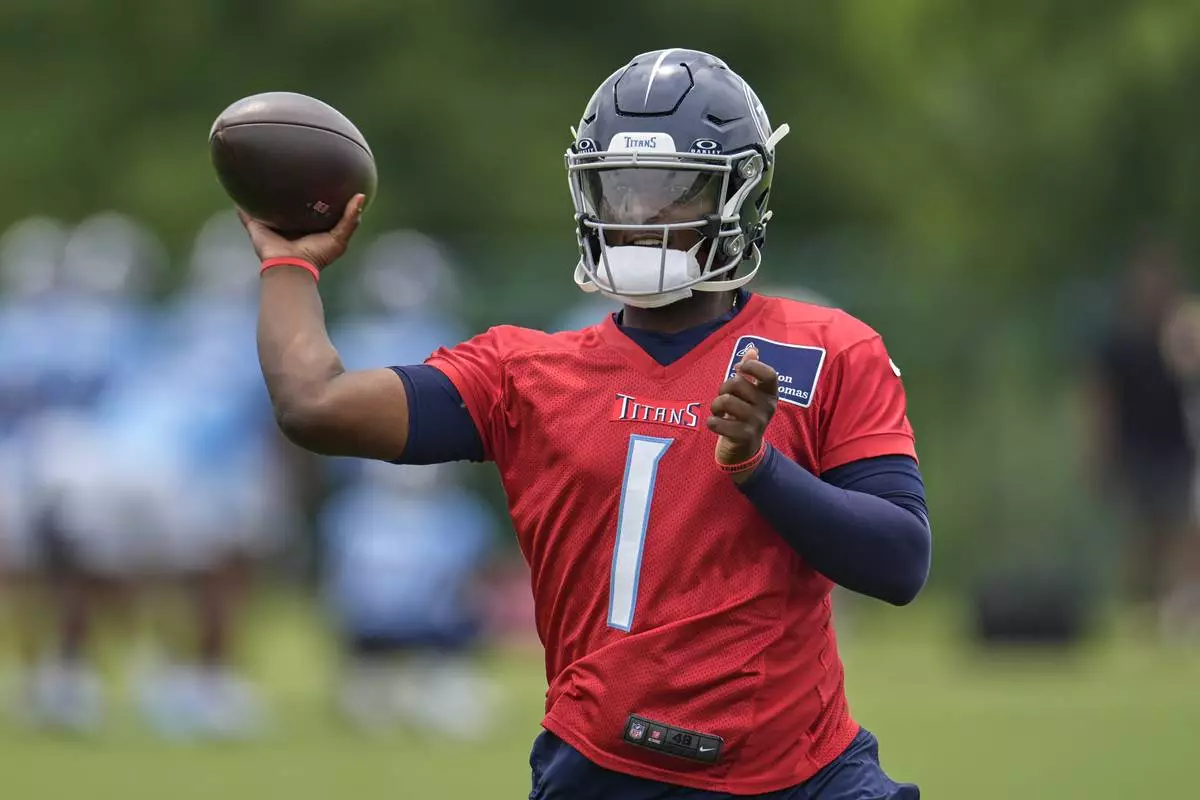
Tennessee Titans quarterback Cam Ward (1) looks to throw a pass during practice at NFL football minicamp, Thursday, June 12, 2025, in Nashville, Tenn. (AP Photo/George Walker IV)
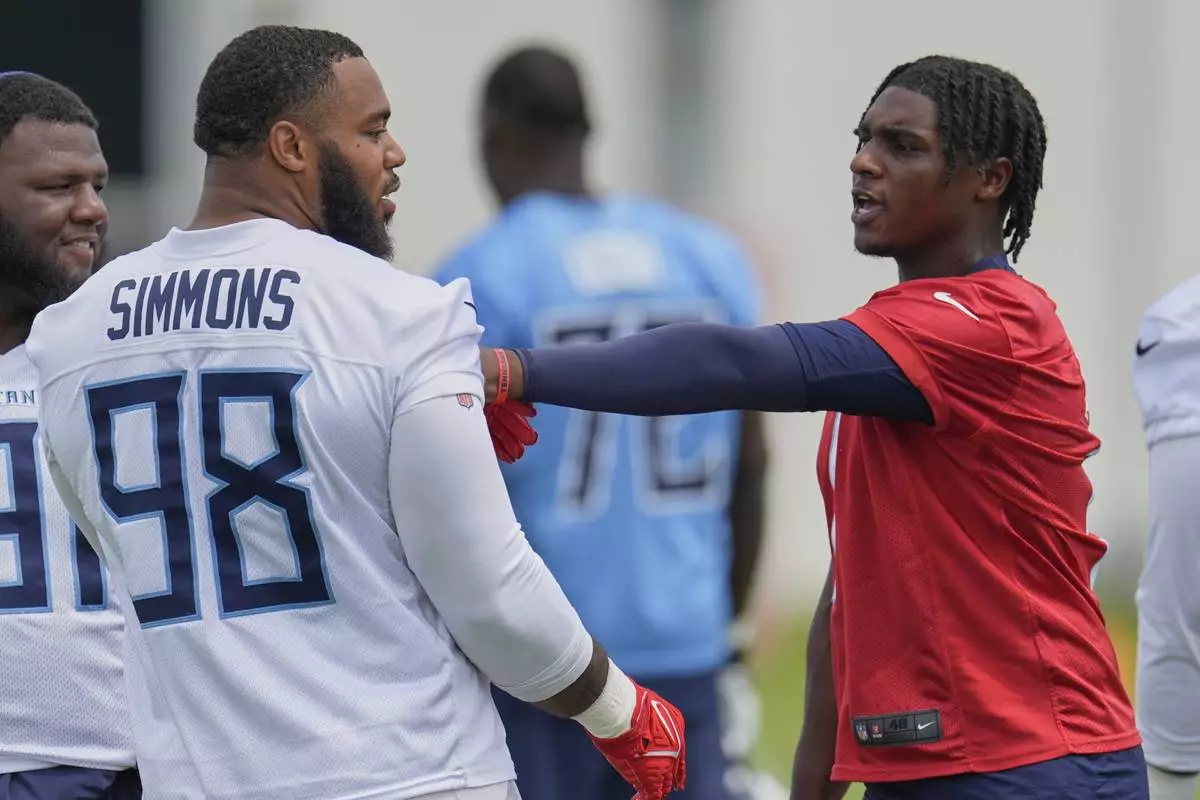
Tennessee Titans defensive tackle Jeffery Simmons (98) and quarterback Cam Ward, right, talk with each other during practice at NFL football minicamp, Thursday, June 12, 2025, in Nashville, Tenn. (AP Photo/George Walker IV)
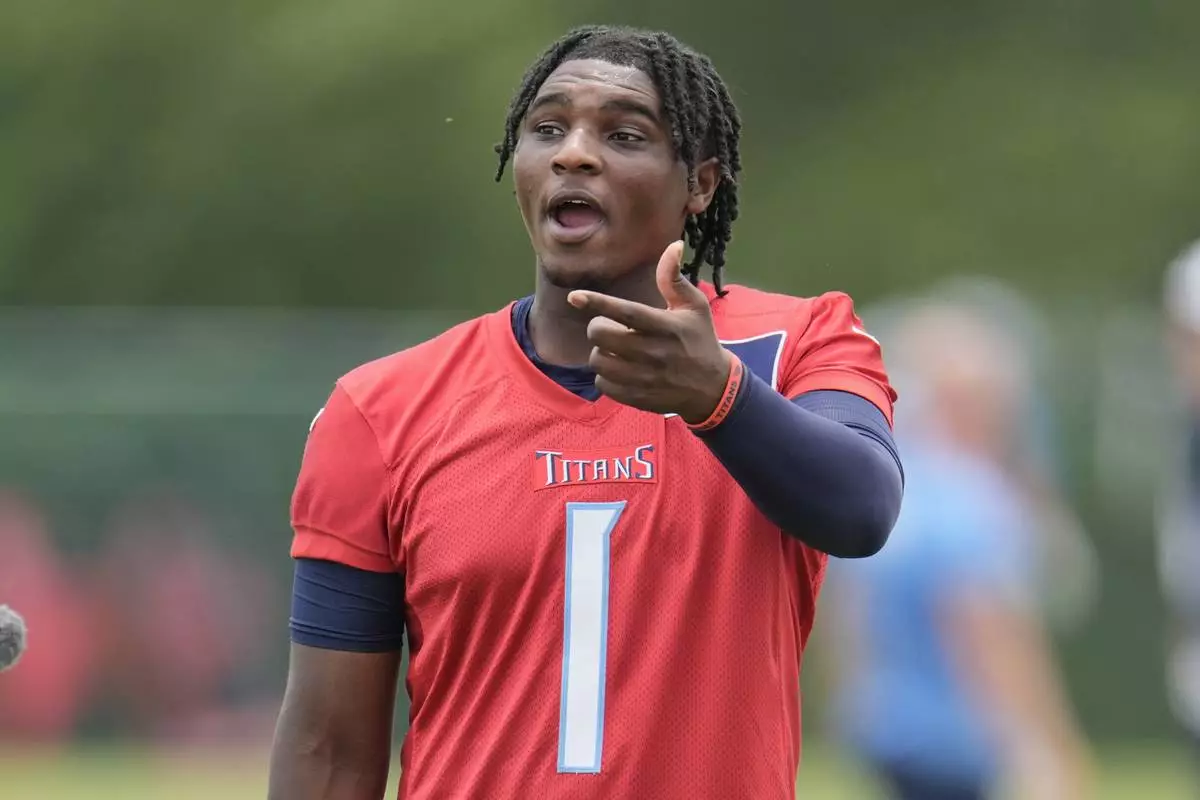
Tennessee Titans quarterback Cam Ward (1) talks to a coach during practice at NFL football minicamp, Thursday, June 12, 2025, in Nashville, Tenn. (AP Photo/George Walker IV)