Chinese Foreign Minister Wang Yi on Thursday met with Togolese Foreign Minister Robert Dussey in Changsha, capital of central China's Hunan Province.
Wang, also a member of the Political Bureau of the Communist Party of China (CPC) Central Committee, extended congratulations to Togo on the smooth transition of its political system and expressed support for Togo in actively exploring a governance path that suits its national conditions. The friendship between China and Togo was forged by the elder generation of leaders and has a solid foundation, said Wang.
Last year, the relationship between China and Togo was elevated to a comprehensive strategic partnership, and China is ready to deepen mutual trust with Togo, enrich the bilateral relationship with dimensions in the new era, continue to support Togo in safeguarding its independence, sovereignty and national dignity, and join the Global South in seeking strength through unity to defend the basic norms governing international relations, said Wang.
Wang Yi said that China has successfully embarked on a modernization path with Chinese characteristics, offering a new option for countries around the world that want to speed up their development while preserving their independence.
The United States is raising tariffs, while China is cutting tariffs; the United States emphasizes putting its interests first, while China practices mutual benefit and win-win cooperation, said Wang.
At the Ministerial Meeting of Coordinators on the Implementation of the Follow-up Actions of the Forum on China-Africa Cooperation (FOCAC), President Xi Jinping announced that China will expand its zero-tariff policy for Africa, and the benefits for Africa will become more evident, said Wang, noting that China does not seek selfish gains in its cooperation with Africa, nor does it engage in geopolitical contests.
The Chinese side will consistently uphold the principle of pursuing the greater good and shared interests, act on the principle of sincerity, real results, amity and good faith which guides China's policy toward Africa, and help Africa accelerate its independent development to achieve modernization together, said Wang Yi.
Dussey stated that Togo has firmly upheld the one-China principle since the very first day of establishing diplomatic relations, and this stance has never changed. He expressed gratitude for China's strong support for Togo's development over the years, and looks forward to deepening practical cooperation in various fields. He congratulated China on the successful hosting of the Ministerial Meeting of Coordinators, which demonstrates China's determination and sincerity in supporting Africa's development, and further clarifies to the world who is the true friend of Africa and who is genuinely contributing to Africa.
The series of global initiatives proposed by China uphold the spirit of solidarity and cooperation, and have made decisive contributions to promoting global stability and prosperity, said Dussey, noting that Togo is willing to work with China to jointly advance the implementation of the series of global initiatives.
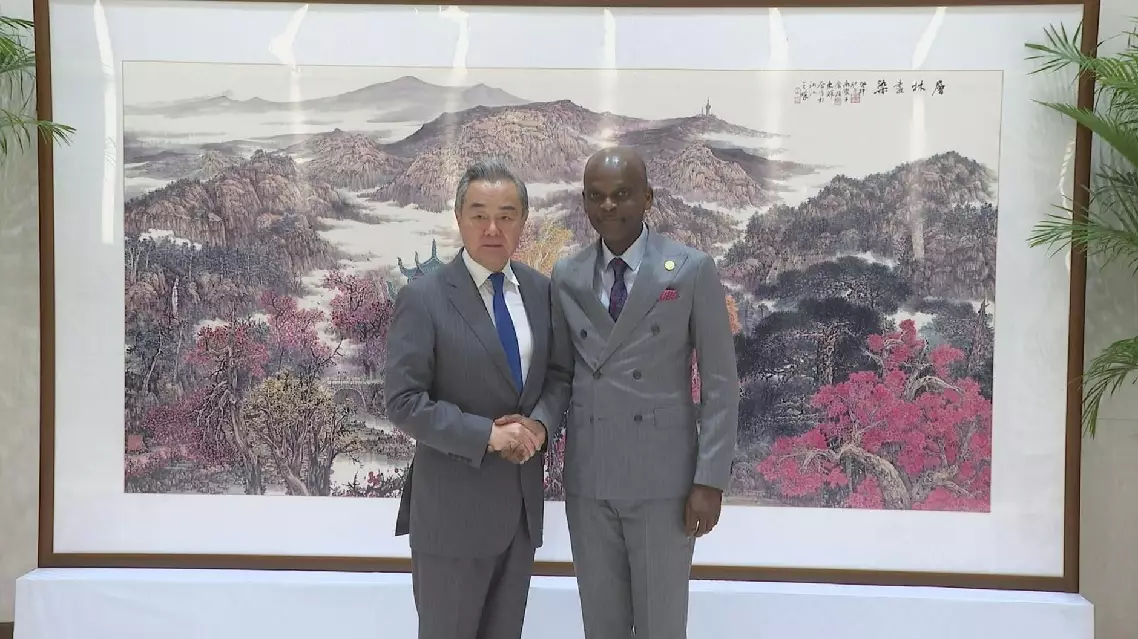
Wang Yi meets with Togolese foreign minister
A civil group in Japan held a study session on Saturday to tell the historical truth about the Nanjing Massacre and called on the Japanese government and society to reflect on history and avoid repeating the tragedy of war of aggression.
Saturday marks China's 12th National Memorial Day for the Victims of the Nanjing Massacre which took place when Japanese troops occupied the then-Chinese capital on Dec 13, 1937, killing approximately 300,000 Chinese civilians and unarmed soldiers in one of the most barbaric episodes of WWII over the course of six weeks.
"Japan's army committed a brutal atrocity -- the Nanjing Massacre 88 years ago in 1937. Today, on this important day, let us observe a moment of silence for 30 seconds for the victims," said an organizer of the study session.
This study session was led by Jomaru Yoichi, a former journalist with the Asahi Shimbun, a Japanese daily newspaper. Yoichi compiled numerous articles published in Japanese newspapers after the Nanjing Massacre. Among them, an article published on December 24, 1937 detailed the atrocities committed by the invading Japanese army in China.
"Around 08:00, about 400-500 defeated Chinese soldiers fled. The Japanese soldiers drove them into houses and bamboo groves, setting fires on all sides. Many of them were driven out by thick smokes. The Japanese soldiers killed them one by one with rifles and bayonets. The Japanese soldiers lost track of how many they had stabbed and killed all of them by 16:00," Yoichi recounted.
Many Japanese citizens said the Japanese government and society must confront the truth of history, and it's important to disseminate accurate historical information in contemporary Japan.
"The Nanjing Massacre is a real incident. The remarks that 'The Nanjing Massacre didn't exist' or 'The Japanese army was powerful and righteous' ignore historical evidence and deny the facts outright. I believe these are all attempts to hide the truth of history. I think these are all wrong. Facts are facts, and we must face history squarely," said a participant at the study session.
"I used to teach history in high school. In 1988, I spent two weeks in China and visited for the first time the site documenting the war crimes of the invading Japanese army. On the 80th anniversary of the end of World War II, the social atmosphere in Japan is gradually becoming strange. We must seriously examine Japan's past history, and disseminating accurate history has become even more important," said another participant.
Some expressed their concern that the Japanese government's historical revisionism, its attempt to cover up the truth of history, and its path towards military expansion will prevent Japan from facing the future.
"The fact that the Japanese army's war of aggression is not taught in social studies or history courses. I have no choice but to learn this myself even now at my age. The idea of upholding the pacifist constitution is becoming increasingly strong. Current Japanese politicians are pursuing a military expansion strategy, which I find incomprehensible," said another participant.
In 2014, China's top legislature designated December 13 as a national memorial day for the massacre victims.
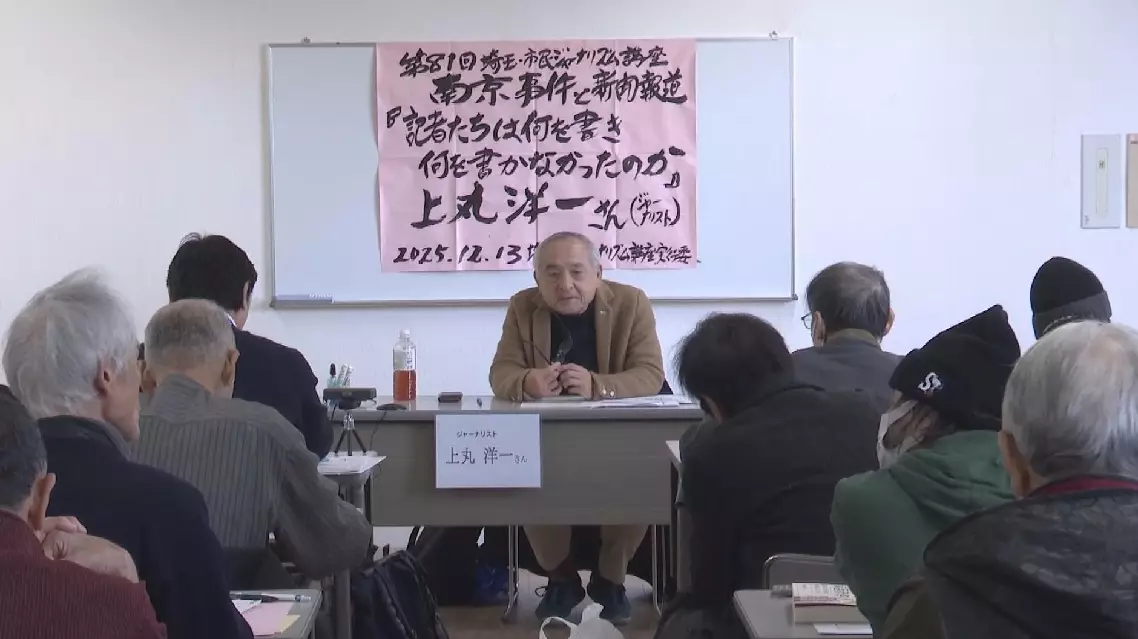
Japanese civil group calls for remembrance of Nanjing Massacre victims