The Center for Excellence in Brain Science and Intelligence Technology (CEBSIT) at the Chinese Academy of Sciences (CAS), in collaboration with Huashan Hospital affiliated with Fudan University and relevant enterprises, has successfully conducted China's first prospective clinical trial of an invasive brain-computer interface (BCI).
Their work makes China the second country, after the United States, to advance invasive BCI technology to the clinical trial stage.
This trail has enabled a Chinese man, who lost all four limbs in a high-voltage electrical accident 13 years ago, to play car racing and other video games using only his mind after only two to three weeks of training with an implanted BCI device.
Currently, there are mainly three BCI technological routes: non-invasive, semi-invasive, and invasive. Non-invasive methods are entirely non-surgical, while semi-invasive and invasive approaches involve surgical procedures.
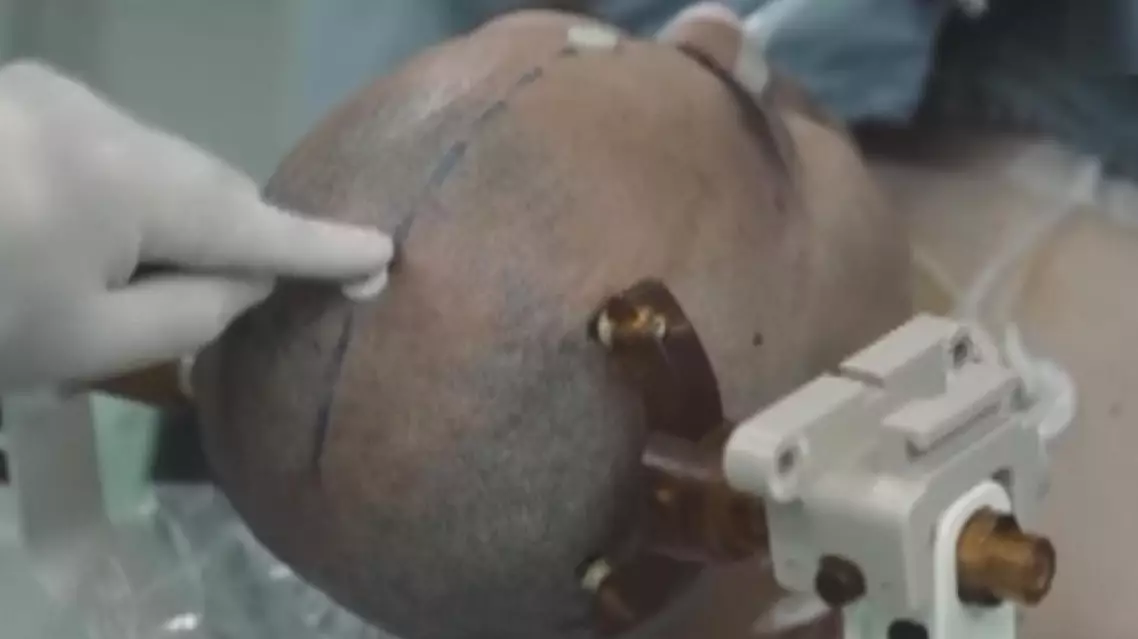
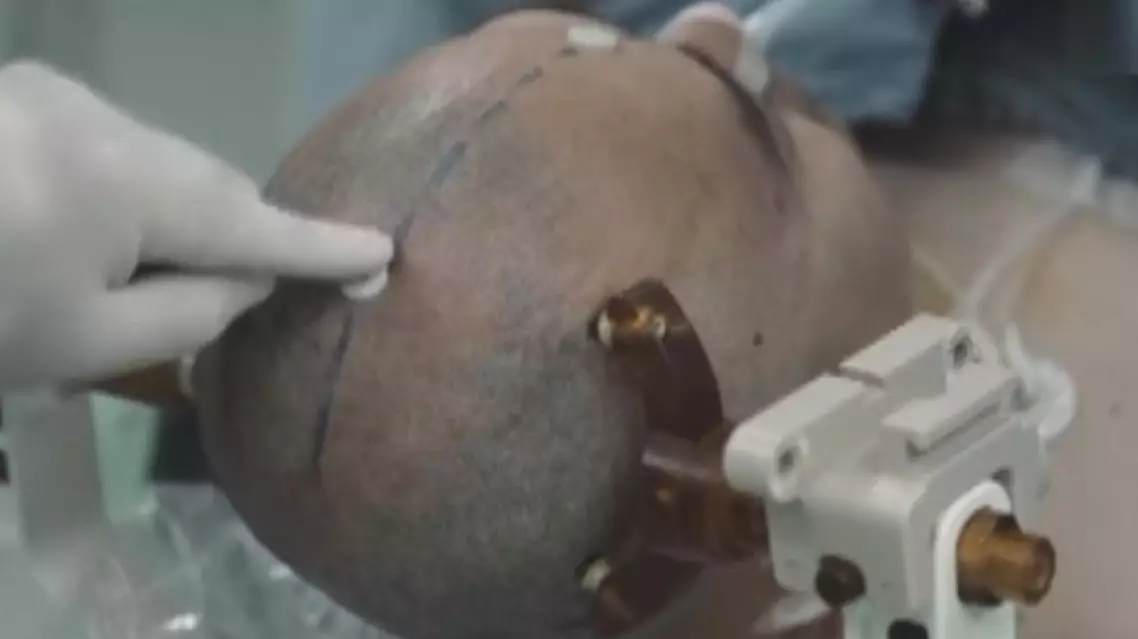
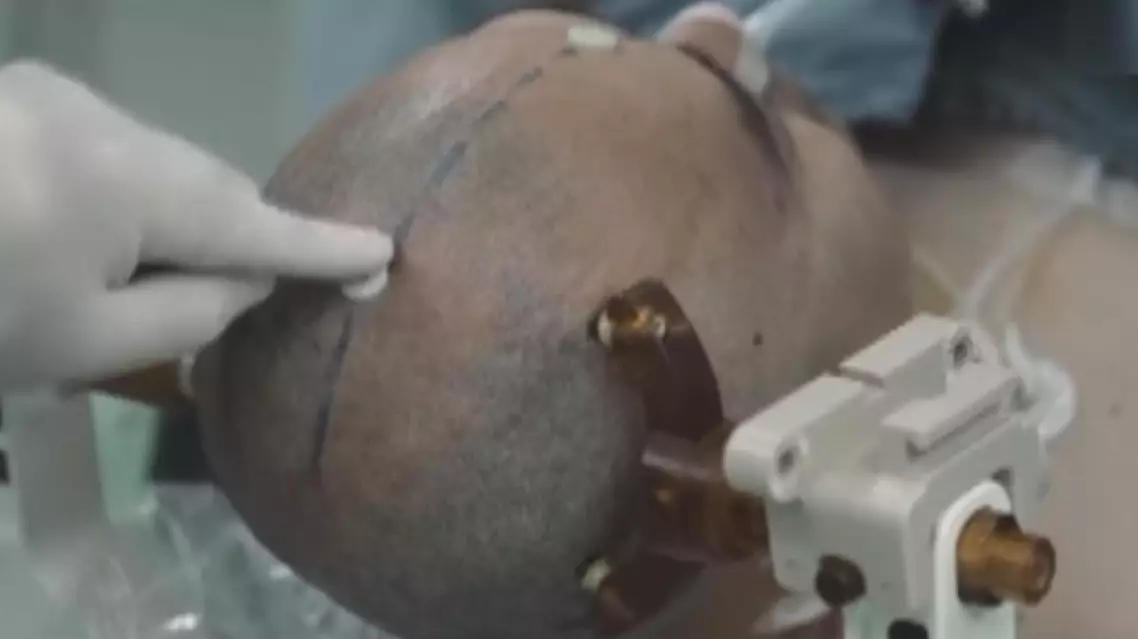
This invasive brain-computer interface (BCI) system, independently developed by Chinese scientists for clinical use, is only the size of a coin and is implanted in a thinned area of the skull.
Its ultra-flexible neural electrodes --just 5 to 8 mm at the tip -- are inserted into brain tissue via minimally invasive surgery.
Though as thin as one-hundredth of a human hair, these electrodes feature an incredibly complex structure.
After semiconductor processing, each electrode tip integrates 32 microscopic sensors capable of precisely detecting faint neural activity within brain tissue. This represents the world's smallest and most flexible neural electrode to date.
"The electrode is so soft that the force required to bend it is comparable to the interaction force between two neurons in the brain. This allows the electrode to coexist harmoniously with brain tissue over extended periods without triggering immune responses or rejection reactions," said Zhao Zhengtuo, a researcher from the Center for Excellence in Brain Science and Intelligence Technology (CEBSIT).
The team hopes the system could enter the market after receiving regulatory approval in 2028, with the potential to enhance the quality of life of millions of patients suffering from complete spinal cord injuries, double upper limb amputations, and amyotrophic lateral sclerosis.
In the next phase, the team aims to enable the patient to control a robotic arm, allowing him to grasp and hold objects like cups. They will also explore controlling complex devices such as robot dogs and embodied intelligent robots to expand the life boundaries of the patient.
Chinese research team launches clinical trial for invasive brain-computer interface
Chinese research team launches clinical trial for invasive brain-computer interface
Chinese research team launches clinical trial for invasive brain-computer interface