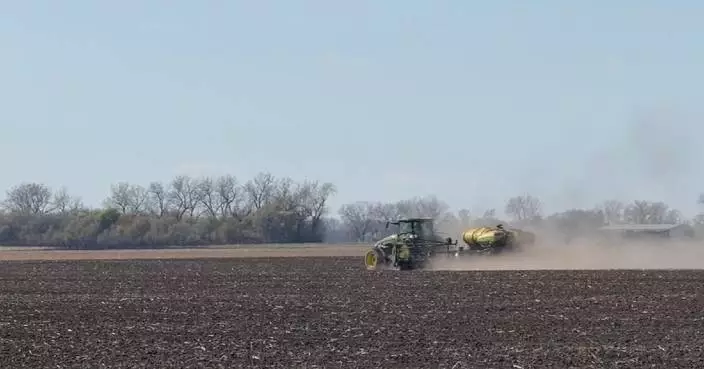
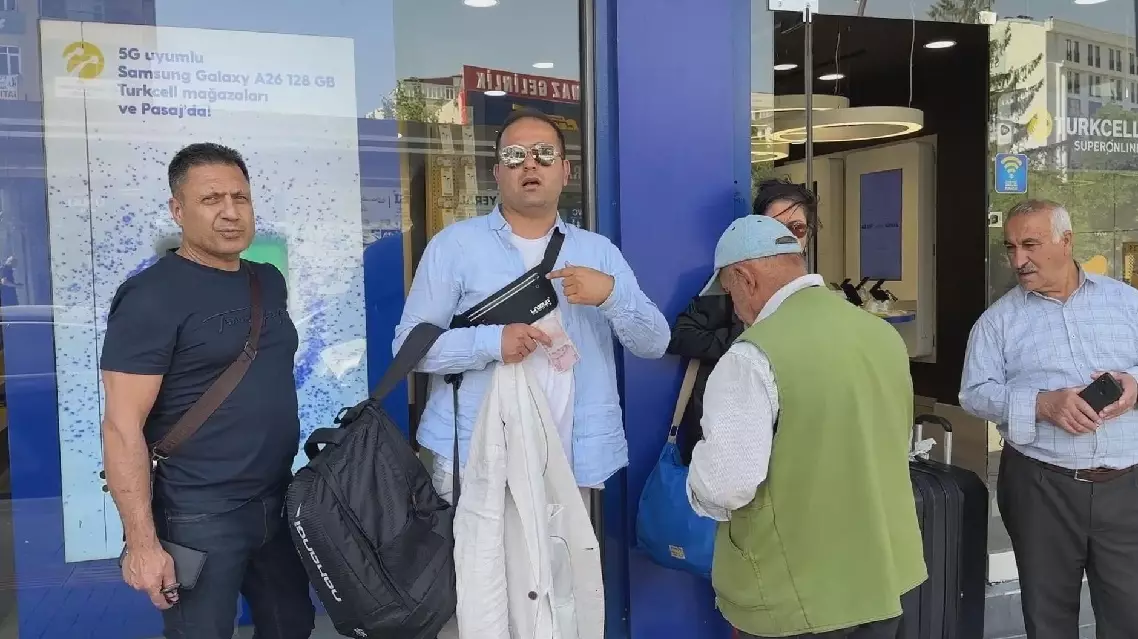
A growing number of Iranian civilians are traveling to the Turkish border city of Van, as rapidly escalating tensions between Iran and Israel heighten security concerns.
In the pre-dawn hours of Friday, Israel launched a series of coordinated airstrikes targeting strategic locations across the country, including in the capital, Tehran. Iranian state media has confirmed the deaths of several high-ranking military commanders and prominent nuclear scientists in these attacks.
In response to the Israeli offensive, Iran has launched barrages of ballistic missiles at military targets inside Israel since Friday night, further intensifying the conflict.
After being struck on Friday, Iran closed its airspace. Over the past two days, an increasing number of Iranians have chosen to travel by bus across the northern border into Van, the largest city in eastern Türkiye.
"The border is still open right now. We've already had 28 buses arrive here from the border today (Saturday). There are so many buses that have come through, and people just keep coming, probably because of the fighting. Normally, we get maybe seven or eight buses of Iranian passengers in a whole day, but this morning we've already had 28 buses show up. At this rate, we could see 150 to 200 buses arriving by the end of today," said a bus company principal.
The surge in cross-border movement is driven by safety concerns among many Iranian civilians following attacks on their capital, with uncertainty over how the crisis may escalate.
An Iranian traveler coming from Tehran said Van was merely a transit point, with Istanbul in northwestern Türkiye as his final destination.
"It's unstable. Nobody knows what's happening," he described the uncertainty in his home country.
With many Iranians arriving and transferring through, transportation from Van has seen surging demand. Flights remain fully booked for the past few days, and buses to Istanbul are also sold out.
"My destination is Sweden. And actually I was a traveler and I had my flight yesterday at four o'clock in the morning. And exactly at four in the morning, Tehran was bombed and (along with) many other cities, so when I came to the airport, I had to come back and just take a taxi to the border in the north of Iran, which takes about 20 hours by taxi. And from this border, I came inside here. And now, I have to go to Istanbul, (which will take) 24 hours more," said another Iranian traveler.
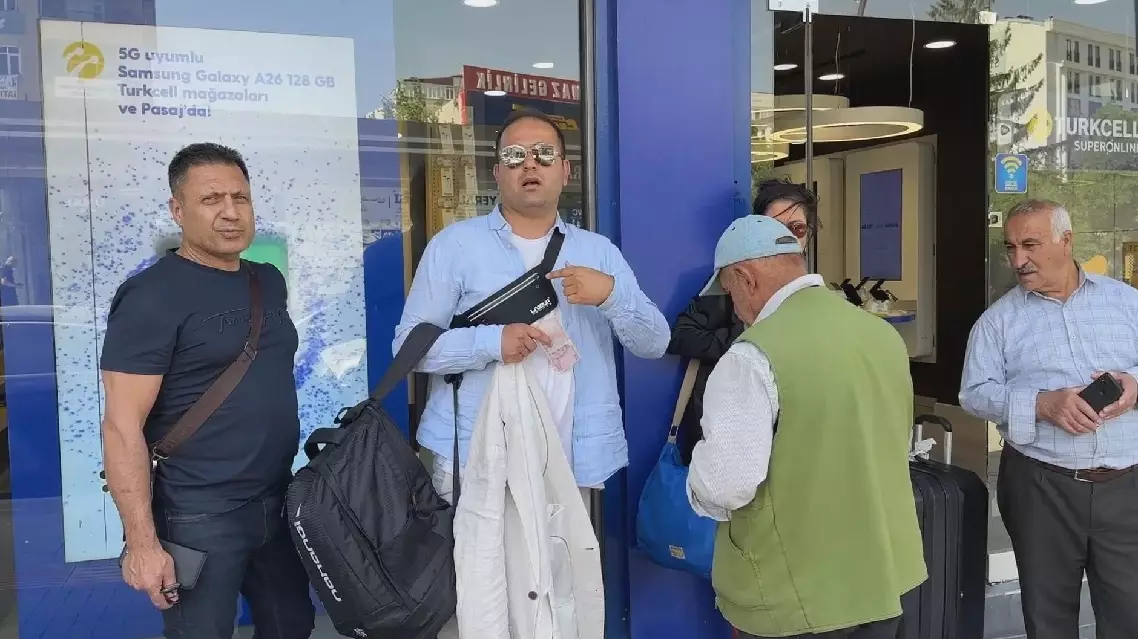
Iran-Türkiye border travel surges amid regional tensions
Iran-Türkiye border travel surges amid regional tensions
The chairman and president of the American Chamber of Commerce in South China expressed optimism about U.S. President Donald Trump's state visit to China.
Trump landed in the Chinese capital on Wednesday evening for a three-day state visit to China at the invitation of Chinese President Xi Jinping.
In an interview with China Global Television Network (CGTN) in Guangzhou, Harley Seyedin, chairman and president of the chamber, highlighted the visit's critical importance to the chamber's members, which account for about 40 percent of China-U.S. business trade and investment.
"The American Chamber of Commerce in South China has over 2,300 members, which account for about 40 percent of all U.S.-China business trade and investment. Therefore, his trip is extremely important to us, and we're very excited about the fact that he's coming," said Seyedin.
"Certainty is extremely important in business and I do believe that his trip will bring about certainty on a number of issues, especially on investment and cooperation and sales. And I think we will do very well with the fact that he's here. The Greater Bay Area, which consists of Hong Kong, Macao and nine cities on the mainland, has a GDP of 2.1 trillion U.S. dollars. I think the fact that President Trump is here is going to signal that we can continue to expand our business, we can continue to cooperate with our Chinese partners and prosper and benefit from the opportunities that will be available," said Seyedin.
He noted that the visit was crucial to a majority of chamber members who now focus on the Chinese market rather than exports.
"I do believe that his arrival will signal better cooperation in many, many new areas, What this will resolve is the reduction of tariffs and I do expect that reduction in tariff levels that's going to be very important. Seventy-seven percent of the members of the American Chamber of Commerce based in South China are not in the export business anymore. They are primarily here importing from the United States components and parts and products, and manufacturing in China for the Chinese market. So the Chinese market has become very important to us. And therefore President Trump's visit, his cooperation with President Xi Jinping, his meetings are gonna be extremely beneficial in our ability to penetrate the Chinese market, even in a greater way than we have in the past," the chairman said.
He also pointed out opportunities for U.S. companies in China's green industrial transformation, citing collaboration in electric vehicles (EVs), batteries, healthcare, AI, and consumer products.
"China is developing new technologies from which we can benefit by cooperating with our Chinese partners - EVs, batteries as well as health care. China is now the leading innovator of new drugs. We know that we can work together with China on many clinical trials in development of new technology. We can work together in AI areas. We think that AI is not necessarily just defense, it is an area that's very important to business going forward. In addition to that, there are just about every consumer product that you can imagine that we provide here in China, and we're gonna continue to do that," he said.

Trump's China visit to boost investment, cooperation: business leader