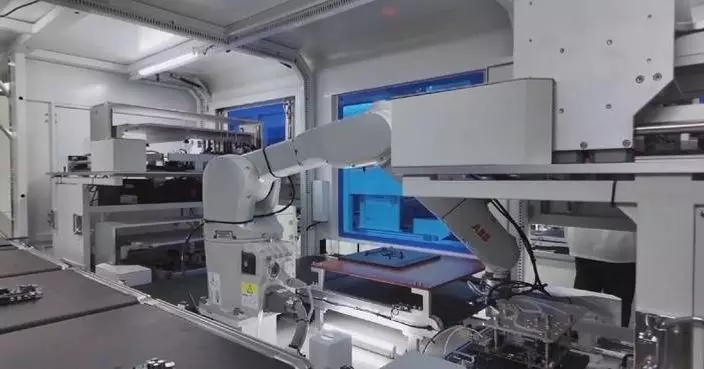
China on Saturday kicked off its 2025 new energy vehicle (NEV) rural promotion campaign in Rugao City, east China's Jiangsu Province, with a record 124 qualified vehicle models - up from 99 last year - now available to rural consumers.
Jointly organized by five central government departments including the Ministry of Industry and Information Technology (MIIT) and the National Development and Reform Commission, this year's campaign features multiple support measures covering vehicle purchases, usage and maintenance.
"We are integrating policy tools such as vehicle trade-in programs and county-level charging/swapping infrastructure improvements to enhance after-sales services covering the entire vehicle lifecycle, that is purchase, usage, and maintenance. At the same time, we are strengthening policy coordination in giving preferences to channeling high-quality resources toward rural areas," said Yao Zhenzhi, deputy director of the MIIT's Equipment Industry Development Center.
The campaign has demonstrated remarkable results since its 2020 launch, with annual sales of promoted NEV models surging from 397,000 units to nearly 7.6 million in 2024, outpacing the corresponding urban market growth, according to the China Association of Automobile Manufacturers.
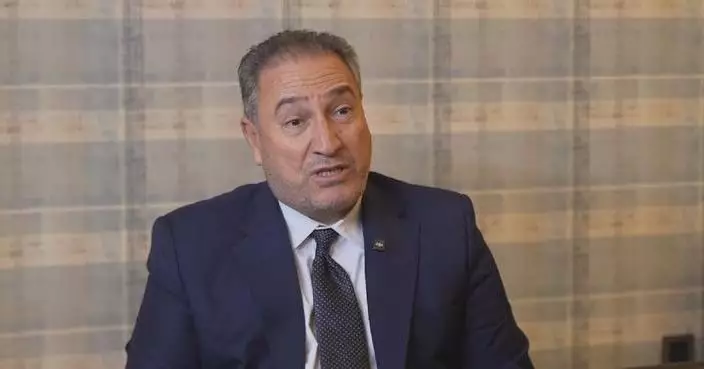
"Models from the recommendations catalog have achieved cumulative sales of nearly 15 million units, demonstrating that these models are mainstream choices favored by consumers," said Fu Bingfeng, the association's executive vice president.
Local governments and automakers will offer additional subsidies and after-sales packages during the campaign, which is expected to set new sales records this year.
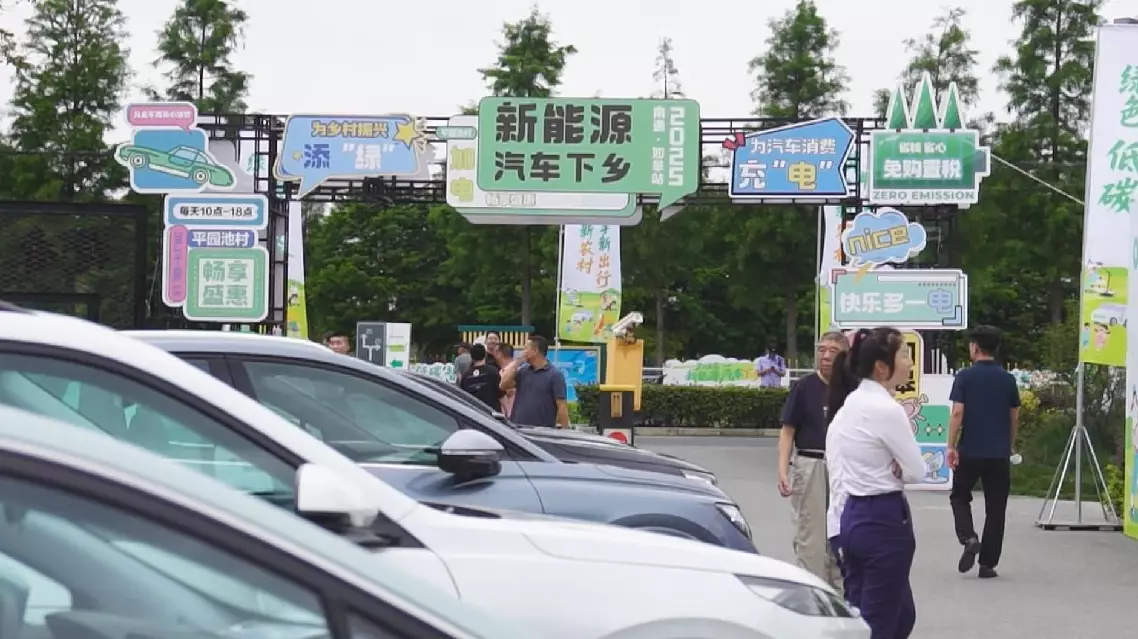
China launches 2025 new energy vehicle rural promotion campaign
Chinese Foreign Minister Wang Yi said on Tuesday that mediation efforts of the Pakistani side regarding the Middle East tensions are in the common interests of all parties.
Wang, also a member of the Political Bureau of the Communist Party of China Central Committee, made the remarks in his talks with Pakistani Deputy Prime Minister and Foreign Minister Mohammad Ishaq Dar in Beijing.
During their talks, the two sides exchanged views on current international issues and regional conflicts.
Wang welcomed the visit of the Pakistani side to Beijing for discussion on easing tensions in the Middle East, just after its holding of a quadrilateral foreign ministers' meeting in Islamabad.
He said China supports and looks forward to Pakistan playing a unique and important role in easing the situation and resuming peace talks. This process is no easy task, and Pakistan's mediation efforts are in line with the common interests of all parties, Wang added.
He noted China is willing to make joint efforts with Pakistan to end the hostilities as soon as possible, create opportunities for peace and open the window for peace talks.
On bilateral ties, Wang said this year marks the 75th anniversary of the establishment of diplomatic relations between China and Pakistan, calling on both sides to implement the important consensus reached by the leaders of the two countries and constantly advance the building of a China-Pakistan community with a shared future.
For his part, Dar said the Pakistan-China friendship is precious and deeply rooted in people's hearts, adding that Pakistan is willing to work with China to promote the continuous development of the all-weather strategic cooperative partnership between the two countries.
Dar thanked China for supporting Pakistan's mediation of the situation in Iran, adding that the current conflict has disrupted international energy supplies and caused heavy damage to developing countries.
Noting that solutions can only be found through negotiation, Dar said Pakistan is willing to strengthen communication and coordination with China to push all parties to start peace talks as soon as possible and restore regional peace.
The two sides also put forward a five-point initiative for restoring peace and stability in the Gulf and the Middle East region:
I. Immediate cessation of hostilities: China and Pakistan call for immediate cessation of hostilities and utmost efforts to prevent the conflict from spreading. Humanitarian assistance must be allowed to all war-affected areas.
II. Start of peace talks as soon as possible. Sovereignty, territorial integrity, national independence and security of Iran and the Gulf states should be safeguarded. Dialogue and diplomacy is the only viable option to resolve conflicts. China and Pakistan support the relevant parties in initiating talks, with all parties committing to peaceful resolution of disputes, and refraining from the use or the threat of use of force during peace talks.
III. Security of nonmilitary targets. The principle of protecting civilians in military conflict should be observed. China and Pakistan call on parties to the conflict to immediately stop attacks on civilians and nonmilitary targets, and fully adhere to International Humanitarian Law, and stop attacking important infrastructure, including energy, desalination and power facilities, and peaceful nuclear infrastructure, such as nuclear power plants.
IV. Security of shipping lanes. The Strait of Hormuz, together with its adjacent waters, is an important global shipping route for goods and energy. China and Pakistan call on the parties to protect the security of ships and crew members stranded in the Strait of Hormuz, allow the early and safe passage of civilian and commercial ships, and restore normal passage through the Strait as soon as possible.
V. Primacy of the United Nations Charter. China and Pakistan call for efforts to practice true multilateralism, to jointly strengthen the primacy of the United Nations, and to support the conclusion of an agreement for establishing a comprehensive peace framework and realizing lasting peace based on the purposes and principles of the UN Charter and international law.
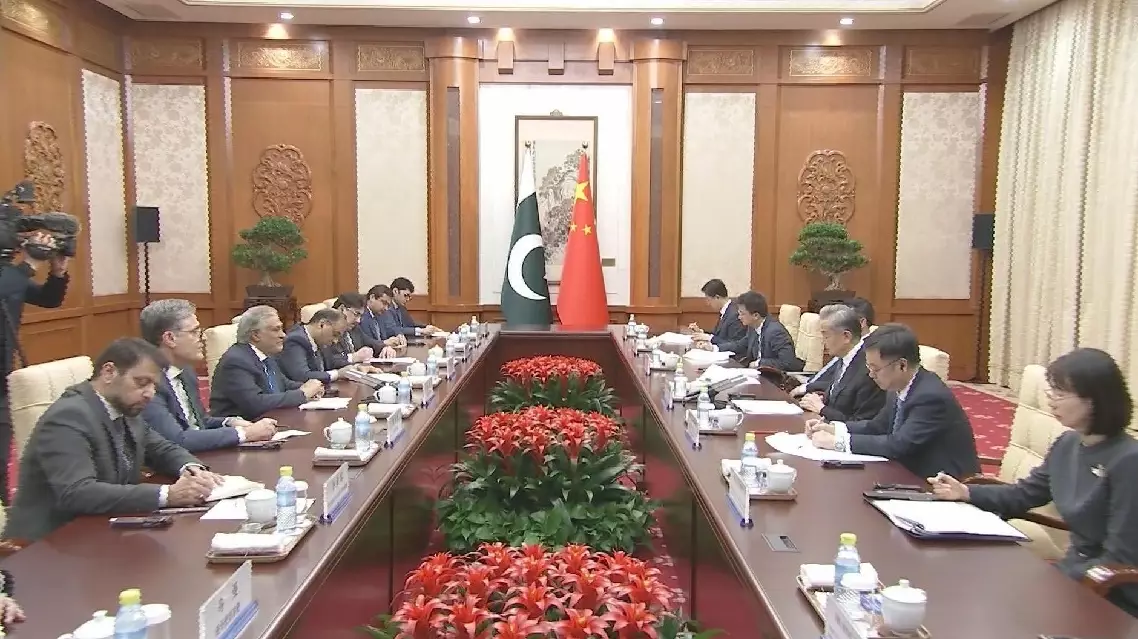
Pakistan's mediation efforts in common interests of all parties: Chinese FM
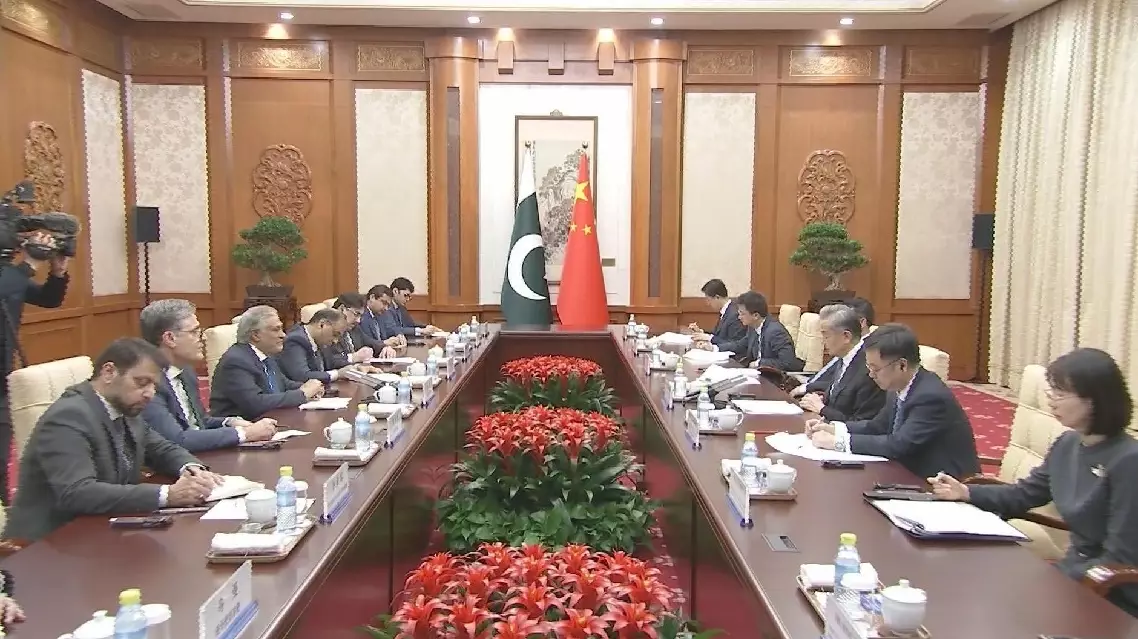
Pakistan's mediation efforts in common interests of all parties: Chinese FM