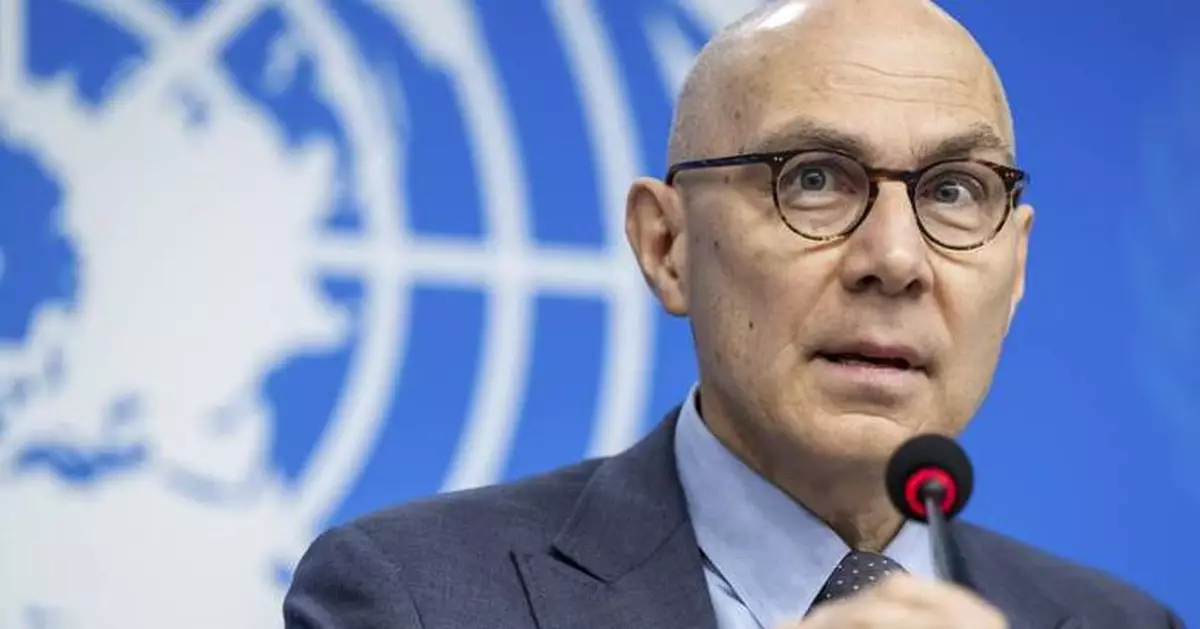
GENEVA (AP) — The U.N. human rights chief said Israel's warfare in Gaza is inflicting “horrifying, unconscionable suffering" on Palestinians and urged government leaders on Monday to “wake up” and exert pressure to bring an end to the conflict.
“The facts speak for themselves,” said Volker Türk. “Everyone in government needs to wake up to what is happening in Gaza. All those with influence must exert maximum pressure on Israel and Hamas, to put an end to this unbearable suffering.”
Türk made the comments at the opening of the latest Human Rights Council session in a broad address that also raised concerns about escalating conflict between Iran and Israel, the fallout from U.S. tariffs, and China's human rights record — alongside wars and conflict in places like Sudan and Ukraine.
As the United Nations High Commissioner for Human Rights — who has regularly spoken out about bloodshed in Gaza and called for the release of Israeli hostages held by armed Palestinian militants — Türk used some of his most forceful words yet to highlight the Mideast violence.
“Israel’s means and methods of warfare are inflicting horrifying, unconscionable suffering on Palestinians in Gaza,” he told the 47-member-country body, which Israeli authorities have regularly accused of anti-Israel bias. The Trump administration has kept the United States, Israel's top ally, out of the council proceedings.
Israel’s military campaign since the deadly Oct. 7, 2023, Hamas-led attacks in Israel has killed over 55,300 Palestinians, according to Gaza’s Health Ministry. It says that women and children make up most of the dead, but it does not distinguish between civilians and combatants.
The Israeli diplomatic mission in Geneva responded by accusing Türk and his office of been “relentless in making irresponsible and uneducated statements regarding Israel’s conduct of hostilities — including reliance on information propagated by terrorist organizations.” It called on Türk to "condemn Hamas’s declared strategy to maximize harm to the population in Gaza.”
In Brussels, medical aid charity Doctors Without Borders appealed to European Union leaders to use what leverage they have over Israel to end the siege of Gaza.
Secretary-General Christopher Lockyear described Gaza as a “hell on earth,” and said that almost two years of relentless bombardment has turned “this narrow strip of land into a graveyard of shattered hospitals, mass graves and destroyed neighborhoods.”
Aid deliveries organised by the U.N. were cut off in mid-March, and violence has accompanied distributions of food from the recently created Gaza Humanitarian Foundation, which has U.S. and Israeli backing.
Beyond the suffering of inflicted on in Gaza, Doctors Without Borders said its international staffers are living often on one meal a day, and some have been admitted to their own facilities for treatment.
The EU is the world’s biggest donor of aid to the Palestinians but has little real leverage over Israel. The bloc's 27 member states are divided in their approach to the conflict, although concern over the plight of Gazans has grown as the siege has dragged on.
In his speech, Türk also bemoaned an increase in civilian casualties in Ukraine, nearly 3 1/2 years after Russia's full-scale invasion. He denounced executions without a fair trial and “wide-scale sexual violence, including against children" in Sudan.
Without mentioning U.S. President Donald Trump by name, Türk likened the tariffs imposed by the Trump administration in April to “a high-stakes poker game, with the global economy as the bank.”
“But the shockwaves of a trade war will hit least developed countries with the force of a tsunami,” he said, warning of a potentially “devastating” impact on exporters in Asia, and the prospect of higher costs for food, healthcare and education in places.
Türk expressed concerns about U.S. deportations of non-nationals, including to third countries, and called on authorities to respect the right to peaceful assembly.
The council session, which has been shortened by 2 1/2 days because of funding issues at the U.N., is set to run through July 9. The Geneva-based council is the U.N.'s top human rights body.
Associated Press writer Lorne Cook in Brussels contributed to this report.
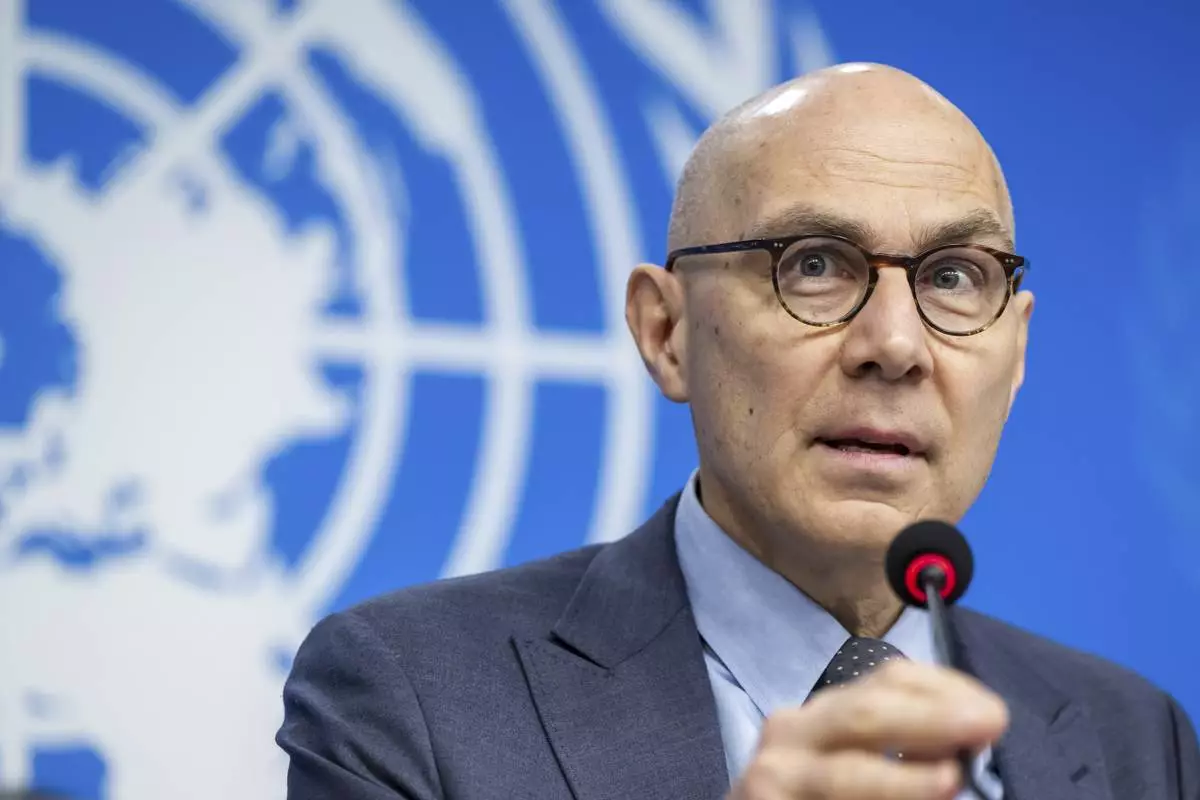
FILE - U.N. High Commissioner for Human Rights (UNHCR) Volker Türk speaks during a press conference at the European headquarters of the United Nations, in Geneva, Switzerland, Wednesday, Feb. 12, 2025. (Martial Trezzini/Keystone via AP, File)
DUBAI, United Arab Emirates (AP) — Iran closed its airspace to commercial flights for hours without explanation early Thursday as tensions remained high with the United States over Tehran’s bloody crackdown on nationwide protests.
The closure ran for over four hours, according to pilot guidance issued by Iran, which lies on a key East-West flight route. International carriers diverted north and south around Iran, but after one extension, the closure appeared to have expired and several domestic flights were in the air just after 7 a.m.
Around midday, Iranian state television carried a statement from the country's Civil Aviation Authority saying that the nation's “skies are hosting incoming and outgoing flights, and airports are providing services to passengers.” It did not acknowledge the closure.
Iran previously shut its airspace during the 12-day war against Israel in June and when it exchanged fire with Israel during the Israel-Hamas war. However, there were no signs of current hostilities though the closure immediately rippled through global aviation.
“Several airlines have already reduced or suspended services, and most carriers are avoiding Iranian airspace,” said the website SafeAirspace, which provides information on conflict areas and air travel. “The situation may signal further security or military activity, including the risk of missile launches or heightened air defense, increasing the risk of misidentification of civil traffic.”
Iran in the past has misidentified a commercial aircraft as a hostile target. In 2020, Iranian air defense shot down Ukraine International Airlines Flight PS752 with two surface-to-air missiles, killing all 176 people on board. Iran for days adamantly dismissed allegations of downing the plane as Western propaganda before finally acknowledging it.
The airspace closure came as some personnel at a key U.S. military base in Qatar were advised to evacuate. The U.S. Embassy in Kuwait also ordered its personnel to “temporary halt” going to the multiple military bases in the small Gulf Arab country.
The U.N. Security Council scheduled an emergency meeting on Iran at the request of the United States on Thursday afternoon.
U.S. President Donald Trump made a series of vague statements Wednesday that left unclear what American action, if any, would take place against Iran.
In comments to reporters, Trump said he had been told that plans for executions in Iran have stopped, without providing many details. The shift comes a day after Trump told protesters in Iran that “help is on the way” and that his administration would “act accordingly” to respond to the Islamic Republic’s deadly crackdown.
Iranian Foreign Minister Abbas Araghchi also sought to tone down the rhetoric, urging the U.S. to find a solution through negotiation.
Asked by Fox News what he would say to Trump, Araghchi said: “My message is: Between war and diplomacy, diplomacy is a better way, although we don’t have any positive experience from the United States. But still diplomacy is much better than war.”
The change in tone by the U.S. and Iran came hours after the chief of the Iranian judiciary said the government must act quickly to punish the thousands who have been detained.
Activists warned that hangings of detainees could come soon. The security forces’ crackdown on the demonstrations has killed at least 2,615, the U.S.-based Human Rights Activists News Agency reported. The death toll exceeds that of any other round of protest or unrest in Iran in decades and recalls the chaos surrounding the country’s 1979 Islamic Revolution.
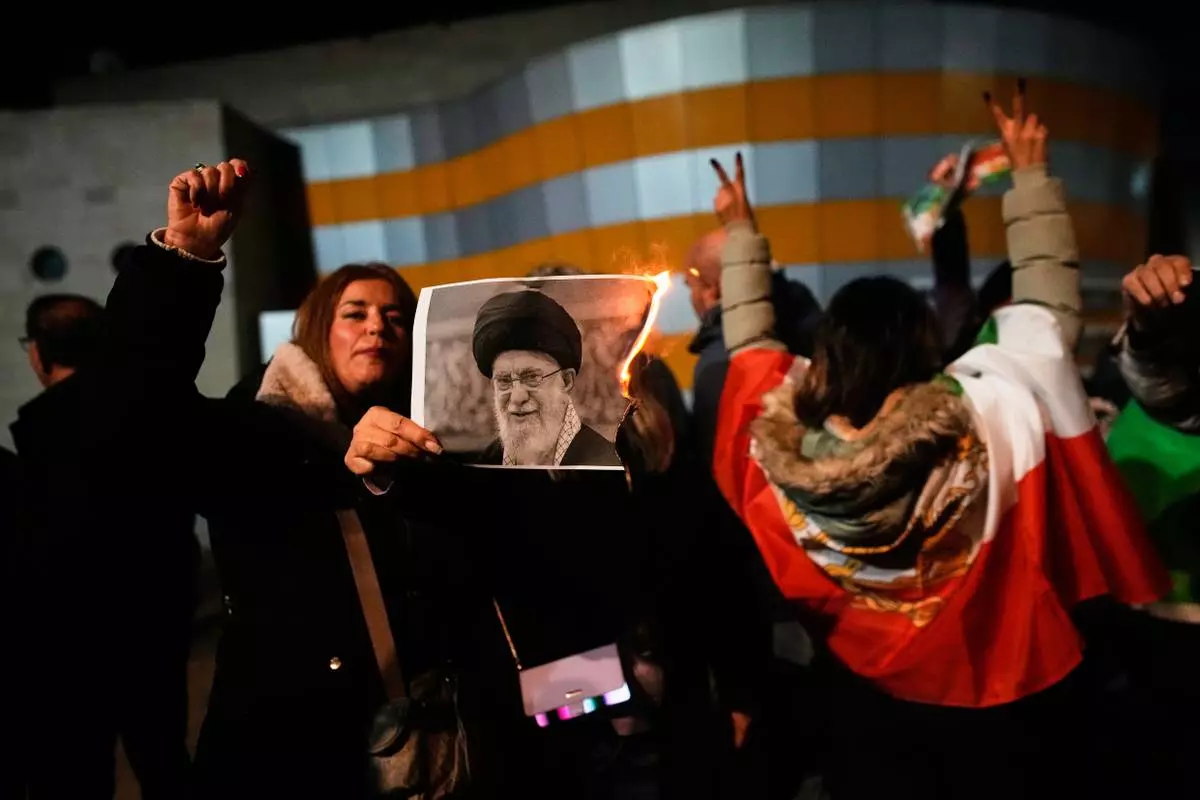
Demonstrators burn a poster depicting Iran's Supreme Leader Ayatollah Ali Khamenei during a rally in support of anti-government protests in Iran, in Holon, Israel Wednesday, Jan. 14, 2026. (AP Photo/Ohad Zwigenberg)
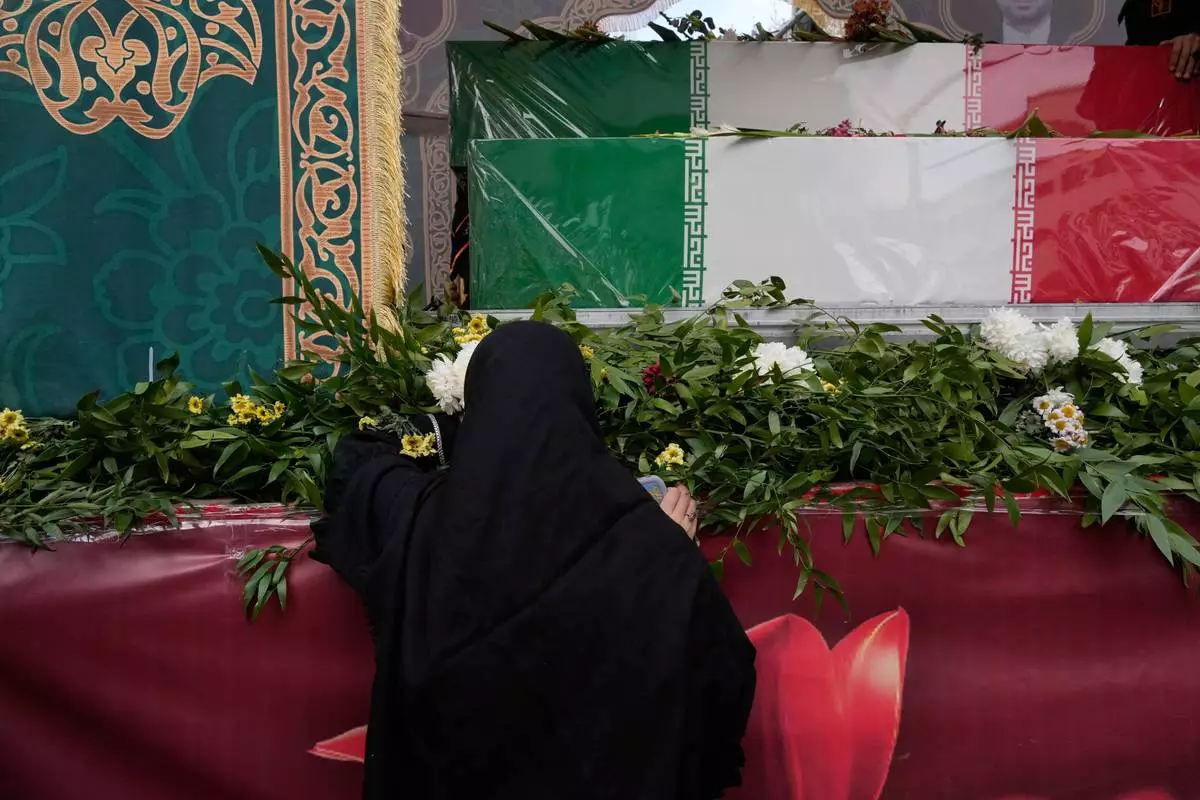
A woman mourns next to the flag-draped coffins of a group of security forces, who were killed during anti-government protests, during their funeral ceremony, in Tehran, Iran, Wednesday, Jan. 14, 2026. (AP Photo/Vahid Salemi)
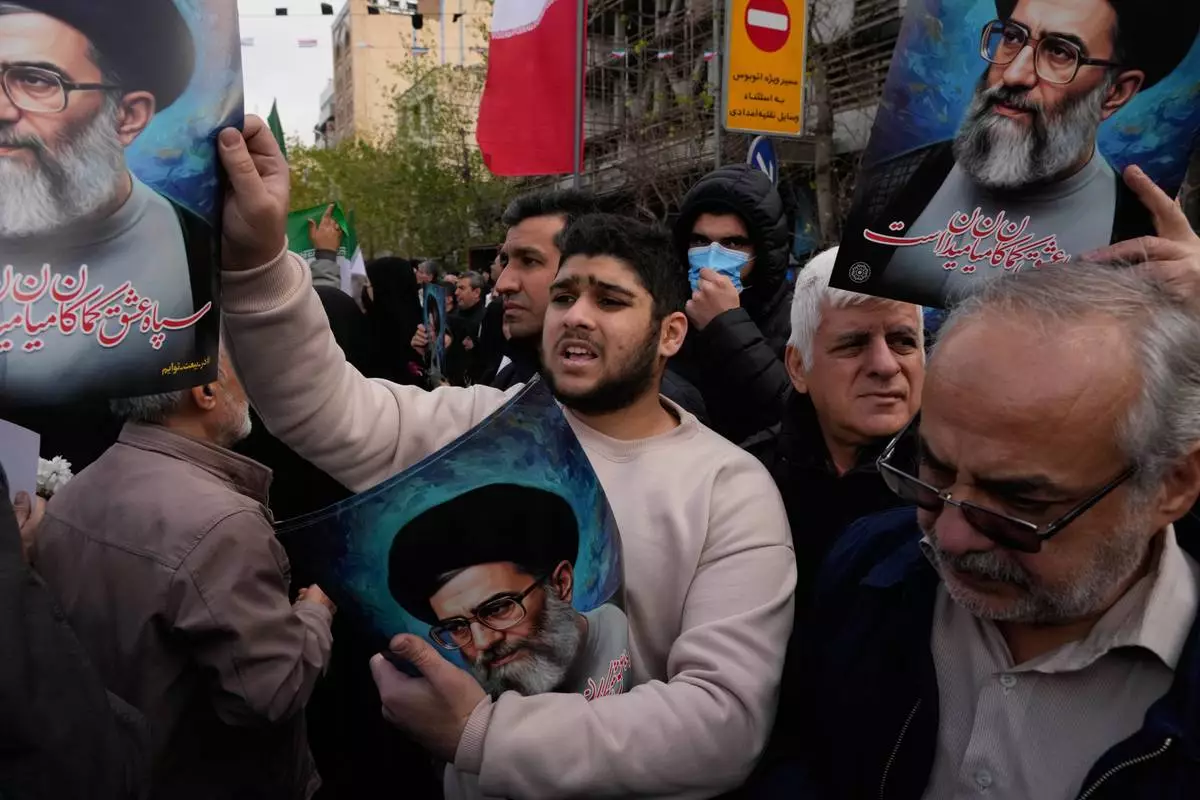
A man hands out posters of the Iranian Supreme Leader Ayatollah Ali Khamenei during a funeral ceremony for a group of security forces, who were killed during anti-government protests, in Tehran, Iran, Wednesday, Jan. 14, 2026. (AP Photo/Vahid Salemi)
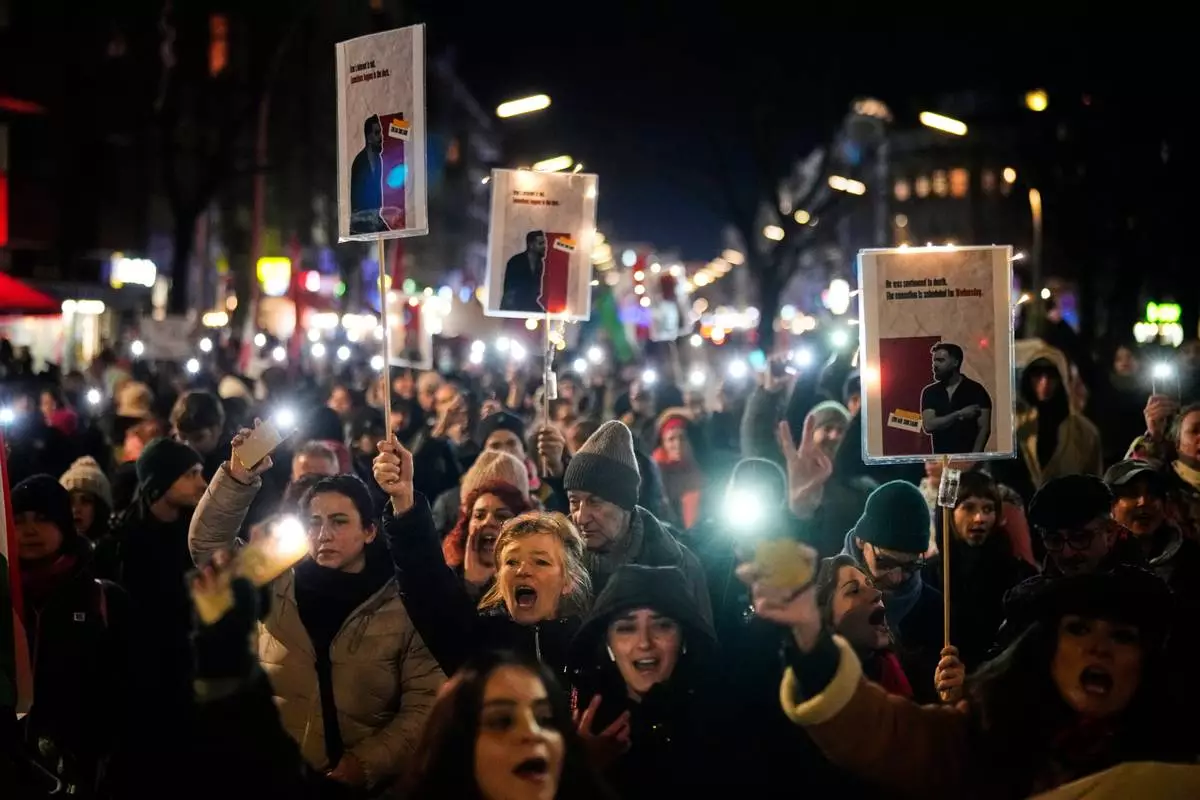
People take part in a rally in support of anti-government protests in Iran, Berlin Germany, Wednesday, June 14, 2026. (AP Photo/Ebrahim Noroozi)
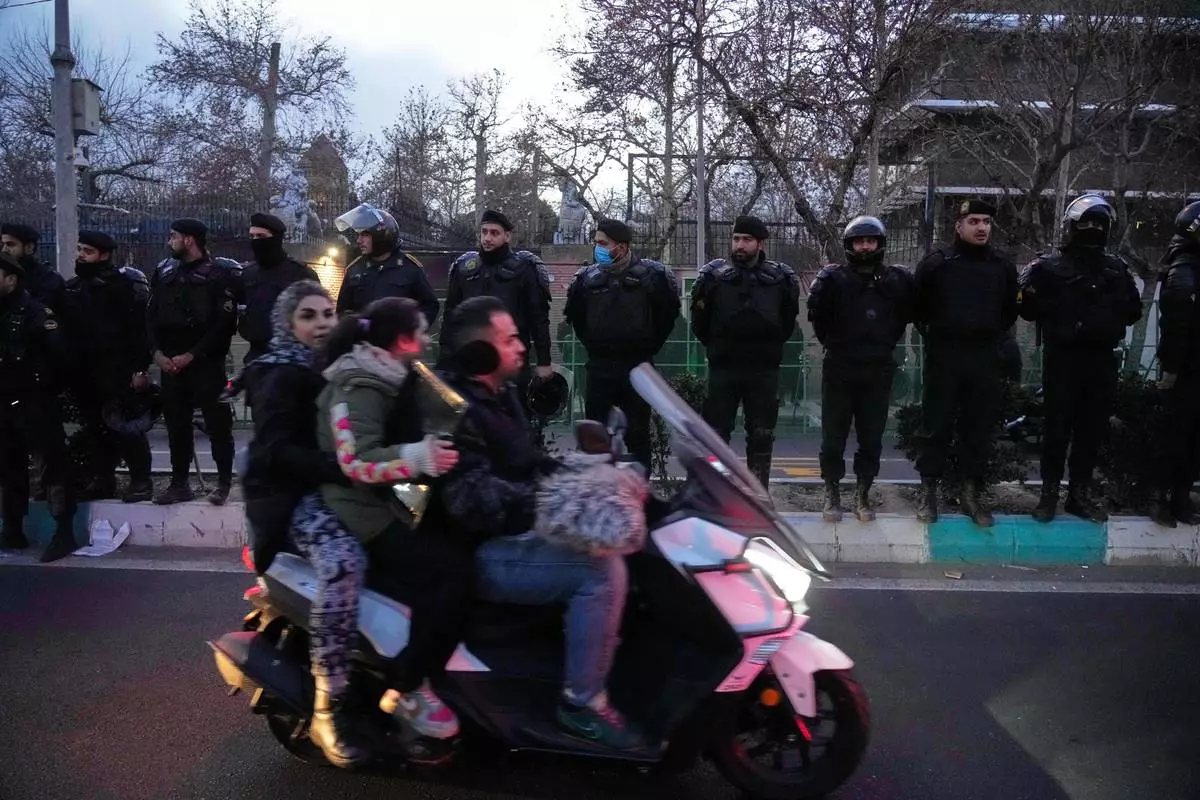
Policemen protect the British Embassy during a protest by hardline supporters of the Iranian government, as people ride on their motorbike in Tehran, Iran, Wednesday, Jan. 14, 2026. (AP Photo/Vahid Salemi)