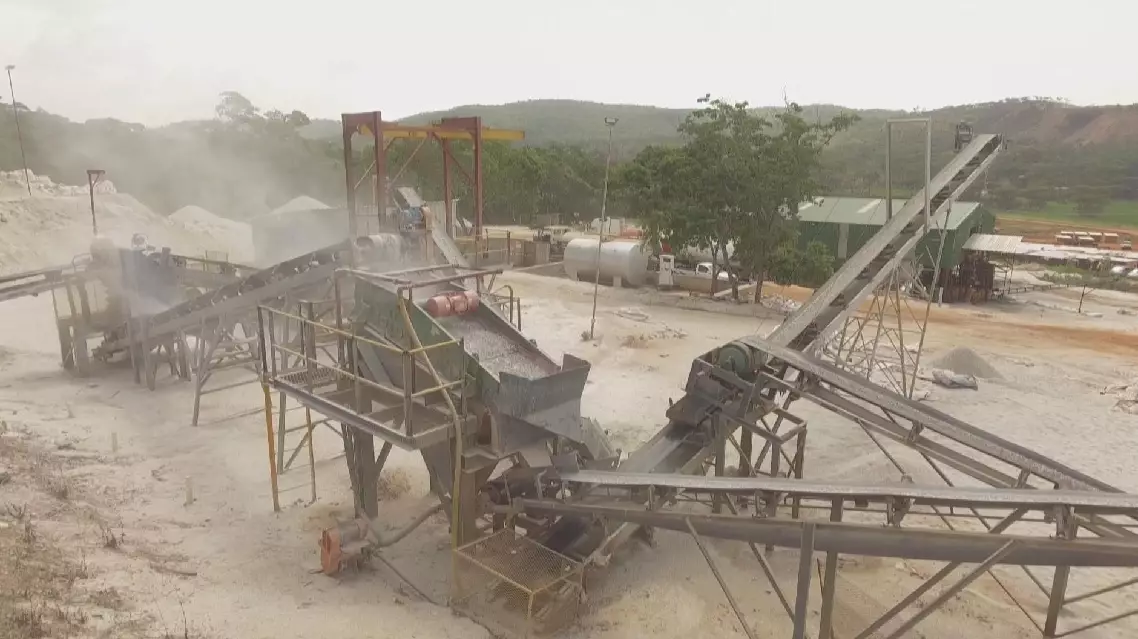
Zimbabwe's planned ban on the export of lithium concentrates from 2027 is a strategic move to accelerate the country's industrialization drive, officials said.
The country in southern Africa announced the ban on June 10.
The policy aims to shift Zimbabwe from exporting raw materials to producing higher-value battery-grade lithium products domestically, said Mines and Mining Development Minister Winston Chitando.
"We are moving to a stage where we are upgrading our lithium production to lithium sulfate, which, among its other uses, is a direct input into battery making. So, because of that capacity, which is now in the country, the export of all lithium concentrates will be banned from January 2027," the minister said.
Two mining companies are already in the process of building lithium sulfate plants, with more expected to follow suit in the wake of the export ban.
The latest development is in line with Zimbabwe's lithium beneficiation policy, which aims to unlock more revenue and create more jobs from the mineral.
The benefits of the ban are expected to be felt beyond the mining industry itself.
"Employment is probably secured and also the downstream industries may also awaken due to this policy move. You will be aware that beneficiation comes with a lot of work in terms of manufacturing from end-to-end, but also, the government needs to support this with necessary action, especially around energy," said Malone Gwadu, an economist analyst.
However, Zimbabwe is experiencing an electricity shortage and may not have capacity readily available to meet the energy demands of smelting and processing plants.
"Obviously, it's a capital-intensive area for there to be the machinery that beneficiates, so the government needs to complement that with tax benefits and tax holidays that incentivize investors for there to be that commercial value for them to be able to invest in these machines," Gwadu said.
The southern African country holds the largest lithium deposits in the continent and is one of the world's top producers of the strategic mineral. It has progressively increased output, which it hopes will eventually spur battery production.
Zimbabwe's 2027 lithium export ban to boost industrialization
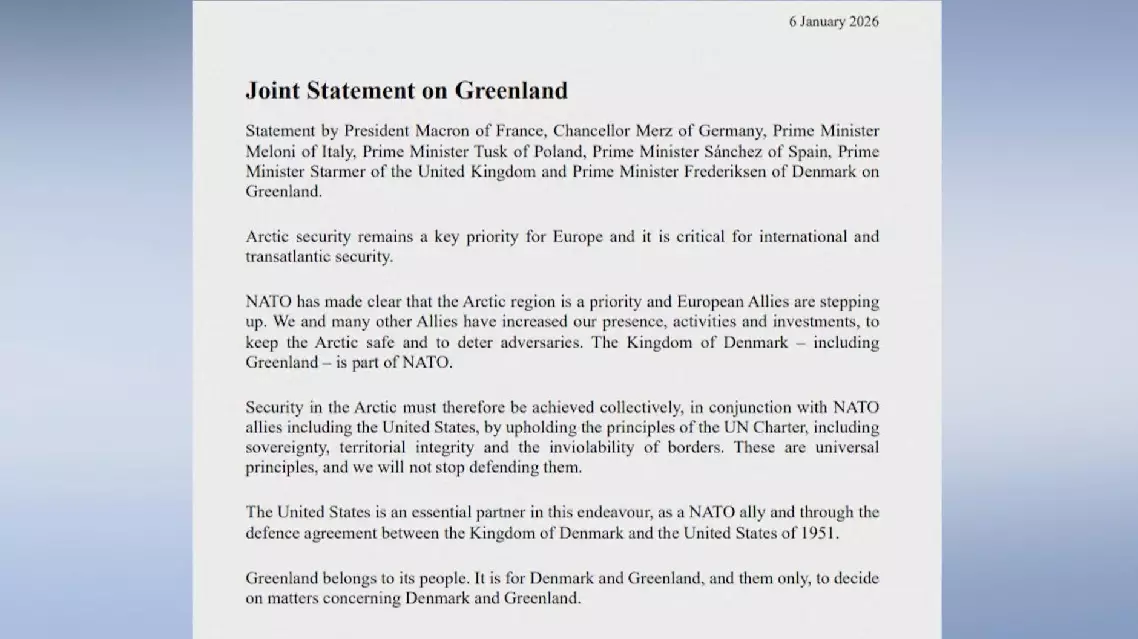
Leaders of seven European countries on Tuesday reaffirmed that Greenland "belongs to its people," stressing that issues concerning Denmark and Greenland must be decided solely by Denmark and Greenland, according to a joint statement.
The statement, released by Denmark's Prime Minister's Office, was signed by Danish Prime Minister Mette Frederiksen, French President Emmanuel Macron, German Chancellor Friedrich Merz, Italian Prime Minister Giorgia Meloni, Polish Prime Minister Donald Tusk, Spanish Prime Minister Pedro Sanchez and British Prime Minister Keir Starmer.
"Greenland belongs to its people. It is for Denmark and Greenland, and them only, to decide on matters concerning Denmark and Greenland," the statement said.
The leaders underscored that Arctic security remains a key priority for Europe and is critical for international and transatlantic security. They noted that NATO has made clear the Arctic region is a priority and that European allies are increasing their presence there.
The statement noted that the Kingdom of Denmark, including Greenland, is part of NATO, and said security in the Arctic must be achieved collectively with NATO allies, including the United States, by upholding the principles of the UN Charter, including sovereignty, territorial integrity and the inviolability of borders.
Calling the United States an "essential partner," the leaders also referred to the 1951 defence agreement between Denmark and the United States.
The Prime Minister of Greenland Jens-Frederik Nielsen said on Tuesday that Greenland is open to dialogue and discussions with the U.S., but "they must take place through the proper channels and in respect of international law."
The PM also urged respect from the U.S. side, saying "Our country is not an object in great power rhetoric." Louisiana Governor Jeff Landry, who was appointed by President Donald Trump last month as the U.S. special envoy to Greenland, said that Trump "supports an independent Greenland with economic ties and trade opportunities for the United States," Reuters reported.
Trump said in a telephone interview on Sunday with The Atlantic that the United States "absolutely" needs Greenland. He also discussed the U.S. intervention in Venezuela.
Since taking office in January 2025, Trump has repeatedly expressed interest in gaining control of Greenland, saying that he would not rule out using "military or economic coercion" to achieve that goal.
European leaders reaffirm Greenland sovereignty, stress Arctic security
European leaders reaffirm Greenland sovereignty, stress Arctic security