China's New Western Land-Sea Corridor saw cargo volumes surge to new heights in 2025, as rail-sea express freight services moved 1.425 million twenty-foot equivalent units (TEUs), a 47.6 percent year-on-year rise, according to China Railway Nanning Group.
At the Qinzhou Port East Station in south China's Guangxi Zhuang Autonomous Region, a key hub along the corridor, containers from overseas are swiftly transferred to trains heading inland to destinations such as Chongqing Municipality and Guizhou Province in China's southwest.
Meanwhile, Chinese exports, from machinery to regional specialties, are loaded onto ships bound for global markets.
"Shipments from the port to western China include both daily necessities and industrial raw materials. And goods exported via the port range from auto parts to regional specialties like Chongqing lemons and Guizhou tea," said Zhao Jian, deputy station master of Qinzhou Port East Station under the Coastal Railway Company of China Railway Nanning Group.
To accommodate growing demand, railway operators have added more scheduled freight lines along the corridor in 2025. Some 44 regular rail-sea routes were in operation in 2025, 21 more than at the end of 2024.
Efforts to streamline logistics have also gained pace, with the expanded use of a "single bill" system for multimodal transport which cuts intermediate handling and simplifies documentation. Last year alone, 13,600 TEUs were shipped under this model.
"The corridor now regularly connects with China-Europe and China-Central Asia freight services, creating a highly efficient international logistics network," Zhao said.
The corridor has achieved consistent growth throughout China's 14th Five-Year Plan which ended in 2025. Over the past five years, it handled a cumulative 4.652 million TEUs, setting new annual records and providing a reliable transport artery that boosts trade and economic ties across regions while powering regional development.
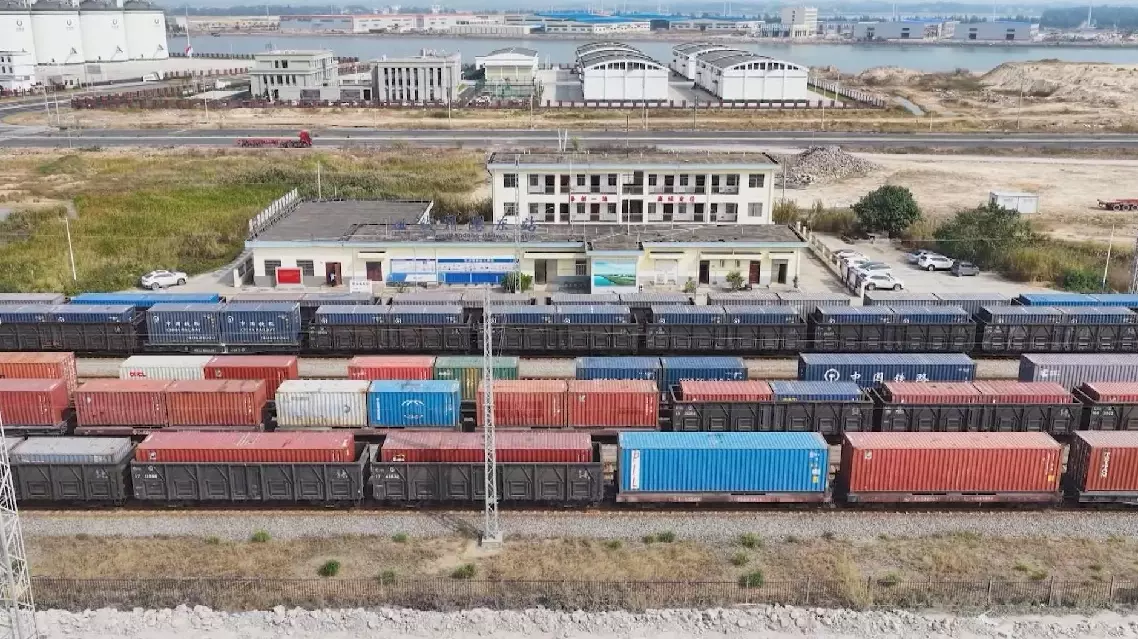
China's New Western Land-Sea Corridor sees record freight traffic in 2025