Skip to Content Facebook Feature Image

Air India faces disruptions as crash prompts deeper checks and flight delays

News

Air India faces disruptions as crash prompts deeper checks and flight delays
News

News

Air India faces disruptions as crash prompts deeper checks and flight delays

2025-06-19 06:55 Last Updated At:07:00

NEW DELHI (AP) — Air India is facing disruptions following last week’s fatal crash as additional safety inspections on its Dreamliner fleet have led to flight delays, cancellations and growing passenger anxiety.

India’s aviation safety regulator ordered deeper checks on Boeing 787 aircrafts operated by the airline soon after its London-bound flight crashed during take-off in Ahmedabad city June 12, killing at least 270 people, including 241 passengers and crew.

The precautionary inspections, as well as the closure of airspace in some Middle Eastern countries, have strained Air India operations across domestic and international routes.

Since the crash, Air India has cancelled operations for 83 wide-body flights, including 66 Dreamliners, according to data shared by the Directorate General of Civil Aviation, India’s aviation safety regulator.

In a statement late Wednesday, Air India said wide-body aircraft service would remain curtailed by 15% until mid-July because of the unfolding conflict in the Middle East and the additional inspections. The airline said it would inform affected passengers and try to accommodate them with alternate flights. The “curtailments are a painful measure to take, but are necessary,” the airline said.

The airline is performing an even greater number of checks than required, which has had a cascading impact on operations, a company executive familiar with the matter said on condition of anonymity as he wasn’t authorized to speak to the media. The airline said in its statement that it has decided to also inspect all of its Boeing 777 airplanes in its fleet even though that model wasn't involved in the crash.

The cuts in the flight schedule will allow Air India to keep more planes in reserve to deal with any unplanned disruptions.

The company on Tuesday announced the cancellation of multiple flights, including one from Ahmedabad to London Gatwick. Another from Delhi to Paris was cancelled when a mandatory pre-flight check raised an issue, the airline said in a statement. The issue was not identified.

In a statement Tuesday, the aviation directorate said surveillance conducted on Air India’s Dreamliner fleet so far has found no “major safety concerns.”

The aircrafts and their associated maintenance systems were found to be compliant with existing safety standards, the directorate said, adding that of the 33 planes, 24 have completed the inspections, while four were undergoing long-term maintenance. The rest were expected to finish the safety checks soon.

The regulator advised the airline to “strictly adhere to regulations," and asked it to strengthen internal coordination across engineering, operations and ground handling units and ensure adequate availability of spares to mitigate flight delays.

Experts from India’s Aircraft Accident Investigation Bureau are probing the crash with assistance from the U.K., the U.S. and officials from Boeing.

Some aviation experts see the crash as a temporary setback for Air India as it transforms from a financially troubled state-owned carrier to a privately owned company with ambitions for broad expansion.

“If you ask me whether the accident will derail the ambitious growth plans, no way. There can be no looking back,” said Jitender Bhargava, a former Air India executive director.

The company already has placed huge orders for new aircrafts. Its present challenge is to boost the morale of employees and passengers through confidence building measures, Bhargava said.

“The faster you make people forget this one-off accident, the better it is,” Bhargava said.

Indian conglomerate Tata Sons took over Air India in 2022, returning the debt-saddled national carrier to private ownership after decades of government control. The $2.4 billion deal was seen as the government’s effort to sell off a loss-making, state-run businesses. It also was in some ways a homecoming for Air India, which was launched by the Tata family in 1932.

Since the takeover, Air India has ordered hundreds of new planes worth over $70 billion, redesigned its branding and livery and absorbed smaller airlines Tata held stakes in. The company additionally has committed millions of dollars to digital overhauls of aircrafts and refurbishing interiors of more than five dozen legacy planes.

Associated Press writer Josh Funk contributed to this report from Omaha, Nebraska.
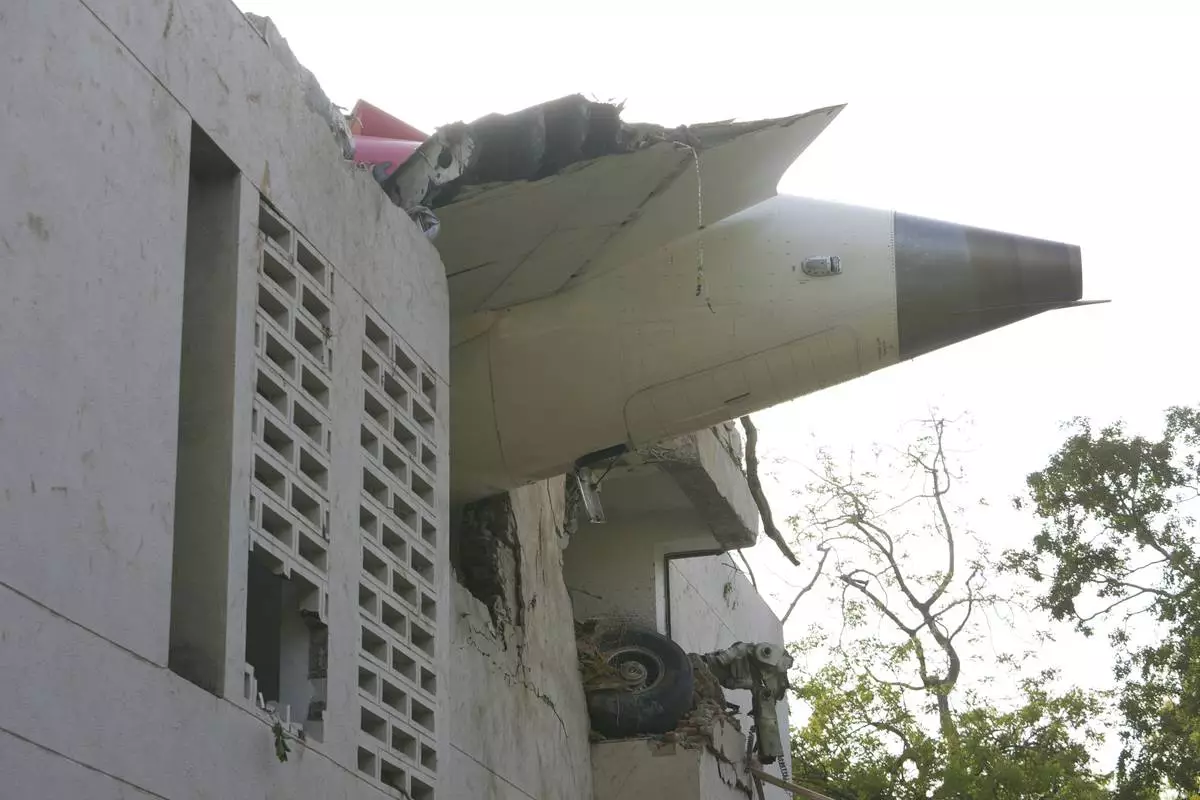
The debris of an airplane sticks out of a building after it crashed in India's northwestern city of Ahmedabad in Gujarat state, Thursday, June 12, 2025. (AP Photo/Ajit Solanki)
The debris of an airplane sticks out of a building after it crashed in India's northwestern city of Ahmedabad in Gujarat state, Thursday, June 12, 2025. (AP Photo/Ajit Solanki)

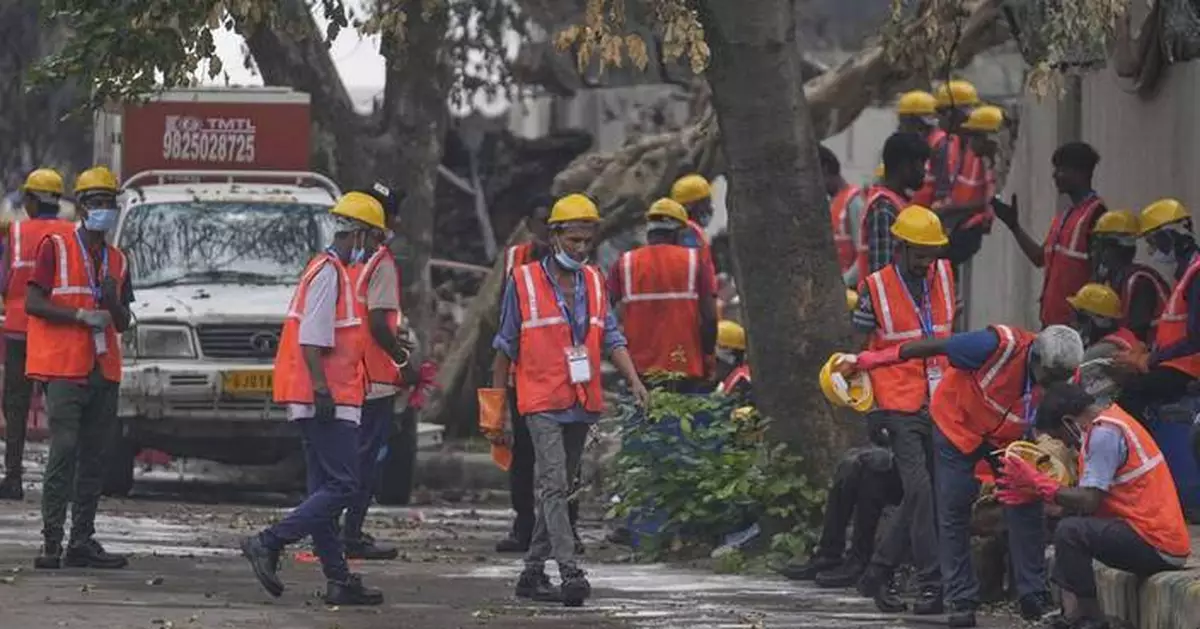
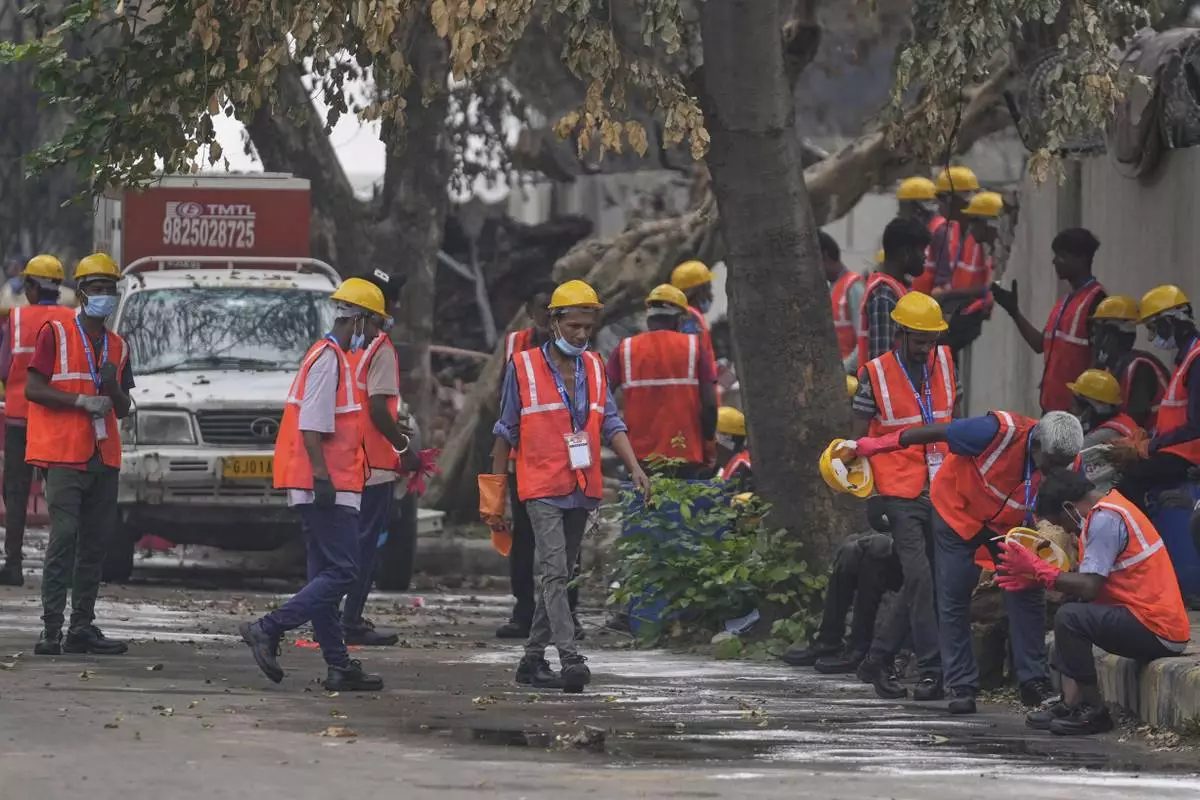
Local workers take a break near the site of the deadly Air India plane crash in Ahmedabad, India, Monday, June 16, 2025. (AP Photo/Rafiq Maqbool)

Local workers take a break near the site of the deadly Air India plane crash in Ahmedabad, India, Monday, June 16, 2025. (AP Photo/Rafiq Maqbool)
CAIRO (AP) — Iranians began to regain internet access on Wednesday after authorities ended a monthslong shutdown. But users said service was slow and spotty in some areas, with apps like YouTube and Instagram heavily restricted, as they were before the cutoff began during nationwide protests in January.

Authorities justified the outage as a military imperative after the United States and Israel attacked Iran on Feb. 28. Their decision to lift some restrictions this week came as negotiators appeared to be closing in on a more permanent truce. But many Iranians feared access could be cut off again at a moment's notice.

Internet tracking company Netblocks said Iran’s connectivity, which measures the ability of devices to connect to the internet, is at around 86% of capacity from before the cutoff. Internet analysis firm Kentik said internet traffic, which measures the amount of data transferred and is a good illustration of usage, was at around 40%.

Amir Rashidi, an Iranian cybersecurity analyst, said there were still widespread disruptions. “It's too early to say the shutdown is over,” he wrote on X.

Iran’s roughly 90 million people have been cut off from the internet for most of 2026, one of the world’s longest and strictest national shutdowns. Young people with online careers saw their incomes evaporate. Job losses and the closure of online businesses added to the war's steep economic costs.

The cutoff made it difficult for Iranian families to communicate through months of unrest and war. At some points, phone lines were also cut off, though they were later restored.

A woman living in Tehran said that for months she was barely able to speak to her sons living abroad. She couldn't believe authorities had restored access, saying she had assumed they would find some justification to prolong the outage.

A taxi driver said service was restored but weak. He expressed hope it would improve so he could use messaging apps with family and friends. Both spoke on condition of anonymity for security reasons.

Prices spiked during the shutdown, with residents in Tehran at times paying around $7.50 per gigabyte. Prices are back down to around $2.25 for 30 gigabytes, roughly where they were before the protests.

Even then, Iran tightly controlled access to popular social media sites, leading many to rely on virtual private networks, or VPNs. The cost of those workarounds soared during the shutdown, making them unaffordable for many as the economy was battered.

Businesses have started reappearing online, announcing their return with posts on sites like Instagram and Telegram.

A gamer and tech influencer in the central city of Isfahan said the shutdown had caused him to lose a lot of his audience on YouTube and Instagram, where he had spent years building up a large following.

“All my views and interactions are way down. I’ve been erased from the algorithm,” he said in a voice note sent by WhatsApp, adding that his internet connection was still slower than before the shutdown.

“The situation is such that many content producers have had their income reduced to zero, have moved on to other jobs, or have been forced to sell their equipment to survive,” he said. He spoke on condition of anonymity for fear of reprisal.

Iranian authorities first shut down the internet in January during mass anti-government protests that were eventually stamped out in a violent crackdown. Thousands of people were killed and tens of thousands detained.

That cutoff was just starting to ease when the government imposed a complete internet blackout after the start of the war, when U.S. and Israeli strikes killed Iran's supreme leader and other top officials.

The government faced criticism for the prolonged shutdown, which caused even more harm to an economy devastated by inflation, strikes on key industries and a U.S. blockade on Iranian ports.

The internet cutoff cost an estimated $30-40 million daily, with indirect losses likely twice that much, a member of Iran’s Chamber of Commerce, Afshin Kolahi, told a local newspaper last month. About 10 million people have jobs that depend on internet connectivity, according to Communications Minister Sattar Hashemi.

Iranians still had access to a national net, but that has a far narrower reach, and users complained of poor service and heavy censorship. Senior government officials are given SIM cards granting them access to the global internet. Under pressure, the government expanded access to the SIM cards to some professions during the shutdown.

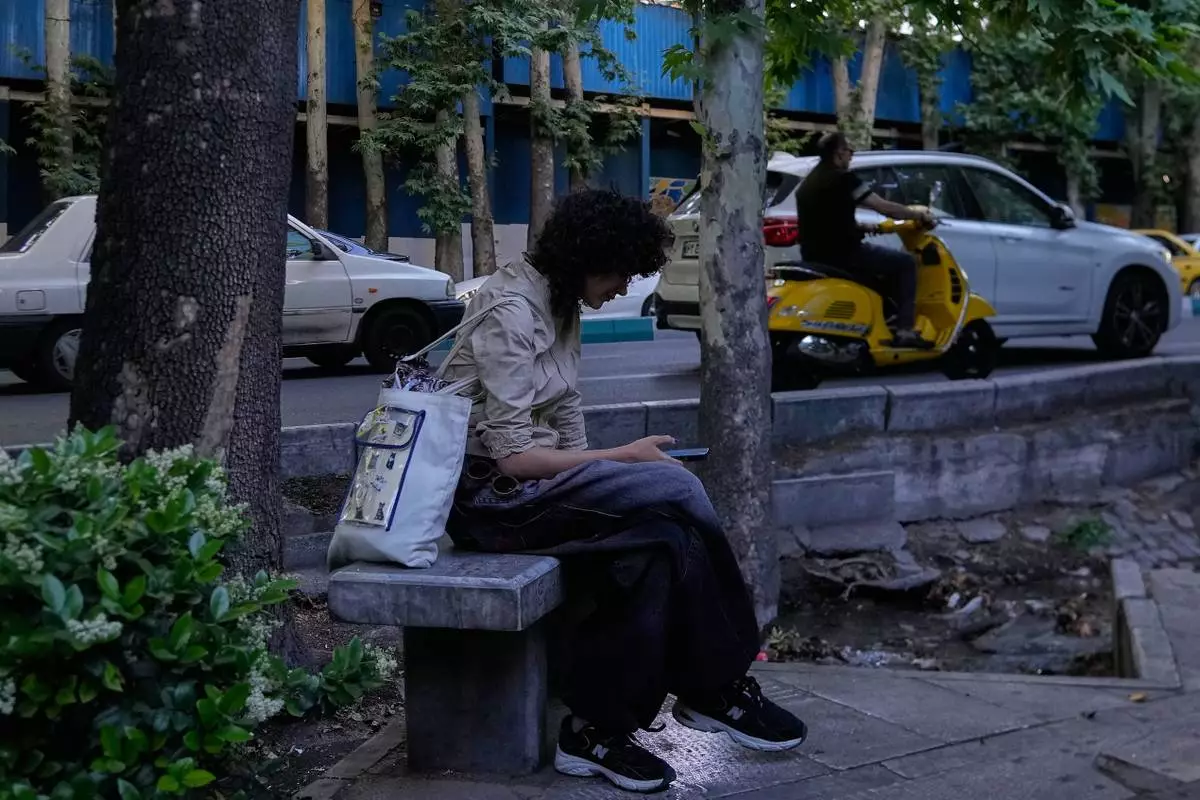
A woman checks her smartphone while sitting on a bench along a sidewalk in northern Tehran, Iran, Tuesday, May 26, 2026. (AP Photo/Vahid Salemi)

A woman checks her smartphone while sitting on a bench along a sidewalk in northern Tehran, Iran, Tuesday, May 26, 2026. (AP Photo/Vahid Salemi)

Recommended Articles