BEERSHEBA, Israel (AP) — President Donald Trump said Thursday he will decide within two weeks whether the U.S. military will get directly involved in the conflict between Israel and Iran given the “substantial chance” for renewed negotiations over Tehran's nuclear program, as the two sides attacked one another for a seventh day.
Trump has been weighing whether to attack Iran by striking its well-defended Fordo uranium enrichment facility, which is buried under a mountain and widely considered to be out of reach of all but America’s “bunker-buster” bombs. His statement was read out by White House press secretary Karoline Leavitt.
Click to Gallery
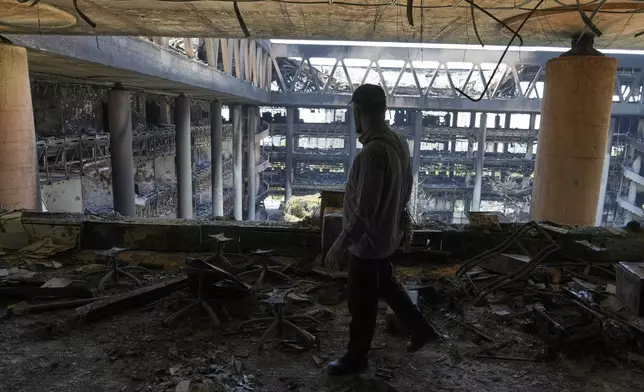
A man walks in the damaged headquarters of Islamic Republic of Iran Broadcasting, Iranian state television, in Tehran, Iran, Thursday, June 19, 2025. (AP Photo/Vahid Salemi)
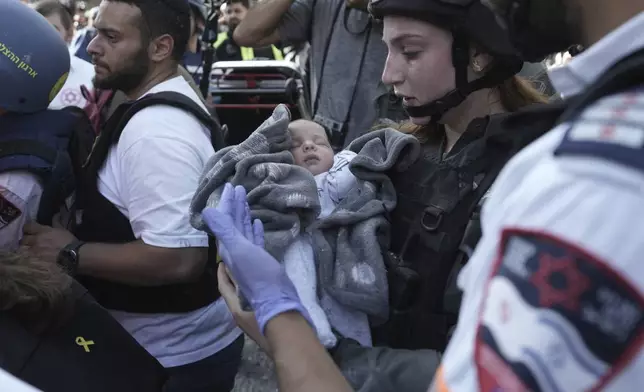
A baby is evacuated from the site of a direct hit from an Iranian missile strike in Ramat Gan, Israel, Thursday, June 19, 2025. (AP Photo/Oded Balilty)
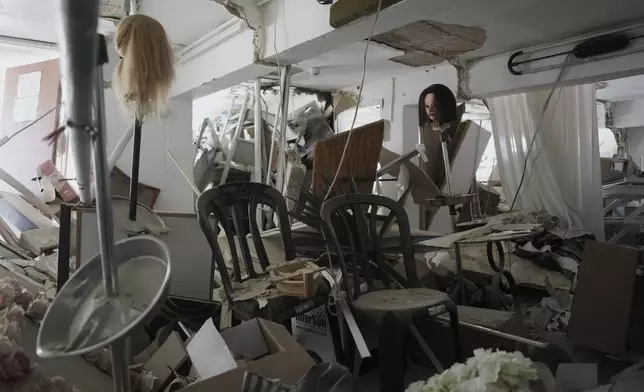
Personal objects at the site of a direct hit from an Iranian missile strike in an apartment in Ramat Gan, Israel, Thursday, June 19, 2025. (AP Photo/Oded Balilty)
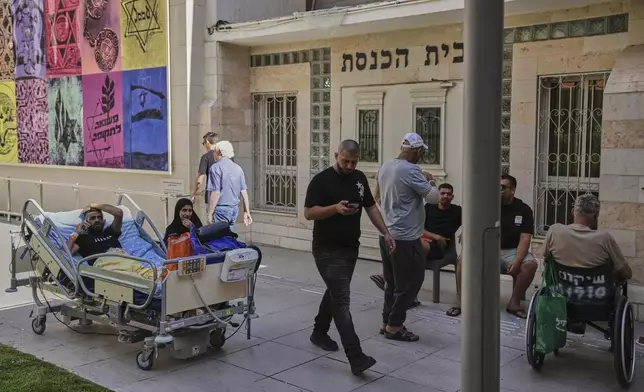
Patients rest outdoors after a building of the Soroka hospital complex was hit by a missile fired from Iran in Be'er Sheva, Israel, Thursday, June 19, 2025. (AP Photo/Leo Correa)
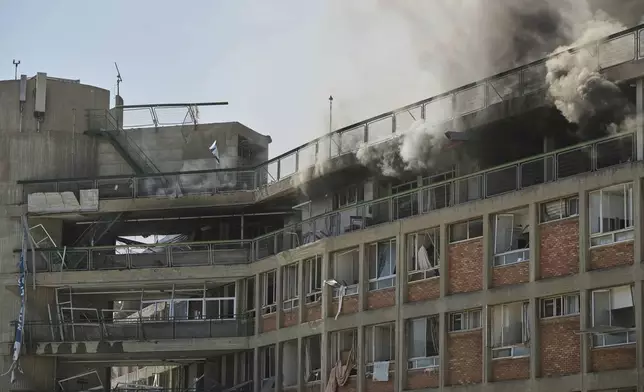
Smokes raises from a building of the Soroka hospital complex after it was hit by a missile fired from Iran in Be'er Sheva, Israel, Thursday, June 19, 2025. (AP Photo/Leo Correa)
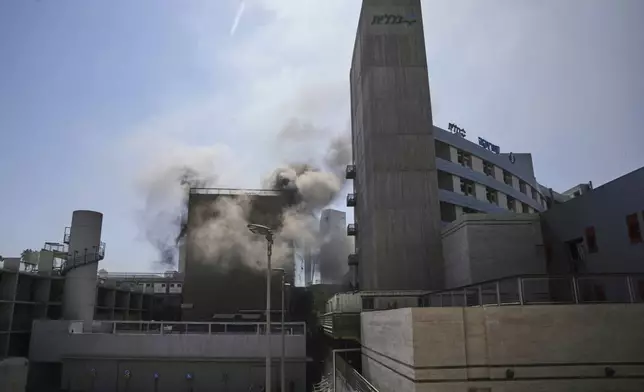
Smokes raises from a building of the Soroka hospital complex after it was hit by a missile fired from Iran in Be'er Sheva, Israel, Thursday, June 19, 2025. (AP Photo/Leo Correa)
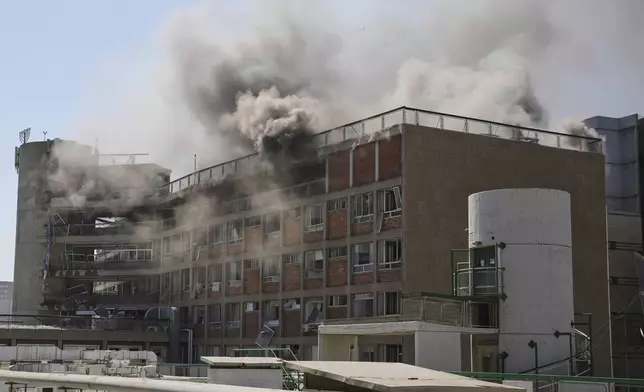
Smokes raises from a building of the Soroka hospital complex after it was hit by a missile fired from Iran in Be'er Sheva, Israel, Thursday, June 19, 2025. (AP Photo/Leo Correa)
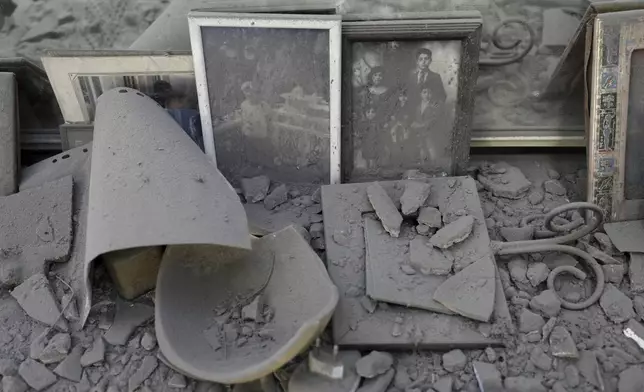
Dust covers framed family photos and personal objects at the site of a direct hit from an Iranian missile strike in Ramat Gan, Israel, Thursday, June 19, 2025. (AP Photo/Oded Balilty)
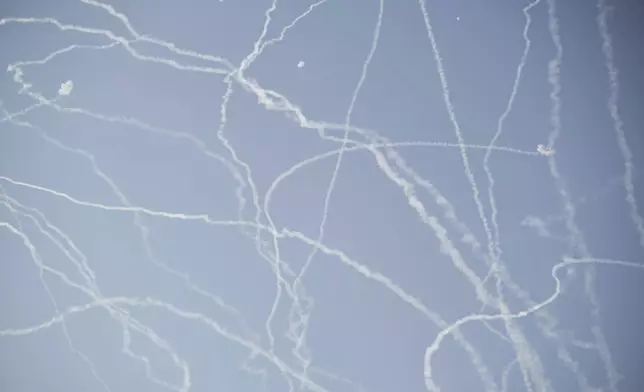
Israeli air defense system fires to intercept missiles during an Iranian attack over Tel Aviv, Israel, Thursday, June 19, 2025. (AP Photo/Leo Correa)
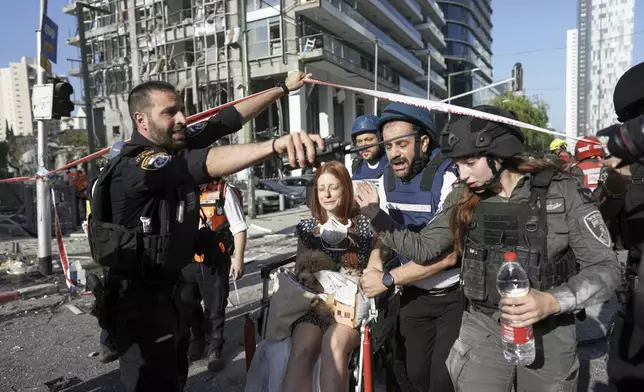
A woman is evacuated from the site of a direct hit from an Iranian missile strike in Ramat Gan, Israel, Thursday, June 19, 2025. (AP Photo/Oded Balilty)
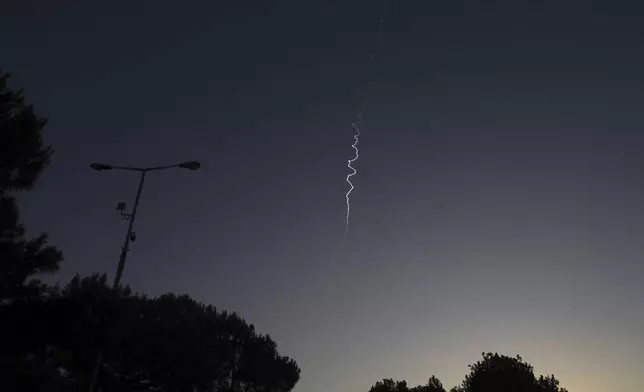
A smoke trail from the Israeli Iron Dome air defense system streaks across the sky as it intercepts missiles launched during an Iranian attack over Jerusalem, Wednesday, June 18, 2025. (AP Photo/Mahmoud Illean)
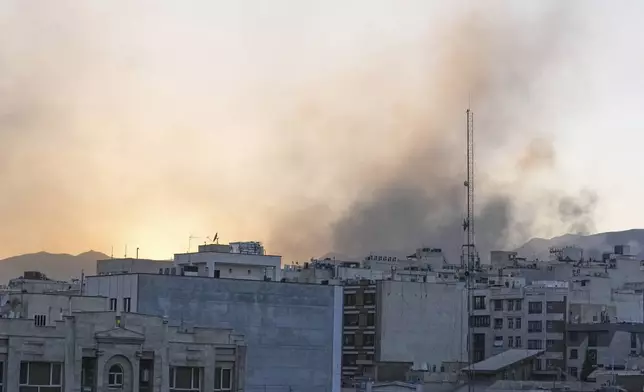
Smoke rises up after Israel's attack, in Tehran, Iran, Wednesday, June 18, 2025. (AP Photo/Vahid Salemi)
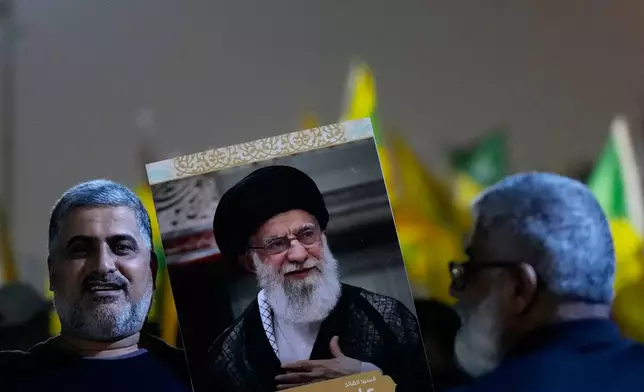
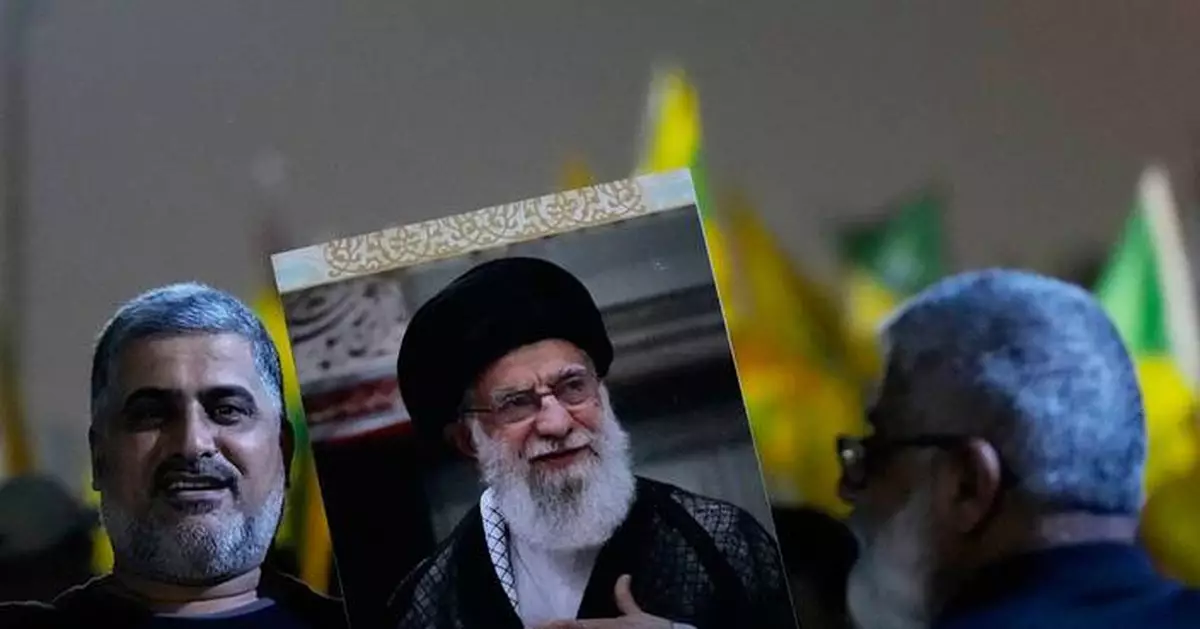
A protester holds a portrait of Iran's Supreme Leader Ayatollah Ali Khamenei during a protest against Israeli attacks on multiple cities across Iran, at a bridge leading to the fortified Green Zone where the U.S. Embassy is located in Baghdad, Iraq, Wednesday, June 18, 2025. (AP Photo/Hadi Mizban)
Earlier in the day, Israel's defense minister threatened Iranian Supreme Leader Ayatollah Ali Khamenei after Iranian missiles crashed into a major hospital in southern Israel and hit residential buildings near Tel Aviv, wounding at least 240 people. Israel's military “has been instructed and knows that in order to achieve all of its goals, this man absolutely should not continue to exist," Defense Minister Israel Katz said.
As rescuers wheeled patients out of the smoldering hospital, Israeli warplanes launched their latest attack on Iran's nuclear program.
Prime Minister Benjamin Netanyahu said he trusted that Trump would “do what's best for America.” Speaking from the rubble and shattered glass around the Soroka Medical Center in Beersheba, he added: “I can tell you that they’re already helping a lot."
A new diplomatic initiative appeared to be underway as Iran’s Foreign Minister Abbas Araghchi prepared to travel Friday to Geneva for meetings with the European Union’s top diplomat and counterparts from the United Kingdom, France and Germany.
Britain’s foreign secretary said he met at the White House with U.S. Secretary of State Marco Rubio and envoy Steve Witkoff, to discuss the potential for a deal that could cool the conflict.
“A window now exists within the next two weeks to achieve a diplomatic solution,” Britain's David Lammy said in a social media post after Thursday's meeting.
The open conflict between Israel and Iran erupted last Friday with a surprise wave of Israeli airstrikes targeting nuclear and military sites, top generals and nuclear scientists. At least 657 people, including 263 civilians, have been killed in Iran and more than 2,000 wounded, according to a Washington-based Iranian human rights group.
Iran has retaliated by firing 450 missiles and 1,000 drones at Israel, according to Israeli army estimates. Most have been shot down by Israel’s multitiered air defenses, but at least 24 people in Israel have been killed and hundreds wounded.
Israel's Home Front Command asserted that one of the Iranian ballistic missiles fired Thursday morning had been rigged with fragmenting cluster munitions. Rather than a conventional warhead, a cluster munition warhead carries dozens of submunitions that can explode on impact, showering small bomblets around a large area and posing major safety risks on the ground. The Israeli military did not say where that missile had been fired.
At least 80 patients and medical workers were wounded in the strike on Soroka Medical Center. The vast majority were lightly wounded, as much of the hospital building had been evacuated in recent days.
Iranian officials insisted they had not sought to strike the hospital and claimed the attack hit a facility belonging to the Israeli military’s elite technological unit, called C4i. The website for the Gav-Yam Negev advanced technologies park, some 3 kilometers (2 miles) from the hospital, said C4i had a branch campus in the area.
The Israeli army did not respond to a request for comment. An Israeli military official, speaking on condition of anonymity in line with regulations, acknowledged that there was no specific intelligence that Iran had planned to target the hospital.
Many hospitals in Israel, including Soroka, had activated emergency plans in the past week. They converted parking garages to wards and transferred vulnerable patients underground. Israel also has a fortified, subterranean blood bank that kicked into action after Hamas’ Oct. 7, 2023, attack ignited the ongoing war in the Gaza Strip.
Doctors at Soroka said the Iranian missile struck almost immediately after air raid sirens went off, causing an explosion that could be heard from a safe room. The strike inflicted the greatest damage on an old surgery building and affected key infrastructure, including gas, water and air-conditioning systems, the medical center said.
The hospital, which provides services to around 1 million residents, had been caring for 700 patients at the time. After the strike, the hospital closed to all patients except for life-threatening cases.
Iran has long maintained its nuclear program is for peaceful purposes. But it is the only non-nuclear-weapon state to enrich uranium up to 60%, a short, technical step away from weapons-grade levels of 90%.
Israel is widely believed to be the only country with a nuclear weapons program in the Middle East but has never acknowledged the existence of its arsenal.
The Israeli air campaign has targeted Iran’s enrichment site at Natanz, centrifuge workshops around Tehran, a nuclear site in Isfahan and what the army assesses to be most of Iran’s ballistic missile launchers. The destruction of those launchers has contributed to the steady decline in Iranian attacks since the start of the conflict.
Israeli airstrikes reached into the city of Rasht on the Caspian Sea early Friday, Iranian media reported. The Israeli military had warned the public to flee the area around Rasht’s Industrial City, southwest of the city’s downtown. But with Iran’s internet shut off to the outside world, it’s unclear just how many people could see the message.
On Thursday, anti-aircraft artillery was audible across Tehran, and witnesses in the central city of Isfahan reported seeing anti-aircraft fire after nightfall.
Trump's announcement of a decision in the next two weeks opened up diplomatic options, with the apparent hope Iran would make concessions after suffering major military losses.
But at least publicly, Iran has struck a hard line.
Iran’s supreme leader on Wednesday rejected U.S. calls for surrender and warned that any U.S. military involvement would cause “irreparable damage to them.”
Parliament speaker Mohammad Bagher Qalibaf on Thursday criticized Trump for using military pressure to gain an advantage in nuclear negotiations. The latest indirect talks between Iran and the U.S., set for last Sunday, were cancelled.
“The delusional American president knows that he cannot impose peace on us by imposing war and threatening us,” he said.
Israel’s military said its fighter jets targeted the Arak heavy water reactor, some 250 kilometers (155 miles) southwest of Tehran, to prevent it from being used to produce plutonium.
Iranian state TV said there was “no radiation danger whatsoever” around the Arak site, which it said had been evacuated ahead of the strike.
Heavy water helps cool nuclear reactors, but it produces plutonium as a byproduct that potentially can be used in nuclear weapons. That would provide Iran another path to the bomb beyond enriched uranium, should it choose to pursue the weapon.
Iran had agreed under its 2015 nuclear deal with world powers to redesign the facility to alleviate proliferation concerns. That work was never completed.
The reactor became a point of contention after Trump withdrew from the deal in 2018. Ali Akbar Salehi, a high-ranking nuclear official in Iran, said in 2019 that Tehran bought extra parts to replace a portion of the reactor that it had poured concrete into under the deal.
Israel said strikes were carried out "in order to prevent the reactor from being restored and used for nuclear weapons development.”
The International Atomic Energy Agency has said that due to restrictions imposed by Iran on inspectors, the U.N. nuclear watchdog has lost “continuity of knowledge” about Iran’s heavy water production — meaning it could not absolutely verify Tehran’s production and stockpile.
Melzer reported from Tel Aviv, Israel, and Gambrell from Dubai, United Arab Emirates. Associated Press writers Melanie Lidman in Tel Aviv and Ellen Knickmeyer in Washington contributed.
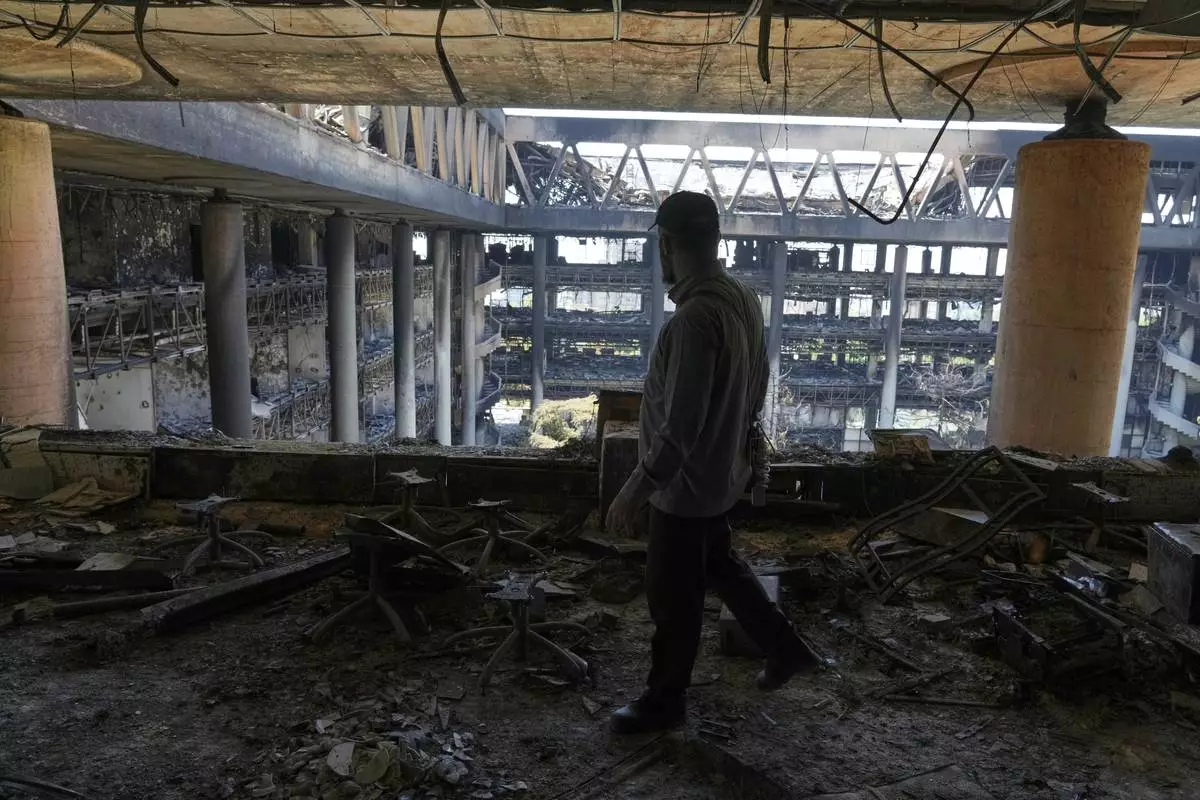
A man walks in the damaged headquarters of Islamic Republic of Iran Broadcasting, Iranian state television, in Tehran, Iran, Thursday, June 19, 2025. (AP Photo/Vahid Salemi)
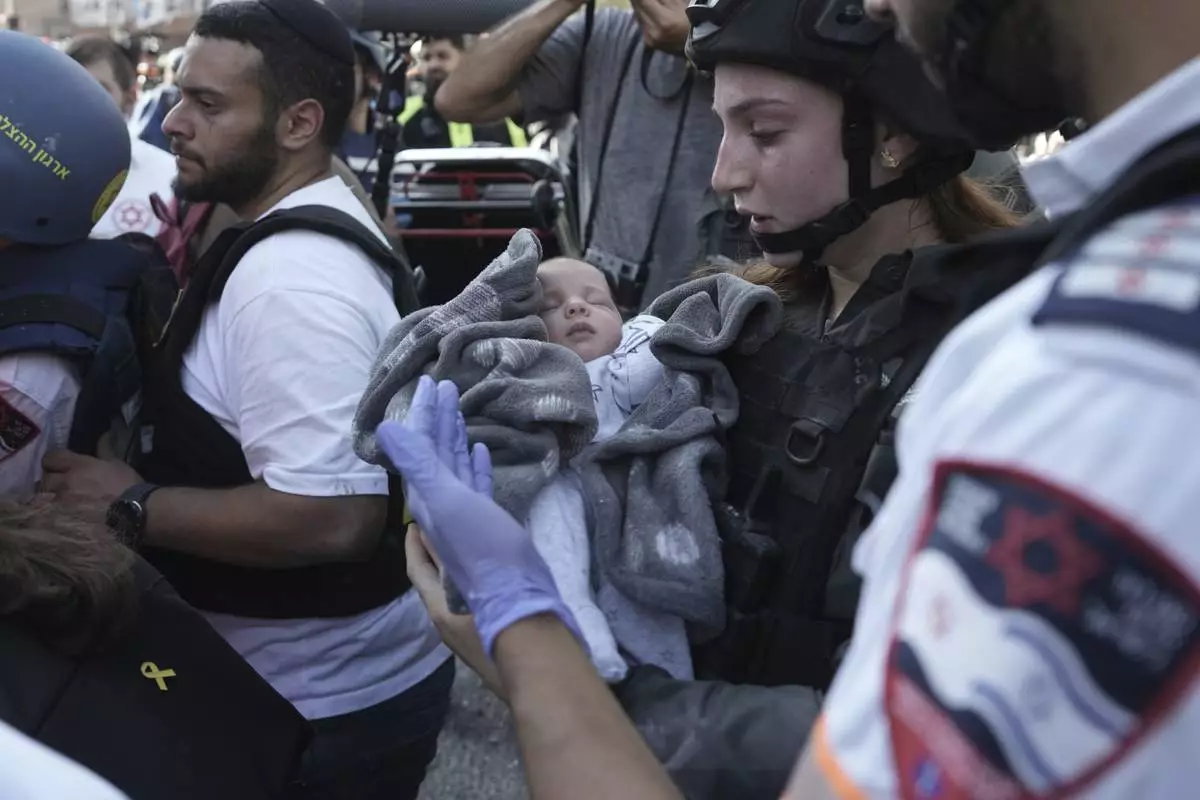
A baby is evacuated from the site of a direct hit from an Iranian missile strike in Ramat Gan, Israel, Thursday, June 19, 2025. (AP Photo/Oded Balilty)
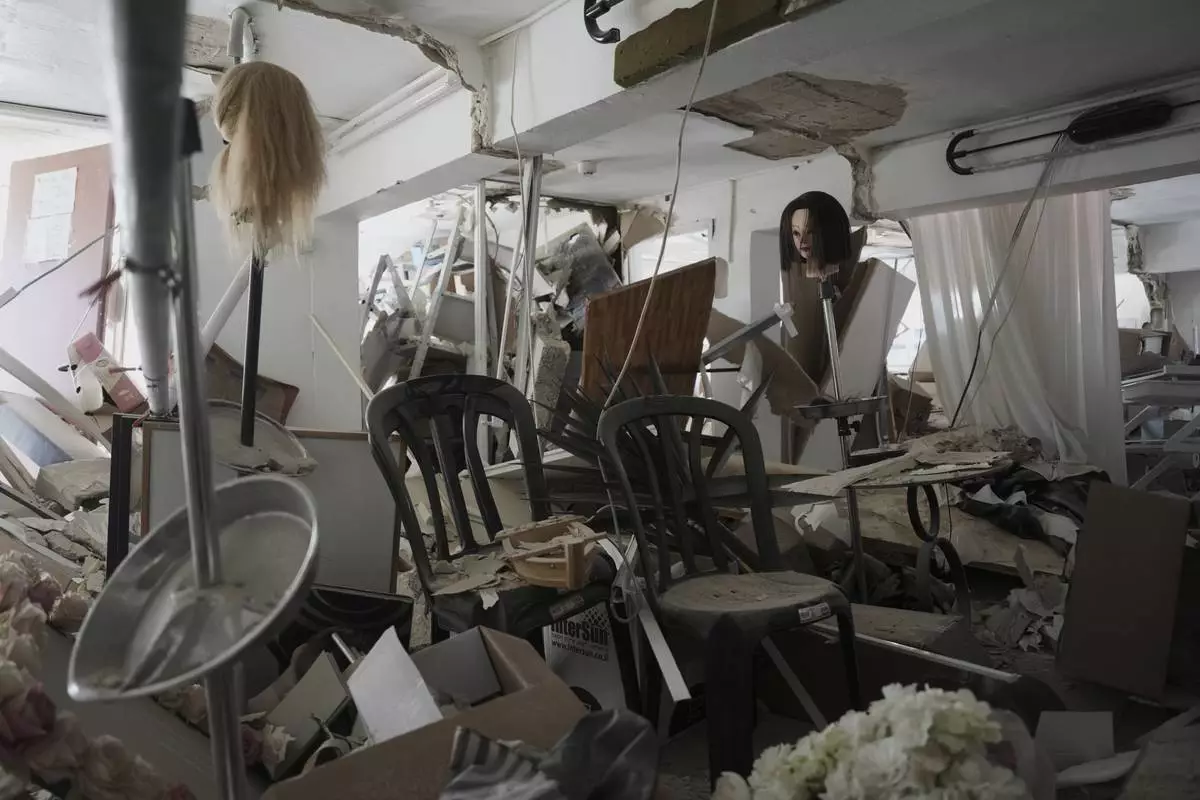
Personal objects at the site of a direct hit from an Iranian missile strike in an apartment in Ramat Gan, Israel, Thursday, June 19, 2025. (AP Photo/Oded Balilty)
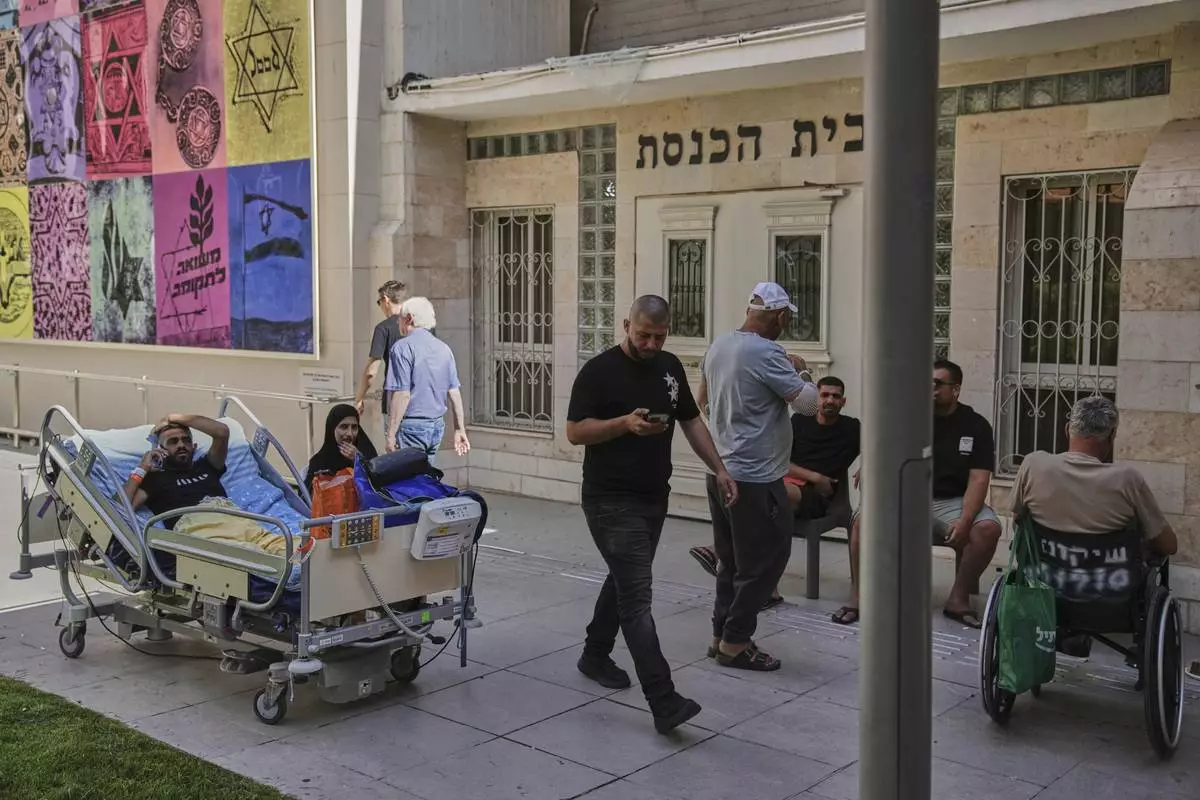
Patients rest outdoors after a building of the Soroka hospital complex was hit by a missile fired from Iran in Be'er Sheva, Israel, Thursday, June 19, 2025. (AP Photo/Leo Correa)
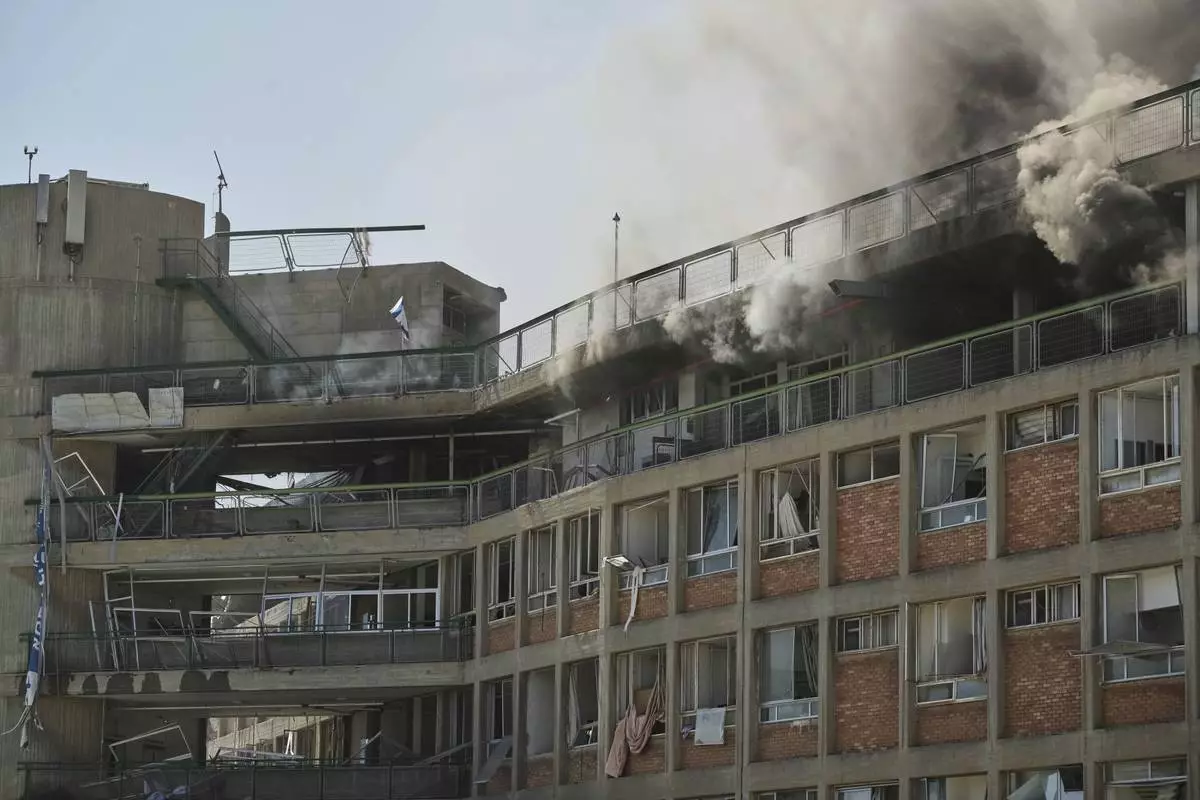
Smokes raises from a building of the Soroka hospital complex after it was hit by a missile fired from Iran in Be'er Sheva, Israel, Thursday, June 19, 2025. (AP Photo/Leo Correa)
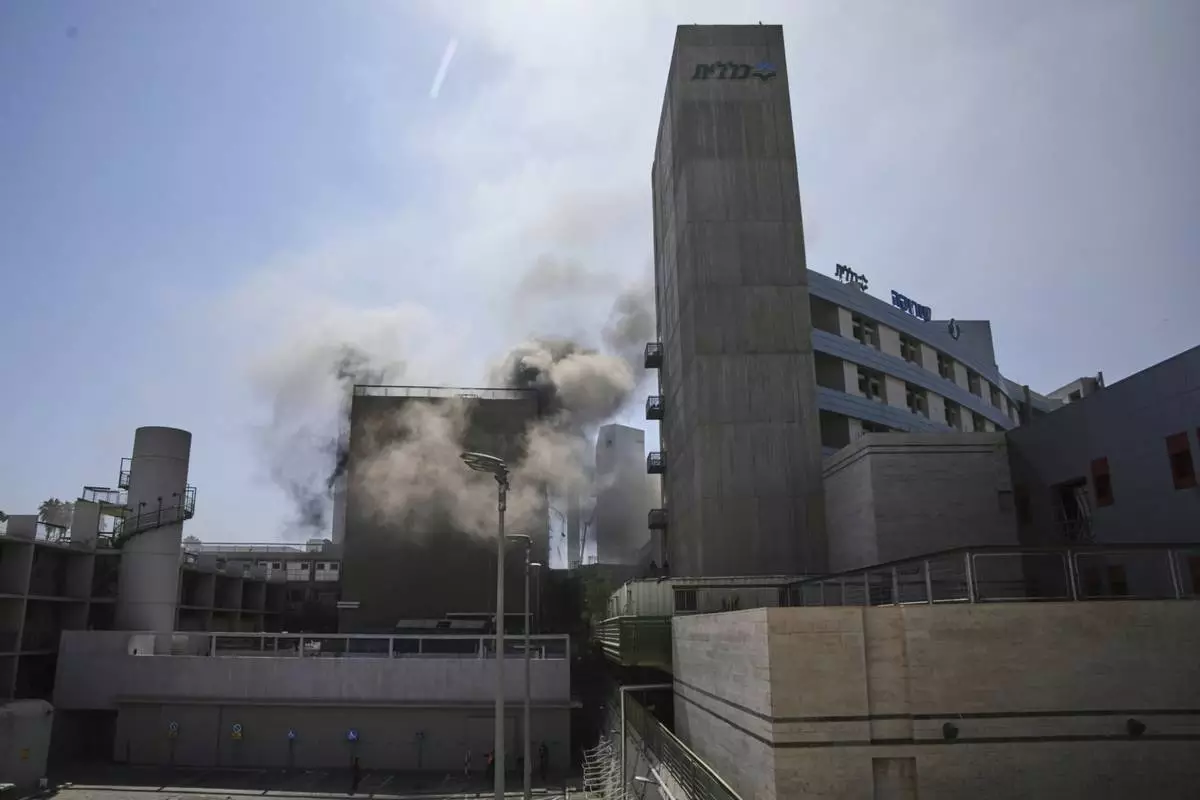
Smokes raises from a building of the Soroka hospital complex after it was hit by a missile fired from Iran in Be'er Sheva, Israel, Thursday, June 19, 2025. (AP Photo/Leo Correa)
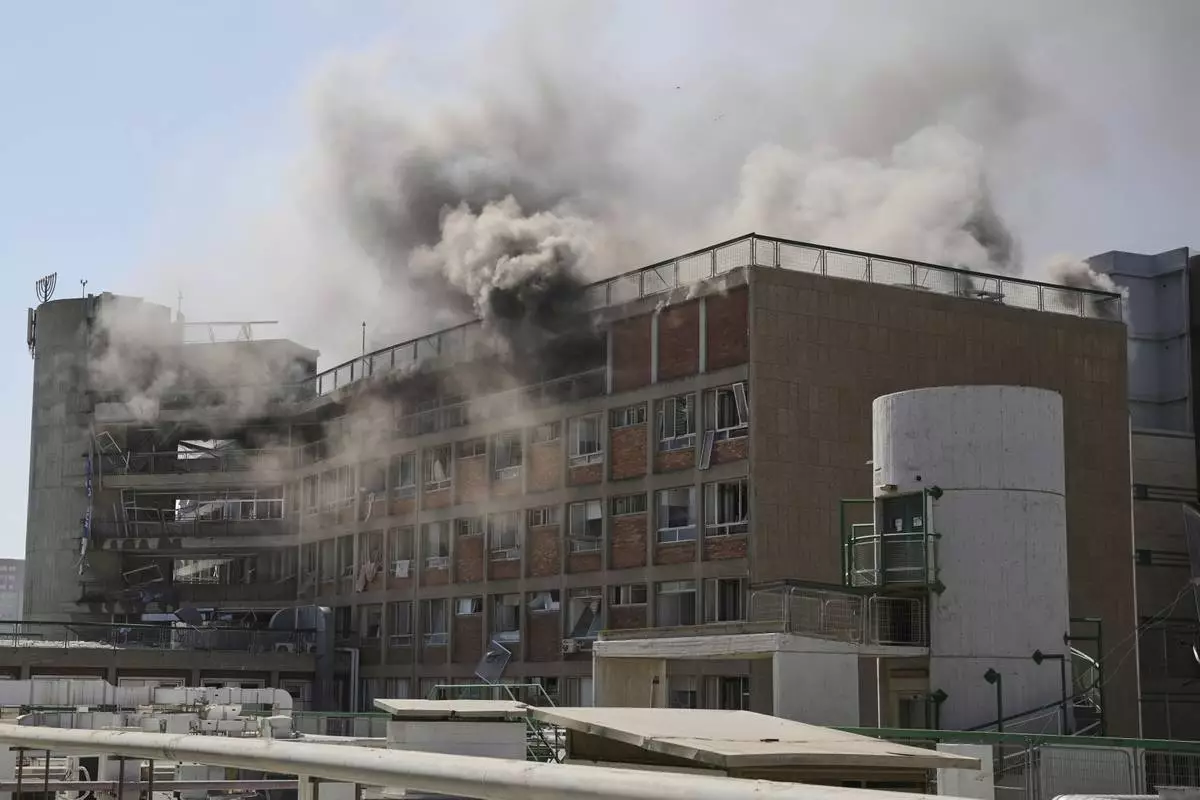
Smokes raises from a building of the Soroka hospital complex after it was hit by a missile fired from Iran in Be'er Sheva, Israel, Thursday, June 19, 2025. (AP Photo/Leo Correa)
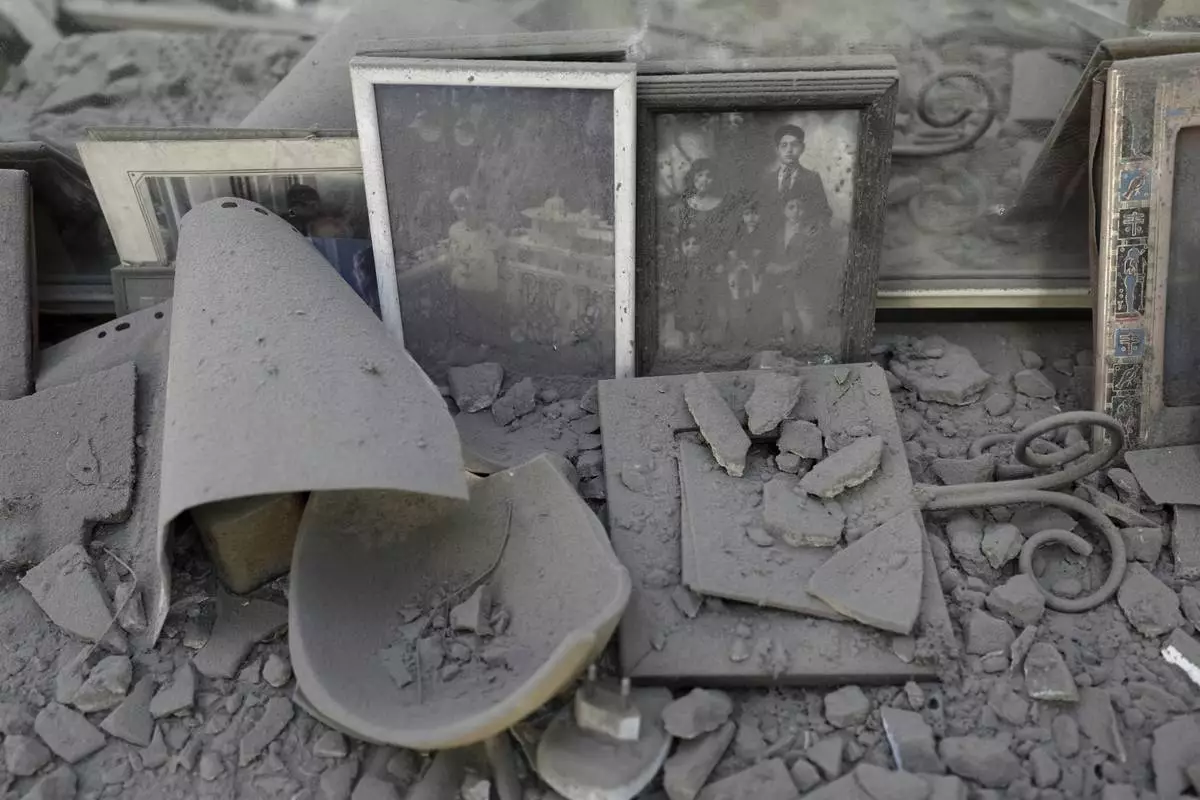
Dust covers framed family photos and personal objects at the site of a direct hit from an Iranian missile strike in Ramat Gan, Israel, Thursday, June 19, 2025. (AP Photo/Oded Balilty)
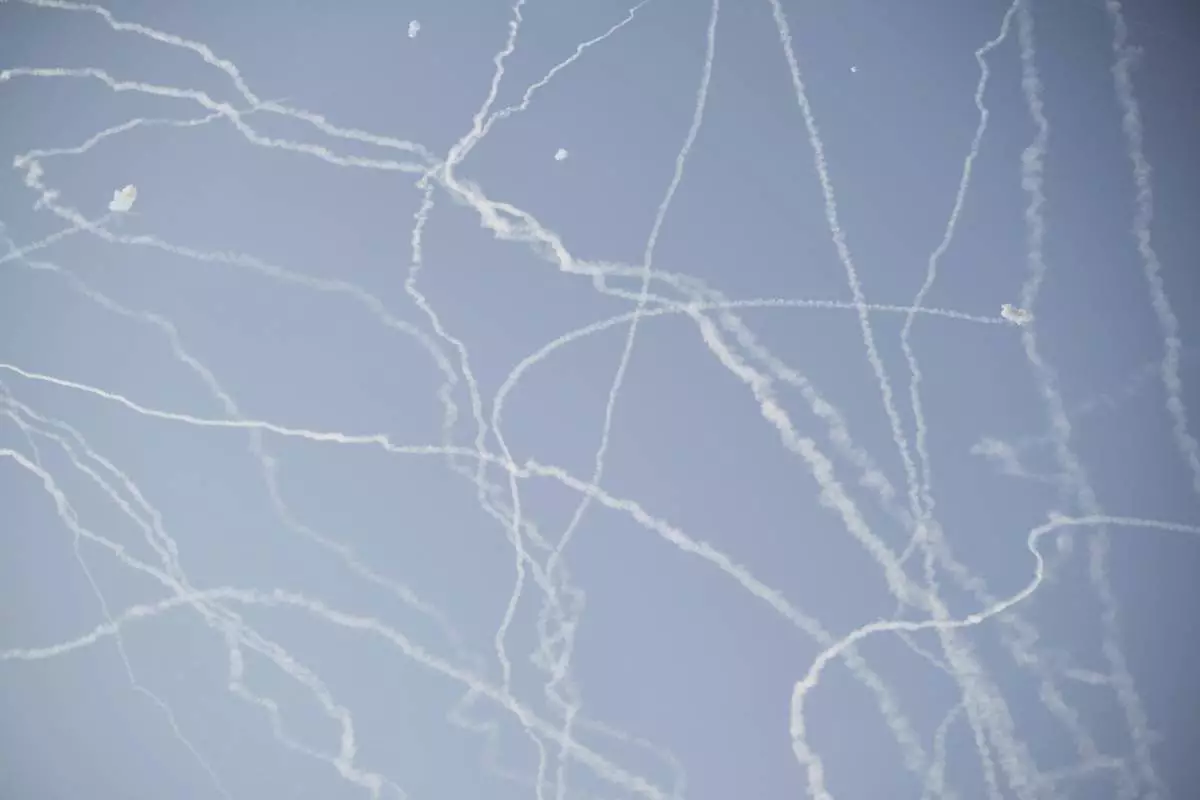
Israeli air defense system fires to intercept missiles during an Iranian attack over Tel Aviv, Israel, Thursday, June 19, 2025. (AP Photo/Leo Correa)
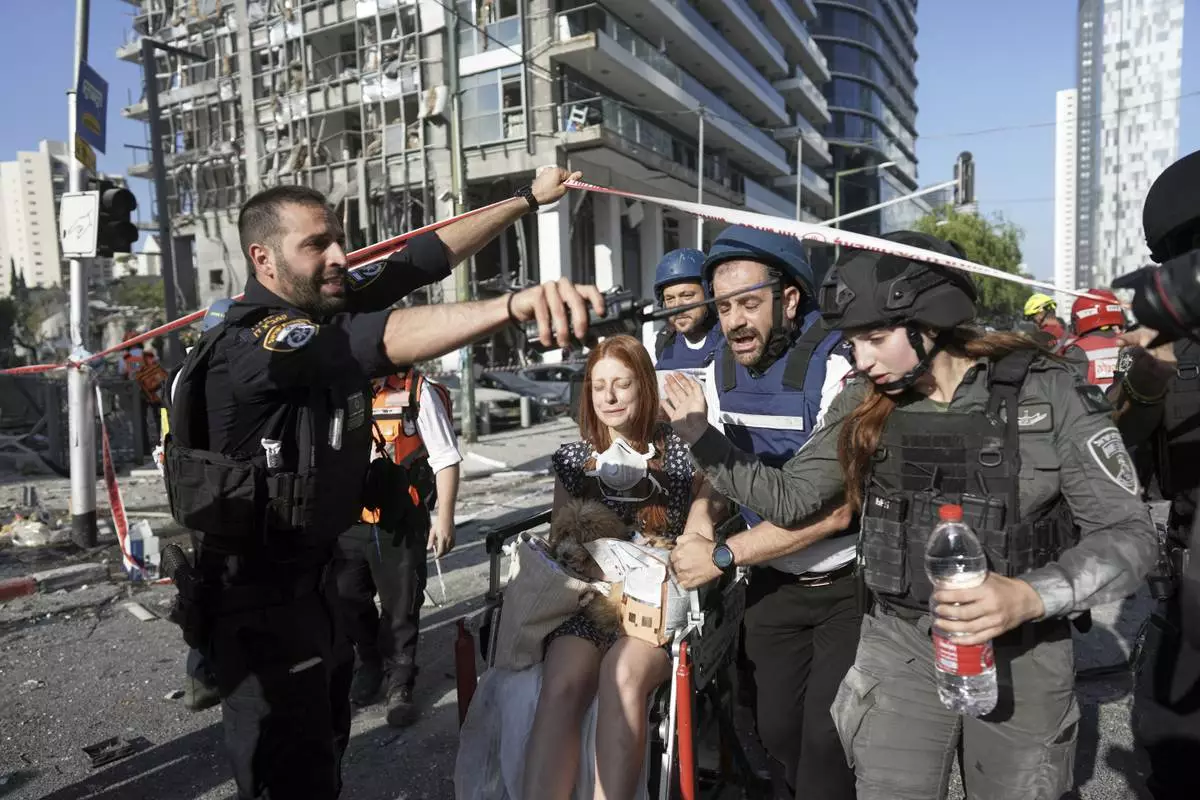
A woman is evacuated from the site of a direct hit from an Iranian missile strike in Ramat Gan, Israel, Thursday, June 19, 2025. (AP Photo/Oded Balilty)
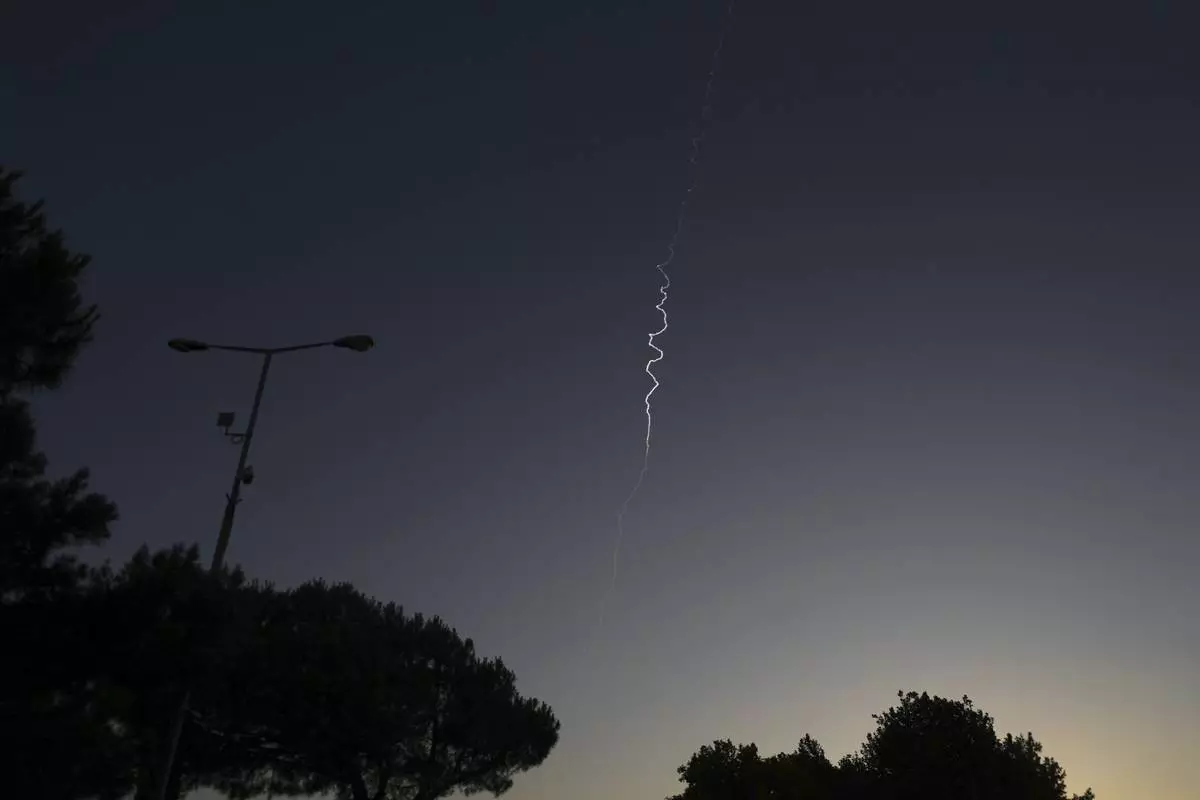
A smoke trail from the Israeli Iron Dome air defense system streaks across the sky as it intercepts missiles launched during an Iranian attack over Jerusalem, Wednesday, June 18, 2025. (AP Photo/Mahmoud Illean)
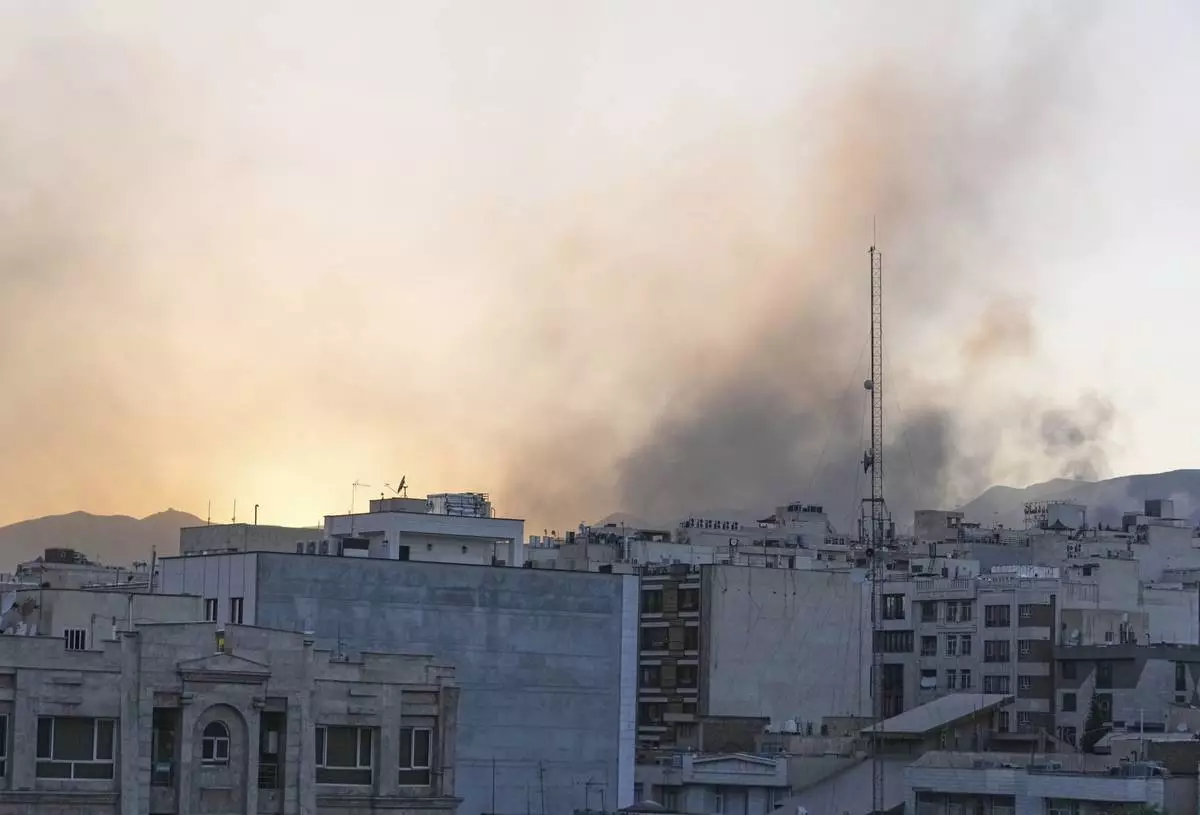
Smoke rises up after Israel's attack, in Tehran, Iran, Wednesday, June 18, 2025. (AP Photo/Vahid Salemi)
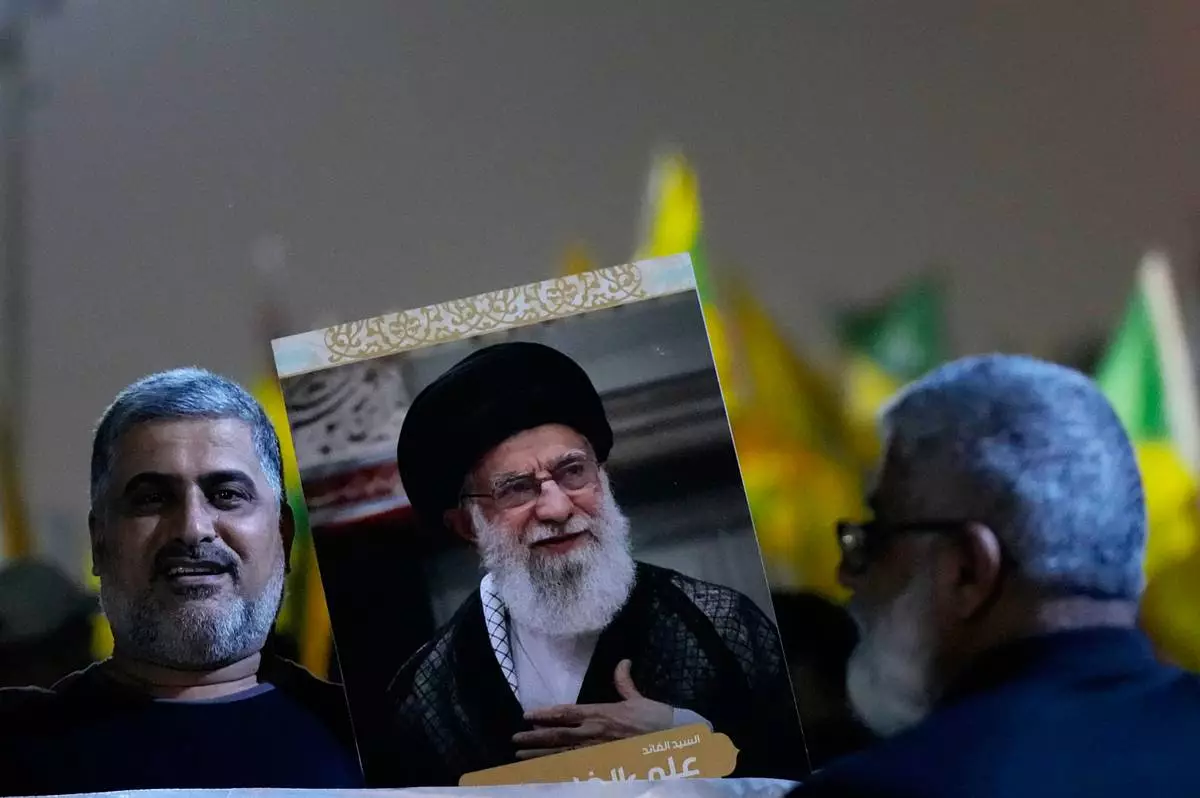
A protester holds a portrait of Iran's Supreme Leader Ayatollah Ali Khamenei during a protest against Israeli attacks on multiple cities across Iran, at a bridge leading to the fortified Green Zone where the U.S. Embassy is located in Baghdad, Iraq, Wednesday, June 18, 2025. (AP Photo/Hadi Mizban)