The 27th Shanghai International Film Festival's Belt and Road Film Week is showcasing 15 carefully curated films from partner nations, promoting cultural exchanges with films as a link, festival organizers said.
With the theme of "Travel with Films," this year's event, which kicked off on Wednesday, features parallel screenings in five Yangtze River Delta cities - Nanjing, Suzhou, Hangzhou, Ningbo and Hefei.
Chen Guo, managing director of the Shanghai International Film and TV Events Center, highlighted the initiative's global reach.
"Through our Belt and Road Film Festival Alliance network, we've successfully introduced 58 Chinese productions to international audiences, significantly expanding overseas exposure for China's film industry," she said.
Marco Muller, Italian artistic director of Shanghai University's Film Art Research Center, underlined the growing international demand for Chinese films.
"At the very least, there are over 300 film festivals across Belt and Road (co-building) countries. I often receive emails or messages from them expressing strong interest in screening more Chinese films and eagerly hoping for Chinese productions to participate in their local festivals," Muller said.
Wang Hanjing of the Shanghai Animation Industry Association stressed the cultural dimension, saying "We can bring more Chinese cultural contents to the international stage, allowing judges and audiences on these global platforms to pay greater attention to our content."
This year's edition brings together more than 40 prominent filmmakers from over 20 countries. Through structured work meetings and roundtable discussions, participants explore critical industry themes including collaborative film production opportunities, strategies for international distribution and promotion and development programs for emerging cinematic talent.
Since its inception in 2018, the Belt and Road Film Week has evolved into a cornerstone of international film cooperation, fostering cultural dialogue between China and participating nations while offering global audiences a window into diverse cinematic traditions.
The Belt and Road Film Festival Alliance has seen remarkable growth, expanding from its original 31 institutions across 29 countries to 55 member organizations spanning 48 nations today. This expanding network continues to facilitate meaningful artistic exchanges and co-production opportunities along the Belt and Road.
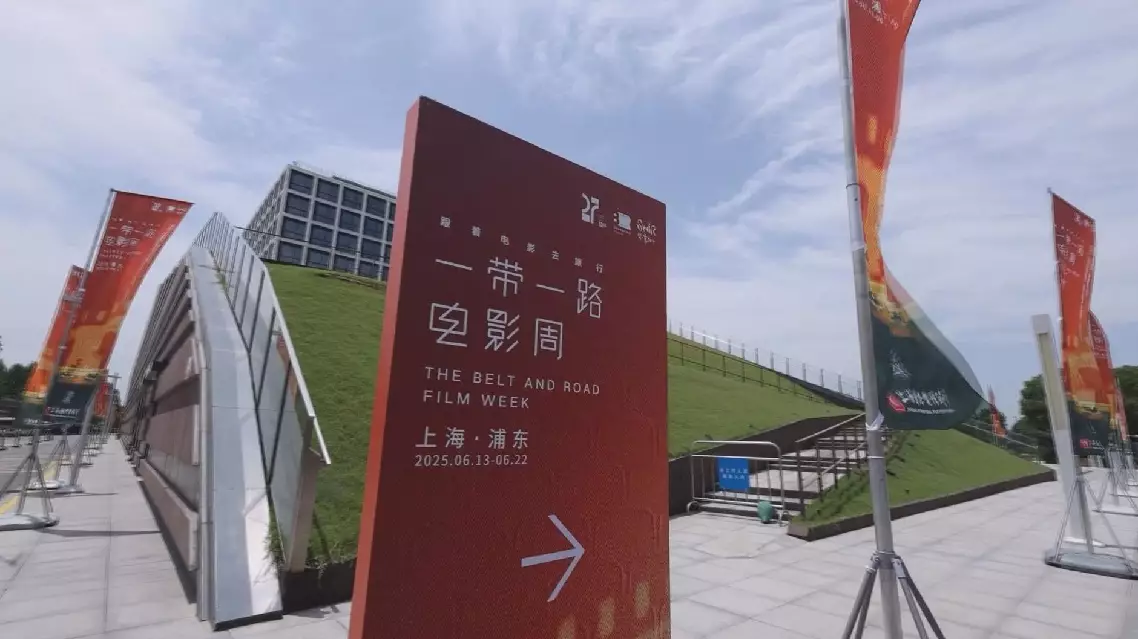
Shanghai Int'l Film Festival launches Belt and Road Film Week to fosters cinematic cultural exchanges
The Iranian government is focusing on public concerns and maintaining stable supplies of essential goods amid recent protests, Iranian President Masoud Pezeshkian said in a televised interview on Sunday.
In the city of Karaj, northwest of the capital Tehran, daily life has largely continued as normal. A video filmed by a local resident on Sunday shows food stores open and grocery shelves fully stocked.
"This is the block near my home, and there are some food stores here. Daily life continues here. Last night we did not see many protests in Karaj. Right now the city is very safe. This is a grocery store close to my home. All the food is available; nothing is in shortage. Here are noodles and different types of beans. Here are dairy products, cheese, and yogurt. I also checked other grocery stores and didn't see any shortages. Everything is available," said local resident Ali Reza.
Iranian officials have described recent disturbances as acts orchestrated by the "enemy," including some carried out by well-trained and armed "terrorists." The incidents have caused casualties among security personnel and civilians, as well as property damage.
The Secretary of Iran's Supreme National Security Council Ali Larijani has directed authorities to severely punish the "terrorists."
Meanwhile, Iran's police chief Ahmad-Reza Radan said on Sunday that the police had raised alert levels and arrested several leaders of the troublemakers during the operations on Saturday.
President Pezeshkian noted in the interview that the normal demands of the Iranian people are reasonable and justified, but they must realize that triggering riots and carrying out terrorist acts are the enemy's attempts to undermine the country. He urged the public to remain vigilant.
Also on Sunday, Iranian Parliament Speaker Mohammad Baqer Qalibaf warned that Tehran would regard U.S. and Israeli bases and facilities in the Middle East as "legitimate targets" if Washington takes military action against Iran. His remarks followed media reports saying U.S. President Donald Trump is "seriously considering authorizing a strike" against Iran.
Iranian state media reported that at least 109 members of Iran's security forces have been killed in clashes since the protests began 14 days ago. Meanwhile, human rights groups based outside the country said the number of protesters killed has exceeded 200, though the figure could not be independently verified.
The protests initially erupted over a sharp depreciation of the rial and sweeping subsidy reforms. Iranian authorities have blamed the unrest on foreign-linked agents and sanctions imposed by the United States.
Iranian president says government focusing on ensuring supplies amid protests