China's first immersive Mars-themed real-scene base in northwest China's Gansu Province has deeply integrated aerospace knowledge and technologies with local landform, presenting a vivid platform for visitors to have an unforgettable experience about "outer space" tourism.
Located in the Gobi desert of Jinchang in Gansu and covering 67 square kilometers, the colossal Mars survival simulation base camp codenamed "Mars Base 1," boasts various facilities for visitors to experience, including simulated models of Mars probes, Mars rovers, starry sky tents and 3D-printed Mars nests.
"I saw a video about the landscapes here simulating Mars, when I was amazed. Now I'm here to find red sandstone, Mars rover and nests printed with 3D technology. It really felt like I had traveled to the outer space," said Zhang Chengxu, a visitor.
"Such training equipment like three-dimensional rolling rings and centrifuges, though simplified versions, still offer an intuitive experience that cannot be felt in books or videos, which is very interesting," said An Xin, another visitor.
The base has developed over 30 immersive projects for visitors to witness simulated rocket launches, experience manual rendezvous and docking, and observe how hydroponic plants to grow in a simulated Martian environment.
"What impressed me the most this time was witnessing the launch of the rocket models on the spot. It feels like I was witnessing the success of a space mission," said Qin Ningmin, another visitor.
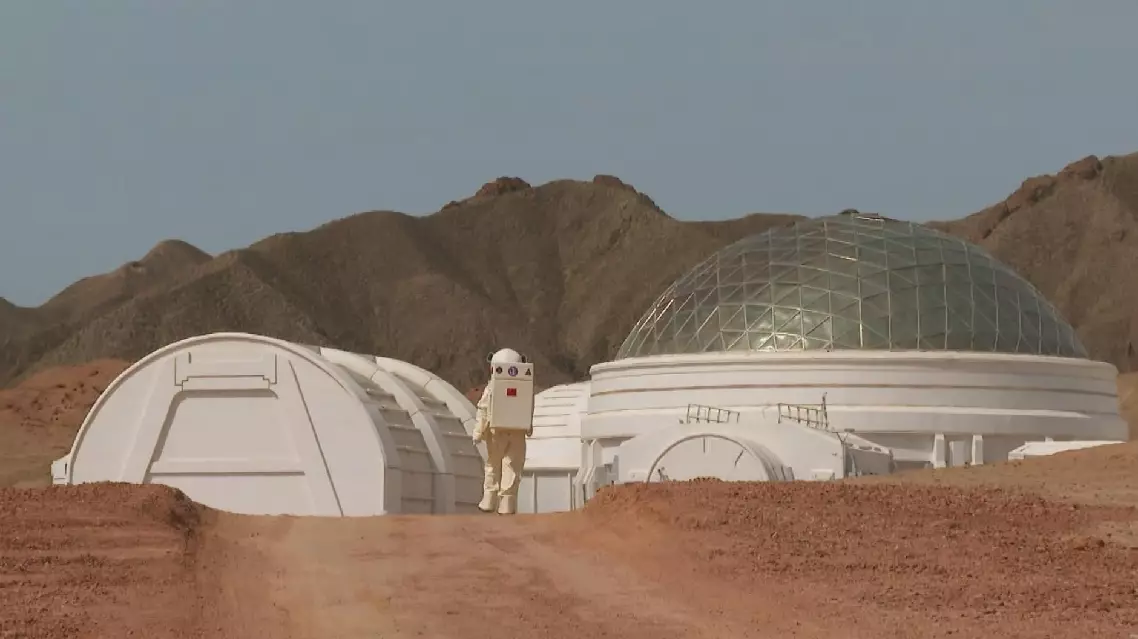
China's first Mars-themed base offers simulated outer space tourism
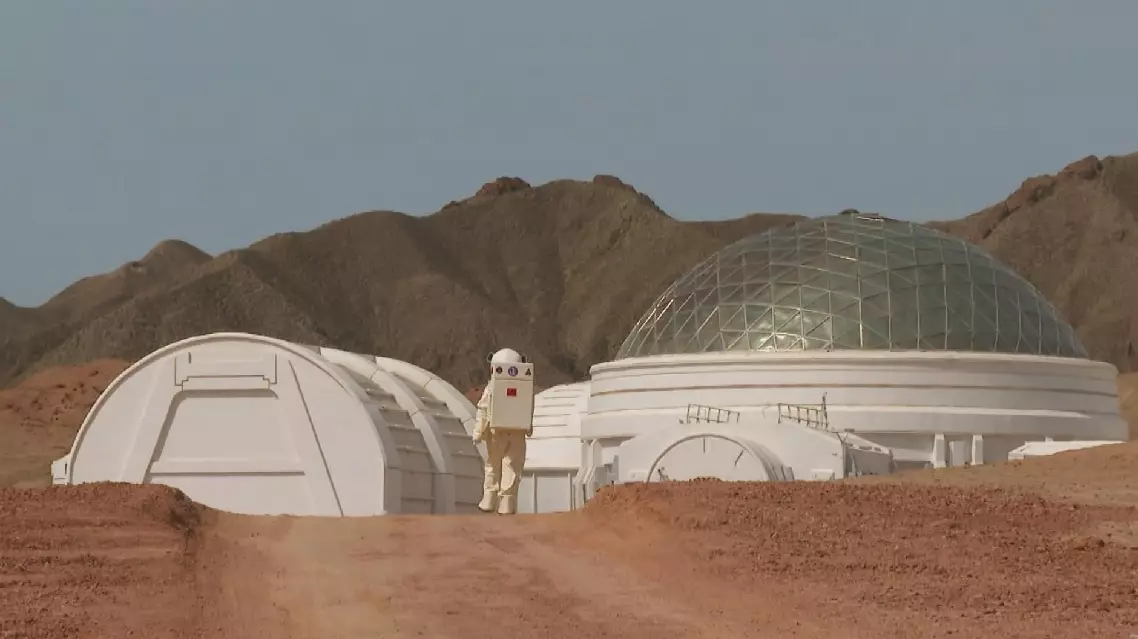
China's first Mars-themed base offers simulated outer space tourism
As clashes between Saudi Arabia and Yemen's Houthi group continue to escalate, the United States may launch a new round of airstrikes against the Houthis, potentially heightening regional tensions and making Yemen a core flashpoint in the Middle East conflict, according to a Chinese expert.
Fighting between the Houthis and the Saudi-led coalition showed no sign of abating on Sunday, as a fresh wave of attacks struck major Saudi airports. The Houthis claimed responsibility for new missile and drone operations against the airports and energy facilities, while the coalition vowed a firm response.
Saudi Arabia's General Authority of Civil Aviation (GACA) reported casualties from a new attack on King Khalid International Airport in Riyadh on Sunday -- the fourth to hit the hub in four days, after two strikes on Oct. 8 and another on Saturday afternoon -- and moved to suspend operations for damage assessments and safety checks.
GACA later said King Fahd International Airport near Dammam had also come under attack on Sunday evening, with inspections underway to gauge the extent of the damage.
Speaking in an interview with China Media Group (CMG), Wang Jin, a professor at the Institute of Middle East Studies of Northwest University, said the U.S. is highly likely to launch a new round of airstrikes against the Houthis, but he expects any such campaign to be limited in scale and difficult to sustain, driven mainly by the need to preserve U.S.-Saudi military ties and respond to the American casualties from the airport attacks.
"The U.S. has threatened to launch a new round of strikes against the Houthis, and the probability of such action is very high. Over the past two to three days, the situation on the Yemeni battlefield and the conflict between Yemen and Saudi Arabia have taken a new turn. The Houthis launched a new round of attacks on Saudi international airports, causing relatively serious casualties. Under these circumstances, the U.S. needs to maintain its military ties with Saudi Arabia, and therefore needs, to a certain extent, to use military strikes to show Saudi Arabia that it remains a so-called reliable regional ally," Wang said. "In addition, some American citizens were among the casualties in the attacks on Saudi airports, so the U.S. needs to mount a military response. However, such a response would more likely be carried out through U.S.-led military forces in the Middle East in the form of airstrikes on targets, rather than by sending a large number of ground troops to Yemen. Moreover, the strikes would probably last only one or two rounds, after which the situation would ease. This is because, given the current U.S. combat capability and force deployment in the Middle East, it cannot support a long-term, direct, and large-scale intervention in the Yemeni battlefield," he said.
Looking further ahead, Wang expects U.S. military strikes to become an important new variable for Yemen and the wider region, as the standoff between the United States and Iran continues and the situation on the Yemeni battlefield enters a new phase.
"In fact, tensions across the Middle East are continually spreading along the fissures of wars and conflicts, with the intensity of fighting escalating rapidly. The risks of confrontation are quickly accumulating, and the scope of the fighting is steadily expanding. Therefore, I think the possibility of further escalation and expansion is very high," Wang said.
The war in Yemen, he said, is still far from over -- and where it heads next may decide whether the country becomes the decisive flashpoint of the wider Middle East conflict.
"Although Yemen remains mired in war, several developments in the country could prove critical in the future. For example, will Taiz be captured by the Houthis in the near term? If so, will the Houthis then turn their military offensive directly toward Aden, the seat of Yemen's interim government and its administrative center? If major phased and landmark developments emerge in the battlefield contest, the overall situation could become even more fragile, triggering a new round of rivalry and reshuffling among multiple Middle Eastern countries and the outside powers behind them. Therefore, looking ahead, I believe the key variable in the broader Middle East situation lies in Yemen, and the window for change is likely to come in the near future," Wang said.

US may launch new airstrikes on Houthis after Riyadh airport attacks: expert