Following the United States' airstrikes on nuclear facilities in Iran on Saturday, Yemen's Ansar Allah (Houthis) declared full support for Tehran and went beyond condemnation, hinting at possible military actions that could once again put U.S. interests in the region at risk.
The United States conducted attacks on three Iranian nuclear facilities in Fordow, Natanz and Isfahan on Saturday.
Yemen's Houthi group called the strikes a serious escalation that threatens regional stability. The group also said that U.S. ships and warships in the Red Sea are now considered possible military targets.
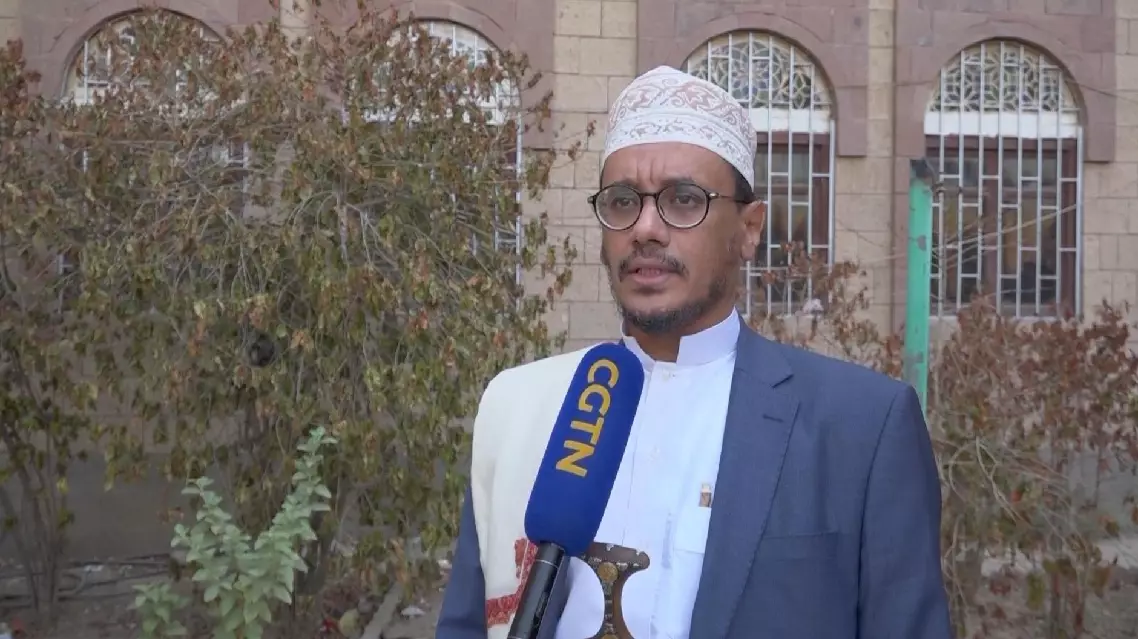
"We strongly condemn the U.S. aggression against Iran. We see it as part of the West's historic crimes, rooted in colonial thinking. And we have declared our full support for Iran. If the U.S. attacks again, we will take direct military action in the Red Sea and target American warships," said Mohammad Taher Anam, advisor of Yemen's Houthi supreme political council.
Many Yemenis have expressed concern over rising tensions in the Middle East. They warn that expanding the Israel-Iran war could have disastrous consequences for the whole region, especially with ongoing humanitarian crises and conflicts in Gaza and the Red Sea.
"We, as citizens and people of the Arab and Islamic nations, condemn the U.S. attack on Iran. These strikes aim to widen the conflict in the region," said Issa al-Sayani, a Yemeni resident of Sanaa.
Yemen's Houthis hint at possible military actions after US strikes on Iranian
Chinese Foreign Minister Wang Yi said on Thursday that both the United States and Iran have the willingness to resume negotiations, and the international community should encourage both sides to return to the negotiating table and seek effective ways for a political settlement.
China and Canada can jointly play a constructive role in this regard, said Wang, also a member of the Political Bureau of the Communist Party of China Central Committee, in a phone conversation with Canadian Foreign Minister Anita Anand at the latter's request.
Anand briefed Wang on Canada's position regarding the situation in the Middle East, noting that Canada is committed to protecting civilians in the conflict, promoting de-escalation of the situation, preventing the spillover of the conflict, and reducing its impact on the global economy as well as industrial and supply chains.
The Iranian nuclear issue bears on the international nuclear non-proliferation regime, and ensuring the safe passage through the Strait of Hormuz is in the common interests of all parties, Anand said.
Canada stands ready to work with China to push for a ceasefire and promote regional peace and stability, she added.
Wang elaborated on China's principled position, saying that the Iranian nuclear issue should be resolved through dialogue and should not be a reason for the use of force.
The abuse of force will only lead to grave repercussions, and the spillover of the war will threaten regional security and stability, he said.
The two sides also exchanged views on China-Canada relations and agreed that they should implement the outcomes of Prime Minister Mark Carney's visit to China with a positive and pragmatic attitude, resume dialogues at various levels, expand mutually beneficial cooperation, and push for the stable and healthy development of the China-Canada new strategic partnership.

U.S., Iran should be encouraged to return to negotiating table for political settlement: Chinese FM