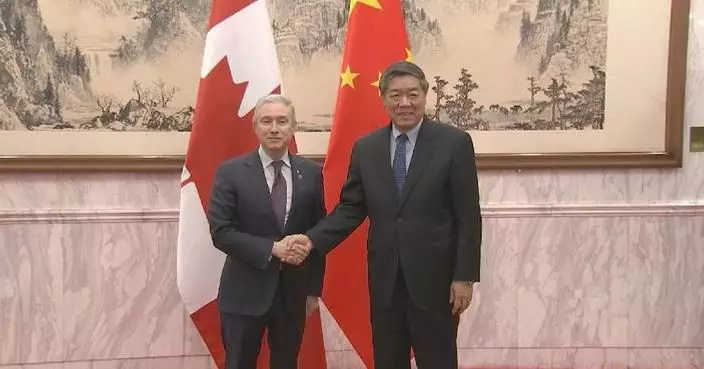
Voting in Japan's general election began on Sunday morning, with 1,284 candidates competing for 465 seats in the House of Representatives, the powerful lower chamber of parliament.
The primary focus of the election is whether the ruling coalition of the Liberal Democratic Party and the Japan Innovation Party will secure a majority and allow the administration of Prime Minister Sanae Takaichi to continue, or whether the opposition will expand its strength and block that outcome.
Polling stations across the country will close at 20:00 local time on Sunday, and ballot counting is expected to last late into the night.
Of the 465 seats in the House of Representatives, 289 will be elected from single-member districts and 176 through proportional representation in 11 regional blocs.
The term of office for members of the House of Representatives is four years. However, Japanese Prime Minister Sanae Takaichi announced the dissolution of the lower house for a snap election on January 23, one year and three months after the last House of Representatives election.
Takaichi's ruling coalition currently holds only a slim majority in the powerful House of Representatives and remains a minority in the House of Councillors.

Japan's general election begins voting

Japan's general election begins voting

Japan's general election begins voting
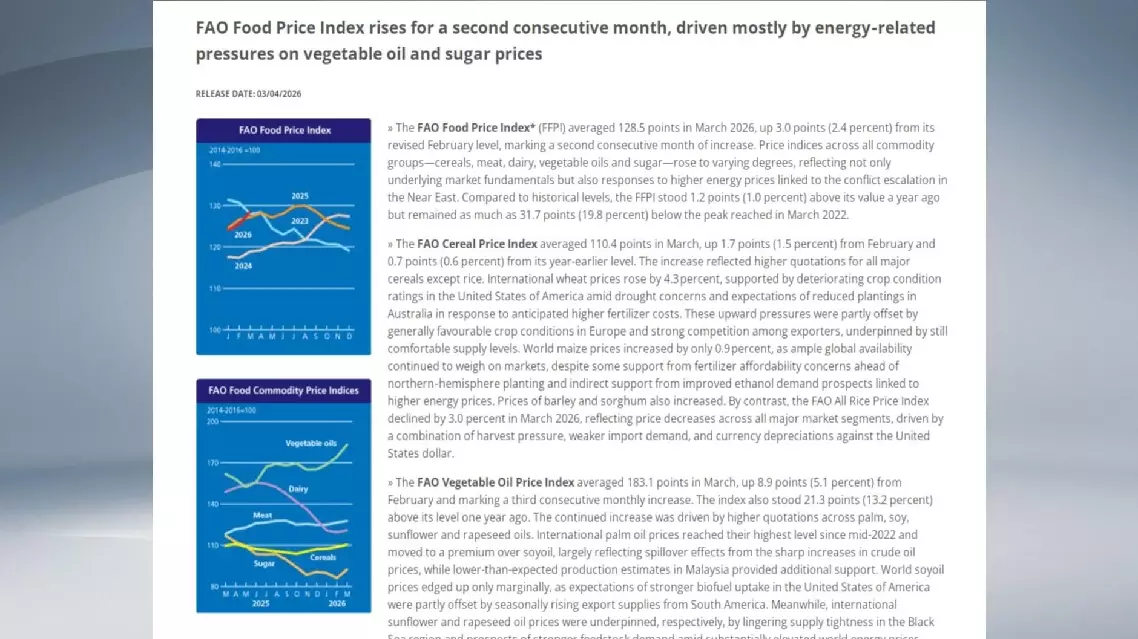
Global food commodity prices climbed for a second consecutive month in March, driven mainly by higher energy costs linked to escalating conflict in the Middle East, the Food and Agriculture Organization of the United Nations (FAO) said in report released on Friday.
The FAO Food Price Index, which tracks monthly changes in the international prices of a basket of globally traded food commodities, averaged 128.5 points in March, up 2.4 percent from February and 1.0 percent above its level a year ago.
According to the report, the FAO Vegetable Oil Index and Sugar Price Index showed the largest increases, up 5.1 percent and 7.2 percent, respectively.
The FAO Cereal Price Index increased by 1.5 percent from the previous month, driven primarily by higher world wheat prices, which rose 4.3 percent.
The FAO Meat Price Index rose by 1.0 percent from the previous month, and the FAO All-Rice Price Index declined by 3.0 percent in March, according to the report.
FAO stated that rising energy and fertilizer prices have been driving up agricultural input costs.
If the conflict stretches beyond 40 days, farmers will have to choose to farm the same with fewer inputs, plant less, or switch to less intensive fertilizer crops, according to FAO Chief Economist Maximo Torero.
These choices will hit future yields and shape food supply and commodity prices for the rest of this year and beyond, Torero said.
Global food prices rise for 2nd consecutive month in March amid Middle East conflict: FAO