Skip to Content Facebook Feature Image

Protesters rally in Tokyo over PM Takaichi's Taiwan remarks, military expansion plans

HotTV

HotTV

HotTV

Protesters rally in Tokyo over PM Takaichi's Taiwan remarks, military expansion plans

2026-02-08 05:30 Last Updated At:02-09 12:37

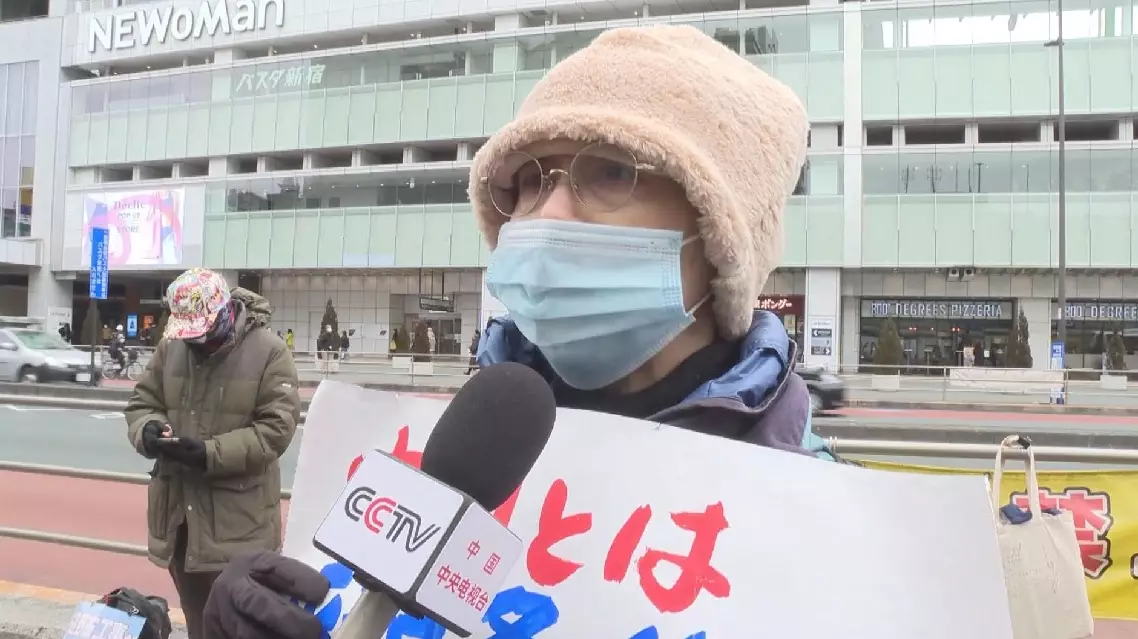
A protest in Tokyo on Saturday highlighted growing public concern over Prime Minister Sanae Takaichi's remarks on China's Taiwan region and the government's plans to expand its military.

In early November 2025, Takaichi said a "Taiwan contingency" could constitute what she called a "survival-threatening situation" for Japan, remarks that many critics say reflect nostalgia for Japan's colonial past and an attempt to weaponize the Taiwan issue against China.

Protesters distributed flyers and held up signs denouncing Takaichi's remarks and policies.

"The Japanese government has already acknowledged that Taiwan is part of China, so I can't help but wonder why the current prime minister would make such remarks. We truly hope there will be no more statements like this. Takaichi should either retract her words or just resign. Her comments have triggered a serious crisis, and she must take full responsibility," one protester said.

"There is widespread anger toward Takaichi within Japan. If the government truly prioritizes people's livelihoods, it must pursue responsible diplomacy, reject any provocation of war and uphold the pacifist constitution. This is what matters most," another demonstrator said.

"It is an interference in China's internal affairs. She must immediately and sincerely apologize for her remarks," said another participant in the rally.

Protesters also said Takaichi's aggressive actions since taking office, including intending to revise three national security documents, easing restrictions on arms exports and planning to increase the defence budget, are dangerous, particularly given Japan's failure to fully reckon with its World War II history.

"Japan's military buildup is dangerous. Eight decades have passed since the war ended, yet the country still hasn't fully reflected on or accounted for its wartime past," a protester said.
Protesters rally in Tokyo over PM Takaichi's Taiwan remarks, military expansion plans
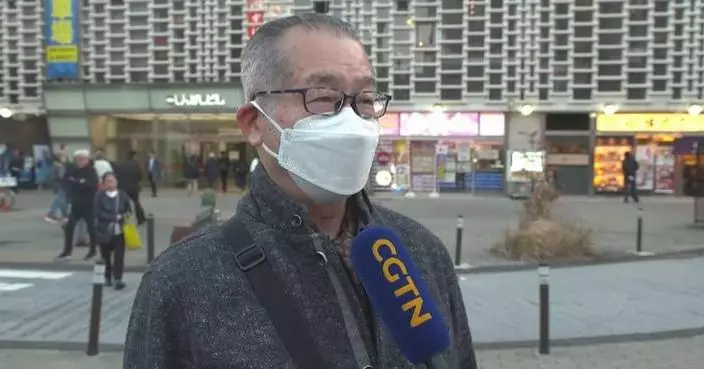
Protesters rally in Tokyo over PM Takaichi's Taiwan remarks, military expansion plans

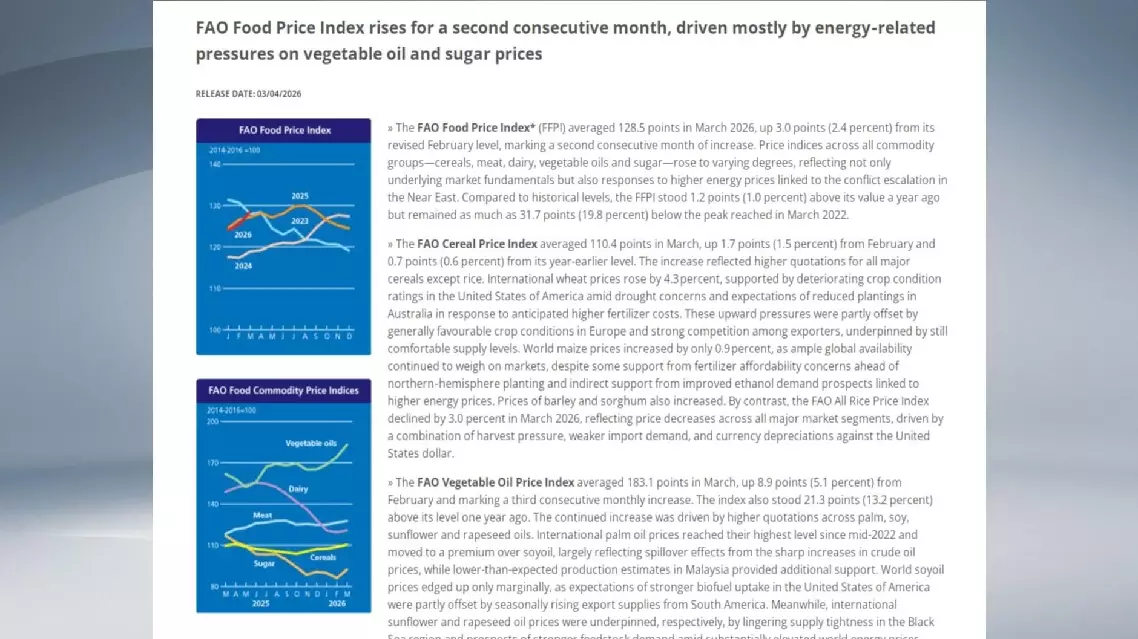
Global food commodity prices climbed for a second consecutive month in March, driven mainly by higher energy costs linked to escalating conflict in the Middle East, the Food and Agriculture Organization of the United Nations (FAO) said in report released on Friday.

The FAO Food Price Index, which tracks monthly changes in the international prices of a basket of globally traded food commodities, averaged 128.5 points in March, up 2.4 percent from February and 1.0 percent above its level a year ago.

According to the report, the FAO Vegetable Oil Index and Sugar Price Index showed the largest increases, up 5.1 percent and 7.2 percent, respectively.

The FAO Cereal Price Index increased by 1.5 percent from the previous month, driven primarily by higher world wheat prices, which rose 4.3 percent.

The FAO Meat Price Index rose by 1.0 percent from the previous month, and the FAO All-Rice Price Index declined by 3.0 percent in March, according to the report.

FAO stated that rising energy and fertilizer prices have been driving up agricultural input costs.

If the conflict stretches beyond 40 days, farmers will have to choose to farm the same with fewer inputs, plant less, or switch to less intensive fertilizer crops, according to FAO Chief Economist Maximo Torero.

These choices will hit future yields and shape food supply and commodity prices for the rest of this year and beyond, Torero said.

Global food prices rise for 2nd consecutive month in March amid Middle East conflict: FAO

Global food prices rise for 2nd consecutive month in March amid Middle East conflict: FAO

Recommended Articles