Following the United States' airstrikes on nuclear facilities in Iran on Saturday, Yemen's Ansar Allah (Houthis) declared full support for Tehran and went beyond condemnation, hinting at possible military actions that could once again put U.S. interests in the region at risk.
The United States conducted attacks on three Iranian nuclear facilities in Fordow, Natanz and Isfahan on Saturday.
Yemen's Houthi group called the strikes a serious escalation that threatens regional stability. The group also said that U.S. ships and warships in the Red Sea are now considered possible military targets.
"We strongly condemn the U.S. aggression against Iran. We see it as part of the West's historic crimes, rooted in colonial thinking. And we have declared our full support for Iran. If the U.S. attacks again, we will take direct military action in the Red Sea and target American warships," said Mohammad Taher Anam, advisor of Yemen's Houthi supreme political council.
Many Yemenis have expressed concern over rising tensions in the Middle East. They warn that expanding the Israel-Iran war could have disastrous consequences for the whole region, especially with ongoing humanitarian crises and conflicts in Gaza and the Red Sea.
"We, as citizens and people of the Arab and Islamic nations, condemn the U.S. attack on Iran. These strikes aim to widen the conflict in the region," said Issa al-Sayani, a Yemeni resident of Sanaa.
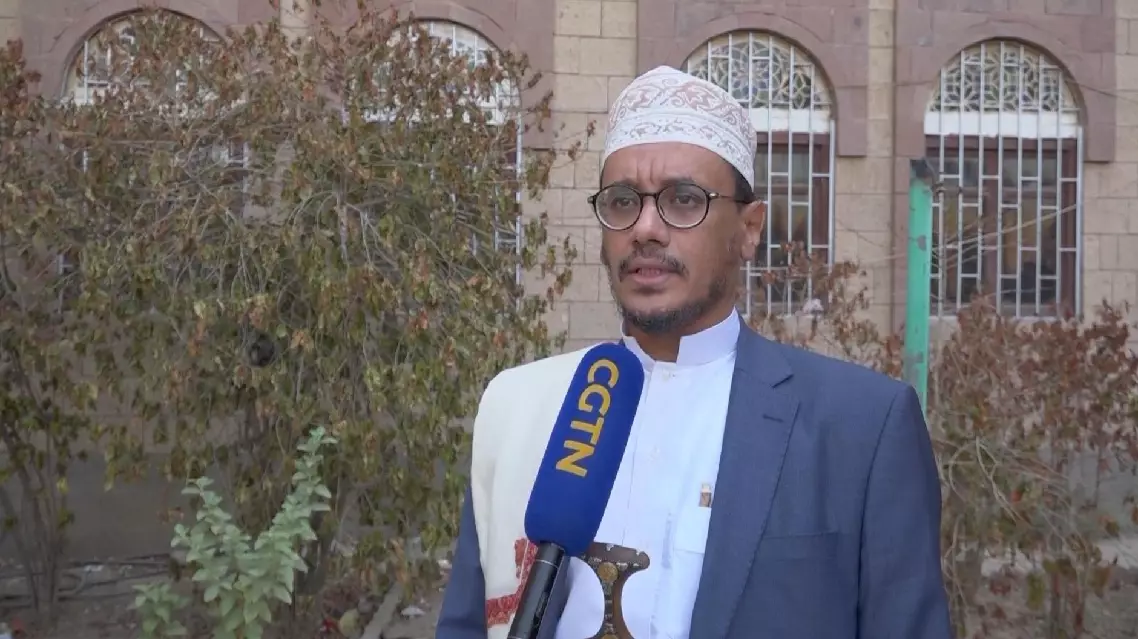
Yemen's Houthis hint at possible military actions after US strikes on Iranian
Global automakers, including Volkswagen, BMW and Chinese brands BYD and NIO, are gathering at the World New Energy Vehicle Congress which opened on Tuesday in Haikou, capital of south China's Hainan Province, to share their insights and showcase their latest innovations in new energy vehicles (NEVs).
The three-day event has reaffirmed the industry consensus established in recent years: NEVs should become a mainstream choice for car buyers.
Whether it's vehicle compliance certification or co-creating vehicle-to-grid systems, whether it's AI-driven solutions or intelligent connectivity -- different banquet halls host different exchanges of ideas.
"First, it's a platform for networking, for meeting people which you met before, and meet people which you never met before and creating new business and getting new ideas or getting a confirmation that the ideas you have on the strategy you made are correct or wrong," said Thomas Regnet, board director of Scherdel Innotec.
The International Energy Agency's latest Global EV Outlook 2026 report forecasts that global electric vehicle sales will reach 23 million units in 2026, accounting for nearly 30 percent of global new car sales.
This year's congress features a special NEV technology and public education exhibition, showcasing cutting-edge achievements in complete vehicles, batteries, battery-swapping equipment, intelligent connectivity and other areas.
Hainan is China's pilot testing ground for the full-scale adoption of NEVs and the transition to clean energy. It leads the country in new energy penetration, charging and battery-swapping infrastructure, green supply chains, and carbon management systems.
"In 2026, NIO's deliveries in Hainan have maintained month-on-month growth, with a year-on-year increase of over 50 percent. The Hainan Free Trade Port currently has 47 NIO battery-swapping stations, achieving the goal of [deploying] battery-swapping stations in every county. Going forward, we will add more stations in urban commercial districts and scenic areas," said Wang Zhijuan, general manager of NIO Hainan.
"We will continue to advance the island-wide adoption of new energy vehicles across Hainan and accelerate the transition of commercial and freight vehicles to new energy. In addition, we will build a testing and services hub for new energy vehicles serving overseas markets. We will make the most of value-added processing policies for special-purpose vehicles to develop new business models in vehicle modification and monitoring," said Yu Huan, deputy director of the NEV Department and Supervision Division under the Department of Industry and Info Technology of Hainan Province.
It is worth noting that this year's congress has attracted many industry representatives from Germany and Sino-German joint ventures.
The automotive industries of both countries are deeply interconnected, with a solid foundation for cooperation in complete vehicle manufacturing, components, and other fields.
The congress not only showcases China's achievements in vehicle electrification but also sends a clear signal to the wider world: China's new energy industry is open and it is accelerating its strategic layout.
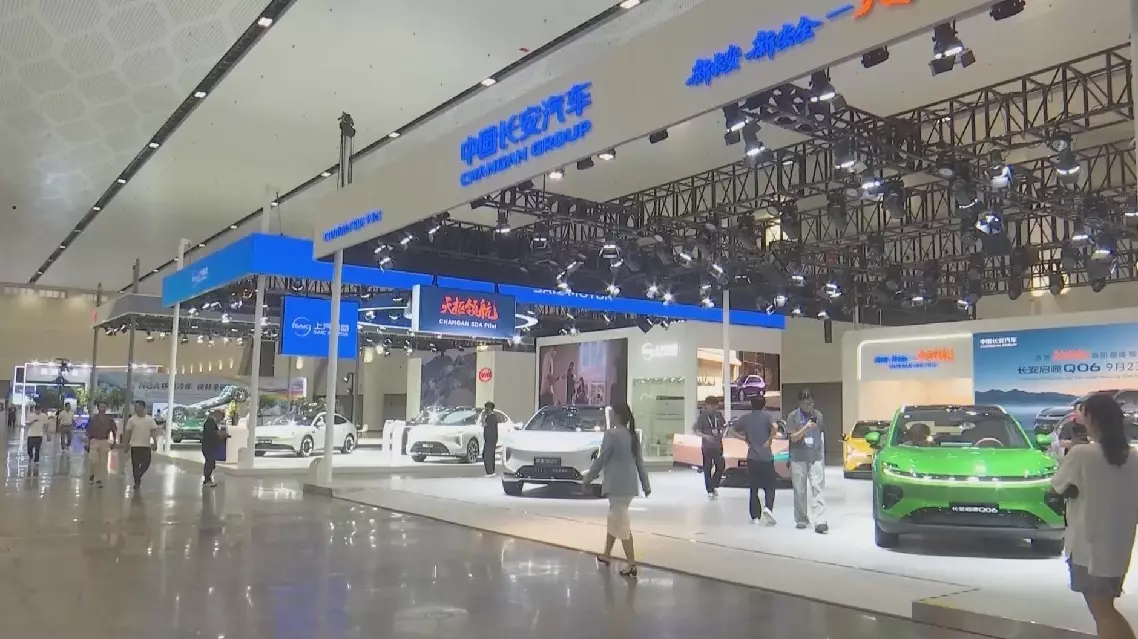
Global automakers join forces in Hainan to build new ecosystem for NEVs