Advanced medical intelligence is being deployed to enhance the efficiency of diagnosis and treatment for residents in Shenzhen City of south China's Guangdong Province, giving a helping hand to local clinics and speeding up procedures for patients.
Over 450 artificial intelligence (AI)-powered healthcare devices have now been adopted at hundreds of community health service centers across the city, highlighting how tech advances are giving a big boost to the medical sector.
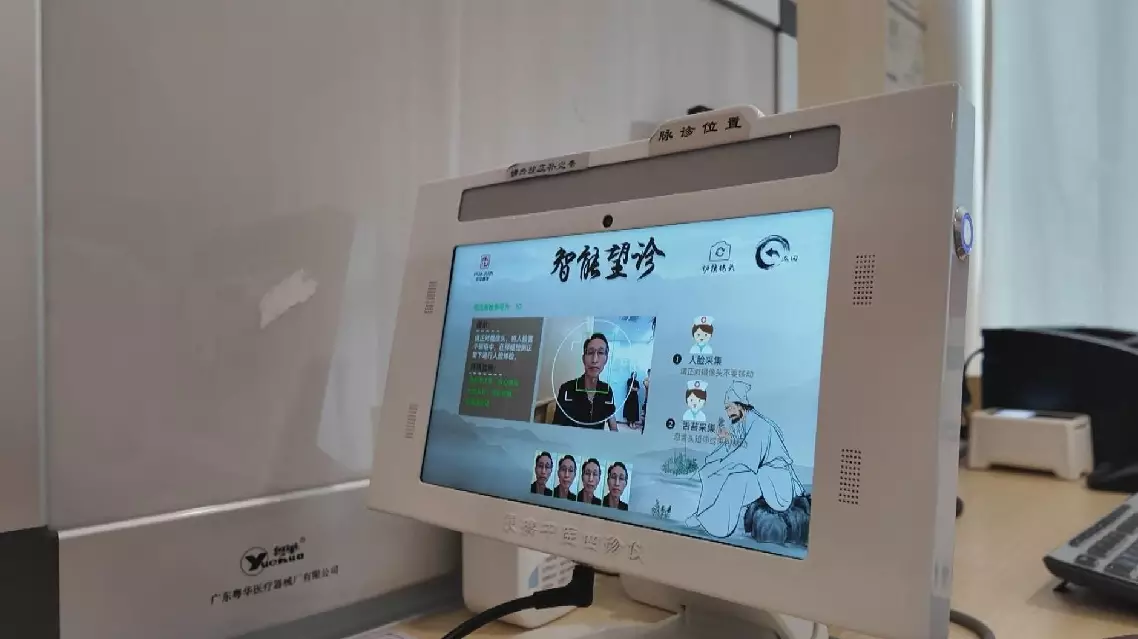
An AI-assisted traditional Chinese medicine (TCM) diagnostic robot at the Dongtang Community Health Service Center in Shenzhen's Bao'an District is able to conduct preliminary consultations, allowing doctors to quickly assess patients' conditions.
"Having these services in our community brings fantastic benefits to us residents," said a local man surnamed Deng. The smart medical devices, which include robotic TCM moxibustion and massage systems, have helped enhance patient experiences while boosting efficiency in community-level healthcare, allowing medics to better manage their daily workload. "These smart devices have significantly reduced doctors' workloads. Now, a single physician can provide therapy to multiple patients at once," said Qi Li, director of the Dongtang Community Health Service Center.
In addition to offering medical services for local patients, the center also works to prepare and deliver prescribed TCM medications for 37 other community clinics within its medical network as part of a wider hospital alliance.
Advanced technology is also being deployed in delivering these medicines, with drones now taking to the skies to ensure fast and efficient distribution to patients in the local area.
"We prepare the medicine using traditional decoction methods, then use drones to deliver it from Dongtang to each community. Our goal is to ensure every dose reaches patients while still warm," said Yang Guangyi, executive vice president of the Shenzhen Hospital of Integrated Chinese and Western Medicine.
A local official said the application of intelligent diagnostic equipment in Shenzhen now helps bring high-quality healthcare right to people’s doorsteps.
"Over 400 community health centers citywide have deployed AI-assisted diagnostic tools. These devices have not only elevated the quality of local-level healthcare but also allowed residents to experience cutting-edge medical services right in their neighborhoods," said Huang Yin, deputy director of the Public Hygiene and Health Commission of Shenzhen Municipality.
As China looks for new solutions to the challenges posed by an aging population, growing cases of chronic illnesses, and disparities in access to medical resources, more hospitals are incorporating AI technology, benefiting both patients and medical professionals.
China fast-tracks introduction of AI-powered healthcare to boost local-level treatment