Joe Ngai, chairman of McKinsey Greater China, praised the dynamic and innovative environment China has forged for multinational corporations in the country and highlighted how these companies are using their experiences in the competitive Chinese market to inspire global innovation.
Ngai visited north China's Tianjin Municipality to attend the 2025 Summer Davos Forum, also known as the 16th Annual Meeting of the New Champions of the World Economic Forum (WEF), which was held from Tuesday to Thursday with the theme "Entrepreneurship in the New Era".
In an interview with the China Global Television Network (CGTN) on the sidelines of the forum, Ngai noted that many multinational CEOs view their operations in China as a model for transforming their strategies worldwide.
"For most multinationals, the way and the rate of how they adapt in China is faster than they do in the rest of the world. In fact, a couple of multinational CEOs have commented to me that 'I'm in China because I'm using this as the way to inspire the rest of the world, to think about how to innovate, the speed, how to be agile, how do I think about my cost structure, how do I think about the way how I bring the product to market, how do I match this kind of pacing'. And I think that once upon a time we all learn from the West. I think right now, a lot of Western CEOs are coming in here, looking at the market, looking at the competitive density and say 'what can I learn from this that I can then implement in the rest of my organization'," said Ngai.
On the essence of innovation, Ngai articulated two vital dimensions.
"I think at the end of the day that innovation are envisioning two things. One, I think [is] innovation in features, in better consumer appeal, better product and all that. But the other innovation, by the way, I think is really extraordinary of Chinese companies, is innovation in the supply chain, innovation in cost, innovation in getting the cost structure to a level that no one ever thought of before because of the competitive density," he said.
Acknowledging competition as a catalyst for innovation in cost and product development, Ngai advocated for a balance between competition and pricing discipline.
So I do think that the competition is a very important element of the Chinese corporate environment in order to force the innovation on costs and on the product. But at the same time, I do think that pricing can be more disciplined, and I think these two are different. We can have competition, but we can have pricing discipline. And I think that the pricing discipline, or at least being a bit more constraint on how quickly you resolve that lever, I think it's something that we all have to learn. But again, remember, these are all individual companies who are all making individual decisions. So I think that it needs to somehow have a little bit better industry structure in order to be conducive to that behavior," said Ngai.
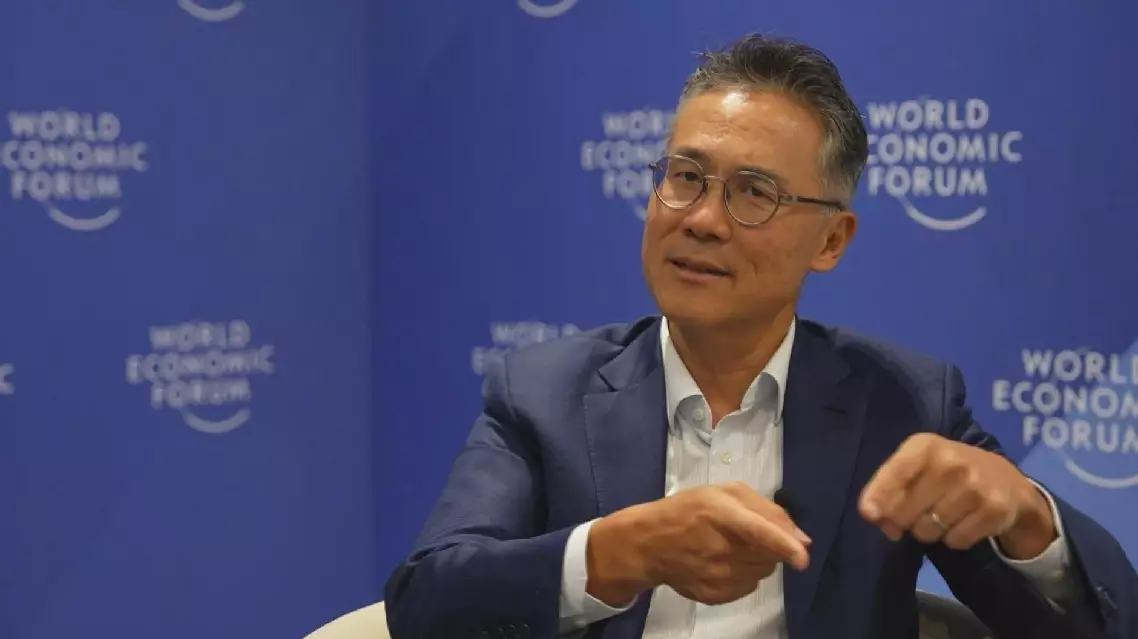
McKinsey chief praises China's dynamic, innovative environment for multinationals