An Asiatic wildcat was captured on camera deep within the Taklimakan Desert in northwest China, indicating the region's healthy and intact ecosystem and abundant food resources capable of sustaining the wild feline's survival.
Rare images of the Asiatic wildcat, a nationally protected species in China, was discovered by a research team from the School of Life Sciences at Peking University when they reviewed infrared camera data collected from the remote desert region.
Click to Gallery
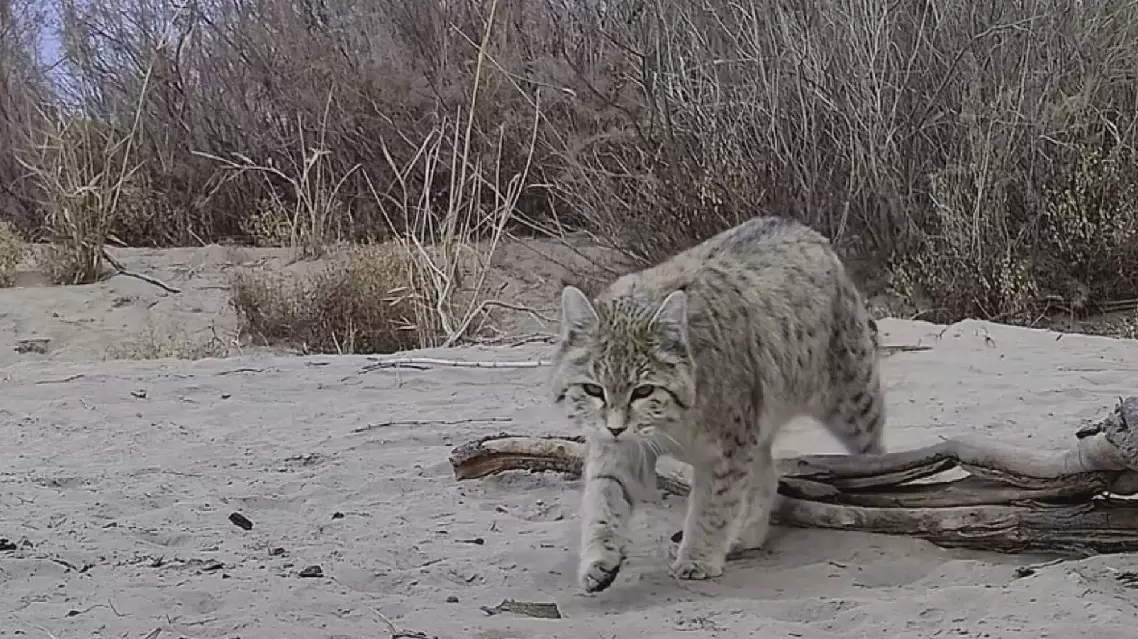
Asiatic wildcat captured on camera in Taklimakan Desert
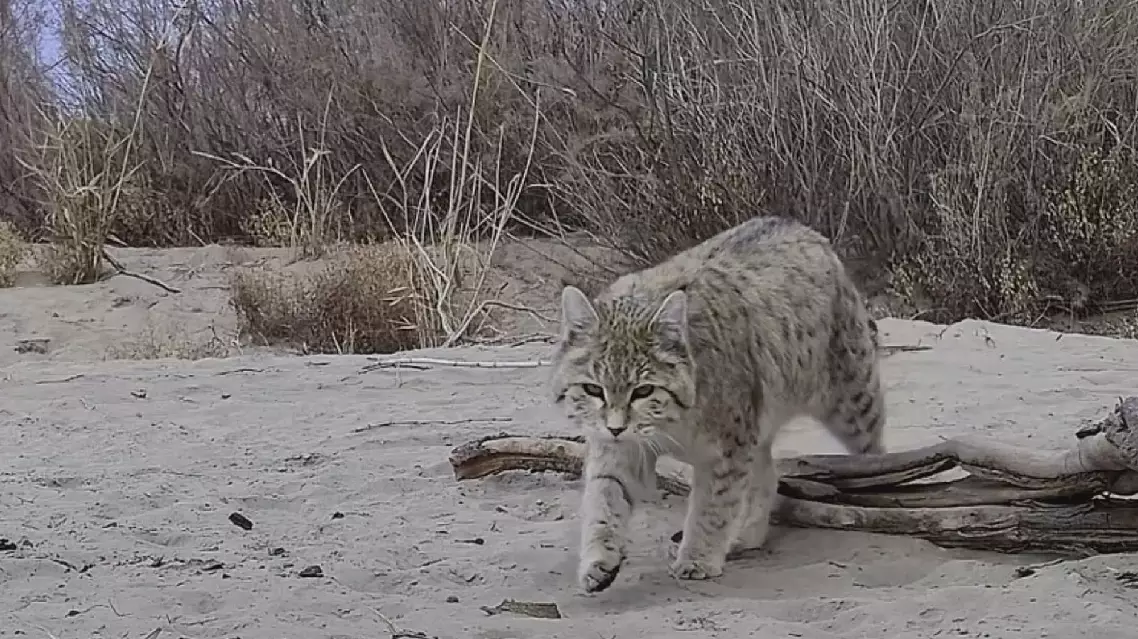
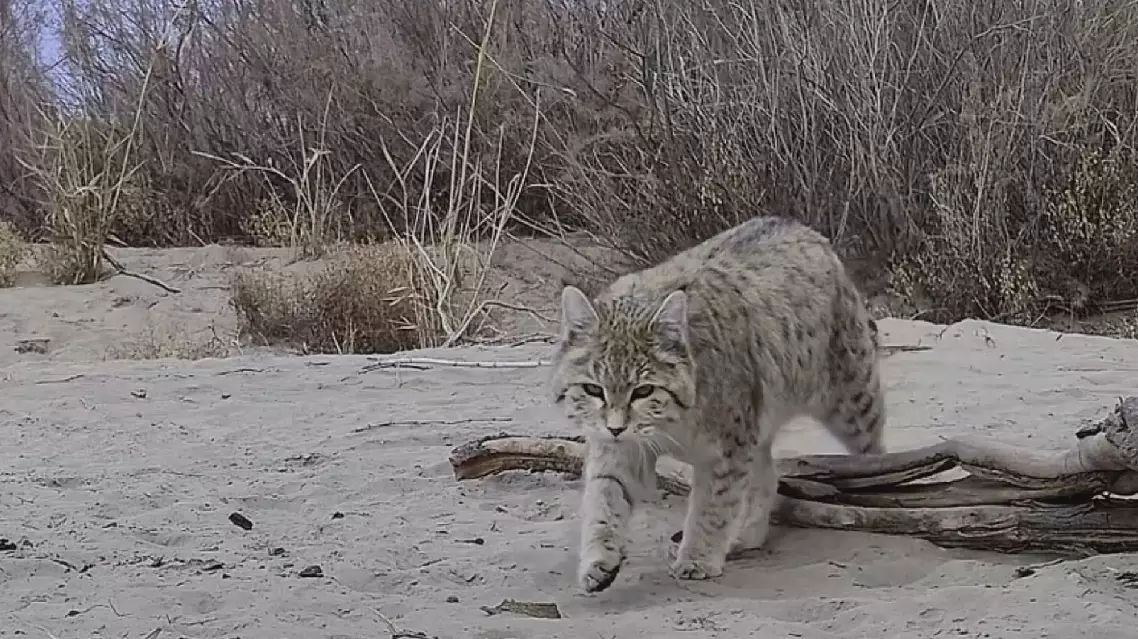
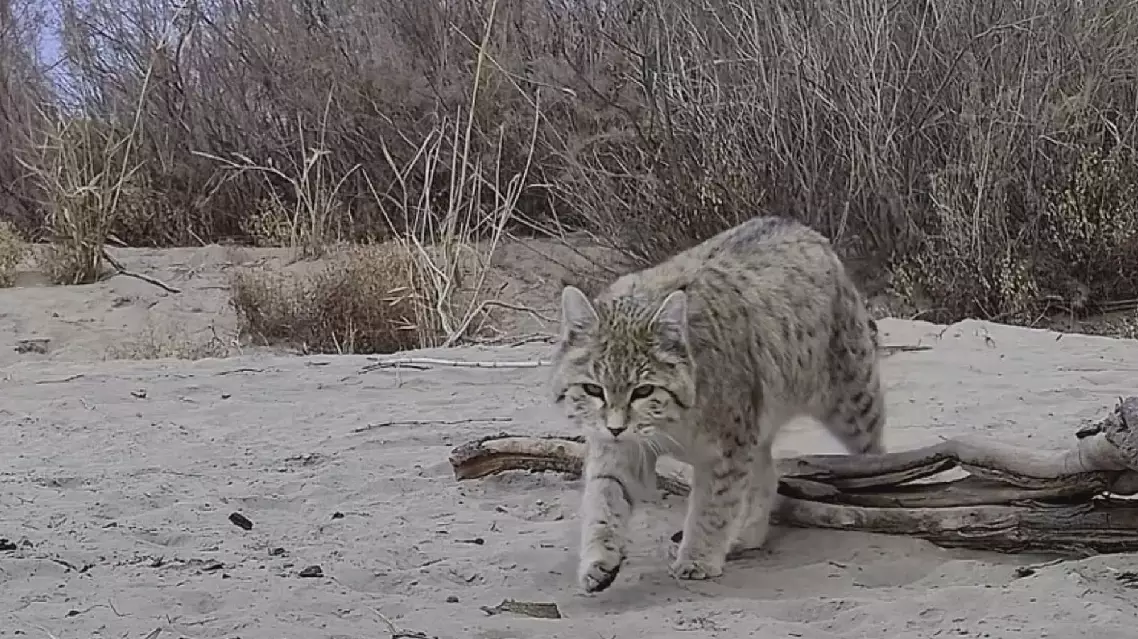

The video footage showed the Asiatic wildcat walking through a semi-arid landscape of poplar trees, saltcedar, and desert shrubs. It was seen sometimes sniffing the ground for prey, while scanning its surroundings with alert.
The Asiatic wildcat is a small feline species native to the arid regions of inland Asia. In China, it is primarily found in Xinjiang Uygur Autonomous Region, Gansu Province, and Ningxia Hui Autonomous Region, and is listed as a Class II nationally protected animal.
Asiatic wildcat captured on camera in Taklimakan Desert


Russia said on Wednesday that its armed forces gained control over a settlement in Zaporizhzhia region in southeastern Ukraine, while Ukraine said on the same day that its armed forces attacked multiple Russian strategic infrastructure.
The Russian Ministry of Defense said in its latest report that Russian forces brought under controlled the Zarechnoye Settlement in Zaporizhzhia Region and attacked Ukrainian troops in the direction of Sumy and Kharkiv in northeastern Ukraine over the past 24 hours.
The ministry also said that over the past day, Russian forces struck Ukrainian military-industrial enterprises, energy facilities, transportation infrastructure, and temporary deployment points of Ukrainian troops and foreign mercenaries across 147 locations.
Meanwhile, the General Staff of the Armed Forces of Ukraine said in a war report released on Wednesday that Ukrainian forces attacked multiple Russian targets earlier on the day.
The report said that a synthetic rubber plant, which was located in the Russian city of Yefremov in the Tula Region and was used to produce components for plastic explosives and key raw materials for solid rocket fuel, was attacked.
It also reported that the Ukrainian forces struck a Russian base for unmanned vessel storage and maintenance in Crimea.
Russia's Federal Security Service (FSB) said on the same day that Russian forces thwarted a planned sabotage and terrorist attack targeting critical infrastructure in the Tyumen Region.
According to the FSB, the suspect acted on orders from Ukrainian special services and planned an attack on a dispatch station of a major oil pipeline operated by the Russian company Transneft.
The individual attempted to extract components he had bought from a cache to assemble an improvised explosive device earlier on the day. When security personnel tried to capture him, he offered armed resistance and was eventually neutralized, the FSB said.
Also on Wednesday, Ihor Terekhov, mayor of Kharkiv, said that a thermal power plant on the outskirts of the city was attacked by Russian forces on the day, resulting in one death and 13 injuries so far.
Additionally, the attack has directly impacted local heating supply and public transportation operations.
Russia claims controlling new settlement, Ukraine reports striking Russian strategic infrastructure