A new mountainous highway in northwest China's Xinjiang Uygur Autonomous Region officially opened to traffic on Monday, offering an improved experience for travelers to explore the region's natural wonders.
The 209-kilometer Ahe Highway starts in Altay City at the southern foothills of the Altai Mountains and ends at the pristine Hemu Village in the Kanas Scenic Area.
The highway, along with the already constructed G217 national highway and other roads, forms a scenic tourism loop route that links attractive tourist destinations, including Tuolehaite Summer Pasture, Hemu Village, and the Tongba Grasslands, allowing tourists to explore the picturesque views of Altay without having to backtrack. The winding road has cut travel time by over two hours.
Construction of the Ahe Highway began in September 2022, and a trial operation started in September 2024. Since then, it has accommodated over 49,000 vehicles and attracted 160,000 visitors.
Dubbed the "Most Beautiful Self-Driving Road in Northern Xinjiang," the highway offers travelers breathtaking views of snow-covered mountains, dense forests, vast grassland, and tranquil lakes.
According to the local transportation department, traffic volume is expected to exceed 3,000 vehicles on the opening day, which is a testament to the highway's immense popularity.
Five service stations are strategically placed along the highway, complemented by over 30 parking lots and observation decks at iconic viewpoints.
The gas stations and charging facilities along the highway are still under construction, so it would be better for visitors to fuel up and charge their vehicles at the highway's starting or terminal points before setting off.
In addition to the newly opened Ahe Highway, six other national and provincial trunk roads were also officially inaugurated on Monday.
Xinjiang has entered the first tier of China's self-driving destinations, supported by an ever-expanding highway network. This combination of transportation with tourism goes beyond connecting Xinjiang's spectacular landscapes. It also drives cultural tourism and rural revitalization across the region.
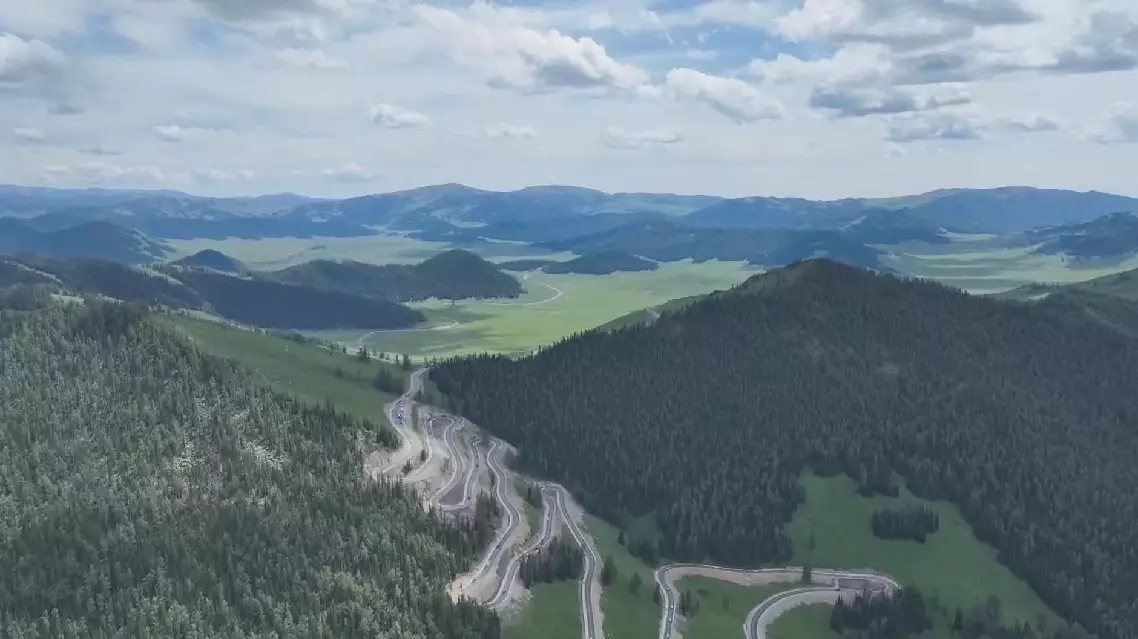
New highway opens to traffic in Xinjiang