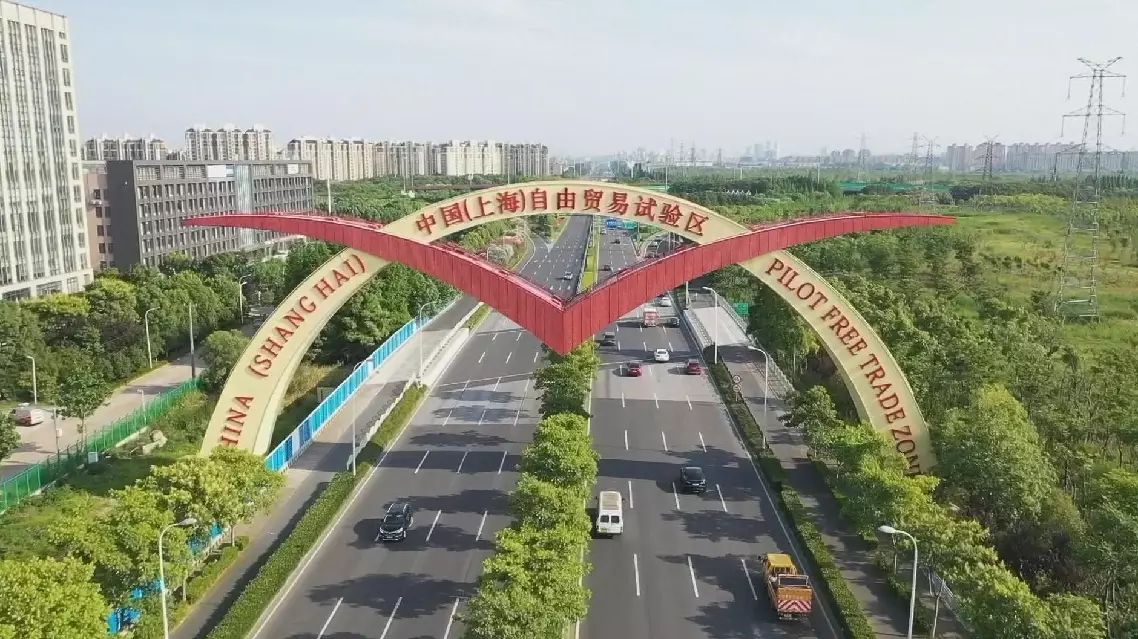
China will replicate 77 pilot measures from the China (Shanghai) Pilot Free Trade Zone (FTZ) in other FTZs and across the country, among efforts to align with high-standard international economic and trade rules and advance high-level institutional opening-up, according to a State Council circular released on Thursday.
The measures span seven key areas: services trade, goods trade, digital trade, intellectual property protection, government procurement reform, behind-the-border management systems reform, and risk prevention and control.
Of the overall package, 34 measures will be extended to other FTZs across the country, including those related to innovation in digital-yuan application scenarios, optimized cross-border fund management for multinational corporations, and data-export negative list mechanisms.
The remaining 43 measures will be implemented nationwide, covering cross-border electronic payment applications, commercial encryption certification recognition, data security management certification, government data transparency, and digital government procurement platforms.
"The reform pilot measures being replicated in wider areas this time are characterized by their broad coverage, substantial breakthroughs, and high substantive value. They encompass traditional areas of international high-standard economic and trade rules, such as trade and investment, as well as emerging fields including intellectual property protection, environmental standards, labor protection, state-owned enterprise reform, government procurement, digital trade, and finance. The majority of these measures represent breakthroughs in existing regulatory frameworks or fill critical institutional gaps, effectively reducing institutional transaction costs and generating significant economic and social benefits," said Cui Weijie, vice president of the Chinese Academy of International Trade and Economic Cooperation.
The initiative builds on a November 2023 plan that positioned the Shanghai pilot FTZ as a pioneer in aligning with high-standard international economic and trade rules, establishing it as a national demonstration zone for institutional opening-up.
After more than a year of pilot testing, Shanghai has created leading and landmark institutional innovations and valuable best practices, the circular said.
Authorities are instructed to implement these measures based on local conditions, prioritizing those most urgently needed by businesses and the public, with the aim of extending the benefits of institutional innovation to broader areas.
The circular emphasized that these efforts support China's strategy of leveraging high-level institutional opening-up to drive deeper reforms and high-quality development.
"The expanded application of these pilot measures primarily target areas where market entities have expressed strong demand for reform, involving concrete initiatives in intellectual property, cross-border data flows, state-owned enterprise reform, and some other key sectors. With wider adoption of these measures, we can amplify the benefits of reform and opening-up across a broader scope, further stimulating the vitality of market entities," said Cui.
China to replicate Shanghai pilot FTZ measures nationwide