China-Senegal relations are in excellent shape because they are built on shared principles and values, said Senegalese Prime Miniter Ousmane Sonko.
In an interview with China Media Group (CMG) released on Friday, Sonko, who was in China for the 2025 Summer Davos, said the two visits taken by President Faye and he himself to China within one year show Senegal values its relationship with China.
"Our relations are excellent. It is no coincidence that President Faye chose China as the destination of his first state visit. For me, as Prime Minister, this is also my first official visit outside the African continent, and I came to China. Our two visits took place one year apart. That alone demonstrates the importance we attach to this relationship," he said.
Sonko noted that the importance placed on the bilateral partnership is mutual, and emphasized the importance of shared principles and values in forging bilateral relations.
"On the Chinese side, I have seen the same level of importance placed on this partnership. Our relations are in excellent shape because they are built on shared principles and values—and that is what matters most in such relationships," he said.
He also spoke about the two countries' close coordination on global issues and their shared positions in international forums, and expressed confidence in deepening cooperation between the two countries.
"On the international stage, we often share the same positions on global issues within international institutions, and we coordinate closely in multilateral forums. This reflects the depth of solidarity, cohesion, and alignment between China and Senegal, and more broadly, between China and Africa. We will continue working together to further strengthen this productive partnership," he said.
The three-day 2025 Summer Davos Forum, held in north China's Tianjin Municipality in late June, attracted over 1,700 influential figures from more than 90 countries and regions to discuss how entrepreneurship and emerging technologies can unlock dynamic and resilient economies.

China-Senegal relations built on shared principles, values: Senegal's PM

China-Senegal relations built on shared principles, values: Senegal's PM
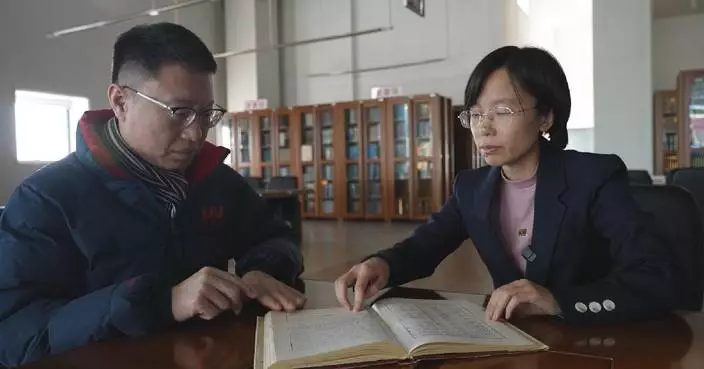
A video featuring a former member of Unit 731, a notorious Japanese germ-warfare unit during World War II (WWII), was released on Thursday in northeast China's Harbin, revealing details of how the unit used meteorological data to conduct horrific bacterial experiments on human beings.
The video was released by the Exhibition Hall of Evidence of Crimes Committed by Unit 731 of the Japanese Imperial Army, in which former Unit 731 member Tsuruo Nishijima detailed how the unit used meteorological data to carry out a bacterial dispersal experiment.
The video was recorded in 1997 by Japanese scholar Fuyuko Nishisato and donated to the exhibition hall in 2019, according to the hall, which was built on the former site of the headquarters of Unit 731 in Harbin, the capital city of Heilongjiang Province.
Jin Shicheng, director of the Department of Publicity, Education and Exhibition of the exhibition hall, said that Nishijima joined Unit 731 in October 1938 and served in the unit's meteorological squad. The squad was not a simple observation section but rather an auxiliary force supporting the unit's field human experiments by measuring wind direction, wind speed, and other conditions to ensure optimal experimental results, according to Jin.
Nishijima confirmed in the footage that "the meteorological squad had to be present at every field experiment." He testified to the "rainfall experiments" conducted by Unit 731, which involved aircraft releasing bacterial agents at extremely low altitudes.
At a field-testing site in Anda City, Heilongjiang, Unit 731 aircraft descended to about 50 meters above the ground. They sprayed bacterial culture liquids onto "maruta" -- human test subjects -- who were tied to wooden stakes. Each experiment involved about 30 people, spaced roughly 5 meters apart. After the experiments, the victims were loaded into sealed trucks and transported back to the unit, where their symptoms and disease progression were recorded over a period of several days.
"Unit 731's bacterial weapons were dropped by aircraft from a height of 50 meters in the open air. Therefore, the meteorological squad needed to observe wind direction and speed, which directly affected the precision and accuracy of the bacterial weapons deployment," said Jin.
Nishijima recounted the harrowing experience of the human test subjects.
"They were fully aware that inhaling the substances would certainly lead to death, so they closed their eyes and held their breath to avoid breathing them in. Their resistance prevented the experiment from proceeding. To compel them to comply, they were forced at gunpoint to open their mouths and lift their heads," said Nishijima.
These experiments, disguised as "scientific research," were in fact systematic tests of biological warfare weapons conducted by the Japanese military. The data generated from these inhumane activities became "research findings" shared among the Japanese army medical school, the medical community, and the military at large.
"At that time, the entire Japanese medical community tacitly approved, encouraged, and even participated in the criminal acts of Unit 731. The unit comprised members from Japan's medical and academic sectors who served the Japanese war of aggression against China. Thus, Unit 731 was not just a military unit but represented an organized and systematic criminal enterprise operating from the top down," said Jin.
Unit 731 was a top-secret biological and chemical warfare research base established in Harbin as the nerve center for Japanese biological warfare in China and Southeast Asia during WWII.
At least 3,000 people were used for human experiments by Unit 731, and Japan's biological weapons killed more than 300,000 people in China.

Video offers details of Japan's germ-warfare crimes in northeast China