Skip to Content Facebook Feature Image

BRICS countries represent Global South as future of growth: UAE trade official

China

China

China

BRICS countries represent Global South as future of growth: UAE trade official

2025-07-05 17:31 Last Updated At:07-06 01:07

As the BRICS group expands, its increasingly diverse member nations continue to play a vital role in driving global economic growth, said a UAE official.

Brazil will host the 2025 BRICS Summit from July 6 to 7 in Rio de Janeiro. The gathering will focus on tackling global challenges and strengthening economic and strategic cooperation among member nations.

The United Arab Eremites was one of six emerging economies to join the BRICS mechanism as a full member in 2024.

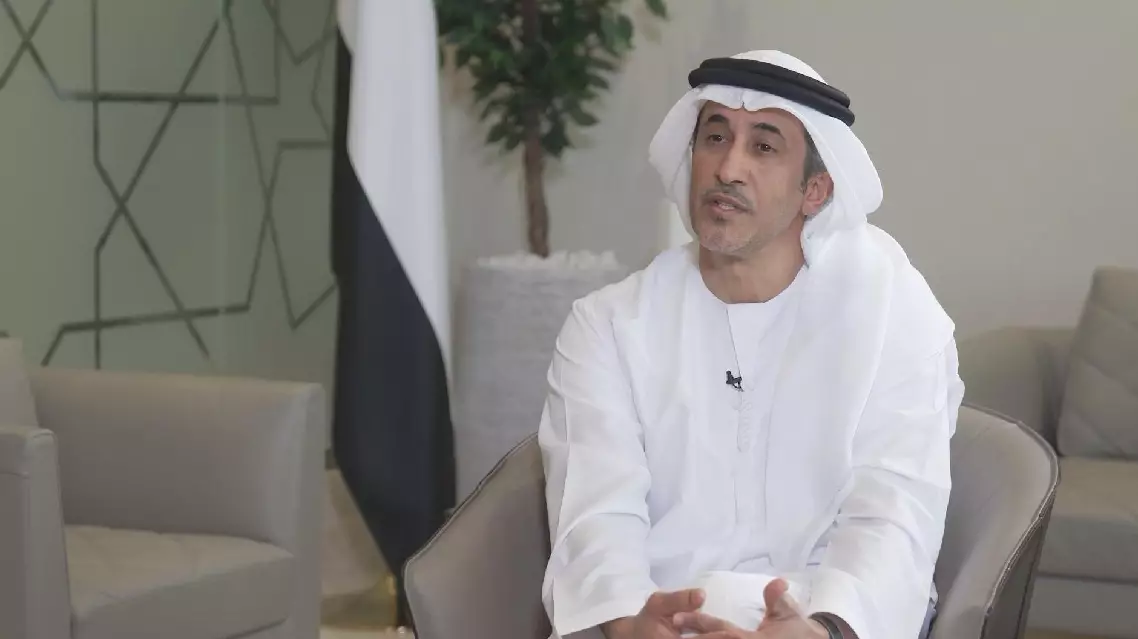
Saeed Al-Hajeri, UAE Assistant Minister for Economic and Trade Affairs, said in an interview with China Global Television Network (CGTN) that BRICS contributes to global economic development and strengthens cooperation among Global South countries.

"If you look at GDP growth over the next 10 years, those economies (of BRICS countries) are growing above the GDP of global economies. Economically they are a large group and they represent a very diverse group of different economies, and another way of looking at diverse strategies, where you can look at Global South as the future of growth. It's a very powerful group," he said.

The 2025 BRICS Summit is being held under the theme of strengthening Global South cooperation for more inclusive and sustainable governance, as laid out by the host country.

"The focus for Brazil, as they also are hosting COP30, is more on sustainability and inclusivity of global players in different fields plus the theme of global economics. For us as the UAE, it links very well to UAE strategies when it comes to those two teams, and then you can add to that the cultural link between the diversity of all these countries, so Brazil is playing a critical role on these three teams," said the assistant minister.

Originally composed of Brazil, Russia, India, China, and South Africa, the group has expanded significantly, including the addition of ten partner countries. According to Al-Hajeri, this growth stands to enhance development prospects for the Global South.

"We see this group as an opportunity for enhancing openness of trade, looking at diverse investment opportunities, and also from a sustainability point of view, the global South and these economies offer so many opportunities that have been neglected for a long time and the UAE is all about that. The UAE is all about openness, UAE is all about logistic connection with the rest of the world, and that has reflected in UAE strategies of signing so many CEPAS -- we have done close to 26 CEPAs around the world. We're utilizing groups like this to encourage trade, encourage openness and looking for opportunities to utilize groups like this to send these messages across. UAE is open for business, UAE is looking to diversify their economies and utilize our companies to reach out globally," he said.
BRICS countries represent Global South as future of growth: UAE trade official

BRICS countries represent Global South as future of growth: UAE trade official
The Iranian government is focusing on public concerns and maintaining stable supplies of essential goods amid recent protests, Iranian President Masoud Pezeshkian said in a televised interview on Sunday.

In the city of Karaj, northwest of the capital Tehran, daily life has largely continued as normal. A video filmed by a local resident on Sunday shows food stores open and grocery shelves fully stocked.

"This is the block near my home, and there are some food stores here. Daily life continues here. Last night we did not see many protests in Karaj. Right now the city is very safe. This is a grocery store close to my home. All the food is available; nothing is in shortage. Here are noodles and different types of beans. Here are dairy products, cheese, and yogurt. I also checked other grocery stores and didn't see any shortages. Everything is available," said local resident Ali Reza.

Iranian officials have described recent disturbances as acts orchestrated by the "enemy," including some carried out by well-trained and armed "terrorists." The incidents have caused casualties among security personnel and civilians, as well as property damage.

The Secretary of Iran's Supreme National Security Council Ali Larijani has directed authorities to severely punish the "terrorists."

Meanwhile, Iran's police chief Ahmad-Reza Radan said on Sunday that the police had raised alert levels and arrested several leaders of the troublemakers during the operations on Saturday.

President Pezeshkian noted in the interview that the normal demands of the Iranian people are reasonable and justified, but they must realize that triggering riots and carrying out terrorist acts are the enemy's attempts to undermine the country. He urged the public to remain vigilant.

Also on Sunday, Iranian Parliament Speaker Mohammad Baqer Qalibaf warned that Tehran would regard U.S. and Israeli bases and facilities in the Middle East as "legitimate targets" if Washington takes military action against Iran. His remarks followed media reports saying U.S. President Donald Trump is "seriously considering authorizing a strike" against Iran.

Iranian state media reported that at least 109 members of Iran's security forces have been killed in clashes since the protests began 14 days ago. Meanwhile, human rights groups based outside the country said the number of protesters killed has exceeded 200, though the figure could not be independently verified.

The protests initially erupted over a sharp depreciation of the rial and sweeping subsidy reforms. Iranian authorities have blamed the unrest on foreign-linked agents and sanctions imposed by the United States.

Iranian president says government focusing on ensuring supplies amid protests

Iranian president says government focusing on ensuring supplies amid protests

Recommended Articles