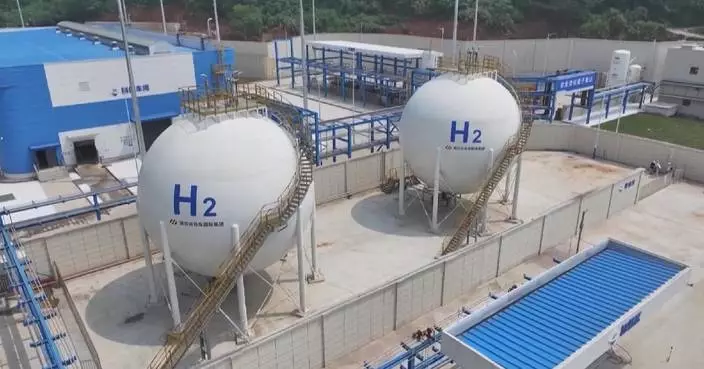
The 2025 the Shanghai Cooperation Organization (SCO) Film Festival concluded in China's Chongqing Municipality on Sunday, with multiple supportive policies released in a bid to boost the China's film-making industry.
The film festival, held from Thursday to Monday, attracts filmmakers from Russia, Belarus, Pakistan and other SCO member states to present films of their respective countries.
The event also gathered over 40 domestic film enterprises to present the latest advancements in film technology and production.
The policies rolled out at this year's SCO Film Festival are designed to nurture and empower film-making entities.
They offer subsidies for company establishment and facility construction, and provide comprehensive support across multiple areas, including script creation and trading, film distribution and screening, technological innovation, and talent attraction and development.
To encourage companies in China to produce films in Chongqing, subsidies will be provided for both the service fees incurred during filming and the technical services in post-production.
The maximum cumulative subsidy for a single project can reach up to 35 percent.
Thanks to these policies, 23 major film and television projects, as well as 19 TV drama projects, have been signed in Chongqing. These projects cover cutting-edge fields, including digital production, smart imaging, prop library construction, and artificial intelligence (AI) empowerment centers.
"The policies released this time are more targeted, which strengthened our determination to bring our subjects to Chongqing," said Xu Shenjun, head of a film-making company.
"This is a good opportunity, so we'll seize it. We're planning to start filming a movie in October and will begin collaborating with Yongchuan," said Liu Liming, head of another film-making company.
With the theme "Technology and Film, Charm of the SCO," the film festival, spans five days and features forums on international cooperation, tech exhibitions, tourism initiatives, and drone light shows.
Highlights of the film festival also include screenings of dozens of outstanding films from SCO member countries and the announcement of winners of the Jinshancha (Golden Camellia) Awards at the closing ceremony on Sunday.
This year marks the 130th anniversary of world cinema and the 120th anniversary of Chinese cinema. The SCO Film Festival stands as a key cultural event alongside the SCO Summit, offering a powerful platform for storytelling, collaboration and mutual understanding.

SCO Film Festival concludes in Chongqing
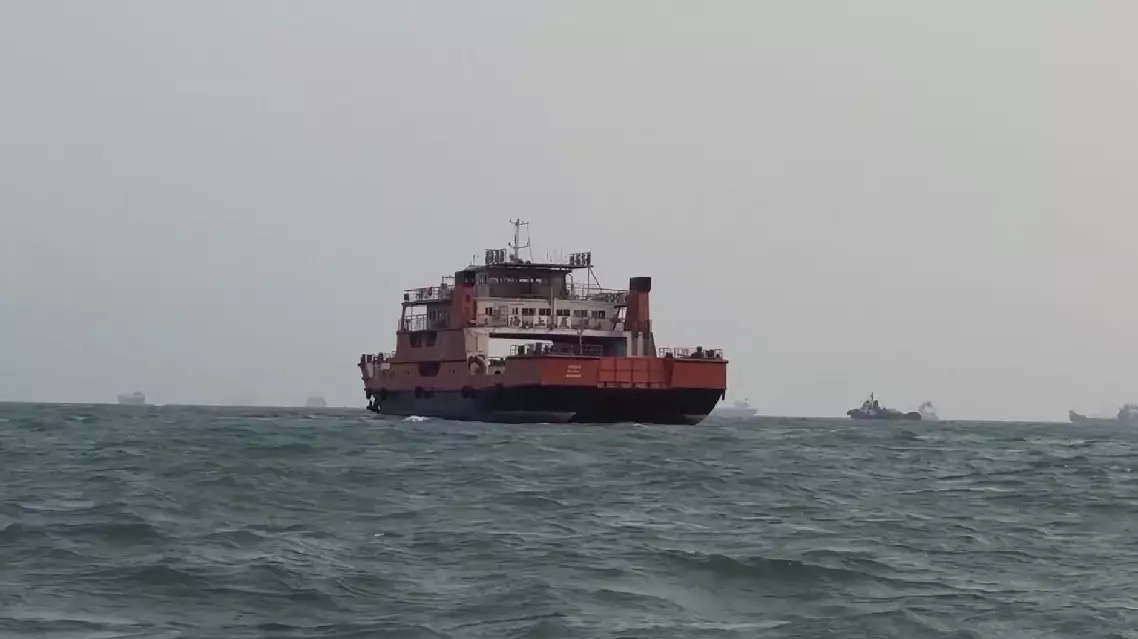
A top Iranian security official has said that the United States has accepted some of Iran's seven conditions for reopening the Strait of Hormuz, while uncertainty remains over Tehran's other terms, according to local media on Sunday.
In an interview with state-run Press TV, which was published on Sunday, Secretary of Iran's Supreme National Security Council Mohsen Rezaei elaborated on the latest messages and proposals exchanged between Tehran and Washington to cease hostilities and reopen the Strait of Hormuz.
"Over the past two months, `the Americans have requested us through three different channels, namely Pakistan, Qatar and even Iraq, to submit our proposals to them. We announced seven conditions to the Americans and explicitly told them that the Strait of Hormuz will not be opened to them and there will be no negotiation unless these conditions are met," Rezaei said.
"The Americans have now responded to us. In their response, they have accepted some of our conditions while some others' situation remains unclear and there exist some ambiguities," he added.
He also said that if the United States launches another "aggression" against Iran, its assets, including key data systems and artificial intelligence (AI) sensors, in the West Asia region will be targeted.
He noted that the United States possesses many highly valuable assets in the United Arab Emirates and around the Strait of Hormuz, which Iran has not yet included among its targets, warning that if the war erupts again, many of the cables, data centers, AI facilities, and other sites in the region will be destroyed.
He underlined that Iran will not return to its previous diplomatic norms, but will never completely abandon diplomacy, saying the country will be the side to determine the confrontation's end, and will continue to resist until all its "legitimate" demands are met.
On Feb 28, Israel and the United States launched joint attacks on Tehran and other Iranian cities. Iran responded with waves of missile and drone attacks targeting Israel and U.S. bases and assets in the region, and tightened its grip on the Strait of Hormuz.
A ceasefire was achieved between the warring parties on April 8. On June 18, Iran and the United States signed a memorandum of understanding (MoU) on ending the war in the region on all fronts.
Under the MoU, the two countries were scheduled to hold negotiations within 60 days, ending on Aug 17, to reach a final agreement on Iran's nuclear program and the removal of sanctions. However, the two sides failed to make sufficient progress toward a deal as tensions continued to escalate.
U.S. accepts some of Iran's conditions, status of others remains unclear: security official