NEW YORK (AP) — The clock is ticking closer to U.S. President Donald Trump's latest tariff deadline of Aug 1. And while several more deals — or at least frameworks for deals — have been reached since his last tariff deadline of July 9 came and went, trade talks with many countries are still in flux.
Trump unveiled sweeping import taxes on goods coming into the U.S. from nearly every country back in April. That included heightened so-called reciprocal rates for certain countries, the bulk of which have since been postponed twice.
The first 90-day pause arrived in an apparent effort to quell global market panic and facilitate country-by-country negotiations, with the Trump administration at one point setting a lofty goal of reaching 90 trade deals in 90 days.
But three months later, only two deals emerged: with the U.K. and Vietnam. A separate “framework” for a deal was hashed out with China. And by early July, Trump began sending warning letters that higher tariffs would be imposed against dozens of countries on Aug. 1.
Since then, the U.S. has announced more trade frameworks. But, many key details remain sparse — or not immediately captured in writing.
Here's what we know about the agreements so far, in the order of those most recently announced.
The U.S. and Pakistan reached a trade agreement expected to allow Washington to help develop Pakistan’s largely untapped oil reserves and lower tariffs for the South Asian country, officials from both nations said Thursday.
Officials did not specify where the exploration would take place — and in a post on his Truth Social platform, Trump said "we are in the process of choosing the oil company that will lead this partnership.”
Pakistan’s Prime Minister Shehbaz Sharif welcomed the “long-awaited” deal and thanked Trump for playing a key role in finalizing it. Pakistan’s Finance Ministry said the agreement aims to boost bilateral trade, expand market access, attract investment and foster cooperation in areas of mutual interest.
The deal includes a reduction in reciprocal tariffs, particularly on Pakistani exports to the U.S., the statement from the ministry said. A new figure wasn’t immediately provided.
Trump on Wednesday said the U.S. reached an agreement with Seoul on July 30 that would impose a 15% tariff for goods from South Korea.
The two countries have also agreed for South Korea to buy $100 billion in energy resources from the U.S. and for South Korea to give to the U.S. $350 billion for “investments owned and controlled by the United States, and selected by myself, as president,” Trump said.
South Korean president Lee Jae Myung later added that the $350 billion investment fund is meant to solidify a foundation for bilateral cooperation on strategic industries — noting that the fund will support South Korean companies' entrance to the U.S. market in areas such as shipbuilding, semiconductors, secondary batteries, biotechnology and energy.
The U.S. and the EU announced a trade framework that imposes 15% tariffs on most European goods — warding off Trump’s most recent threat of 30% if no deal had been reached by Aug. 1.
But some key details require more work. The headline of the agreement, unveiled July 27, is that the 15% tariff rate will apply to 70% of European goods brought into the U.S. — with the EU later confirming that that rate applies to pharmaceuticals, semiconductors, and car and car parts. But the remaining 30% of those imports is still open for negotiations.
European Commission President Ursula von der Leyen said that both sides had agreed to zero tariffs for a range of “strategic” goods. Meanwhile, Trump pointed to heightened investments from European companies in the U.S. — including what Trump said was $750 billion (638 billion euros) worth of natural gas, oil and nuclear fuel over three years, as well as an additional $600 billion (511 billion euros) under a political commitment that isn’t legally binding, officials said.
On July 22, Trump announced a trade framework to impose 15% tariffs on Japan — down from his previously-threatened rate of 25%. The U.S. president also said Japan would invest $550 billion into the U.S. and would “open” its economy to American autos and rice.
The newly-agreed on 15% tariff rate also applies to Japanese cars — marking a welcome relief for automakers like Toyota Motor Corp. and Honda — which, like other automakers, have faced a 25% levy on key parts and finished vehicles going into the U.S. since earlier this year. But car companies in other countries, including U.S. competitors, worry that this could put them at a disadvantage.
Shortly after a July 22 meeting with Philippine President Ferdinand Marcos, Jr., Trump announced that he would lower his upcoming tariffs on imports from the country to 19% — down just 1% from his previous threat of 20%.
In return, Trump said on Truth Social, the U.S. would not pay tariffs on American goods it shipped to the Philippines. But additional details remained unclear. Marcos said his country was considering options such as having an open market without tariffs for U.S. automobiles, but emphasized details were still left to be worked out.
On July 15, Trump again took to social media to announce that he’s agreed to lower his planned tariffs on Indonesian goods to 19% — down from a previously-threatened levy of 32% — while American goods sent to the southeast Asian country will face no tariffs. A fact sheet from the White House later confirmed that “over 99% of U.S. products” exported to Indonesia would be sent duty-free.
Indonesian President Prabowo Subianto said he will continue to negotiate with Trump, in hopes of further lowering the coming U.S. tariffs.
On July 2, Trump announced a trade deal with Vietnam that he said would allow U.S. goods to enter the country duty-free. Vietnamese exports to the U.S., by contrast, would face a 20% levy.
That's less than half the 46% “reciprocal” rate Trump proposed for Vietnamese goods back in April. But in addition to the new 20% tariff rate, Trump said the U.S. would impose a 40% tax on “transshipping’’ — targeting goods from another country that stop in Vietnam on their way to the United States. Washington complains that Chinese goods have been dodging higher U.S. tariffs by transiting through Vietnam.
On May 8, Trump agreed to cut tariffs on British autos, steel and aluminum, among other trade pledges — while the U.K. promised to reduce levies on U.S. products like olive oil, wine and sports equipment. The deal was announced in grandiose terms by both countries, but some key details remained unknown for weeks.
When the deal was announced, for example, the British government notably said that the U.S. agreed to exempt the U.K. from its then-universal 25% duties on foreign steel and aluminum — which would have effectively allowed both metals from the country to come into the U.S. duty-free.
But the timing for when those cuts would actually take effect stayed up in the air for almost a month. It wasn’t until early June, when Trump hiked his steel and aluminum tariffs to a punishing 50% worldwide, that the U.S. acknowledged it was time to implement the agreement. And even then, U.S. tariffs on British steel and aluminum did not go to zero. The U.K. was the only country spared from Trump’s new 50% levies, but still faces 25% import taxes on the metals.
At its peak, Trump’s new tariffs on Chinese goods totaled 145% — and China’s countertariffs on American products reached 125%. But on May 12, the countries agreed to their own 90-day truce to roll back those levies to 30% and 10%, respectively. And in June, details began trickling in about a tentative trade agreement.
U.S. Treasury Secretary Scott Bessent said that China had agreed to make it easier for American firms to acquire Chinese magnets and rare earth minerals critical for manufacturing and microchip production. Meanwhile, the Chinese Commerce Ministry said that the U.S. would “lift a series of restrictive measures it had imposed on China."
Other key details of the deal remain murky — including the timing of implementation for these terms. On July 29, China’s top trade official said the two sides had agreed to work on extending an Aug. 12 deadline for new tariffs on each other, following a two-day trade meeting in Stockholm. The U.S. side said extension plans were discussed, but not decided.
Associated Press reporters from all over the world contributed to this report.
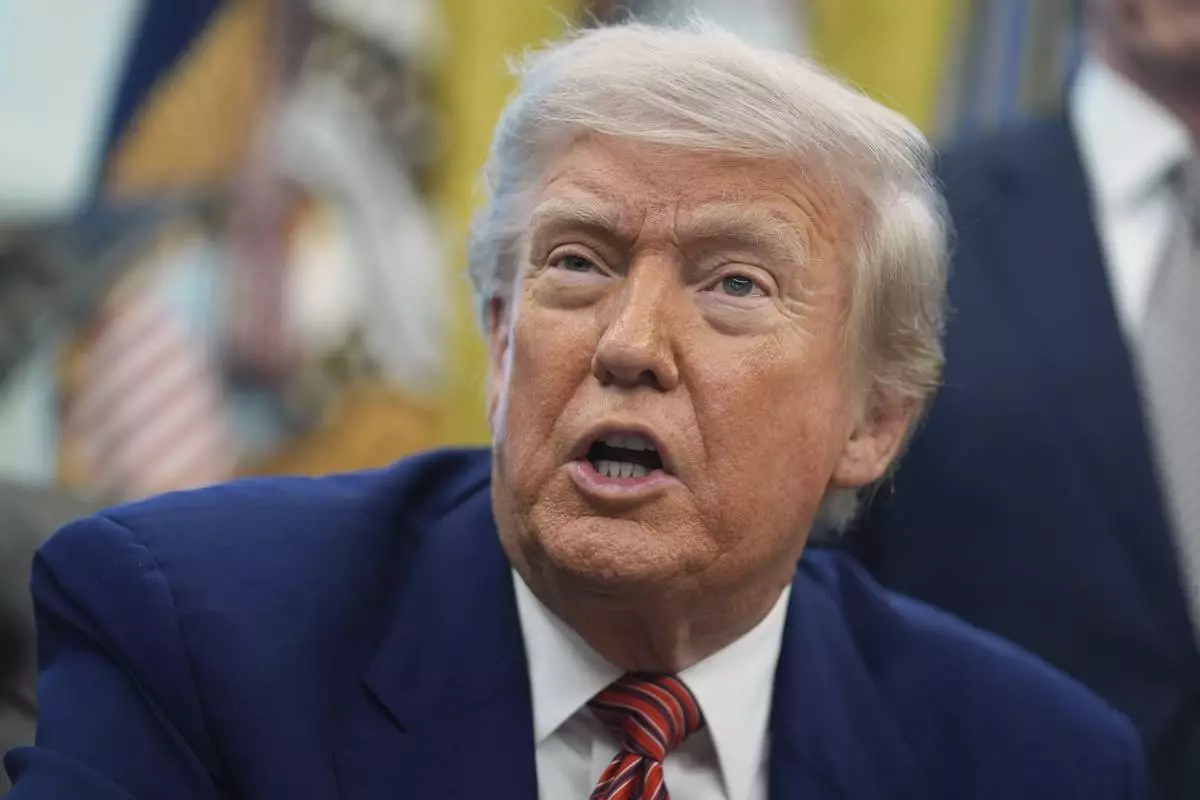
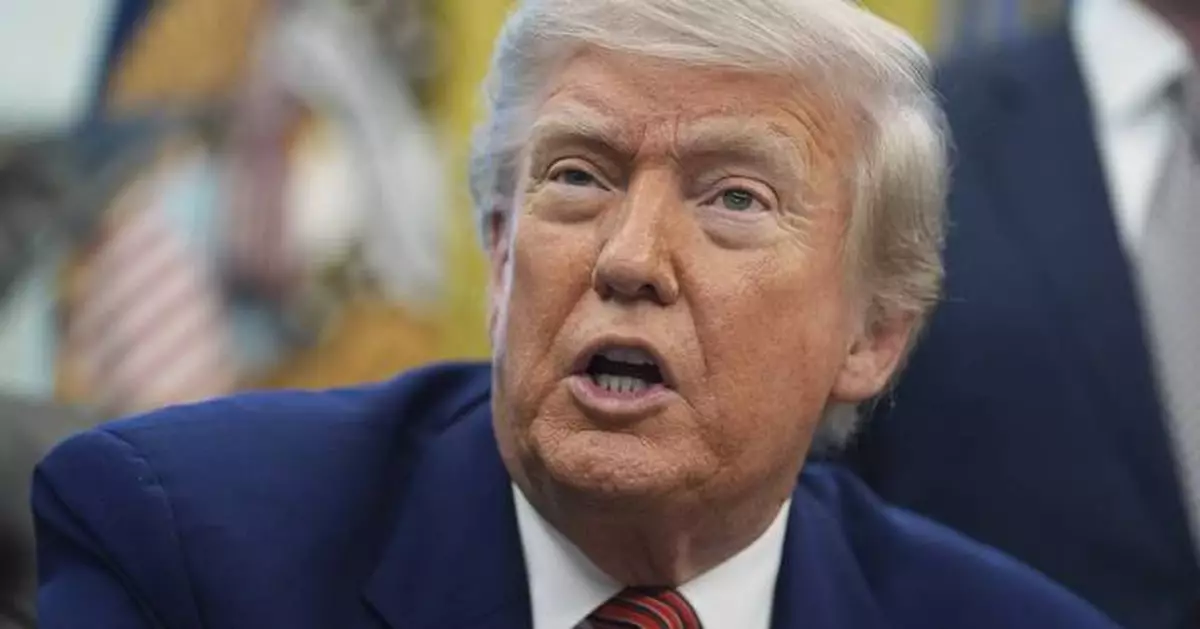
FILE - President Donald Trump speaks to reporters in the Oval Office of the White House, May 23, 2025, in Washington. (AP Photo/Evan Vucci, File)
A group of Buddhist monks and their rescue dog are striding single file down country roads and highways across the South, captivating Americans nationwide and inspiring droves of locals to greet them along their route.
In their flowing saffron and ocher robes, the men are walking for peace. It's a meditative tradition more common in South Asian countries, and it's resonating now in the U.S., seemingly as a welcome respite from the conflict, trauma and politics dividing the nation.
Their journey began Oct. 26, 2025, at a Vietnamese Buddhist temple in Texas, and is scheduled to end in mid-February in Washington, D.C., where they will ask Congress to recognize Buddha’s day of birth and enlightenment as a federal holiday. Beyond promoting peace, their highest priority is connecting with people along the way.
“My hope is, when this walk ends, the people we met will continue practicing mindfulness and find peace,” said the Venerable Bhikkhu Pannakara, the group’s soft-spoken leader who is making the trek barefoot. He teaches about mindfulness, forgiveness and healing at every stop.
Preferring to sleep each night in tents pitched outdoors, the monks have been surprised to see their message transcend ideologies, drawing huge crowds into churchyards, city halls and town squares across six states. Documenting their journey on social media, they — and their dog, Aloka — have racked up millions of followers online. On Saturday, thousands thronged in Columbia, South Carolina, where the monks chanted on the steps of the State House and received a proclamation from the city's mayor, Daniel Rickenmann.
At their stop Thursday in Saluda, South Carolina, Audrie Pearce joined the crowd lining Main Street. She had driven four hours from her village of Little River, and teared up as Pannakara handed her a flower.
“There’s something traumatic and heart-wrenching happening in our country every day,” said Pearce, who describes herself as spiritual, but not religious. “I looked into their eyes and I saw peace. They’re putting their bodies through such physical torture and yet they radiate peace.”
Hailing from Theravada Buddhist monasteries across the globe, the 19 monks began their 2,300 mile (3,700 kilometer) trek at the Huong Dao Vipassana Bhavana Center in Fort Worth.
Their journey has not been without peril. On Nov. 19, as the monks were walking along U.S. Highway 90 near Dayton, Texas, their escort vehicle was hit by a distracted truck driver, injuring two monks. One of them lost his leg, reducing the group to 18.
This is Pannakara's first trek in the U.S., but he's walked across several South Asian countries, including a 112-day journey across India in 2022 where he first encountered Aloka, an Indian Pariah dog whose name means divine light in Sanskrit.
Then a stray, the dog followed him and other monks from Kolkata in eastern India all the way to the Nepal border. At one point, he fell critically ill and Pannakara scooped him up in his arms and cared for him until he recovered. Now, Aloka inspires him to keep going when he feels like giving up.
“I named him light because I want him to find the light of wisdom,” Pannakara said.
The monk's feet are now heavily bandaged because he's stepped on rocks, nails and glass along the way. His practice of mindfulness keeps him joyful despite the pain from these injuries, he said.
Still, traversing the southeast United States has presented unique challenges, and pounding pavement day after day has been brutal.
“In India, we can do shortcuts through paddy fields and farms, but we can’t do that here because there are a lot of private properties,” Pannakara said. “But what’s made it beautiful is how people have welcomed and hosted us in spite of not knowing who we are and what we believe.”
In Opelika, Alabama, the Rev. Patrick Hitchman-Craig hosted the monks on Christmas night at his United Methodist congregation.
He expected to see a small crowd, but about 1,000 people showed up, creating the feel of a block party. The monks seemed like the Magi, he said, appearing on Christ’s birthday.
“Anyone who is working for peace in the world in a way that is public and sacrificial is standing close to the heart of Jesus, whether or not they share our tradition,” said Hitchman-Craig. “I was blown away by the number of people and the diversity of who showed up.”
After their night on the church lawn, the monks arrived the next afternoon at the Collins Farm in Cusseta, Alabama. Judy Collins Allen, whose father and brother run the farm, said about 200 people came to meet the monks — the biggest gathering she’s ever witnessed there.
“There was a calm, warmth and sense of community among people who had not met each other before and that was so special,” she said.
Long Si Dong, a spokesperson for the Fort Worth temple, said the monks, when they arrive in Washington, plan to seek recognition of Vesak, the day which marks the birth and enlightenment of the Buddha, as a national holiday.
“Doing so would acknowledge Vesak as a day of reflection, compassion and unity for all people regardless of faith,” he said.
But Pannakara emphasized that their main goal is to help people achieve peace in their lives. The trek is also a separate endeavor from a $200 million campaign to build towering monuments on the temple’s 14-acre property to house the Buddha’s teachings engraved in stone, according to Dong.
The monks practice and teach Vipassana meditation, an ancient Indian technique taught by the Buddha himself as core for attaining enlightenment. It focuses on the mind-body connection — observing breath and physical sensations to understand reality, impermanence and suffering. Some of the monks, including Pannakara, walk barefoot to feel the ground directly and be present in the moment.
Pannakara has told the gathered crowds that they don't aim to convert people to Buddhism.
Brooke Schedneck, professor of religion at Rhodes College in Memphis, Tennessee, said the tradition of a peace walk in Theravada Buddhism began in the 1990s when the Venerable Maha Ghosananda, a Cambodian monk, led marches across war-torn areas riddled with landmines to foster national healing after civil war and genocide in his country.
“These walks really inspire people and inspire faith,” Schedneck said. “The core intention is to have others watch and be inspired, not so much through words, but through how they are willing to make this sacrifice by walking and being visible.”
On Thursday, Becki Gable drove nearly 400 miles (about 640 kilometers) from Cullman, Alabama, to catch up with them in Saluda. Raised Methodist, Gable said she wanted some release from the pain of losing her daughter and parents.
“I just felt in my heart that this would help me have peace,” she said. “Maybe I could move a little bit forward in my life.”
Gable says she has already taken one of Pannakara’s teachings to heart. She’s promised herself that each morning, as soon as she awakes, she’d take a piece of paper and write five words on it, just as the monk prescribed.
“Today is my peaceful day.”
Freelance photojournalist Allison Joyce contributed to this report.
Associated Press religion coverage receives support through the AP’s collaboration with The Conversation US, with funding from Lilly Endowment Inc. The AP is solely responsible for this content.
Buddhist monks who are participating in the, "Walk For Peace," get lunch Thursday, Jan. 8, 2026, in Saluda, S.C. (AP Photo/Allison Joyce)
Aloka rests with Buddhist monks who are participating in the, "Walk For Peace," Thursday, Jan. 8, 2026, in Saluda, S.C. (AP Photo/Allison Joyce)
A sign is seen greeting the Buddhist monks who are participating in the, "Walk For Peace," Thursday, Jan. 8, 2026, in Saluda, S.C. (AP Photo/Allison Joyce)
Supporters pray with Buddhist monks who are participating in the, "Walk For Peace," Thursday, Jan. 8, 2026, in Saluda, S.C. (AP Photo/Allison Joyce)
Supporters watch Buddhist monks who are participating in the, "Walk For Peace," Thursday, Jan. 8, 2026, in Saluda, S.C. (AP Photo/Allison Joyce)
A Buddhist monk ties a prayer bracelet around the wrist of Josey Lee, 2-months-old, during the, "Walk For Peace," Thursday, Jan. 8, 2026, in Saluda, S.C. (AP Photo/Allison Joyce)
Bhikkhu Pannakara, a spiritual leader, speaks to supporters during the, "Walk For Peace," Thursday, Jan. 8, 2026, in Saluda, S.C. (AP Photo/Allison Joyce)
Buddhist monks participate in the, "Walk For Peace," Thursday, Jan. 8, 2026, in Saluda, S.C. (AP Photo/Allison Joyce)
Bhikkhu Pannakara leads other buddhist monks in the, "Walk For Peace," Thursday, Jan. 8, 2026, in Saluda, S.C. (AP Photo/Allison Joyce)
Audrie Pearce greets Buddhist monks who are participating in the, "Walk For Peace," Thursday, Jan. 8, 2026, in Saluda, S.C. (AP Photo/Allison Joyce)
Bhikkhu Pannakara, a spiritual leader, speaks to supporters during the, "Walk For Peace," Thursday, Jan. 8, 2026, in Saluda, S.C. (AP Photo/Allison Joyce)
Buddhist monks who are participating in the, "Walk For Peace," arrive in Saluda, Thursday, Jan. 8, 2026, in Saluda, S.C. (AP Photo/Allison Joyce)
Buddhist monks who are participating in the, "Walk For Peace," are seen with their dog, Aloka, Thursday, Jan. 8, 2026, in Saluda, S.C. (AP Photo/Allison Joyce)