The descendants of Japanese combatants in China during World War II, who last year knelt in apology to the Chinese people on behalf of their forebears in northeast China's Jilin Province, stressed the crucial need for Japanese people to recognize the atrocities committed by their ancestors and offer sincere apologies as an obligation.
On July 7, 1937, Japanese troops attacked Chinese forces at the Lugou Bridge on the outskirts of Beijing, marking the beginning of Japan's full-scale invasion of China and China's nationwide resistance against the Japanese invaders, initiating a whole-of-nation war effort that opened the main Eastern battlefield in the global war against fascism.
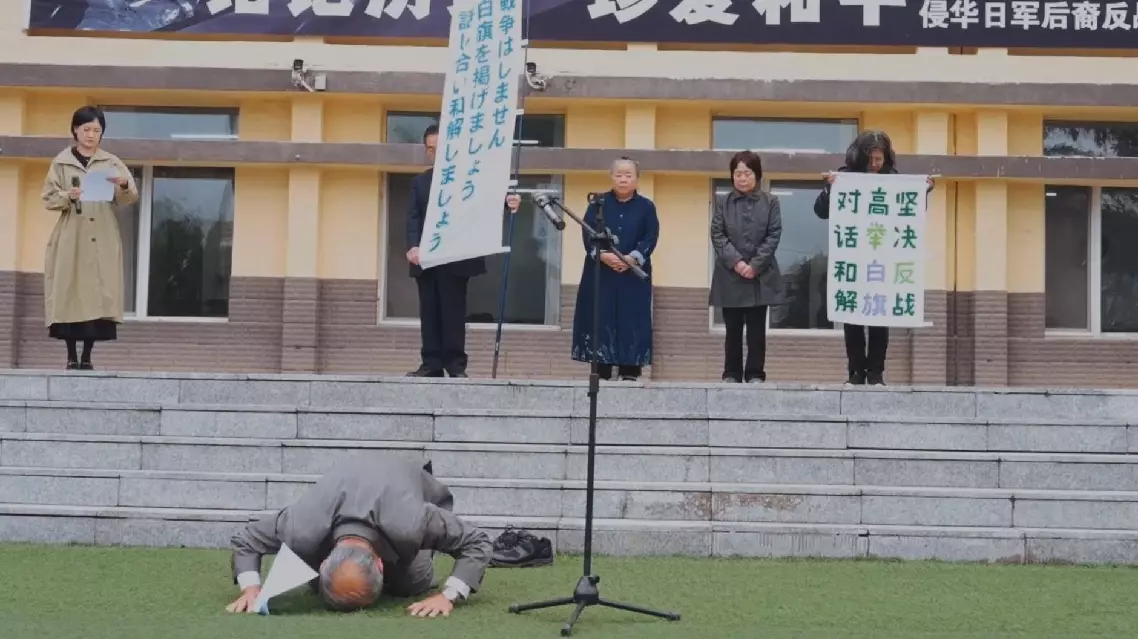
In September 2024, Kuroi Akio, along with five other descendants of Japanese soldiers who had invaded China, came to Gongzhuling City in Jilin Province with historical documents to apologize to the Chinese people on behalf of their fathers.
Kuroi's father, Kuroi Keijirou, participated in two separate campaigns in northeast China in 1932 and 1941. These campaigns included violent acts against civilians, something Kuroi is determined to address and atone for.
"As far as I can remember, my father was always a quiet man who rarely spoke. I hardly ever saw him smile -- he always wore a gloomy expression. I never had any experience of him patting my head or giving me a hug; no affectionate father-son interaction ever passed between us," Kuroi said.
Kuroi recalled watching a video featuring an American veteran of the Vietnam war. The veteran disclosed that he continued to dream about the killing of Vietnamese civilians and woke up screaming in the dead of night.
Kuroi observed that the veteran's harrowing experiences bore a striking resemblance to his father's sorrowful countenance. This led him to believe that his father suffered from the same kind of war trauma.
"Some people have shared with me their experiences of fathers who, due to war trauma, have subjected their families to domestic violence, such as beating or kicking their mothers, or struggling with alcohol abuse. As a matter of fact, in Japan, soldiers who suffered psychological breakdowns due to war were deliberately concealed by the authorities during wartime. I believe that my father also understood that it was the wrong war. I think it is crucial to convey the sentiment of 'I am truly sorry to the Chinese people' to express this feeling," Kuroi said.
During last year's apology ceremony at Gongzhuling Zhanqian Primary School, under the Chinese national flag, Kuroi removed his shoes and socks and knelt down to kowtow before the students.
"For Japanese people, kneeling in apology is considered the most solemn way," Kuroi said.
"At Gongzhuling Zhanqian Primary School, it is the actual ground where many murdered Chinese people are buried, and where the blood of numerous Chinese people has flowed. As a Japanese, I believe that I cannot wear shoes while standing on this land," he said.
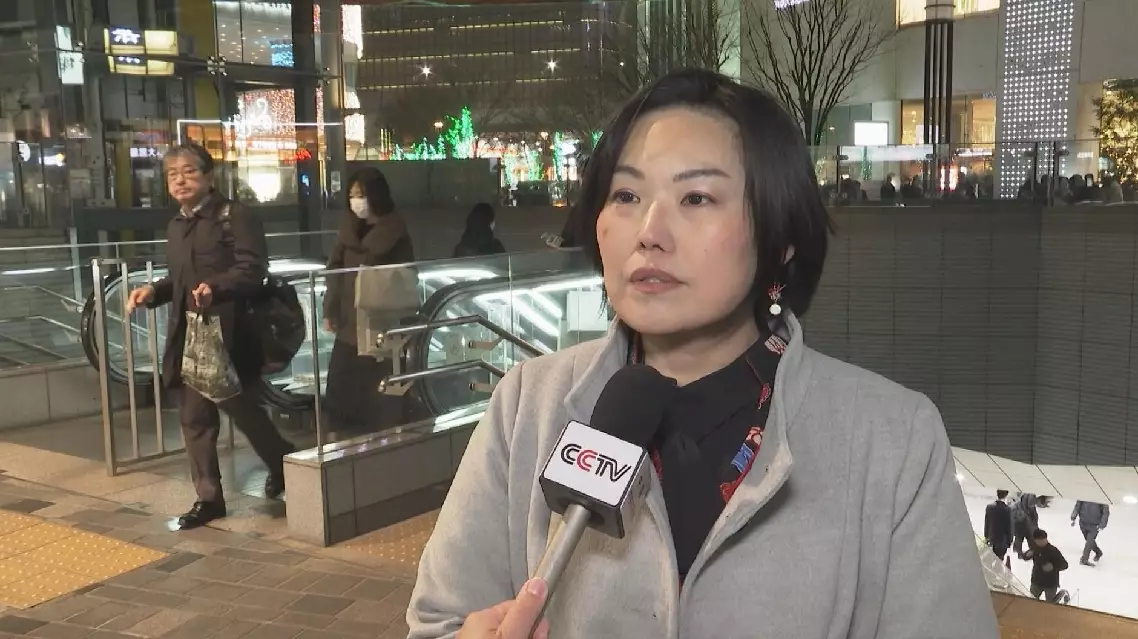
"China is our neighboring country, with which we should live in harmony. We must openly confront the painful facts of the atrocities and aggression committed in the past and sincerely apologize from the bottom of our hearts. I believe this is something that must be done," said Kurokawa Yasuko, another descendant of a WWII Japanese soldier.
During the interview, Kuroi warned about the lack of information in today's education system regarding Japan's wartime invasion of China and other Asian countries.
"Three years ago, I asked a group of children between the ages of six and 10 if Japan had ever been in a war and where it was fought. About 70 children raised their hands, so I asked them one by one. Every child answered 'America,' and not one mentioned any other country. The children knew about the war with the United States and the dropping of atomic bombs on Hiroshima and Nagasaki. However, they didn't know about Japan's invasions of China, the Korean Peninsula, China's Taiwan region, Indonesia, and the Philippines. This is the reality, and that's why the education in Japan is so hopeless," said Kuroi.
Kurokawa also called for better education in Japan about its wartime history, saying it was essential for a properly informed public opinion.
"I think that the lack of war history education is wrong. It's important to teach students the history of Japan's invasion of others in the modern world, otherwise the public opinion of this country will be steered in the wrong direction," she said.
"We hope to create a strong anti-war public opinion in Japan. My activities are called 'micro-power' in Japan, a tiny power indeed, but by gathering voices of support and agreement, such drops of water will become a stream, a river, and eventually an ocean. Without a peaceful future, mankind can't survive. Humanity's future can only be realized through a belief in peace," Kuroi said.
Descendants of Japanese WWII combatants urge apologies, education on wartime atrocities
Descendants of Japanese WWII combatants urge apologies, education on wartime atrocities