Skip to Content Facebook Feature Image

Residents wear masks as volcanic ash blankets villages near erupting Indonesian volcano

News

Residents wear masks as volcanic ash blankets villages near erupting Indonesian volcano
News

News

Residents wear masks as volcanic ash blankets villages near erupting Indonesian volcano

2025-07-08 13:20 Last Updated At:13:41

MAUMERE, Indonesia (AP) — Residents wore masks to protect themselves from thick volcanic ash that blanketed roads and green rice fields in villages in south-central Indonesia as rumbling Mount Lewotobi Laki Laki erupted Tuesday for a second straight day.

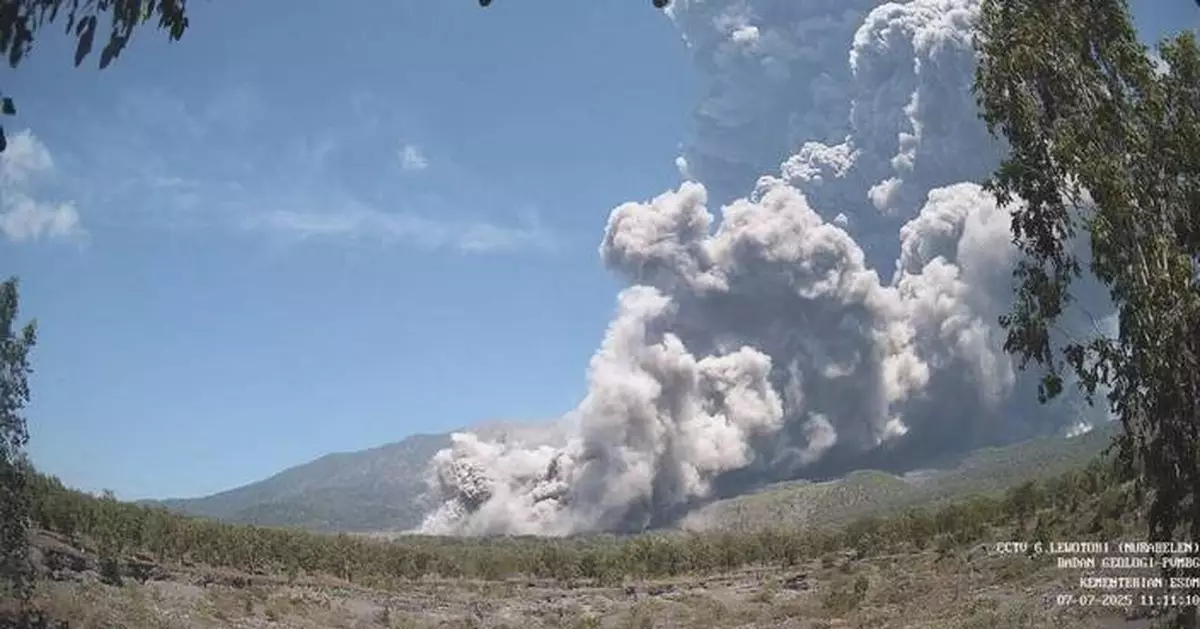
The eruption at dawn sent lava and clouds of ash up to 4 kilometers (2.4 miles) high. That followed an eruption around midday Monday that sent a column of volcanic materials up to 18 kilometers (11 miles) into the sky and an evening burst that spewed lava and send volcanic ash as high as 13 kilometers (8 miles) into the air.

Photos and videos circulating on social media showed terrified residents ran for their lives under the rain of ash and gravel and motorists struggled to drive motorbikes and cars in the reduced visibility as the ash clouds from Monday's eruption expanded into a mushroom shape.

No casualties have been reported from the latest eruptions of the volcano that has been at the highest alert level since June 18 when its no-go zone was expanded to a 7-kilometer (4.3-mile) radius, said Abdul Muhari, the National Disaster Mitigation Agency spokesperson.

“People around the volcano have increasingly understood how to minimize the impact of disaster risks as eruptions became more frequent since the end of 2023,” Muhari said in a statement.

The eruptions of the volcano on on Flores Island affected more than 10,000 people in 10 villages in East Flores and Sikka districts, according to initial assessments by the local disaster management agency.

Thick volcanic ash and rocks were reported to have fallen in villages of Nawakote, Klantanio, Hokeng Jaya, Boru, Pululera and Wulanggitang, where roads and green rice fields were transformed into grey thick mud and rocks, said Very Awales, an public information official at Sikka district administration, adding that schools were closed in those affected areas since Monday to protect students and staff from various hazards due to volcanic activities.

“The smell of sulfur and ash hung so thickly in the air that breathing was painful,” Awales said.

Authorities distributed 50,000 masks and urged residents to limit outdoor activities to protect themselves from volcanic materials. Residents were also urged to be vigilant about heavy rainfall that could trigger lava flows in rivers originating from the volcano.

The eruption of Lewotobi Laki Laki followed its eruption in November 2024 that killed nine people and injured dozens.

The Geology Agency recorded an avalanche of searing gas clouds mixed with rocks and lava traveling up to 5 kilometers (3 miles) down the slopes of the 1,584-meter (5,197-foot) mountain Monday. Observations from drones showed lava filling the crater, indicating deep movement of magma that set off volcanic earthquakes. Volcanic materials, including hot thumb-size gravel, were thrown up to 8 kilometers (5 miles) from the crater.

Muhari said two airports in the cities of Maumere and Larantuka in East Nusa Tenggara province remained closed Tuesday.

Dozens of flights to and from the Ngurah Rai international airport on the resort island of Bali were delayed or canceled, but airport spokesperson Ahmad Syaugi Shahab said the airport was running normally despite the cancellations, as monitoring showed the volcanic ash had not affected Bali’s airspace.

Monday's initial eruption of Lewotobi Laki Laki was one of Indonesia’s largest since 2010 when Mount Merapi, the country’s most volatile volcano, erupted on the densely populated island of Java. That killed 353 people and forced over 350,000 people to evacuate.

Indonesia is an archipelago of more than 280 million people with frequent seismic activity. It has 120 active volcanoes and sits along the “Ring of Fire,” a horseshoe-shaped series of seismic fault lines encircling the Pacific Basin.

Karmini reported from Jakarta. Associated Press journalists Edna Tarigan and Firdia Lisnawati contributed to this report.
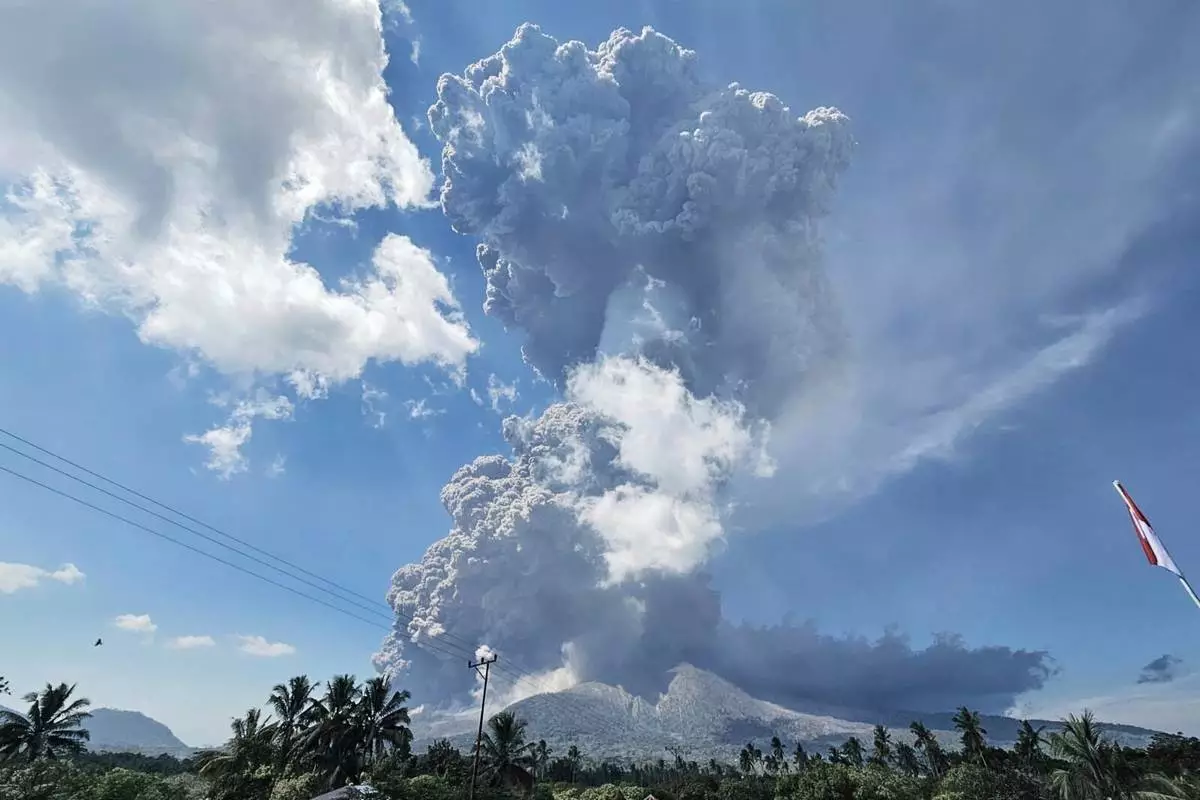
In photo released by Geological Agency (Badan Geologi) of the Indonesia's Ministry of Energy and Mineral Resources, Mount Lewotobi Laki-Laki spews volcanic materials during an eruption in East Flores, Indonesia, Monday, July 7, 2025. (Badan Geologi via AP)
In photo released by Geological Agency (Badan Geologi) of the Indonesia's Ministry of Energy and Mineral Resources, Mount Lewotobi Laki-Laki spews volcanic materials during an eruption in East Flores, Indonesia, Monday, July 7, 2025. (Badan Geologi via AP)

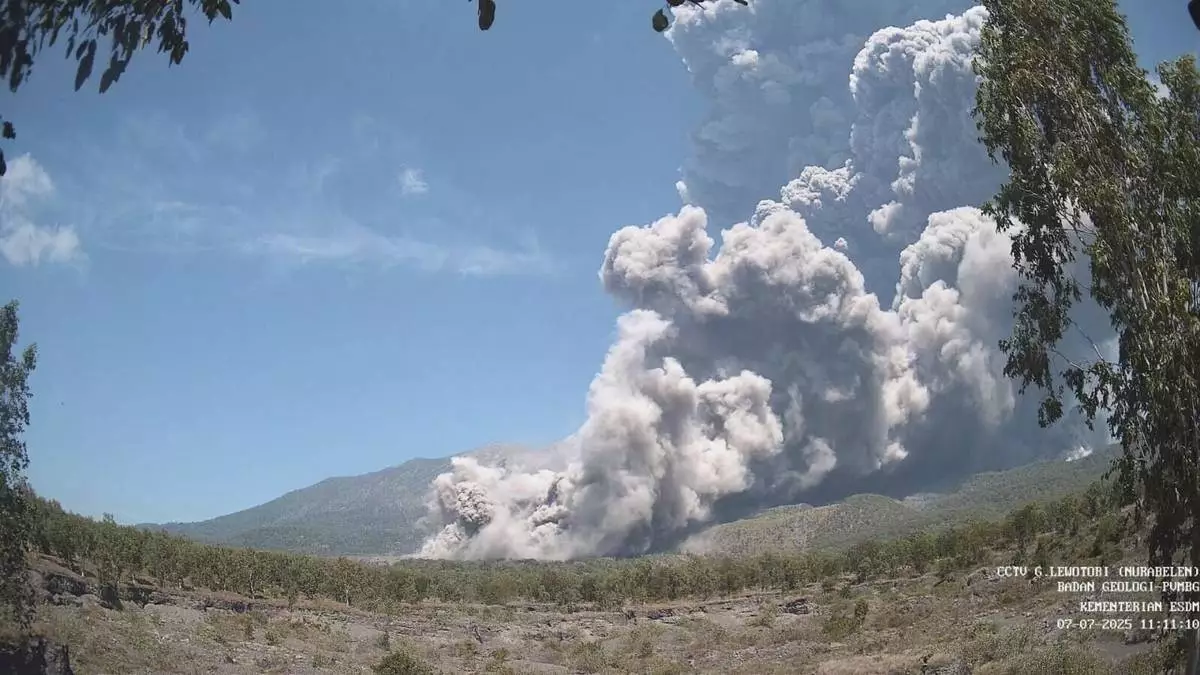
ADDS DETAILS OF THE DIGITAL IMPRINTS AT LOWER RIGHT - In photo released by the Geological Agency (Badan Geologi) of the Indonesia's Ministry of Energy and Mineral Resources, Mount Lewotobi Laki Laki spews volcanic materials during an eruption in East Flores, Indonesia, Monday, July 7, 2025. The watermark at the lower right corner reads: CCTV Mount Lewotobi, Geological Agency, Ministry of Energy and Mineral Resources, with the date and time. (Badan Geologi via AP)

ADDS DETAILS OF THE DIGITAL IMPRINTS AT LOWER RIGHT - In photo released by the Geological Agency (Badan Geologi) of the Indonesia's Ministry of Energy and Mineral Resources, Mount Lewotobi Laki Laki spews volcanic materials during an eruption in East Flores, Indonesia, Monday, July 7, 2025. The watermark at the lower right corner reads: CCTV Mount Lewotobi, Geological Agency, Ministry of Energy and Mineral Resources, with the date and time. (Badan Geologi via AP)
CAIRO (AP) — Iranians began to regain internet access on Wednesday after authorities ended a monthslong shutdown. But users said service was slow and spotty in some areas, with apps like YouTube and Instagram heavily restricted, as they were before the cutoff began during nationwide protests in January.

Authorities justified the outage as a military imperative after the United States and Israel attacked Iran on Feb. 28. Their decision to lift some restrictions this week came as negotiators appeared to be closing in on a more permanent truce. But many Iranians feared access could be cut off again at a moment's notice.

Internet tracking company Netblocks said Iran’s connectivity, which measures the ability of devices to connect to the internet, is at around 86% of capacity from before the cutoff. Internet analysis firm Kentik said internet traffic, which measures the amount of data transferred and is a good illustration of usage, was at around 40%.

Amir Rashidi, an Iranian cybersecurity analyst, said there were still widespread disruptions. “It's too early to say the shutdown is over,” he wrote on X.

Iran’s roughly 90 million people have been cut off from the internet for most of 2026, one of the world’s longest and strictest national shutdowns. Young people with online careers saw their incomes evaporate. Job losses and the closure of online businesses added to the war's steep economic costs.

The cutoff made it difficult for Iranian families to communicate through months of unrest and war. At some points, phone lines were also cut off, though they were later restored.

A woman living in Tehran said that for months she was barely able to speak to her sons living abroad. She couldn't believe authorities had restored access, saying she had assumed they would find some justification to prolong the outage.

A taxi driver said service was restored but weak. He expressed hope it would improve so he could use messaging apps with family and friends. Both spoke on condition of anonymity for security reasons.

Prices spiked during the shutdown, with residents in Tehran at times paying around $7.50 per gigabyte. Prices are back down to around $2.25 for 30 gigabytes, roughly where they were before the protests.

Even then, Iran tightly controlled access to popular social media sites, leading many to rely on virtual private networks, or VPNs. The cost of those workarounds soared during the shutdown, making them unaffordable for many as the economy was battered.

Businesses have started reappearing online, announcing their return with posts on sites like Instagram and Telegram.

A gamer and tech influencer in the central city of Isfahan said the shutdown had caused him to lose a lot of his audience on YouTube and Instagram, where he had spent years building up a large following.

“All my views and interactions are way down. I’ve been erased from the algorithm,” he said in a voice note sent by WhatsApp, adding that his internet connection was still slower than before the shutdown.

“The situation is such that many content producers have had their income reduced to zero, have moved on to other jobs, or have been forced to sell their equipment to survive,” he said. He spoke on condition of anonymity for fear of reprisal.

Iranian authorities first shut down the internet in January during mass anti-government protests that were eventually stamped out in a violent crackdown. Thousands of people were killed and tens of thousands detained.

That cutoff was just starting to ease when the government imposed a complete internet blackout after the start of the war, when U.S. and Israeli strikes killed Iran's supreme leader and other top officials.

The government faced criticism for the prolonged shutdown, which caused even more harm to an economy devastated by inflation, strikes on key industries and a U.S. blockade on Iranian ports.

The internet cutoff cost an estimated $30-40 million daily, with indirect losses likely twice that much, a member of Iran’s Chamber of Commerce, Afshin Kolahi, told a local newspaper last month. About 10 million people have jobs that depend on internet connectivity, according to Communications Minister Sattar Hashemi.

Iranians still had access to a national net, but that has a far narrower reach, and users complained of poor service and heavy censorship. Senior government officials are given SIM cards granting them access to the global internet. Under pressure, the government expanded access to the SIM cards to some professions during the shutdown.

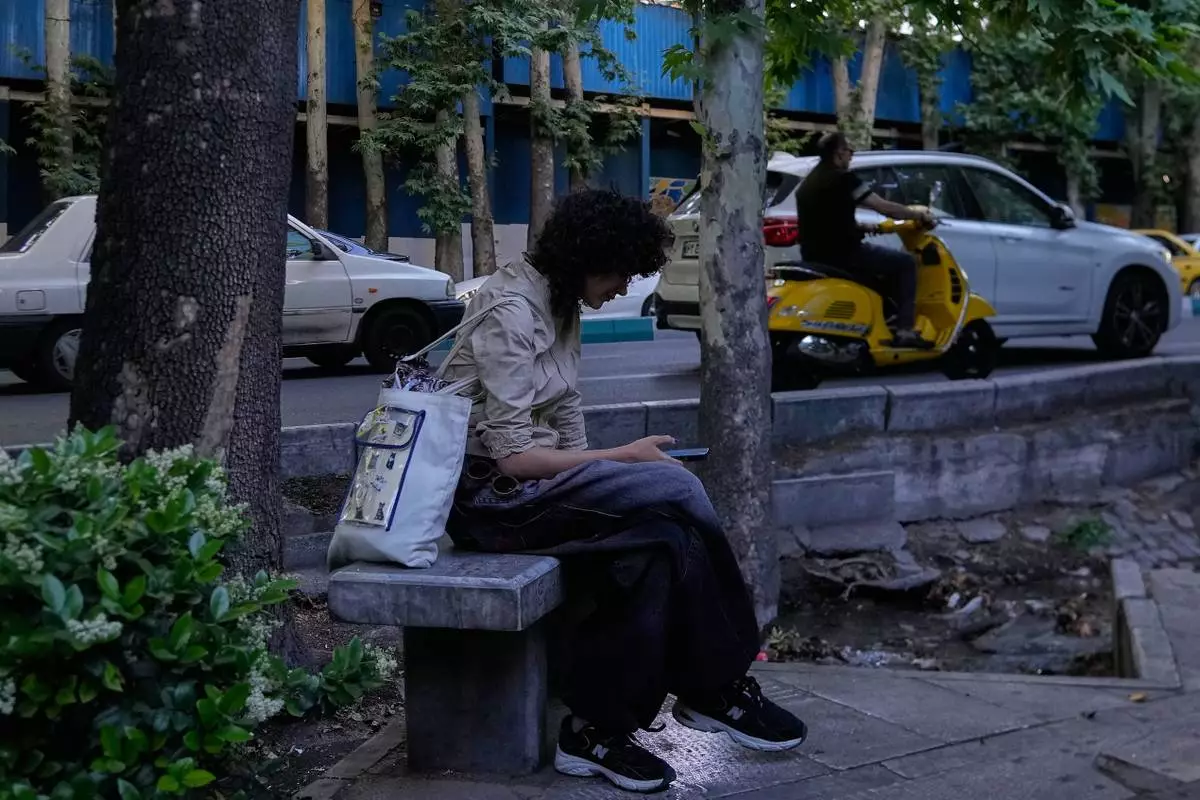
A woman checks her smartphone while sitting on a bench along a sidewalk in northern Tehran, Iran, Tuesday, May 26, 2026. (AP Photo/Vahid Salemi)

A woman checks her smartphone while sitting on a bench along a sidewalk in northern Tehran, Iran, Tuesday, May 26, 2026. (AP Photo/Vahid Salemi)

Recommended Articles