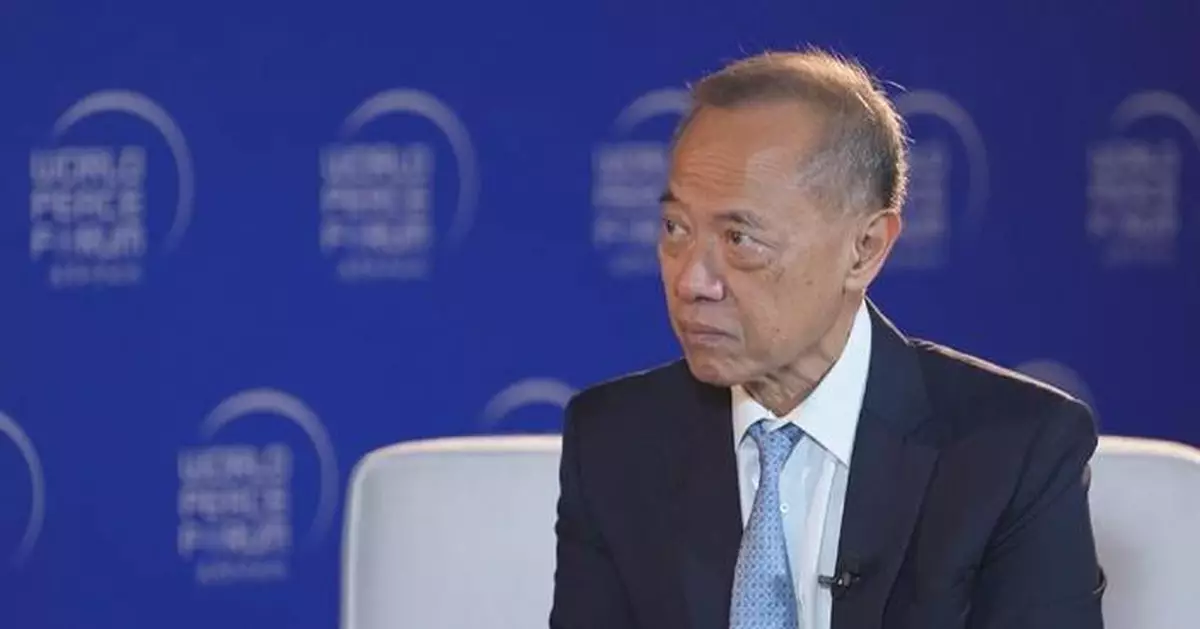
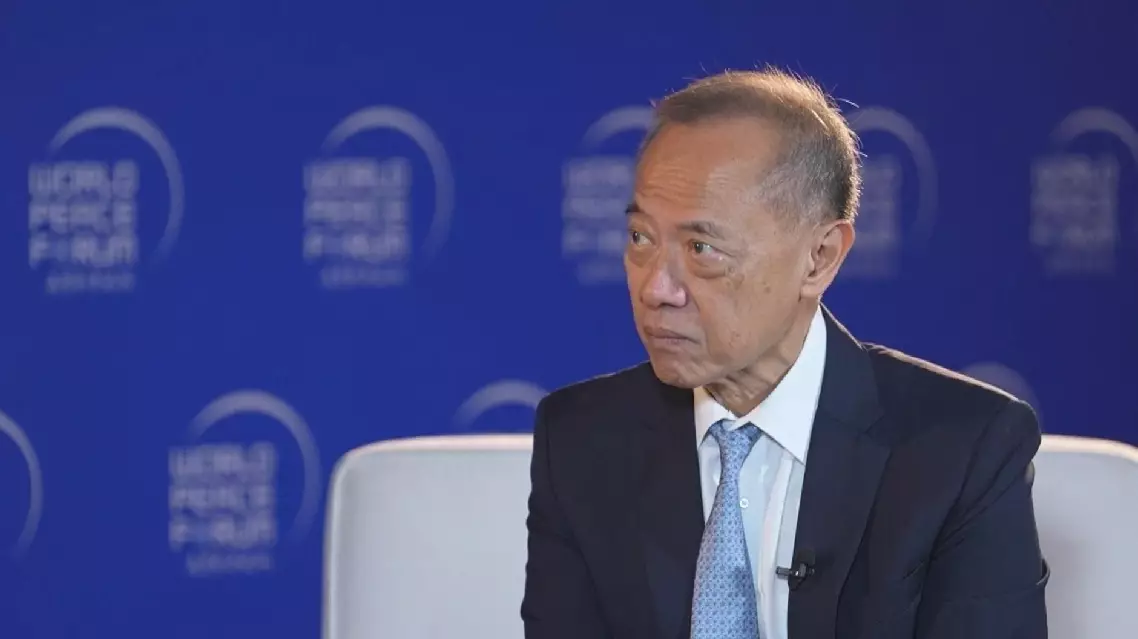
Former Singaporean Foreign Minister George Yeo Yong-Boon expressed his optimism about the resilience of global trade amid confusion and disruption caused the U.S. tariff moves.
Analyzing the potential escalation of the U.S. "reciprocal tariffs" and its impact, Yeo said in an interview with China Global Television Network (CGTN) in Beijing on Friday that U.S. President Donald Trump has abandoned the ideals of free trade because of dampened self-confidence and growing insecurity within the U.S.
"Trump is going back to an old world where there's no WTO (World Trade Organization), where there's no MFN (Most-Favored-Nation), where trade is part of politics, part of relationships. I like you. I need you more. So, we have one regime. I don't like you. You need me more. We have another regime. So, Trump has abandoned all the ideals of free trade. He thinks that this will benefit the U.S. more," he said.
As a founding member of the World Trade Organization, the United States has long claimed to champion free trade. But now its protectionist practices reflect its existential anxiety, Yeo said.
"If you think about it, it is because the U.S. no longer feels the same self-confidence, which it had in the past. When it was 40 percent of the global economy, they set the rules and they said 'Well, you can depoliticize trade.' And that was what the WTO was. But the U.S. is no longer in such a position. And it feels a growing insecurity about itself," he said.
While Trump's policies may create temporary disruptions, trade, much like water, cannot be permanently contained by artificial barriers, Yeo observed.
"Trump doesn't understand that you can change your mind from day to day, but it's a long tail. But this is a phase we are living through. He's there. He's got power. We adjust to it. And as you said earlier, trade is like water, it will always find its way. You can have all the rules you want. But whatever the rules, people will find a way around the rules," he said.
Former Singaporean FM optimistic about global trade
Farmers across the U.S. Midwest, a major agricultural hub with over 200 million acres of cropland, are facing unprecedented challenges as the cost of essential agricultural inputs, particularly diesel and fertilizer, has surged in recent weeks.
This sharp increase is largely attributed to the ongoing U.S.-Israeli war with Iran, which began in late February, and its ripple effects on global markets. The rising expenses are casting a shadow over the upcoming planting season, threatening to erode profitability for many.
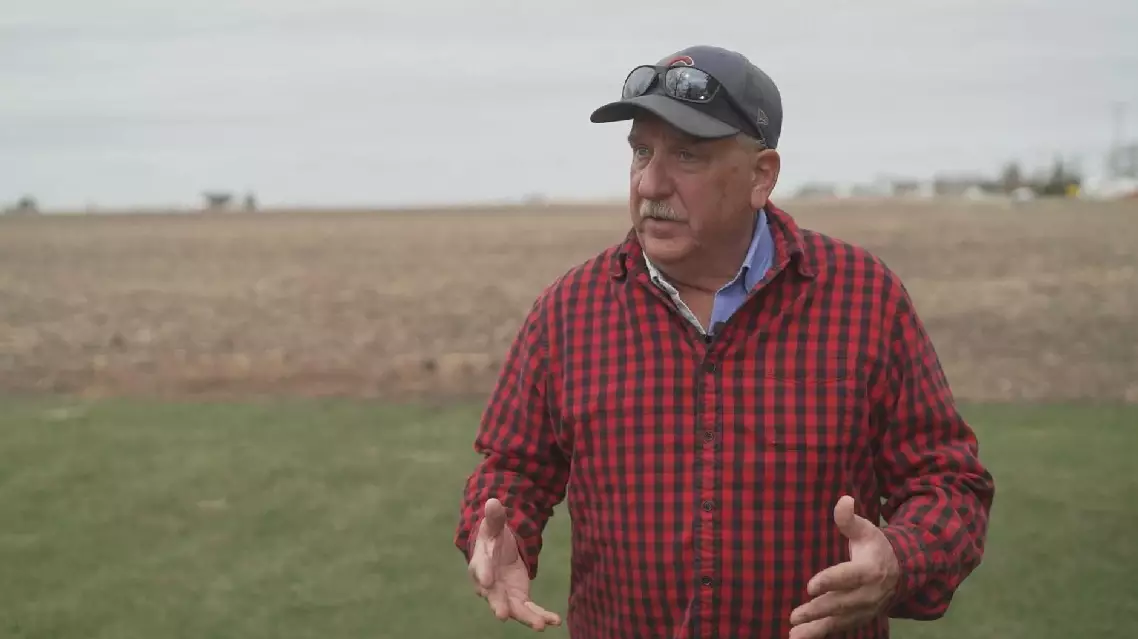
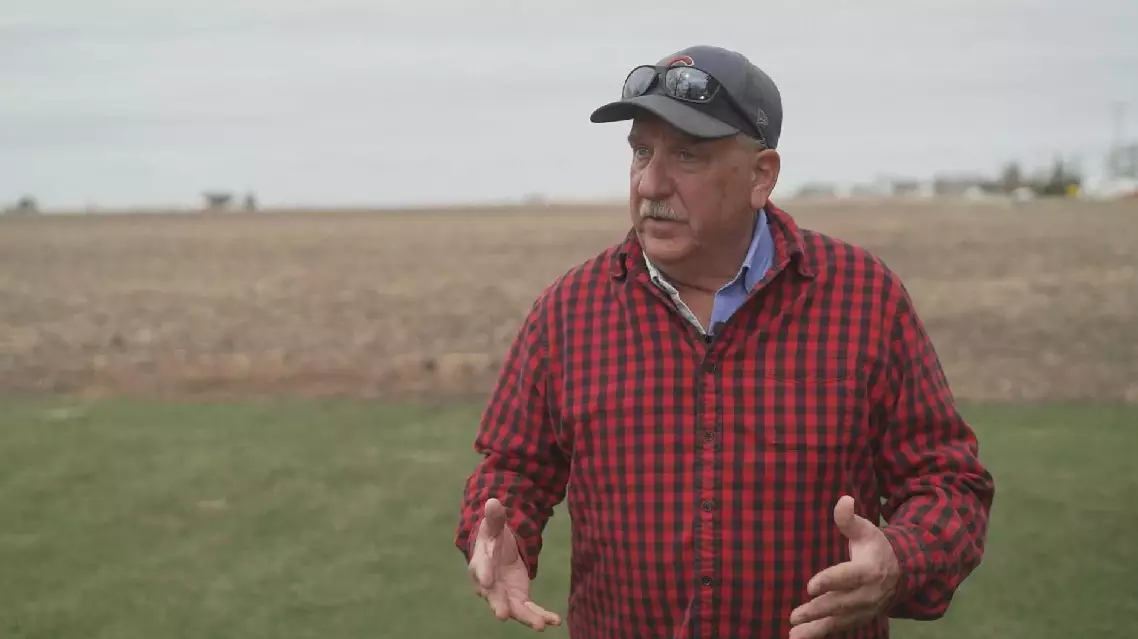
At a farm in southern Illinois, preparations for planting season are underway, a process that critically relies on the application of fertilizer. However, the cost of this vital resource has escalated dramatically.
Brian Duncan, a farmer in Illinois, highlighted the global nature of the impact.
"The Strait of Hormuz is very important for transit of fuel and fertilizer, and it's a global market. So even if the shipments that were coming here are not impacted, what we will see is a global rise in price because of that insecurity, and it will impact us here," he said.
With many U.S. farmers locking in fertilizer prices last year, the full impact on farmers is only likely to be felt later in the year, if the conflict continues and fertilizer prices remain high.
Robb Ewoldt, a farmer in the neighboring state of Iowa, echoed these concerns. He noted that while farmers have faced high costs before, the current situation is compounded by depressed commodity prices for crops like soybeans and corn, meaning farmers face the prospect of producing at a loss this year.
"We have higher cost, and that's the biggest thing. We have had our costs be higher in the past, but right now, our commodity prices are a little bit depressed, and so it's making it very challenging to be profitable and make a positive cash flow for the year," said Ewoldt.
As fertilizer prices skyrocket, concerns are growing for many farmers. In the longer term, if input costs including fertilizer remain high, the consequences for farmers could be dire.
"The sentiment is, you know, when I go to meetings, we think, well, there's going to be, some of us aren't going to be here next year because we're not going to be in business," said Ewoldt.
"I'd say it's a time of concern, perhaps a time of survival mode, where we're looking to cut costs, not make any new expenditures, and try to hang on for either a better marketplace dynamic or a significant lowering of our input costs," said Duncan.
As the planting season commences, the inherent optimism of farmers will be put to the test against a backdrop of economic uncertainty and geopolitical volatility.
Soaring diesel, fertilizer costs hit US farmers
Soaring diesel, fertilizer costs hit US farmers
Soaring diesel, fertilizer costs hit US farmers